
How to Create Therapy Treatment Plans for Trauma and Anxiety

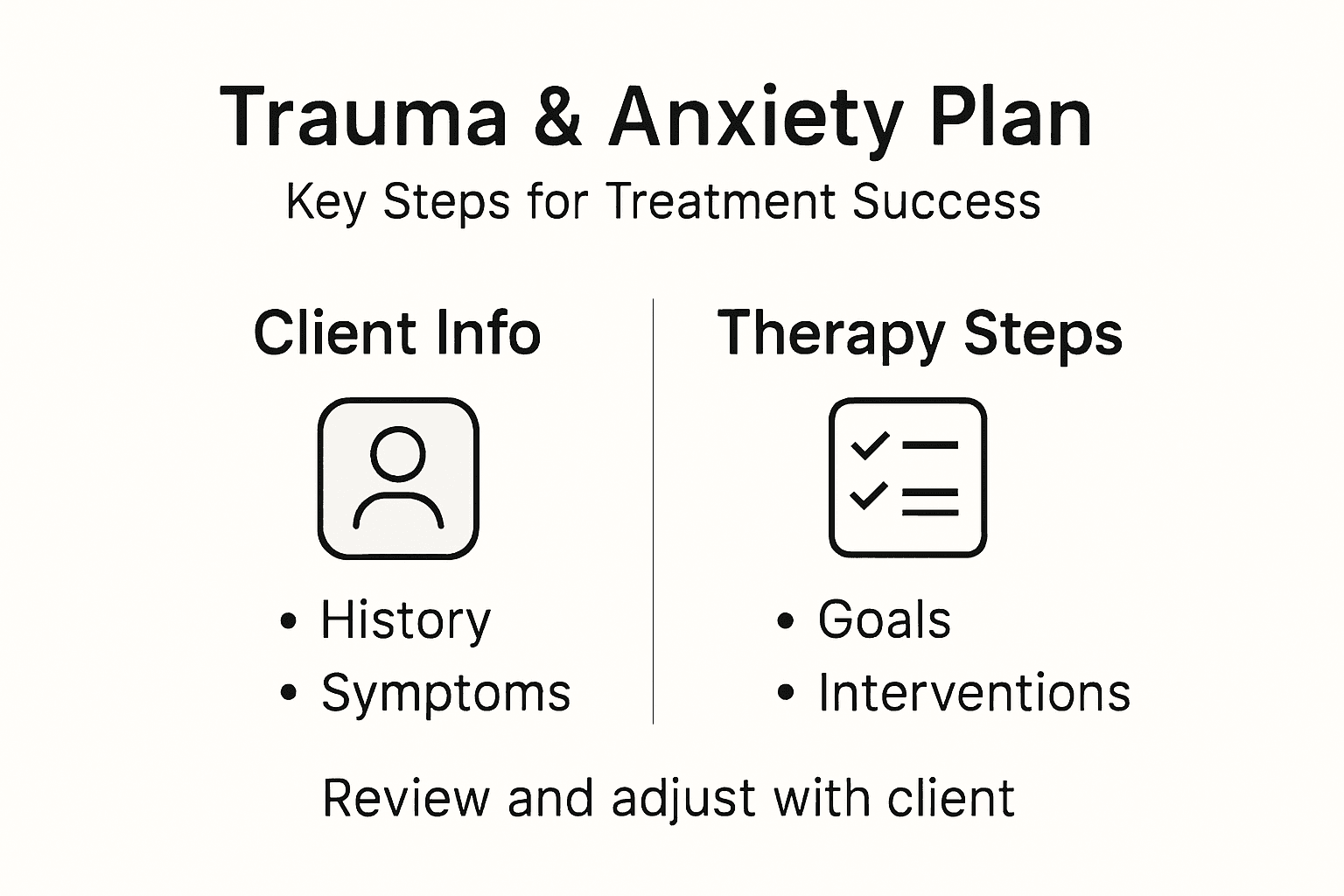
Every California clinician knows just how complex trauma and anxiety can shape a client’s mental health journey. Building an effective treatment plan starts with a thorough intake process, informed by trauma-informed assessment guidelines and comprehensive evaluation resources. This guide offers step-by-step strategies for gathering essential client information, setting clear therapy goals, choosing proven interventions, and tracking progress so your practice can deliver compassionate, individualized care for PTSD and anxiety.
Table of Contents
Quick Summary
| Key Point | Explanation |
|---|---|
| 1. Gather Detailed Client Information | Collect comprehensive client data for effective trauma and anxiety treatment planning, focusing on trauma history and coping mechanisms. |
| 2. Set Collaborative Therapy Goals | Work with clients to establish specific, measurable goals that empower them in their healing journey and address immediate symptoms. |
| 3. Choose Evidence-Based Interventions | Select scientifically validated therapeutic approaches based on the client’s specific needs, preferences, and trauma history. |
| 4. Develop a Flexible Therapy Timeline | Create a structured, phased timeline for treatment that allows client-centered progression and prioritizes emotional safety. |
| 5. Regularly Review and Adjust Treatment Plans | Continuously evaluate and modify treatment effectiveness through client feedback and symptom tracking to ensure meaningful progress. |
Step 1: Gather Comprehensive Client Information
Gathering comprehensive client information is the foundational step in creating an effective trauma and anxiety treatment plan. Your initial assessment will provide critical insights into the client's psychological landscape, helping you design a targeted and compassionate therapeutic approach.
To conduct a thorough intake, you'll want to systematically collect information using multiple assessment strategies. Start by creating a safe, non-threatening environment where clients feel comfortable sharing sensitive details. Trauma-informed assessment guidelines recommend a comprehensive approach that explores the full context of a client's experiences.
Key elements to investigate during your initial information gathering include:
Detailed trauma history including type, frequency, and duration of traumatic experiences
Specific anxiety symptoms and their impact on daily functioning
Co-occurring mental health conditions
Current coping mechanisms and support systems
Significant life events and potential triggers
Consider using structured assessment tools and open-ended interview techniques to develop a nuanced understanding. Clinical assessment resources can provide additional guidance on comprehensive client evaluation.
Professional assessments reveal the roadmap to healing - every detail matters.
Document information systematically, ensuring confidentiality and creating a narrative that captures both the clinical facts and the human experience behind them. Your goal is to build a holistic picture that informs a personalized treatment strategy.
Pro tip: Always approach information gathering with deep empathy, creating a space where clients feel heard and validated, not just clinically examined.
Step 2: Assess Trauma and Identify Therapy Goals
Assessing trauma and establishing clear therapy goals is a critical process that transforms initial client information into a structured healing pathway. This step requires careful, compassionate exploration of the client's psychological landscape and collaborative goal setting.
Begin by utilizing comprehensive trauma assessment guidelines to systematically evaluate the client's traumatic experiences. This involves creating a safe, supportive environment where clients can openly discuss their history, symptoms, and emotional challenges. Your assessment should focus on understanding:
Impact of traumatic experiences on current mental health
Specific anxiety and stress symptoms
Emotional and behavioral patterns
Psychological defense mechanisms
Potential triggers and stress responses
The goal is to develop a nuanced understanding that goes beyond surface-level symptoms. Trauma-focused therapeutic approaches recommend a collaborative process where therapy goals are co-created with the client, ensuring they feel empowered and engaged in their healing journey.
Effective trauma therapy begins with seeing the client as the expert of their own experience.
Establish specific, measurable goals that address both immediate symptom management and long-term psychological resilience. These might include reducing anxiety frequency, improving emotional regulation, or rebuilding a sense of personal safety.

Pro tip: Frame therapy goals as collaborative discoveries, not prescriptive directives, to maintain client autonomy and motivation.
Step 3: Select Evidence-Based Interventions
Selecting the right evidence-based interventions is a crucial step in developing an effective trauma and anxiety treatment plan. Your goal is to choose therapeutic approaches that are scientifically validated, aligned with the client's unique needs, and most likely to promote meaningful healing.
Evidence-based trauma therapiesrequire careful consideration of multiple factors. TheAPA clinical practice guidelinesrecommend several first-line interventions that have proven effectiveness in treating trauma and anxiety:
Cognitive Processing Therapy (CPT)
Prolonged Exposure Therapy
Trauma-Focused Cognitive Behavioral Therapy
Eye Movement Desensitization and Reprocessing (EMDR)
Narrative Exposure Therapy
When selecting interventions, consider these critical elements:
Client's specific trauma history
Current symptom presentation
Personal treatment preferences
Psychological and neurobiological assessment results
Potential contraindications or triggers
The most effective intervention is one that resonates with the client's unique healing journey.
Remember that no single approach works universally. Successful treatment often involves a flexible, integrated approach that combines multiple evidence-based techniques tailored to the individual's specific needs.
Here's a quick comparison of evidence-based trauma and anxiety interventions:
| Intervention Type | Core Approach | Target Outcomes | Typical Duration |
|---|---|---|---|
| Cognitive Processing Therapy (CPT) | Restructures trauma beliefs | Reduces PTSD symptoms | 12 sessions |
| Prolonged Exposure Therapy | Controlled exposure to trauma | Lowers anxiety and avoidance | 8–15 sessions |
| EMDR | Eye movement desensitization | Processes traumatic memories | 6–12 sessions |
| Narrative Exposure Therapy | Life story reconstruction | Builds trauma narrative and resilience | 10–16 sessions |
Pro tip: Always maintain professional flexibility and be prepared to adjust your intervention strategy based on the client's ongoing response and feedback.
Step 4: Develop a Structured Therapy Timeline
Developing a structured therapy timeline is essential for creating a clear, predictable path toward healing. This roadmap will guide your therapeutic approach while providing the client with a sense of direction and hope.
Trauma treatment guidelines recommend a phased approach that allows for flexibility and client-centered progression. The structured timeline typically encompasses three primary phases:
Safety and Stabilization Phase
Trauma Processing Phase
Integration and Reconnection Phase
Key considerations for timeline development include:
Client's current psychological stability
Severity of trauma symptoms
Individual healing capacity
Available support systems
Treatment modality selected
When constructing your timeline, reference the three-phase trauma treatment model to ensure comprehensive coverage. Each phase requires specific attention and cannot be rushed.
Healing is not linear. Your timeline is a guide, not a rigid prescription.
Typical Timeline Breakdown:
Initial Phase: 4-6 sessions focused on building safety and trust
Processing Phase: 8-12 sessions addressing traumatic memories
Integration Phase: 6-8 sessions developing coping strategies
Pro tip: Create a flexible timeline that can be adjusted based on the client's progress, always prioritizing their emotional safety and comfort.
Step 5: Review and Adjust the Treatment Plan
Reviewing and adjusting your trauma therapy treatment plan is a dynamic process that ensures continued effectiveness and client progress. This critical step allows you to respond to the client's evolving needs and therapeutic responses.
Clinical practice guidelines emphasize the importance of ongoing treatment evaluation. Regular reassessment helps identify whether the current interventions are producing meaningful therapeutic outcomes or if modifications are necessary.
Key elements to evaluate during your treatment plan review include:
Client's symptom progression
Effectiveness of current therapeutic techniques
Emerging psychological challenges
Client's engagement and motivation
Unexpected treatment responses
Use systematic methods to track progress, such as:
Standardized psychological assessments
Client feedback sessions
Behavioral and emotional tracking
Collaborative goal reassessment
Reviewing therapeutic relationship dynamics
Systematic review researchsuggests maintaining treatment flexibility to optimize psychological symptom management.
The following table summarizes therapy review methods and their impact:
| Review Method | Key Benefit | Best Use Case |
|---|---|---|
| Standardized Assessments | Objective symptom tracking | Gauging overall progress |
| Client Feedback Sessions | Encourages client ownership | Identifying emotional setbacks |
| Behavioral Tracking | Monitors daily changes | Adjusting interventions quickly |
| Goal Reassessment | Aligns with client needs | Updating therapy direction |
Treatment plans are living documents, not immutable contracts.
Recommended Review Frequency:
Initial intensive review: Every 4-6 sessions
Ongoing maintenance reviews: Quarterly
Comprehensive annual assessment
Pro tip: Approach treatment plan adjustments as collaborative discoveries with your client, not unilateral changes.
Take the Next Step in Healing Trauma and Anxiety with Expert Support
Creating effective therapy treatment plans for trauma and anxiety requires a deep understanding of your unique experiences and emotional goals. If you struggle with identifying the right path forward or finding compassionate care that respects your personal story, Alvarado Therapy is here to help. Our licensed therapists specialize in trauma-informed approaches like EMDR and trauma-focused cognitive behavioral therapy that align with the evidence-based methods highlighted in this article.
Discover the power of a personalized, flexible treatment plan designed just for you. Whether you prefer in-person support in Ventura or virtual sessions throughout California, our bilingual and culturally responsive team is ready to listen and guide you on your healing journey. Visit our California — Meet Our Team — Alvarado Therapy page to learn about our clinicians and see how we combine trauma expertise with heartfelt care. Ready to start your path toward safety, clarity, and empowerment? Explore all our services at Alvarado Therapy and take your first step today.
Frequently Asked Questions
How can I gather comprehensive client information for therapy treatment plans?
Gather comprehensive client information by creating a safe environment for clients to share their experiences. Use multiple assessment strategies, such as structured tools and open-ended interviews, to collect detailed trauma histories and symptom impacts.
What are effective assessment strategies for identifying trauma and anxiety therapy goals?
Effective assessment strategies involve utilizing trauma assessment guidelines and creating a supportive setting. Focus on understanding the client's emotional challenges and co-create specific, measurable goals together to enhance their engagement in the healing process.
How do I select evidence-based interventions for trauma and anxiety treatment?
Select evidence-based interventions by considering the client’s trauma history, current symptoms, and personal preferences. Review various therapeutic approaches like Cognitive Processing Therapy or EMDR, and choose those that align best with the client’s healing journey.
What steps should I follow to develop a structured therapy timeline?
Develop a structured therapy timeline by outlining the phases of treatment: safety and stabilization, trauma processing, and integration. Make sure to adjust the timeline based on the client’s psychological stability and healing capacity, often revisiting every 4-6 sessions.
How can I review and adjust the treatment plan effectively?
To effectively review and adjust the treatment plan, regularly evaluate the client's symptom progression and the effectiveness of the interventions used. Reassess goals and therapeutic relationships at least once every 4-6 sessions to ensure the plan remains aligned with the client's needs and progress.
What are the typical durations for different phases of trauma therapy?
The typical durations for trauma therapy phases include 4-6 sessions for the safety and stabilization phase, 8-12 sessions for the trauma processing phase, and 6-8 sessions for the integration phase. Adjust these durations based on the client’s progress and comfort level.
