
How to Prepare for Marriage Counseling: A Step-by-Step Guide

Every American couple hoping to strengthen their bond faces unique challenges before starting marriage counseling. Research shows that couples who set clear goals together are far more likely to experience lasting improvements in communication and trust. Building a strong foundation from the very beginning is crucial, and understanding the right steps can make a real difference. Discover how expert guidance and thoughtful preparation can help both partners feel supported and ready for meaningful progress.
Table of Contents
Quick Summary
| Key Point | Explanation |
|---|---|
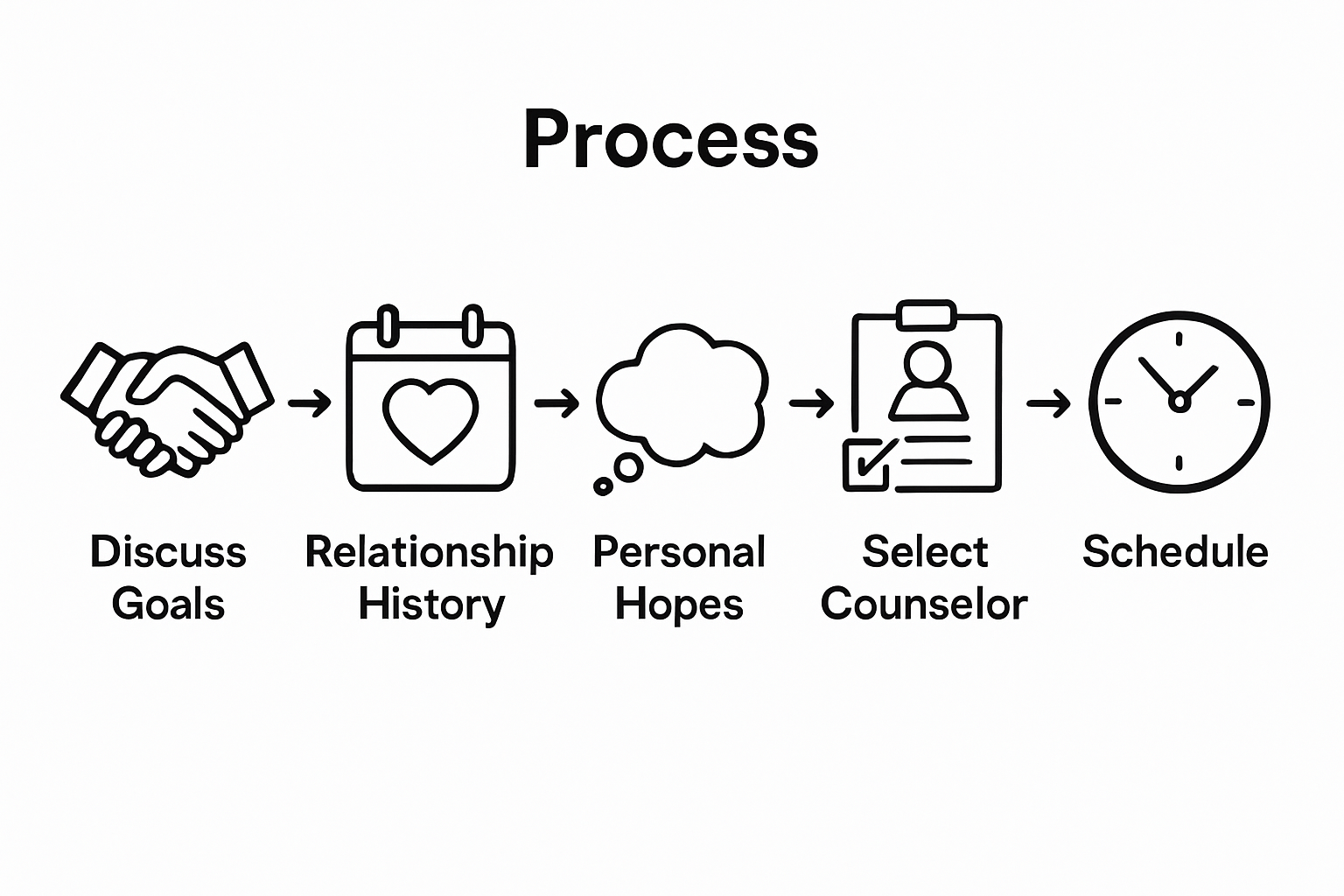
| 1. Discuss Goals Together | Share individual and shared relationship goals to align expectations and foster open communication. |
| 2. Reflect on Relationship History | Document significant milestones and challenges to gain insights into your relationship’s foundation and dynamics. |
| 3. Identify Personal Hopes | Clearly articulate individual hopes and concerns about marriage to address potential conflicts proactively. |
| 4. Choose the Right Counselor | Select a therapist with trauma-informed and culturally responsive training to ensure effective support tailored to your needs. |
| 5. Establish Practical Arrangements | Plan logistical details such as session frequency and mode to enhance commitment and structure in your counseling journey. |
Step 1: Discuss Goals and Expectations Together
Successful marriage counseling starts with honest communication about your shared and individual goals. Your first task is sitting down together and having an open dialogue about what you each hope to achieve through counseling and in your relationship.
Begin by creating a safe, judgment-free environment where both partners can speak candidly. Setting specific, measurable goals helps partners align their expectations and work collaboratively. Take turns sharing your personal objectives for counseling. Are you seeking better communication? Resolving recurring conflicts? Rebuilding intimacy? Be specific about what success looks like for you.
Consider discussing long-term relationship goals beyond therapy. Before committing to marriage, couples should explore personal aspirations including children, living arrangements, and career plans to ensure you are fundamentally aligned. This conversation helps identify potential areas of future tension and allows you to proactively address them.
Pro tip: Create a shared document or notebook where you can both track your goals, progress, and insights from counseling sessions. This collaborative approach ensures you remain unified and accountable throughout your therapeutic journey.
Step 2: Gather Key Relationship History and Insights
In this crucial step of marriage counseling preparation, you will create a comprehensive picture of your relationship’s foundation and trajectory. Premarital counseling provides a platform for partners to openly discuss their hopes and fears, helping you understand each other more deeply.

Start by individually reflecting on your relationship history. Document significant milestones like how you met, major challenges you have overcome, and key moments that defined your connection. This process helps clarify and align your expectations about marriage, roles, and future plans, reducing potential misunderstandings. Consider discussing past relationship patterns, family backgrounds, communication styles, and emotional triggers that might impact your current dynamic.
Be prepared to share openly but without judgment. This is an opportunity to explore your relationship’s strengths and potential growth areas. Listen actively when your partner shares, seeking to understand rather than defend or interrupt.
Pro tip: Before your counseling session, individually write a brief timeline of your relationship, noting pivotal moments, challenges, and mutual achievements. This preparation will help your therapist understand your unique journey more comprehensively.
Step 3: Identify Personal Hopes and Concerns
This crucial step involves deeply exploring your individual expectations, dreams, and potential anxieties about marriage. The goal is to create a transparent emotional landscape where both partners can share their innermost thoughts without fear of judgment or rejection.
Unmet or unrealistic marriage expectations can become a significant source of conflict, so it is essential to articulate your hopes and concerns clearly. Begin by reflecting on your personal vision for marriage. What does a successful partnership look like to you? Consider emotional needs, communication styles, financial expectations, family dynamics, and long term life goals. Write down specific scenarios or experiences that represent your ideal relationship and potential areas of worry.
Approach this conversation with vulnerability and openness. Take turns sharing your lists, listening actively without becoming defensive. Pay attention to both verbal and nonverbal cues. If certain topics feel challenging to discuss, acknowledge that difficulty and create space for gentle exploration. Remember that identifying potential areas of tension now can help you develop strategies to address them proactively.
Pro tip: Use a structured template or worksheet to guide your individual reflection, ensuring you cover comprehensive ground and maintain focus during your discussion.
Step 4: Select Trauma-Informed, Culturally Responsive Support
Choosing the right marriage counselor is a critical step that requires careful consideration of your unique relationship dynamics and individual backgrounds. Your goal is to find a therapist who understands the nuanced layers of your personal experiences and can provide compassionate, informed guidance.
Analyzing dialogue in therapy can help understand and guide behavior in counseling, which underscores the importance of selecting a therapist skilled in trauma-informed approaches. Look for professionals who demonstrate cultural responsiveness understanding your specific cultural context, communication styles, and potential generational or familial trauma impacts. Prioritize therapists with specialized training in trauma recovery, cross cultural counseling, and relationship dynamics.
Research potential counselors thoroughly. Review their professional backgrounds, read client testimonials, and schedule initial consultation calls to assess their approach. Positive psychotherapy involves a semi-structured first interview that considers relationship factors, so use these initial interactions to gauge the therapist’s ability to create a safe, validating environment. Pay attention to how comfortable you feel discussing sensitive topics and whether the therapist demonstrates genuine empathy and understanding.
Pro tip: Request therapist credentials related to trauma informed care and ask specific questions about their experience working with couples from diverse backgrounds before committing to ongoing sessions.
Here’s a summary of essential factors to consider when selecting a marriage counselor:
| Selection Criteria | Why It Matters | What to Look For |
|---|---|---|
| Trauma-Informed Approach | Addresses past trauma’s impact on couples and supports emotional safety during sessions. | Therapist trained in trauma care and nervous system awareness. |
| Cultural Responsiveness | Recognizes cultural influences on relationship dynamics and communication styles. | Experience working with diverse cultural backgrounds. |
| Specialized Training | Ensures the use of proven, evidence-based counseling strategies. | Certification in couples or marriage therapy. |
| Communication Style | Builds trust, comfort, and emotional openness between partners. | Empathetic, validating, and clear communicator. |
Step 5: Establish Practical Arrangements for Success
Successful marriage counseling requires thoughtful planning and commitment from both partners. This step involves creating a structured approach that supports your therapeutic journey and maximizes the potential for meaningful progress.
Goal attainment scaling involves developing a written follow-up guide between the client and counselor for monitoring progress, which provides a strategic framework for your counseling experience. Begin by discussing logistical details such as session frequency, timing, budget, and preferred communication methods with your chosen therapist. Determine whether you will pursue in person or online sessions, and establish clear expectations about session duration, homework assignments, and individual versus couples therapy components.
Developing a logic model helps in setting specific short-term and long-term goals, ensuring practical arrangements for success. Create a shared document or worksheet where you can track therapeutic objectives, individual growth milestones, and relationship improvement metrics. Consider factors like scheduling conflicts, childcare needs, work commitments, and financial constraints that might impact your counseling journey.
Pro tip: Designate a specific shared digital folder or notebook where both partners can collaboratively store therapy notes, progress tracking documents, and reflective insights to maintain transparency and mutual accountability.
Compare common formats for marriage counseling for better decision-making:
Counseling Format Comparison
| Format Type | Advantages | Limitations |
|---|---|---|
| In-Person | Strong connection with minimal distractions, allowing deeper engagement. | Less flexibility in scheduling and location. |
| Online | Convenient and private, saving time and reducing travel. | Technical issues or connectivity problems can arise. |
| Hybrid | Combines the flexibility of online sessions with the trust built through in-person meetings. | May require more coordination and planning. |
Step 6: Review Readiness and Commit to the Process
This critical stage involves an honest self assessment of your emotional preparedness and mutual commitment to the marriage counseling journey. Your goal is to transparently evaluate both individual and collective readiness for meaningful therapeutic work.
Premarital counseling helps partners address their thoughts, concerns, and expectations, preparing them for marriage and making them more comfortable with therapy. Schedule a dedicated conversation where you both candidly discuss your individual comfort levels with the counseling process. Explore potential emotional barriers, past experiences with therapy, and any underlying anxieties about vulnerability. Acknowledge that feeling uncertain or nervous is completely normal and does not indicate a lack of commitment.
Assess your willingness to engage authentically by discussing specific personal boundaries, communication preferences, and mutual expectations for the counseling experience. Be prepared to negotiate and find compromise. Recognize that commitment means showing up consistently not just physically but emotionally willing to do the challenging work of relationship growth. Validate each other’s feelings and create a supportive environment where both partners feel heard and respected.
Pro tip: Create a joint commitment statement outlining your shared goals, individual promises, and mutual expectations for the counseling process to reinforce your collaborative approach and maintain accountability.
Take the Next Step Toward Healing and Connection
Preparing for marriage counseling can feel overwhelming when faced with identifying personal hopes and concerns or selecting a trauma-informed therapist who truly understands your unique journey. If you are navigating relationship challenges, seeking clearer communication, or aiming to rebuild trust, it is essential to work with professionals trained in trauma-sensitive, culturally responsive care.
Start building a stronger partnership today with guidance from licensed therapists in California who specialize in couples therapy and trauma recovery. Visit our California — Meet Our Team — Alvarado Therapy page to find compassionate experts ready to support your growth. Whether you prefer in-person support in Ventura at Ventura CA (in person) — Meet Our Team — Alvarado Therapy or flexible online sessions, Alvarado Therapy offers a safe, affirming space to explore your relationship goals together. Learn more about our comprehensive approaches and schedule your first session by visiting Alvarado Therapy. Take this courageous step now and empower your healing journey.
Frequently Asked Questions
What should I discuss with my partner before starting marriage counseling?
To prepare for marriage counseling, you should discuss your individual and shared goals and expectations for the therapy. Set aside time for an honest dialogue about what you each hope to achieve in your relationship, focusing on specific areas like communication and intimacy.
How can I reflect on our relationship history before counseling?
Reflecting on your relationship history involves documenting significant milestones and challenges you’ve faced together. Create a timeline that notes pivotal moments, which will help your therapist understand your journey and any patterns that may impact your current relationship dynamics.
What should I include in my personal hopes and concerns for marriage?
When identifying your personal hopes and concerns, think about what makes a successful marriage for you. Write down your dreams regarding emotional needs, communication styles, and family dynamics to share with your partner openly during your discussions.
How do I choose the right marriage counselor for us?
Selecting the right marriage counselor involves looking for a therapist who understands your unique relationship dynamics and has training in trauma-informed and culturally responsive approaches. Research their background thoroughly, and consider scheduling initial consultations to gauge their compatibility with you both.
What practical arrangements do we need to establish before counseling starts?
Before starting therapy, establish logistics like session frequency, budgeting, and whether to meet in person or online. Create a shared document to track goals and progress, helping you stay organized and committed to the process throughout counseling.
How can we assess our readiness for marriage counseling?
To assess your readiness, have an honest conversation about your individual comfort levels with counseling. Discuss potential emotional barriers and mutual expectations to ensure both partners feel prepared to engage authentically in the therapy process.
