
Role of Therapy in Healing: Complete Guide

Over half of adults will face a significant mental health challenge in their lives, yet seeking help can feel daunting. The idea of opening up to a therapist stirs questions and even doubt, especially with so many misconceptions and options available. Understanding how therapy truly supports healing helps individuals find hope and clarity. This article explores the real role of therapy, outlining its benefits, methods, and what makes it so valuable on the journey to emotional recovery.
Table of Contents
Key Takeaway
| Point | Details |
|---|---|
| Therapy's Role | Therapy provides a structured and supportive environment for emotional healing and personal transformation. |
| Diverse Modalities | Different therapeutic approaches are tailored to individual needs, emphasizing that no single method is universally applicable. |
| Emotional Recovery | Therapy facilitates deep emotional recovery through structured interventions that promote self-discovery and resilience. |
| Choosing a Therapist | Selecting the right therapist requires careful consideration of their qualifications, approach, and the client's comfort level. |
Defining Therapy's Role in Healing
Therapy represents a structured, professional approach to healing emotional wounds, processing traumatic experiences, and developing healthier mental and psychological strategies. Mental health therapy is fundamentally about creating a safe, supportive environment where individuals can explore complex feelings, understand underlying patterns, and develop transformative coping mechanisms.
At its core, therapy serves multiple critical functions in an individual's healing journey. These functions extend far beyond simple conversation and include psychological reconstruction, emotional processing, and skill-building. Therapists act as skilled guides who help clients navigate intricate emotional landscapes, providing professional strategies to address deeply rooted psychological challenges. When exploring therapy's profound role, understanding it as a collaborative healing process becomes essential.
The healing process through therapy typically involves several interconnected stages:
Establishing Safety: Creating a secure therapeutic relationship
Exploring Experiences: Examining past traumas and current emotional states
Understanding Patterns: Identifying recurring psychological mechanisms
Developing Coping Skills: Learning adaptive emotional regulation techniques
Empowerment: Building resilience and self-understanding
Therapy isn't about quick fixes or temporary solutions. It's a nuanced journey of self-discovery, where individuals learn to understand themselves more deeply, process unresolved emotional experiences, and develop more constructive ways of responding to life's challenges. The ultimate goal is not just symptom reduction, but comprehensive personal transformation and emotional resilience.
Different Types of Therapy for Healing
Therapy encompasses a diverse range of approaches designed to address unique psychological and emotional challenges. According to a comprehensive systematic review on psychotherapies for PTSD, different therapeutic modalities offer targeted strategies for healing, demonstrating that no single approach fits every individual's needs.
Some primary therapeutic approaches include:
Cognitive Behavioral Therapy (CBT): Focuses on identifying and changing negative thought patterns
EMDR (Eye Movement Desensitization and Reprocessing): Helps process traumatic memories through bilateral stimulation
Psychodynamic Therapy: Explores unconscious psychological processes and past experiences
Humanistic Therapy: Emphasizes personal growth and self-actualization
Dialectical Behavior Therapy (DBT): Teaches emotional regulation and interpersonal effectiveness
The research on therapeutic interventions reveals nuanced differences in effectiveness. PubMed research highlights that trauma-focused therapies like cognitive processing therapy demonstrate significant potential in treating complex emotional wounds, particularly for children and adolescents. When exploring therapeutic approaches, understanding the unique strengths of each modality becomes crucial.
Ultimately, therapy is a deeply personal journey. The most effective approach depends on individual needs, trauma history, and personal psychological landscape. Professional therapists collaborate with clients to determine the most appropriate therapeutic strategy, ensuring a customized path to healing that respects each person's unique emotional experience and potential for transformation

How Therapy Facilitates Emotional Recovery
Emotional recovery is a complex journey of healing and self-discovery that requires professional guidance and support. According to Venture World research, individual therapy provides a critical safe space where individuals can explore their deepest emotional landscapes, develop healthier perspectives, and cultivate transformative coping strategies.
The emotional recovery process through therapy typically involves several key mechanisms:
Creating Psychological Safety: Establishing a non-judgmental environment
Emotional Processing: Helping clients understand and integrate complex feelings
Trauma Deconstruction: Breaking down overwhelming emotional experiences
Skill Building: Developing resilient emotional regulation techniques
Self-Compassion Development: Fostering kindness toward oneself
Therapy facilitates emotional recovery by providing structured interventions that address the root causes of psychological distress. When exploring therapeutic approaches for healing, therapists guide clients through understanding their emotional patterns, identifying negative thought cycles, and constructing more adaptive responses to life's challenges. This process isn't about quick fixes, but about deep, sustainable emotional transformation.
Ultimately, emotional recovery is a personal and profound journey. Professional therapists serve as compassionate navigators, helping individuals reconnect with their inner strength, process painful experiences, and rediscover their capacity for joy, resilience, and meaningful connection. The goal extends beyond symptom management – it's about empowering individuals to rewrite their emotional narratives and create more fulfilling, authentic lives.
Comparing Therapy With Alternative Healing Methods
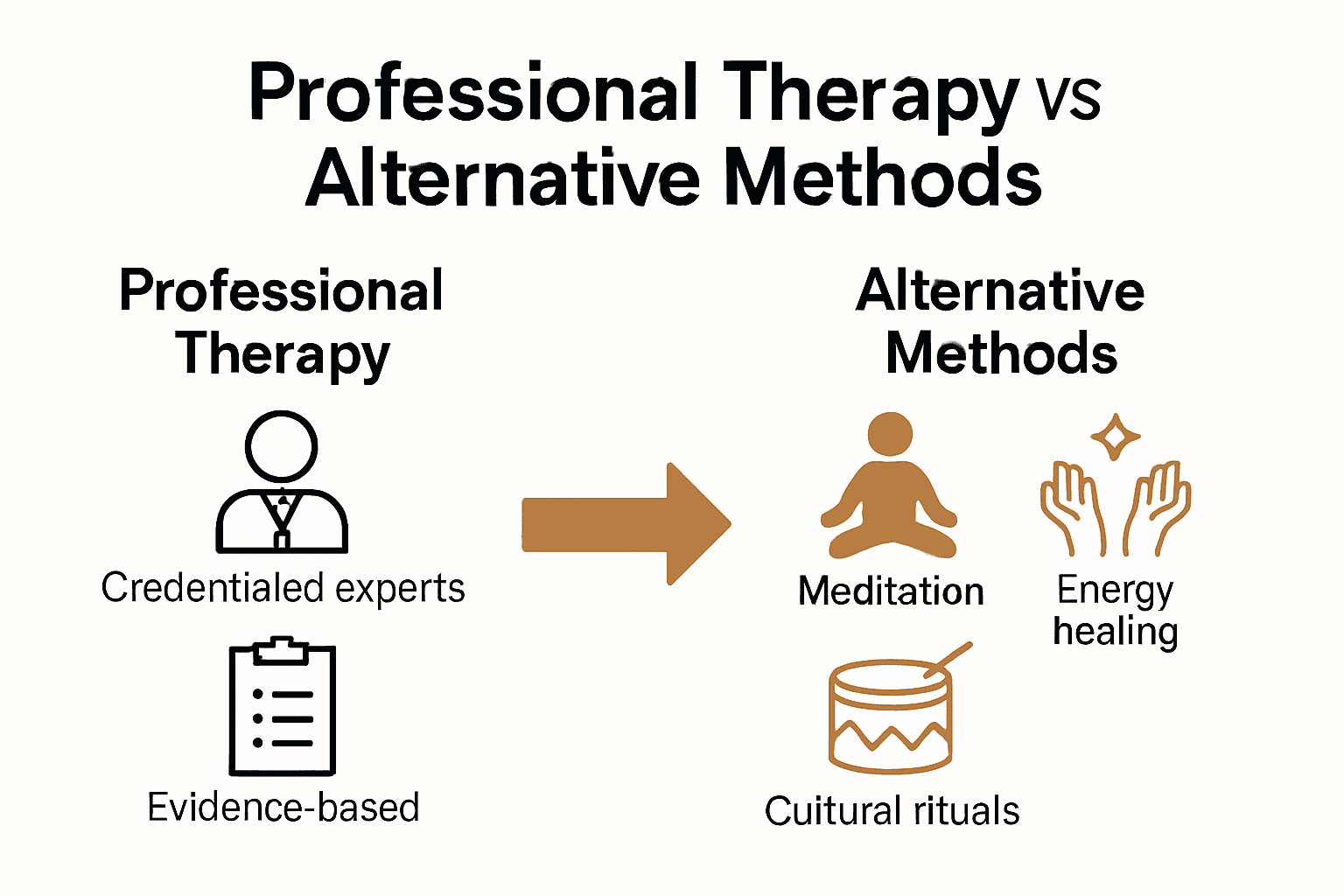
Alternative healing methods represent diverse approaches to emotional and physical wellness that differ significantly from traditional psychotherapy. A systematic review on healing interventions reveals that while multiple healing practices exist, professional therapy offers uniquely structured and scientifically validated approaches to addressing psychological challenges.
Key comparisons between therapy and alternative healing methods include:
Professional Training: Therapists have extensive clinical education
Evidence-Based Approaches: Psychological therapies rely on research-validated techniques
Personalized Interventions: Tailored strategies based on individual psychological profiles
Comprehensive Assessment: Systematic evaluation of underlying psychological mechanisms
Long-Term Support: Structured, ongoing therapeutic relationships
Research exploring cultural dimensions of healinghighlights that therapeutic effectiveness isn't just about techniques, but also about cultural understanding and personal connection.When exploring healing approaches, understanding the nuanced differences between alternative methods and professional therapy becomes crucial.
While alternative healing methods like meditation, energy work, or traditional cultural practices can offer valuable support, professional therapy provides a scientifically grounded, comprehensive approach to emotional recovery. The key distinction lies in therapy's ability to address deep-rooted psychological patterns, provide evidence-based interventions, and support individuals through complex emotional landscapes with professional expertise and compassionate guidance.
Risks, Misconceptions, and Choosing a Therapist
Therapy misconceptions can significantly impact an individual's willingness to seek professional mental health support. Research on cultural beliefs in psychotherapy reveals that misunderstandings often stem from cultural differences and lack of understanding about the therapeutic process.
Common misconceptions about therapy include:
Weakness Myth: Seeking therapy is a sign of strength, not weakness
Quick Fix Fallacy: Therapy is a process, not an instant solution
One-Size-Fits-All Assumption: Each therapeutic approach is uniquely tailored
Stigma: Mental health support is a normal and healthy choice
Confidentiality Concerns: Therapists maintain strict professional boundaries
A systematic review on healing interventions highlights the importance of critically evaluating therapeutic approaches. When exploring therapy options, individuals should consider several key factors in selecting a therapist: professional credentials, specialization, cultural competence, therapeutic approach, and personal comfort level.
Choosing the right therapist is a deeply personal journey. It requires careful consideration, open communication, and a willingness to be vulnerable. The most effective therapeutic relationship is built on trust, mutual respect, and a genuine connection between client and therapist. Don't be afraid to have initial consultations, ask questions, and trust your instincts in finding a mental health professional who truly understands and supports your unique healing path.
Discover the Transformative Power of Therapy in Your Healing Journey
Many people face complex emotional challenges like childhood trauma, PTSD, or anxiety and wonder how therapy can truly help. This article highlights that therapy is more than just talking; it offers a safe and supportive space to process emotions, rebuild emotional resilience, and develop effective coping skills. If you are ready to take that step toward lasting emotional recovery, professional guidance tailored to your unique experience is crucial.
Start your path to healing with compassionate experts who understand the nuances of trauma-informed care and specialized approaches such as EMDR therapy and individual counseling. At Alvarado Therapy, licensed therapists licensed therapists serving California clients are ready to walk with you through each stage of transformation.
Explore our dedicated team in California to find the right therapist who will support your personal growth and emotional healing at California — Meet Our Team — Alvarado Therapy. Visit our main site at Alvarado Therapy to learn more about our trauma-sensitive services and take advantage of online booking to begin your journey today. Healing is possible. Take the first step now.
Frequently Asked Questions
What is the primary role of therapy in the healing process?
Therapy serves as a structured approach to healing emotional wounds, facilitating the exploration of complex feelings, understanding underlying patterns, and developing healthier coping mechanisms.
What are some common types of therapy available for emotional healing?
Common types of therapy include Cognitive Behavioral Therapy (CBT), EMDR, Psychodynamic Therapy, Humanistic Therapy, and Dialectical Behavior Therapy (DBT), each designed to address different psychological challenges.
How does therapy facilitate emotional recovery?
Therapy aids emotional recovery by creating a safe space for individuals to explore their emotions, process trauma, develop coping skills, and foster self-compassion, leading to profound personal transformation.
What misconceptions exist about therapy?
Common misconceptions about therapy include the belief that seeking help is a sign of weakness, that therapy provides instant solutions, and that all therapeutic approaches are the same. It's important to understand that therapy is a personalized process tailored to individual needs.
Recommended
Ready to see what’s possible?
It’s your time to heal in a transformative way.
