
Clinician Checklist: EMDR Aftercare for the First 72 Hours

Most post-EMDR reactions are normal. Fatigue, vivid dreams, and shifting emotions can indicate ongoing brain processing, not necessarily a problem. The single most important move is to protect a soft landing: clear your schedule, use the resourcing tools your therapist taught you, and call your clinician if distress feels severe or won't ease within a few days.
TL;DR:
Most post-EMDR reactions, such as fatigue, vivid dreams, and emotional shifts, are normal and reflect ongoing brain processing rather than problems.
Fatigue, muscle tension, headaches, and vivid dreams often occur in the hours or nights after a session, and simple self-care like hydration and grounding exercises support recovery.
Between sessions, new cognitive connections and brief confusion are common, and keeping a short log helps track important insights without attempting solo reprocessing.
In the first 24 to 72 hours post-session, it is best to avoid alcohol, intense media, and high-stakes decisions, and to prioritize light activities and grounding routines.
Contact your therapist immediately if symptoms like dissociation, escalating self-harm thoughts, or unresponsive flashbacks persist or worsen beyond typical reactions.
Alvaradotherapy
Find Trauma-Informed EMDR Support
Alvarado Therapy offers EMDR therapy and trauma-informed counseling for adults across California, including online care and bilingual support.
Table of Contents
Why do you feel tired or achy after a session, and are the dreams normal?
What cognitive shifts show up between sessions, and how should you track them?
How should you handle relationships and support during aftercare?
Can you continue medication or other treatments while doing EMDR?
What emotional reactions are normal after EMDR?
Right after a session, it's common to feel raw, relieved, weepy, or oddly flat, sometimes all in the same afternoon. None of these on their own point to a problem. EMDR works by activating a memory network and letting the brain continue sorting it even after the session ends.
Typical reactions include:
Sudden tearfulness or a wave of relief you didn't expect.
Irritability or a shorter fuse than usual.
Mood swings that feel unrelated to your day.
A sense of mental tiredness, like you ran a race sitting still.
The National Center for PTSD describes EMDR as a trauma-focused treatment with measurable effects on PTSD, anxiety, and depression, often after a standard course of weekly sessions lasting around three months. Between sessions, that same processing tends to peak in the first 24 to 72 hours and then trend downward. If your reaction is still climbing by the middle of the week instead of settling, that's worth flagging to your therapist rather than riding out alone.
Why do you feel tired or achy after a session, and are the dreams normal?
The body often reacts before the mind fully catches up. Fatigue, muscle tension, headaches, and appetite changes are common in the hours after a session, and vivid or unusual dreams can show up for two to four nights afterward, as your brain continues consolidating what came up.
Simple aftercare supports that process:
Drink water and eat something grounding rather than skipping meals.
Keep your usual sleep window instead of staying up late to process.
Skip late caffeine and alcohol, both of which interfere with the deep sleep your brain uses to file memories.
Choose a short walk over an intense workout for the first day.
Pro Tip: Keep a glass of water and a snack within reach after your session. Simple, low-effort self-care in the first hour makes the rest of the evening easier.
What cognitive shifts show up between sessions, and how should you track them?
Between sessions, you might notice new connections forming, like suddenly seeing how one memory links to another, or a belief about the event starting to loosen. Brief confusion or a foggy afternoon is common too.
If something surfaces that feels important to bring back to therapy, a short log works better than trying to sit with it alone:
Note the date and time.
Name the trigger, if you can identify one.
Describe the body sensation, tight chest or clenched jaw, for example.
Write down what you did about it.
Keep the entry to 10 or 15 minutes and stop there. This is a tool for regulation and tracking, not for reprocessing the memory yourself. Full reprocessing works best with your clinician guiding the pace, and the EMDR International Association (EMDRIA) is clear that EMDR is meant to be delivered by trained clinicians, with preparation-phase tools meant for stabilization between sessions rather than solo memory work.
What should you do (and avoid) in the days after a session?
A short list of dos and don'ts covers most of what matters in the first 24 to 72 hours.
Dos:
Clear the next few hours of your schedule if you can, even a lighter afternoon helps.
Hydrate and eat something nourishing instead of running on coffee.
Use the Calm Place, Container, or butterfly hug exercise your therapist taught you.
Set a 10 to 15 minute timer for journaling, then close the notebook.
Take a short walk and do a grounding exercise before bed.
Don'ts:
Avoid alcohol and recreational drugs, which blunt the nervous system's ability to settle.
Skip intense or triggering media for a day or two.
Postpone high-stakes conversations or major decisions until you feel steadier.
Hold off on anything that requires sharp focus if you're feeling foggy.
Pro Tip: If work allows it, ask for a lighter caseload the day after an intensive session rather than a full day off. Light structure often helps more than total rest.
When should you contact your therapist between sessions?
Most reactions settle on their own, but certain warning signs mean it's important to reach out for help rather than wait.
Dissociation that lasts well beyond the session or makes it hard to function.
Escalating thoughts of self-harm or suicide.
Flashbacks that don't respond to grounding techniques you've practiced.
Intense urges to act out or use substances to cope.
Use whatever between-session contact plan your clinician set up, and call 988 or emergency services if you're in immediate danger. Bring your log to the next appointment so your therapist can see the pattern. Clinicians expect check-ins after a heavy session. Reaching out is a safety step, not an inconvenience.
How do clinicians help you stay regulated between sessions?
Before you leave the room, your therapist should walk you through closure, sometimes called Phase 7, which is designed to leave you settled rather than raw. This typically includes returning to your Calm Place, a mental image of somewhere safe you can call up on demand, and the Container exercise, where distressing material gets mentally "stored" until the next session instead of following you home. The butterfly hug, a self-administered tapping pattern across the chest, is another common tool for calming the nervous system in the moment.
Practice your Calm Place for a minute or two once a day, not just when you're distressed.
Use the Container when something surfaces unexpectedly and you need to keep functioning.
Try the butterfly hug if you feel your body tightening up during the day.
According to EMDR Assist's guide to closure, processing often continues for hours or days after a session, which is why closure and these portable tools are considered standard practice. Some clinicians, including at Alvarado Therapy, build in brief check-ins 24 to 48 hours after an EMDR intensive or an especially activating session to adjust pacing or reinstall resources.
Pro Tip: Ask your therapist directly which resource they want you to lean on most between sessions. Not every tool fits every person.
How should you handle relationships and support during aftercare?
Processing trauma tends to make you more sensitive to the people around you, for better and worse. A supportive partner or friend who knows to give you quiet time after a session can make a real difference, while someone who pushes for details before you're ready can set you back.
If people close to you want to help, the National Center for PTSD's guidance for families suggests they allow quiet time after sessions, learn the same coping skills you're practicing, and let you set the pace on what you share. You don't owe anyone a play-by-play of what came up in therapy.
At the same time, isolating completely can backfire. A short walk with a friend or a low-key dinner can be exactly the kind of light social contact that helps you feel human again without demanding emotional heavy lifting. The goal is company that doesn't ask questions you're not ready to answer, not total withdrawal.

Can you continue medication or other treatments while doing EMDR?
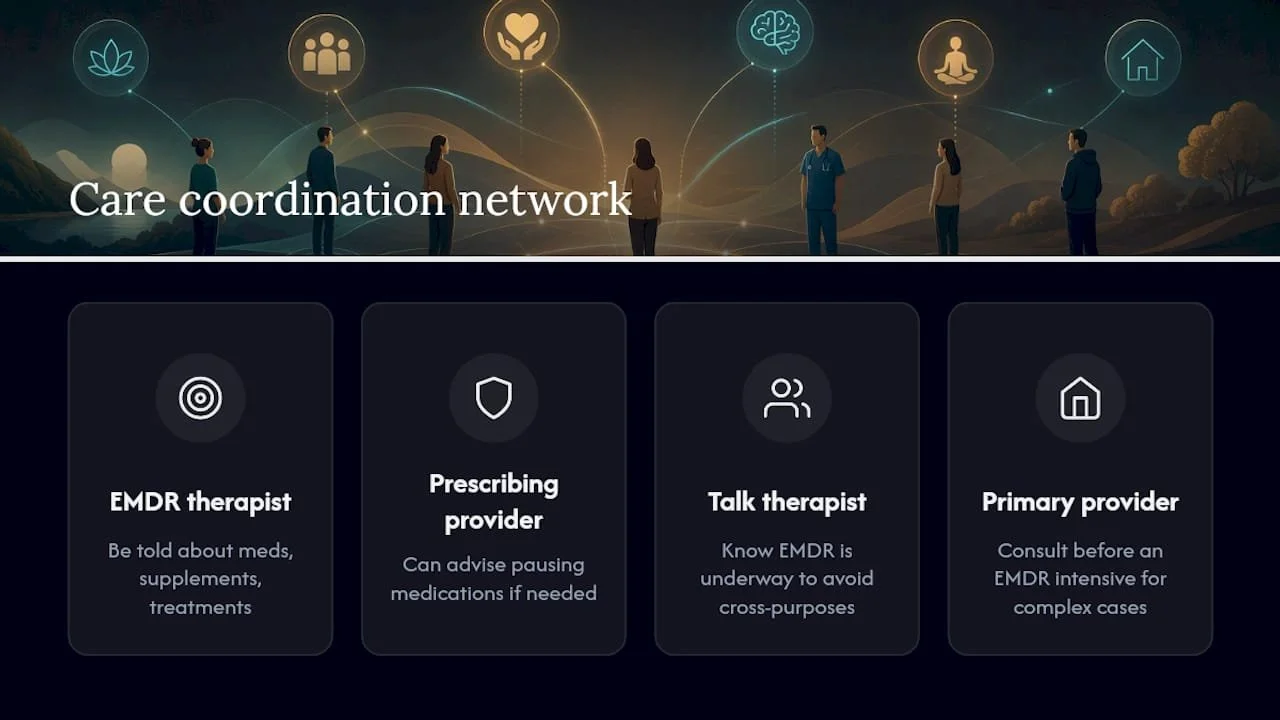
EMDR is often used alongside other care rather than instead of it. Many people continue psychiatric medication, ongoing talk therapy, or medical treatment for unrelated conditions while doing EMDR, and there's no need to pause those unless your prescribing provider tells you to.
What matters is communication. Let your EMDR therapist know about any medications, supplements, or other treatments you're using, since some can affect sleep or emotional regulation in ways that overlap with normal post-session reactions. If you're also seeing a separate talk therapist, it helps for both providers to know EMDR is underway so they're not working at cross purposes, especially if a difficult memory surfaces in one setting and needs follow-up in the other.
If you're managing a complex presentation, several conditions at once, or a significant medical issue, loop in your primary provider before starting an EMDR intensive in particular, since concentrated sessions can bring up more material in a shorter window than weekly sessions do.
What actually helps between sessions
Clients who do well with EMDR aftercare tend to build a few small habits rather than white-knuckling through the week. A soft landing after a session, even just an hour with nothing demanded of you, tends to matter more than any single technique.
Three habits worth trying: a timed 10-minute journal entry the evening of your session, a short grounding walk the next morning, and a three-minute Calm Place visualization before bed. None of these fix anything by themselves, but processing that feels uncomfortable is often a sign of movement, not failure. Patience helps. So does calling your therapist when something feels off.
— Juiced
How Alvarado Therapy supports safe EMDR integration
Alvarado Therapy offers individual EMDR sessions alongside EMDR Intensives for clients who want concentrated, faster-paced processing with built-in aftercare pacing. The practice provides bilingual, trauma-informed care in English and Spanish, with online booking for clients in certain states.

A follow-up or check-in visit focused on aftercare typically means reviewing what came up since your last session, checking whether resourcing tools like the Calm Place or Container are working for you, and adjusting the pace of future sessions if the material has felt heavier than expected.
Standard weekly individual EMDR therapy for ongoing pacing and support.
EMDR Intensives for clients who want concentrated progress with structured check-ins.
Bilingual care for clients who want culturally responsive support.
If you're already in EMDR elsewhere and want a consultation on pacing or aftercare, you can request a consultation or explore what to expect from working with the practice.
This article is general information, not a substitute for advice from a qualified doctor. Consult a qualified healthcare professional about your own circumstances before acting on anything here.
Sources
FAQ
What are the signs that EMDR is not working?
EMDR isn't working as expected if your distress keeps climbing rather than trending down by mid-week, or if you feel no shift at all across several sessions. The National Center for PTSD's decision aid notes that persistent intensity that doesn't ease, or reactions that stop you from functioning at work or home, are reasons to talk to your therapist about adjusting the approach.
What should you not do after an EMDR session?
Avoid alcohol, recreational drugs, and major decisions in the first day or two after a session, since your nervous system is still settling. It also helps to skip intense or triggering media and postpone high-stakes conversations until you feel steadier.
What are the potential side effects of EMDR therapy?
Temporary fatigue, vivid dreams, and emotional shifts like tearfulness or irritability are common and usually pass within a few days. According to the National Center for PTSD, these reactions are typically brief, and you should contact your therapist if they prevent you from eating, sleeping, or functioning normally.
How effective is EMDR for complex PTSD?
A meta-analysis of studies covering EMDR for PTSD found sustained benefits for PTSD symptoms, anxiety, and depression, with a standard course running about three months of weekly sessions. Complex presentations often need a longer or more tailored course, so success depends on the individual case and is best discussed with your own clinician.
If you're in crisis right now, what should you do?
If you're in immediate danger or having thoughts of harming yourself, call 988 or your local emergency number right away. This applies whether or not you're currently in EMDR therapy, and reaching out is always the right move.
