
Complete Guide to EMDR’s Role in Grief Healing

More than 7 percent of american adults struggle with complicated grief following a major loss, making emotional recovery a challenge for millions. These experiences often linger, affecting daily life and relationships in ways that talking alone cannot always resolve. EMDR therapy offers a new path, using structured eye movement techniques to help americans process their grief at its source. Discover how this clinically proven approach creates real change for those longing for genuine healing.
Table of Contents
Key Takeaways
| Point | Details |
|---|---|
| EMDR Therapy for Grief Healing | EMDR therapy effectively processes grief by targeting traumatic memories, using bilateral stimulation to facilitate healing at a neurological level. |
| Comparison with Traditional Therapy | Unlike traditional therapy, EMDR focuses on direct trauma resolution and neurological reprocessing rather than verbal expression and emotional validation. |
| Benefits and Challenges | While EMDR offers significant therapeutic benefits, challenges include potential blocked emotional processing and the necessity for experienced therapists to guide complex grief scenarios. |
| Cultural Sensitivity | Effective EMDR practice requires cultural humility, recognizing the unique individual and cultural factors that shape each person's grief experience. |
Defining EMDR Therapy for Grief Healing
Eye Movement Desensitization and Reprocessing (EMDR) therapy offers a powerful, structured approach to healing grief by targeting the deep emotional wounds that accompany loss. According to EMDRIA, this evidence-based therapy facilitates adaptive mourning by processing complicated emotional memories associated with loss.
At its core, EMDR therapy operates through an innovative eight-phase psychotherapy protocol guided by the Adaptive Information Processing model. Unlike traditional talk therapy, EMDR helps individuals reprocess traumatic or stuck memories through bilateral stimulation techniques, typically involving guided eye movements. These techniques allow individuals to revisit painful memories in a safe, controlled environment, gradually reducing their emotional intensity and transforming their relationship with grief.
The therapeutic approach specifically targets how grief memories are stored in the brain, helping clients move from feeling emotionally overwhelmed to developing more adaptive inner representations of their loss. Academic Research suggests that EMDR can be particularly effective in processing obstacles that complicate mourning, ultimately supporting individuals in forming healthier attachments to memories of their loved ones.
Key components of EMDR for grief healing include:
Identifying and processing traumatic grief memories
Reducing emotional distress associated with loss
Facilitating positive memory formation
Supporting adaptive emotional processing
Helping clients integrate their grief experience
By addressing grief at a neurological level, EMDR offers a compassionate, structured pathway for healing that goes beyond traditional counseling approaches. It recognizes that grief is not a linear process but a deeply personal journey of emotional transformation.

How EMDR Works to Process Grief
EMDR therapy provides a systematic approach to processing grief by addressing the complex emotional landscape of loss. PubMed Research reveals that this therapeutic method focuses on processing past memories, current emotional triggers, and future anxieties related to prolonged grief, offering a comprehensive healing framework.
The core mechanism of EMDR grief processing involves eight distinct phases that help individuals reframe and integrate traumatic loss experiences. During these phases, clients engage in bilateral stimulation techniques, typically through guided eye movements, which help the brain reprocess and desensitize painful memories. Unlike traditional talk therapy, this approach directly targets how grief memories are stored neurologically, allowing individuals to gradually reduce emotional intensity and develop more adaptive responses to loss.
Academic Researchdemonstrates that EMDR addresses the traumatic impact of loss by systematically working through distressing memories and emotional triggers. The therapy promotes adaptive mourning by helping individuals transform maladaptive memory networks, ultimately supporting a more constructive relationship with grief.
Key processing techniques in EMDR grief therapy include:
Identifying and targeting specific grief-related traumatic memories
Reducing emotional distress associated with loss
Reprocessing negative beliefs formed through grief
Developing positive coping strategies
Creating new, healthier neurological pathways for emotional healing
Through this structured yet compassionate approach, EMDR empowers individuals to move beyond their grief, transforming painful experiences into opportunities for personal growth and emotional resilience. It recognizes grief as a complex, nonlinear journey that requires nuanced, individualized support.
For more insights into healing approaches, explore our guide on therapy for grief recovery.
Comparing EMDR and Traditional Grief Therapy
Traditional grief therapy and EMDR represent two distinct approaches to processing emotional loss, each with unique methodologies and therapeutic goals. Academic Research highlights that EMDR offers an integrative treatment model that fundamentally differs from conventional grief counseling by directly targeting distressing memories and present emotional triggers.
While traditional grief therapies often focus on talking through emotional experiences and providing support, EMDR takes a more neurologically targeted approach. Bilateral stimulation techniques in EMDR help individuals reprocess traumatic memories at a neural level, allowing for more profound emotional healing. Traditional methods typically emphasize verbal expression and emotional validation, whereas EMDR seeks to rewire how traumatic memories are stored and interpreted in the brain.
Academic Researchreveals that EMDR can effectively integrate the Dual Process Model of Grief, which involves oscillating between loss-oriented and restoration-oriented coping strategies. This structured approach provides a more dynamic framework compared to traditional grief therapies that often follow a more linear progression of emotional processing.
Key differences between EMDR and traditional grief therapy include:
Neurological focus vs. verbal processing
Active memory reprocessing vs. emotional exploration
Structured eight-phase approach vs. open-ended counseling
Direct trauma resolution vs. gradual emotional adaptation
Emphasis on neural rewiring vs. emotional support
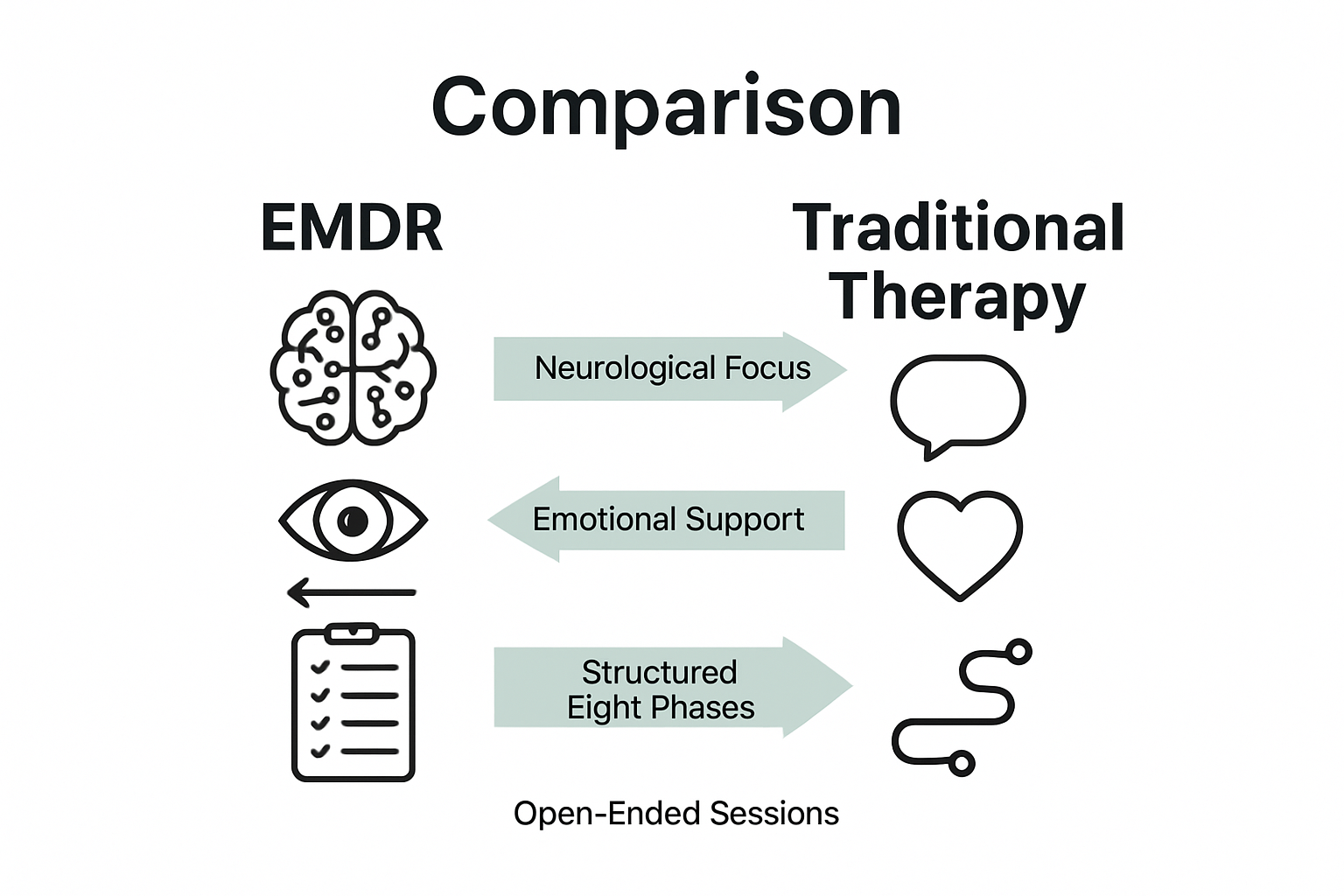
Ultimately, EMDR offers a more targeted, scientifically grounded approach to grief healing. For those seeking a comprehensive understanding of modern grief therapy approaches, explore our guide on grief therapy methods.
Key Benefits and Challenges of EMDR for Grief
EMDR therapy offers a powerful approach to grief healing, combining significant therapeutic benefits with unique challenges. Academic Research reveals that this method can effectively address complicated grief by processing distressing memories and facilitating adaptive mourning, while also acknowledging the nuanced complexities of emotional healing.
The primary benefits of EMDR for grief include its ability to target deep-seated emotional trauma at a neurological level. Neurological reprocessing allows individuals to transform painful memories, reducing their emotional intensity and creating space for healing. Unlike traditional therapeutic approaches, EMDR helps clients move beyond verbal processing, enabling them to directly address the neural pathways associated with traumatic loss and emotional pain.
Academic Research highlights an integrative treatment model that addresses not just past memories, but also present triggers and future emotional templates. However, this comprehensive approach is not without challenges. Potential obstacles may include:
Blocked emotional processing
Difficulty accessing underlying past traumas
Intense emotional responses during therapy
Varying individual neurological responses
Complex grief scenarios requiring specialized intervention
These challenges underscore the importance of working with experienced, trauma-informed therapists who can navigate the intricate landscape of grief processing. While EMDR offers profound healing potential, it requires careful case conceptualization and personalized therapeutic strategies.
For those interested in exploring comprehensive healing approaches, our guide on EMDR therapy offers deeper insights into this transformative therapeutic method.
Cultural and Individual Considerations in EMDR
Cultural sensitivity lies at the heart of effective EMDR therapy, recognizing that grief is a deeply personal experience shaped by individual and cultural backgrounds. Academic Research emphasizes the importance of understanding how different cultural contexts influence mourning processes, highlighting the need for a nuanced, personalized approach to grief healing.
The Dual Process Model of Grief, integrated into EMDR therapy, acknowledges the complex ways individuals navigate loss across diverse cultural landscapes. Each person's grief journey is unique, influenced by family traditions, cultural beliefs, spiritual practices, and personal coping mechanisms. This means that therapeutic approaches must be flexible, recognizing that mourning is not a one-size-fits-all experience but a deeply individual process of emotional transformation.
Academic Research underscores the critical importance of understanding an individual's specific background when conceptualizing grief treatment. Key cultural and individual considerations in EMDR include:
Respecting diverse cultural mourning rituals
Acknowledging different emotional expression patterns
Understanding family and community grief dynamics
Recognizing variations in trauma response
Adapting therapeutic approaches to individual needs
Therapists must approach EMDR with cultural humility, creating a safe space that honors each client's unique emotional landscape. Language, family structure, historical trauma, and personal beliefs all play crucial roles in how individuals process and heal from loss.
For those seeking a comprehensive understanding of trauma-informed therapeutic approaches, explore our step-by-step guide to trauma recovery.
Begin Your Healing Journey with Expert EMDR Support for Grief
Grieving the loss of a loved one can be overwhelming when painful memories and emotions feel stuck. This article highlights how EMDR therapy targets traumatic grief memories and helps reprocess emotional pain at a neurological level. If the challenge of complicated grief is holding you back from finding peace and emotional resilience, specialized trauma-informed care is essential. At Alvarado Therapy, our licensed therapists deliver compassionate, individualized EMDR therapy to help Californians transform grief and move forward with adaptive healing.

Discover the benefits of working with dedicated professionals by exploring our California — Meet Our Team — Alvarado Therapy. Take the next step in your journey by learning more about our services and how EMDR can support your unique grief process at Alvarado Therapy. Begin healing now with trusted care designed to meet your specific emotional and cultural needs.
Frequently Asked Questions
What is EMDR therapy and how does it help with grief healing?
EMDR (Eye Movement Desensitization and Reprocessing) therapy is an evidence-based approach that helps individuals process complicated emotional memories associated with loss, facilitating adaptive mourning and transforming one's relationship with grief.
How does EMDR differ from traditional grief therapy?
Unlike traditional grief therapy, which often relies on verbal processing and emotional exploration, EMDR utilizes bilateral stimulation techniques to target and reprocess traumatic memories at a neurological level, leading to potentially more profound emotional healing.
What are the key phases of EMDR therapy for grief?
EMDR therapy consists of eight distinct phases that guide individuals through identifying specific grief-related memories, reducing emotional distress, reprocessing negative beliefs, and developing healthier coping strategies.
What are some challenges individuals may face during EMDR therapy for grief?
Challenges can include blocked emotional processing, difficulty accessing past traumas, or intense emotional responses during therapy. It is important to work with an experienced, trauma-informed therapist to navigate these challenges effectively.
Recommended
Ready to see what’s possible?
It’s your time to heal in a transformative way.
