
Step-by-Step Guide to Finding Online Therapist in CA

Over 42 percent of american adults have reported symptoms of anxiety or depression in recent years, making mental health support more vital than ever. Finding the right therapist can feel complex, especially when considering the unique needs and diversity within the american experience. This guide breaks down a practical step by step approach to help you clarify your therapy goals, identify qualified online professionals, and choose a specialist who understands your challenges and background.
Table of Contents
Quick Summary
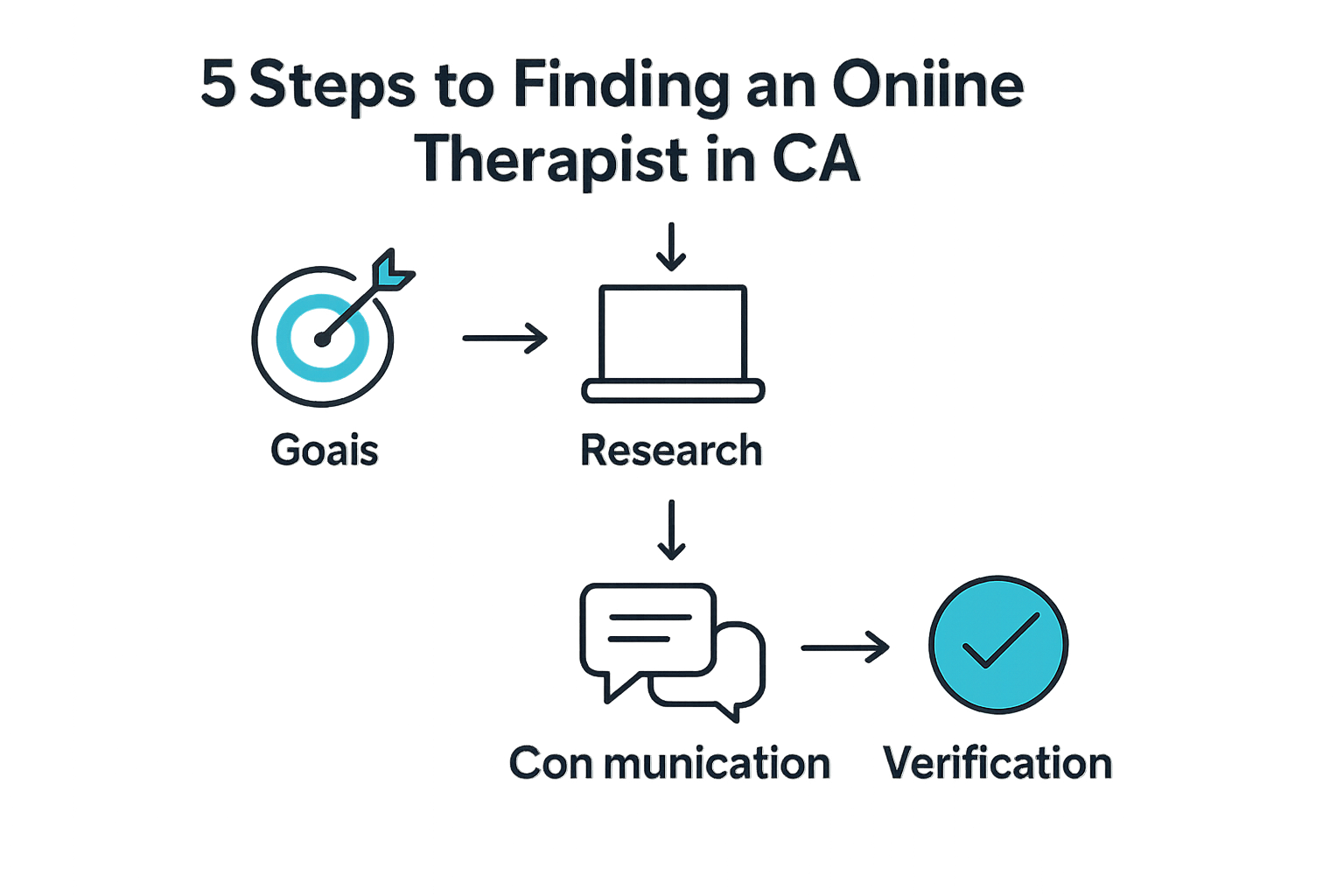
| Key Point | Explanation |
|---|---|
| 1. Define Clear Therapy Goals | Specific goals help you choose the right therapist to address your mental health needs effectively. Be as detailed as possible in your objectives. |
| 2. Research Therapist Credentials | Verify the professional licenses and specialties of potential therapists to ensure they fit your specific needs and therapy goals. |
| 3. Evaluate Communication Styles | Assess therapists during initial calls to ensure their communication resonates with you and respects your cultural background. |
| 4. Verify Licensing Status | Always confirm a therapist's valid license and check for any disciplinary actions before starting therapy for quality assurance. |
| 5. Schedule Initial Consultations | Use consultations to discuss your therapy goals, understand their treatment approach, and determine overall compatibility. |
Step 1: Clarify your therapy goals and preferences
Identifying your specific therapy goals is the crucial first step in finding the right online therapist in California. According to the Board of Behavioral Sciences, understanding your mental health needs helps you select the most appropriate therapeutic approach and treatment plan.
Start by conducting an honest self assessment of what you want to accomplish through therapy. Are you seeking support for anxiety management, processing past trauma, improving relationship dynamics, or addressing specific life transitions? Write down your primary objectives and any specific challenges you hope to work through. Mental Health America recommends creating a clear list of your emotional and psychological goals to help guide your therapist selection process.
Pro tip: Be as specific and detailed as possible when defining your therapy goals. Instead of a vague goal like "feel better," try articulating precise outcomes such as "develop healthier communication strategies" or "learn stress management techniques for work related anxiety." The more clarity you bring to your goals, the more effectively you can match with a therapist who specializes in your specific needs.
Once you have clarified your goals, you are ready to start researching potential therapists who align with your therapeutic objectives and personal preferences.
Step 2: Research qualified online therapists in California
Researching qualified online therapists in California requires a strategic approach to ensure you find a licensed professional who meets your specific mental health needs. The Board of Behavioral Sciences emphasizes the critical importance of verifying therapist credentials before starting treatment.
Begin your research by checking the California licensing board for therapist verification. Look for licensed clinical social workers (LCSW), licensed marriage and family therapists (LMFT), licensed professional clinical counselors (LPCC), or licensed psychologists who are authorized to provide online therapy in California. Mental Health America recommends using professional directories and verified online platforms that list therapists with their specific areas of expertise, educational background, and professional credentials.
Pro tip: Beyond basic licensing, investigate therapists specializing in your specific mental health concerns. Review their professional profiles, treatment approaches, and any additional certifications that align with your therapy goals. Check if they offer online sessions and have experience with telehealth platforms. Look for therapists who demonstrate cultural competence and have experience working with clients similar to your background and needs.
Once you have compiled a list of potential qualified therapists, you are ready to move forward with comparing their individual approaches and setting up initial consultations.

Step 3: Review credentials, specialties, and trauma expertise
The Board of Behavioral Sciences emphasizes the critical importance of thoroughly examining a therapist's professional background and specialized expertise. Reviewing credentials goes beyond simply confirming basic licensing it involves understanding the nuanced qualifications that make a therapist well suited to address your specific mental health needs.
Begin by investigating each potential therapist's educational background, professional certifications, and specialized training in trauma treatment. Mental Health America recommends carefully examining therapists' professional profiles to understand their specific areas of expertise. Look for additional certifications in trauma informed approaches such as EMDR, cognitive processing therapy, or specific modalities related to complex trauma recovery. Pay close attention to their experience working with clients who have similar backgrounds or challenges to your own.
Pro tip: Beyond formal credentials, consider the therapist's approach to cultural competence and their demonstrated understanding of intersectional trauma experiences. Search for professionals who show evidence of ongoing professional development and a nuanced understanding of how trauma impacts different communities. Verify their licensing status through the California Board of Behavioral Sciences and look for therapists who have additional specialized training in trauma recovery techniques.
By conducting a comprehensive review of credentials and specialties, you will be well positioned to select a therapist who can provide targeted and effective support for your healing journey.
Step 4: Evaluate communication styles and cultural responsiveness
The Board of Behavioral Sciences underscores the critical importance of finding a therapist whose communication approach resonates with your personal needs and cultural background. Evaluating communication styles is more than understanding professional language it involves identifying a therapeutic relationship where you feel genuinely heard, respected, and understood.
Mental Health America recommends conducting initial consultations or brief screening calls to assess a therapist's communication style. During these interactions, pay attention to how comfortable you feel expressing yourself, the therapist's listening skills, and their ability to create a safe emotional space. Look for professionals who demonstrate active listening, validate your experiences, and show genuine empathy. Consider whether they use language that feels inclusive, affirming, and sensitive to your cultural identity, personal experiences, and unique background.
Pro tip: Trust your intuition during initial interactions. A culturally responsive therapist will not only acknowledge your background but also demonstrate a nuanced understanding of how cultural experiences shape mental health. They should be able to discuss intersectionality, systemic challenges, and the impact of cultural trauma with depth and sensitivity. If something feels off during initial conversations, it is perfectly acceptable to continue searching for a therapist who truly understands and respects your complete lived experience.
Carefully evaluating communication styles and cultural responsiveness will help you find a therapeutic partner who can support your healing journey with authentic understanding and genuine respect.
Step 5: Verify licensing and schedule a consultation
The Board of Behavioral Sciences provides critical guidance on the importance of thoroughly verifying a therapist's licensing status before beginning treatment. Confirming professional credentials is an essential step in ensuring you receive quality mental health care from a qualified professional who meets California state requirements.
Mental Health America recommends using the California Board of Behavioral Sciences website to validate a therapist's active license and check for any potential disciplinary actions. During this verification process, gather the therapist's full name and license number. Check their current registration status, confirm the type of license they hold (such as LMFT, LCSW, or LPCC), and verify that their license is in good standing with no outstanding complaints or restrictions.
Pro tip: When scheduling your initial consultation, prepare a list of specific questions about the therapist's approach, experience with your particular mental health concerns, and their availability for online sessions. Most reputable therapists offer a brief preliminary consultation to assess mutual fit. Use this opportunity to discuss your therapy goals, understand their treatment philosophy, and determine whether their communication style and expertise align with your needs.
By meticulously verifying licensing credentials and scheduling a thoughtful initial consultation, you will be taking proactive steps toward finding a supportive and professionally qualified therapist who can guide your healing journey.
Find a Compassionate Online Therapist Who Understands Your Journey in California
Struggling to identify the right online therapist who truly resonates with your trauma and mental health goals can feel overwhelming. This guide highlights the importance of clear therapy goals, verifying credentials, and securing culturally responsive care. At Alvarado Therapy, we specialize in trauma-informed approaches like EMDR therapy designed to meet your unique needs. Whether you feel stuck managing anxiety, grief, or complex trauma, our licensed therapists are here to support you with empathy and expertise.
Take control of your healing journey today by connecting with a skilled professional who aligns with your goals. Explore our experienced California therapists on the California — Meet Our Team — Alvarado Therapy page or find flexible options through our Online — Meet Our Team — Alvarado Therapy team. Visit Alvarado Therapy now for trusted support and easy online booking so you can start healing confidently and securely.
Frequently Asked Questions
How do I clarify my therapy goals before finding an online therapist in California?
Start by conducting an honest self-assessment of what you want to achieve through therapy. Write down specific objectives related to your mental health, such as anxiety management or improving relationship dynamics, to guide your selection process.
What should I look for when researching online therapists in California?
Focus on verifying therapist credentials, including their licenses and specialties that align with your mental health needs. Compile a list of qualified professionals from verified online platforms that detail their educational backgrounds and therapeutic approaches.
How do I evaluate a therapist's credentials and trauma expertise?
Investigate each therapist's educational background, professional certifications, and specialized training in trauma treatment. Look for qualifications in approaches such as EMDR or cognitive processing therapy that directly relate to your experiences.
How can I assess a therapist's communication style and cultural responsiveness?
Conduct initial consultations to gauge how comfortable you feel with the therapist's communication style. Pay attention to their listening skills and whether they demonstrate understanding of your cultural background during conversations.
What steps should I take to verify a therapist’s licensing before starting therapy?
Use the relevant state licensing board's website to check the active status of a therapist's license and ensure it is in good standing. Gather their full name and license number to confirm there are no outstanding complaints or restrictions before proceeding with treatment.
How do I prepare for an initial consultation with a potential therapist?
Create a list of specific questions regarding the therapist's approach, experience with your mental health concerns, and availability for online sessions. This preparation will help you assess whether their expertise aligns with your therapy goals during the consultation.
Recommended
Ready to see what’s possible?
It’s your time to heal in a transformative way.
