
EMDR Therapy in PTSD Recovery: Lasting Change and Hope

Over eight million American adults live with PTSD each year, many still searching for effective ways to reclaim their lives. The lingering effects of trauma can disrupt relationships, work, and even daily routines, leaving countless individuals feeling stuck. Eye Movement Desensitization and Reprocessing therapy, commonly known as EMDR, offers a clinically proven path to healing that stands apart from standard treatments. Exploring how EMDR can transform trauma recovery reveals new hope for countless American families.
Table of Contents
Key Takeaways
| Point | Details |
|---|---|
| EMDR Therapy Overview | EMDR is a structured psychotherapy method for processing traumatic memories using bilateral sensory stimulation. |
| Mechanism of Action | The therapy facilitates memory reconsolidation by engaging the brain’s natural processing systems, helping to desensitize traumatic experiences. |
| Benefits of EMDR | Patients often experience faster symptom relief and improved emotional regulation compared to traditional talk therapies. |
| Importance of Qualified Professionals | Selecting a trained EMDR therapist is critical for effective treatment; these professionals should be licensed and experienced in trauma-informed care. |
EMDR Therapy for PTSD: What It Is
Eye Movement Desensitization and Reprocessing (EMDR) therapy represents a groundbreaking approach to healing psychological trauma. Developed as a specialized therapeutic technique, EMDR focuses on helping individuals process and integrate traumatic memories that continue to cause emotional distress.
At its core, EMDR is a structured psychotherapy method that enables patients to reprocess traumatic memories through bilateral sensory stimulation. The treatment involves guiding patients to recall distressing images while simultaneously experiencing side-to-side eye movements or other forms of bilateral stimulation. This unique approach helps the brain reframe and desensitize traumatic experiences, reducing their ongoing psychological impact.
The therapeutic process typically involves eight distinct phases designed to support comprehensive trauma healing. These stages include history taking, preparation, assessment, desensitization, installation, body scan, closure, and reevaluation. Each phase is carefully structured to help patients safely navigate their traumatic memories and ultimately reduce the emotional charge associated with those experiences.
Key characteristics of EMDR therapy include its ability to produce faster results compared to traditional talk therapies, its focus on the patient’s internal healing mechanisms, and its effectiveness across various types of psychological trauma. By helping the brain reprocess traumatic memories more adaptively, EMDR offers hope for individuals struggling with PTSD, enabling them to move beyond their past experiences and reclaim emotional wellness.
How EMDR Works to Heal Trauma
EMDR therapy operates through a sophisticated neurological mechanism that fundamentally transforms how traumatic memories are processed and stored in the brain. Neurological research reveals that bilateral stimulation activates specific neural pathways that help individuals reprocess and integrate traumatic experiences more adaptively.

The therapy’s core mechanism involves guiding patients through a structured process of memory reconsolidation. During EMDR sessions, patients are asked to recall distressing memories while simultaneously experiencing bilateral sensory input, typically through side-to-side eye movements. This unique approach appears to mimic the brain’s natural information processing systems, helping to desensitize and reframe traumatic memories by reducing their emotional intensity.
Contemporary neuroscience studies suggest that EMDR facilitates profound neurological changes within the brain’s memory and emotional processing centers. Neuroimaging research indicates that the therapy can normalize hyperactive limbic structures and enhance neural connectivity, which contributes to improved emotional regulation and reduced physiological stress responses.
The therapeutic process ultimately helps patients transform traumatic memories from overwhelming, fragmented experiences into more manageable, integrated narratives. By systematically addressing how traumatic memories are stored and interpreted, EMDR empowers individuals to develop new, healthier neurological patterns that support emotional healing and psychological resilience.
Key Benefits of EMDR in Recovery
EMDR therapy offers profound therapeutic benefits for individuals struggling with psychological trauma, providing a targeted approach to healing that goes beyond traditional treatment methods. Comprehensive meta-analyses have demonstrated significant reductions in symptoms of PTSD, depression, and anxiety through this innovative therapeutic technique.
One of the most transformative aspects of EMDR is its ability to help patients rapidly process and integrate traumatic memories. Unlike traditional talk therapies that can take years to produce meaningful change, EMDR can help individuals experience substantial emotional relief in a relatively short period. Patients often report increased self-awareness, improved emotional regulation, and a newfound sense of personal empowerment as they work through deeply rooted traumatic experiences.
Systematic reviews consistently show that EMDR therapy leads to meaningful improvements in overall psychological functioning, with patients experiencing enhanced quality of life and reduced psychological distress. The therapy’s unique approach allows individuals to reframe traumatic memories, transforming them from overwhelming emotional burdens into manageable life experiences that no longer trigger intense negative responses.
The benefits of EMDR extend beyond symptom reduction, offering a holistic path to psychological recovery. By directly addressing the neurological impact of trauma, the therapy helps patients develop more adaptive coping mechanisms, rebuild emotional resilience, and create new, healthier narrative frameworks for understanding their life experiences. This comprehensive approach makes EMDR a powerful tool for those seeking lasting emotional healing and personal transformation.
Comparing EMDR to Traditional Talk Therapy
Traditional talk therapy and EMDR represent fundamentally different approaches to psychological healing. Systematic reviews of randomized controlled trials indicate that EMDR may offer significant advantages in treating trauma-related symptoms, particularly in terms of treatment speed and symptom reduction.
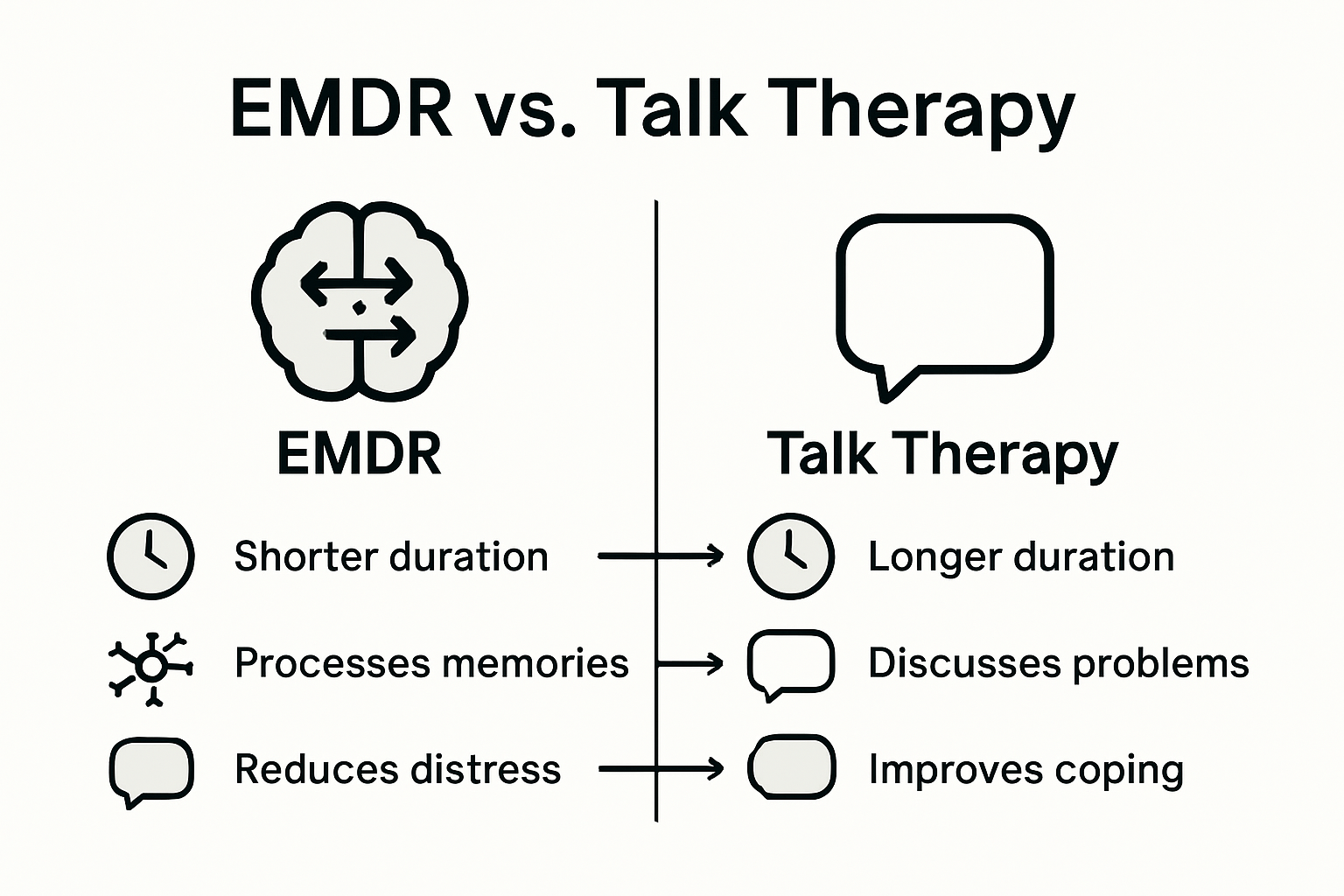
In traditional talk therapy, patients typically spend extensive time verbally processing traumatic experiences, often requiring multiple years of consistent sessions to achieve meaningful healing. Conversely, EMDR takes a more direct neurological approach, allowing patients to process traumatic memories without extensive verbal recounting. This method can be less emotionally taxing, as individuals are not required to provide detailed descriptions of their most painful experiences.
Clinical research suggests that EMDR tends to produce results much faster than conventional therapeutic methods, with patients experiencing significant symptom reduction in fewer sessions. Where traditional talk therapy might require months or years of weekly discussions, EMDR can often help individuals reprocess traumatic memories more efficiently, reducing psychological distress in a shorter timeframe.
The key distinction lies in the therapeutic mechanism. Traditional talk therapy relies primarily on verbal processing and cognitive understanding, while EMDR directly targets the neurological storage and emotional impact of traumatic memories. By engaging the brain’s natural healing mechanisms through bilateral stimulation, EMDR offers a more targeted, neurologically informed approach to trauma recovery that can provide faster relief and more comprehensive emotional transformation.
Safety, Suitability, and Finding the Right Therapist
Safety is paramount when considering EMDR therapy, and finding a qualified professional requires careful evaluation. Treatment typically involves weekly sessions lasting up to 90 minutes over approximately three months, making the selection of a licensed and experienced therapist critical for successful trauma recovery.
Not every individual is an ideal candidate for EMDR therapy. While highly effective for trauma-related conditions, the treatment may not be suitable for all psychological challenges. Potential patients should undergo a comprehensive initial assessment to determine whether EMDR aligns with their specific mental health needs. Factors such as current psychological stability, ability to tolerate emotional processing, and specific trauma history play significant roles in determining treatment appropriateness.
Mental health professionals trained in EMDR require specialized certification and ongoing professional development, ensuring they can safely guide patients through the therapeutic process. When searching for an EMDR therapist, individuals should prioritize professionals who demonstrate:- Advanced training in EMDR techniques- Experience working with similar trauma backgrounds- Current licensure in mental health counseling- Demonstrated expertise in trauma-informed care- Compassionate and patient-centered approach
The journey toward healing involves more than technical expertise; it requires a deep sense of trust and safety between therapist and patient. A skilled EMDR practitioner creates a supportive environment that allows patients to process traumatic memories without feeling overwhelmed, guiding them gently through each stage of emotional recovery while maintaining professional boundaries and individual psychological well-being.
Discover Lasting Healing with EMDR Therapy at Alvarado Therapy
When post-traumatic stress disorder causes emotional distress and leaves you feeling stuck in painful memories, effective treatment can transform your life. EMDR therapy helps reprocess traumatic experiences and reduce PTSD symptoms faster than traditional talk therapy. If you are seeking hope and lasting change, our licensed therapists in California provide compassionate, trauma-informed care designed to empower your healing journey.

Start your recovery today by connecting with our skilled team offering EMDR therapy in-person at Ventura CA (in person) — Meet Our Team — Alvarado Therapy or conveniently online through Online in California — Meet Our Team — Alvarado Therapy. Visit Alvarado Therapy now to learn how trauma-sensitive EMDR can help you reclaim emotional wellness and empower yourself with resilience.
Frequently Asked Questions
What is EMDR therapy and how does it work?
EMDR therapy, or Eye Movement Desensitization and Reprocessing, is a structured psychotherapy method designed to help individuals process and integrate traumatic memories. It utilizes bilateral sensory stimulation, such as side-to-side eye movements, to reduce the emotional intensity of distressing memories and facilitate healing.
How long does EMDR therapy typically last?
EMDR therapy usually involves weekly sessions lasting up to 90 minutes over approximately three months. The exact duration can vary depending on individual needs and progress in therapy.
Is EMDR therapy effective for all types of trauma?
While EMDR therapy is highly effective for many trauma-related conditions, it may not be suitable for everyone. A comprehensive initial assessment by a qualified professional is essential to determine if it aligns with an individual’s specific mental health needs.
How does EMDR therapy compare to traditional talk therapy?
EMDR therapy differs from traditional talk therapy by focusing on the neurological processing of traumatic memories rather than extensive verbal recounting. It often produces faster results in symptom reduction and emotional healing compared to conventional therapeutic methods.
