

EMDR shows real, if still emerging, promise for chronic pain, especially when trauma, fear of movement, or pain-related avoidance keeps the pain cycle spinning. Pilot trials report meaningful drops in pain intensity and better mood and function, but sample sizes are small and results vary person to person. The honest next step is talking with a clinician about whether EMDR fits your specific case, then folding it into a broader pain care plan rather than treating it as a stand-alone fix.
TL;DR:
EMDR shows promise primarily for individuals with chronic pain linked to trauma, PTSD, or pain-related avoidance, especially with a trauma history or high catastrophizing.
Pilot studies indicate short-term pain reduction and mood improvement, but small sample sizes and inconsistent protocols mean more research is needed.
EMDR should be integrated with other treatments like physical therapy or medication and is not a standalone solution for pain management.
Typical EMDR pain protocols involve 10-12 sessions focusing on trauma and body sensations, with online options showing preliminary success.
Proper screening for medical and psychological factors is crucial before starting EMDR, and success involves gradual progress rather than immediate relief.
Table of Contents
What Is EMDR for Chronic Pain and How Does It Work?
EMDR, or Eye Movement Desensitization and Reprocessing, was built to help the brain reprocess stuck, distressing memories. During a session, a therapist guides the patient through bilateral stimulation, usually side-to-side eye movements, taps, or tones, while the patient briefly focuses on a distressing memory or sensation. That dual-attention state seems to help the nervous system file the memory away as past instead of an ongoing threat.
Pain-focused EMDR borrows that structure but changes the target. Instead of only processing a traumatic event, the therapist directs attention toward the memories, meanings, and body sensations tied to the pain itself, including the fear of movement clinicians call kinesiophobia. Pain-focused protocols conventionally adapt the standard eight-phase EMDR model, sometimes using shortened or condensed session formats.
Common targets in pain-focused work include:
The original injury or accident that triggered the pain
Frightening medical procedures, surgeries, or diagnoses
Phantom or residual limb sensations after amputation
Recurring thoughts like "this pain will never end" or "my body is broken"
What Does the Evidence Actually Say About EMDR and Pain?
The clinical picture is encouraging but not settled. A randomized controlled pilot study found that adding a standardized EMDR pain protocol to treatment-as-usual reduced pain intensity and improved quality of life and mood compared with treatment-as-usual alone, and many of those gains held up at follow-up months later.
What the numbers actually show: The strongest EMDR-for-pain trials to date are pilot-scale, meaning they involve relatively small groups and test feasibility before larger studies, which means findings are preliminary but promising.
A 2024 controlled study testing group EMDR, which combined the therapy with physical activation and pain education, reported feasible and promising outcomes, suggesting group formats might widen access. More broadly, a 2025 systematic review concluded that EMDR shows promise for chronic pain and related mental health symptoms, but flagged real limits:
Protocols vary widely between studies, making direct comparisons difficult
Most trials use small samples, often a few dozen participants
Follow-up periods tend to be short, so long-term durability is still unclear
Reviewers consistently call for larger, better-controlled randomized trials
CBT and acceptance and commitment therapy remain the best-supported psychological treatments for chronic pain overall. EMDR is a newer entrant with a growing but still developing evidence base.
Who Actually Benefits From EMDR for Pain?
EMDR tends to help most when trauma and pain are tangled together, not every person with chronic pain.
Trauma history or PTSD. People with a clear traumatic event connected to their pain, or a formal PTSD diagnosis alongside pain, often see the clearest gains.
High pain catastrophizing or avoidance. If fear of movement or catastrophic thinking about pain is driving disability, EMDR's trauma-processing approach has a direct target to work with.
A completed medical and psychological screening. Clinicians typically check for PTSD symptoms, substance use, undiagnosed medical causes of pain, and any suicidal ideation before starting.
A clear sequencing plan. Some patients need pain stabilized first, others need trauma addressed first, and many do best with an integrated approach that treats both at once, a decision VA guidance frames as a case-by-case clinical judgment.
What Happens During an EMDR Pain Protocol?
EMDR still follows its familiar phase structure: history-taking and stabilization, target identification, processing through bilateral stimulation, and closure with grounding. What changes in pain work is the emphasis. More time often goes into building tolerance for body sensations before diving into memory processing, since pain itself can feel threatening to approach directly.
Session formats vary:
Standard protocols often run 10 to 12 sessions, once or twice weekly
Shortened, "pain-specific" protocols exist for some patients needing a faster course
Online delivery has shown preliminary acceptability in pilot trials, with medium-to-large reductions in pain severity and catastrophizing reported in small samples
Temporary emotional sensitivity between sessions is common and expected, not a sign something has gone wrong. Success generally looks like gradual, not overnight, improvement: less pain interference with daily activities, reduced fear of movement, and a calmer relationship with flare-ups. A closer look at what the EMDR session process actually involves can help set expectations before the first appointment.
Pro Tip: Track your pain and mood on a simple 0 to 10 scale before starting EMDR. It gives you and your therapist a concrete baseline to measure whether the protocol is actually moving the needle, rather than relying on memory alone.
How Does EMDR Fit Into a Broader Pain Management Plan?
EMDR works best as one piece of a larger plan, not a replacement for physical therapy, medication, or CBT. A patient might do physical therapy to rebuild movement confidence, see a physician for medication management, and use EMDR to process the fear and trauma that keep them from fully engaging in rehab. Practitioners generally see EMDR succeed when patients stay connected to their other supports rather than dropping them to pursue EMDR alone.
Coordination matters, especially around medications. Clinicians should monitor opioid or benzodiazepine tapers closely during trauma-focused work, since withdrawal symptoms can complicate processing sessions.
Before starting, it helps to:
Share your full medication list and any planned changes with every provider involved
Set shared goals across your EMDR therapist, physical therapist, and physician
Expect a gradual pace rather than instant relief
Certain issues are red flags that need attention first: unmanaged substance use, unstable mood or suicidal ideation, and uncontrolled medical conditions driving the pain. Those need to be addressed, or at least stabilized, before EMDR processing goes deep.
How Alvarado Therapy Approaches EMDR for Chronic Pain
Some trauma-informed therapy practices treat chronic pain as a case where trauma and physical symptoms often reinforce each other. Intake typically starts with a full screening for trauma history, mood, and coordination needs with medical providers, since pain rarely improves in isolation. From there, clinicians build a plan that may include standard EMDR, EMDR intensives, or bilingual English-Spanish sessions depending on what fits the person's history and pace. The goal throughout is safety first: clinicians trained in trauma-informed care, working alongside a patient's existing medical team rather than replacing it.
— Juiced
Starting EMDR for Chronic Pain With Alvarado Therapy
If the evidence above has you considering EMDR, the practical question is where to start. Alvarado Therapy offers online EMDR therapy across California and New York, including EMDR intensives for people who want a condensed, focused course rather than a slower weekly schedule.

A first consultation is where the screening happens: trauma history, current pain management, medications, and any coordination needed with your physician or physical therapist. Alvarado Therapy also treats co-occurring PTSD alongside pain through its dedicated trauma and complex trauma services, and sessions are available in both English and Spanish. If you are dealing with pain that feels tangled up with a past injury, accident, or medical trauma, the next concrete step is booking a consultation to talk through whether EMDR fits your situation before committing to a full course.
Where to Read the Original Research
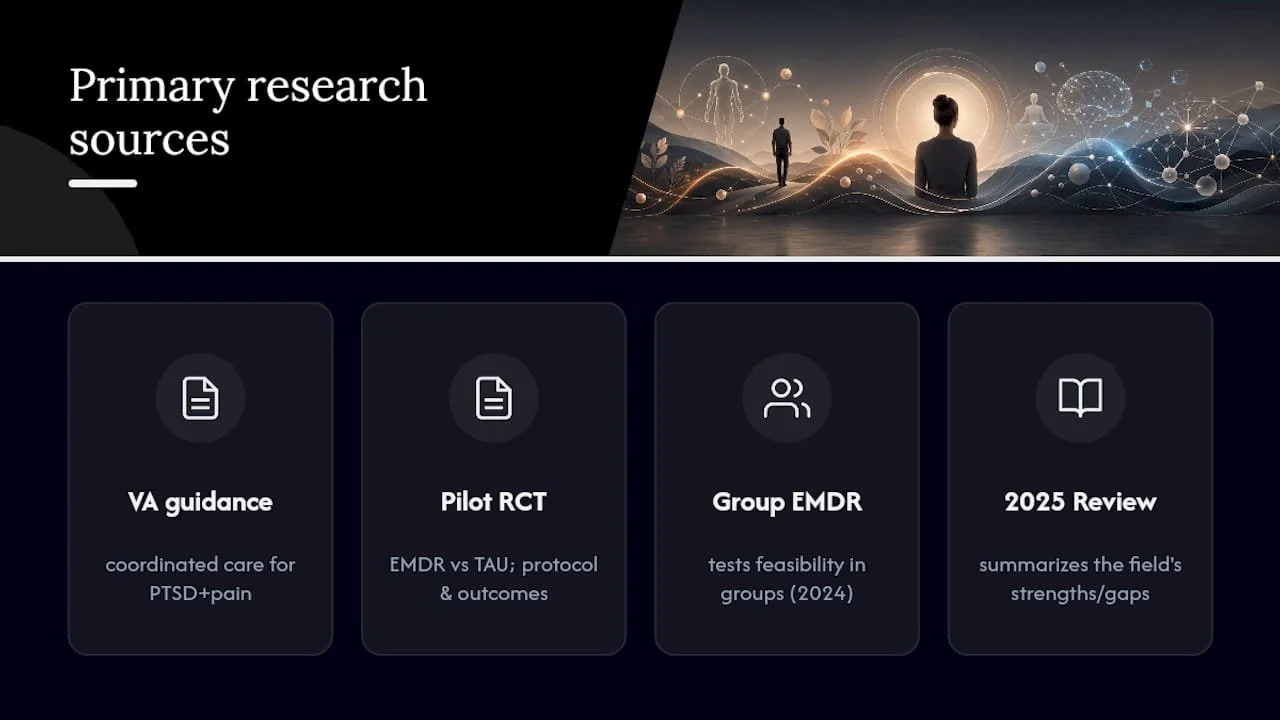
For readers who want to check the underlying evidence directly: the VA National Center for PTSD guidance covers coordinated care for co-occurring PTSD and pain; the pilot RCT on EMDR versus treatment-as-usual details the standardized protocol and outcomes; the 2024 group EMDR study tests feasibility in group formats; and the 2025 systematic review summarizes the field's current strengths and gaps.
This article is general information, not a substitute for advice from a qualified doctor. Consult a qualified healthcare professional about your own circumstances before acting on anything here.
Sources
Group eye movement desensitization and reprocessing (EMDR) in chronic pain patients
Treatment of co-occurring PTSD and chronic pain — VA National Center for PTSD
Eye Movement Desensitization and Reprocessing for Chronic Pain: A Systematic Review
Recommended
Are you happy with the article?
You'll earn a backlink credit for your feedback!
