

Most EMDR intensives run 3 to 6 hours a day for 2 to 5 consecutive days, though some 10-day programs use two shorter sessions daily instead of one long block. Research on these condensed formats shows they can match the results of a typical course of weekly sessions for the right candidate. That last part carries weight: an intensive schedule only works when it's built on real screening, stabilization skills, and a plan for what happens after the last session ends.
TL;DR:
Intensive EMDR programs often span 3 to 6 hours daily over 2 to 5 days, with longer programs suited for complex trauma histories.
The success of an intensive depends on careful screening, stabilization skills, and a structured follow-up plan post-therapy.
Shorter, gentler formats may require additional sessions or follow-up care for more layered or severe trauma cases.
Clinicians pace processing, incorporate breaks, and monitor distress levels to prevent overload and ensure effective therapy.
Research indicates that well-selected candidates can achieve results comparable to multiple weekly sessions, with benefits lasting up to a year.
Alvaradotherapy
Explore EMDR Intensive Support
Alvarado Therapy provides EMDR intensives and trauma-informed care for California adults healing from childhood or complex trauma.
Table of Contents
How Long Is a Typical EMDR Intensive Schedule?
Clinicians don't pick a format at random. They match the schedule to how many traumatic memories need processing, how much distress those memories currently trigger, and how much a client can tolerate in a single day without shutting down. A single overwhelming event might need a single extended day. A history of repeated childhood trauma usually needs several.
Here's how the common formats break down:
Single extended day: Often used for one clearly defined incident, like a car accident or a single assault, where the target list is short.
2 to 3 day intensives: A common starting point for clients with a handful of related memories or a recent PTSD diagnosis tied to one period of life.
4 to 5 day programs: Built for complex or layered trauma histories, where multiple targets need their own processing time plus room for integration between sessions.
10-day twice-daily models: Sessions run morning and afternoon over two weeks, giving the nervous system overnight recovery between blocks. This format shows up often in Frontiers in Psychology research comparing intensive and weekly protocols.
The trade-off is straightforward. Longer, denser formats move faster but demand more resilience and more downtime to integrate. Shorter formats are gentler but may leave harder cases unfinished, requiring a second intensive or follow-up weekly care.
What Does a Sample EMDR Intensive Schedule Look Like?
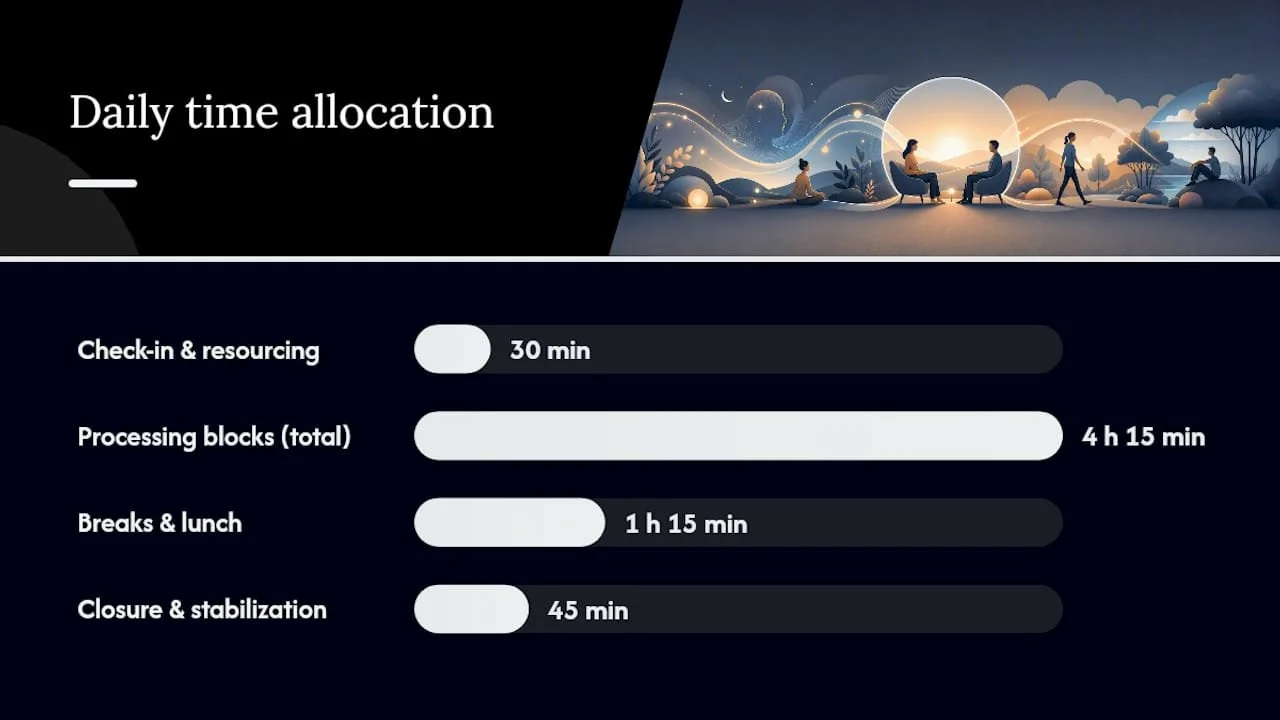
A typical full day inside an intensive rarely runs more than 6 hours of clinical time, even when the program is billed as an 8-hour day. Here's a representative hour-by-hour structure:
9:00 to 9:30 AM: Check-in, nervous system assessment, and resourcing review.
9:30 to 11:00 AM: First processing block, targeting a specific memory or belief.
11:00 to 11:15 AM: Short break for grounding.
11:15 AM to 12:30 PM: Second processing block or installation work.
12:30 to 1:30 PM: Lunch and full disengagement from clinical content.
1:30 to 3:00 PM: Afternoon processing block, often lighter than the morning.
3:00 to 3:45 PM: Closure, body scan, and stabilization exercises.
A two-day intensive usually front-loads assessment on day one and reserves day two for deeper processing. A five-day version typically builds in a lighter day midway through, sometimes just resourcing and body-based work, to prevent cumulative overload. Travel days should sit outside the intensive itself, and most clinicians recommend at least one fully quiet day immediately afterward with no major obligations.
Pro Tip: Ask your clinician for the specific daily start and end times before you book travel. Some intensives run 9 to 5 with real breaks; others compress the same content into 4 tighter hours, which changes how much energy you'll have left each evening.
How Are the Eight EMDR Phases Used in an Intensive?
The eight-phase EMDR protocol doesn't change in an intensive. What changes is how tightly the phases get sequenced within a single day.
History taking and treatment planning happens largely before the intensive starts, often during a dedicated intake call.
Resourcing (Phase 2) gets revisited each morning to confirm the client has grounding tools ready before processing begins.
Assessment, desensitization, and installation (Phases 3 to 5) form the bulk of each processing block, often revisited multiple times per day as different targets surface.
Body scan and closure (Phases 6 and 7) close out every block, not just the final one of the day.
Reevaluation (Phase 8) typically happens the next morning or at a follow-up session, checking whether the previous day's target has settled.
A therapist judges a memory "processed enough" when distress ratings drop and stay low across a body scan, not just during the session itself.
What Screening Happens Before an EMDR Intensive?
No reputable clinician books an intensive without an intake process first. That intake typically includes a trauma history, a safety and risk assessment, a review of current medications, and a clear list of the specific memories or symptoms the intensive will target.
Preparation sessions teach grounding and regulation skills the client will lean on between processing blocks.
Goal setting happens explicitly, so the client and clinician agree on what "done" looks like for the scheduled hours.
Stabilization checks confirm the client's current life circumstances (housing, safety, support system) can absorb the emotional intensity of concentrated work.
Intensives are usually delayed or restructured for active, unmanaged substance use, severe dissociative symptoms, or an unstable living situation. EMDRIA's guidance on intensives frames this screening as the difference between a longer session and a properly structured intensive.
Pro Tip: If you're unsure whether you're ready, ask your therapist directly: "What would make you postpone or restructure my intensive schedule?" A clear answer is a good sign they're screening carefully.
How Do Clinicians Prevent Overwhelm During an Intensive?
Pacing is the clinical skill that separates a well-run intensive from a risky one. Sequencing has to avoid triggering cascading distress across multiple memories at once, something EMDRIA's clinical guidance identifies as a distinct skill from weekly-session pacing.
Short breaks happen inside processing blocks, not just between them, often every 20 to 30 minutes.
A full lunch break separates morning and afternoon work entirely.
At least one rest or integration day is built into most multi-day programs, especially those running 4 days or longer.
Grounding and somatic tools (breathing exercises, body-based check-ins, brief mindfulness) get woven throughout the day, not saved for emergencies.
A clinician will slow or stop processing when distress ratings climb instead of settle, when dissociation signs appear, or when the client reports feeling numb rather than engaged. When that happens, the remaining time shifts to stabilization and resourcing instead of pushing forward.
Does Research Support Intensive EMDR Over Weekly Sessions?
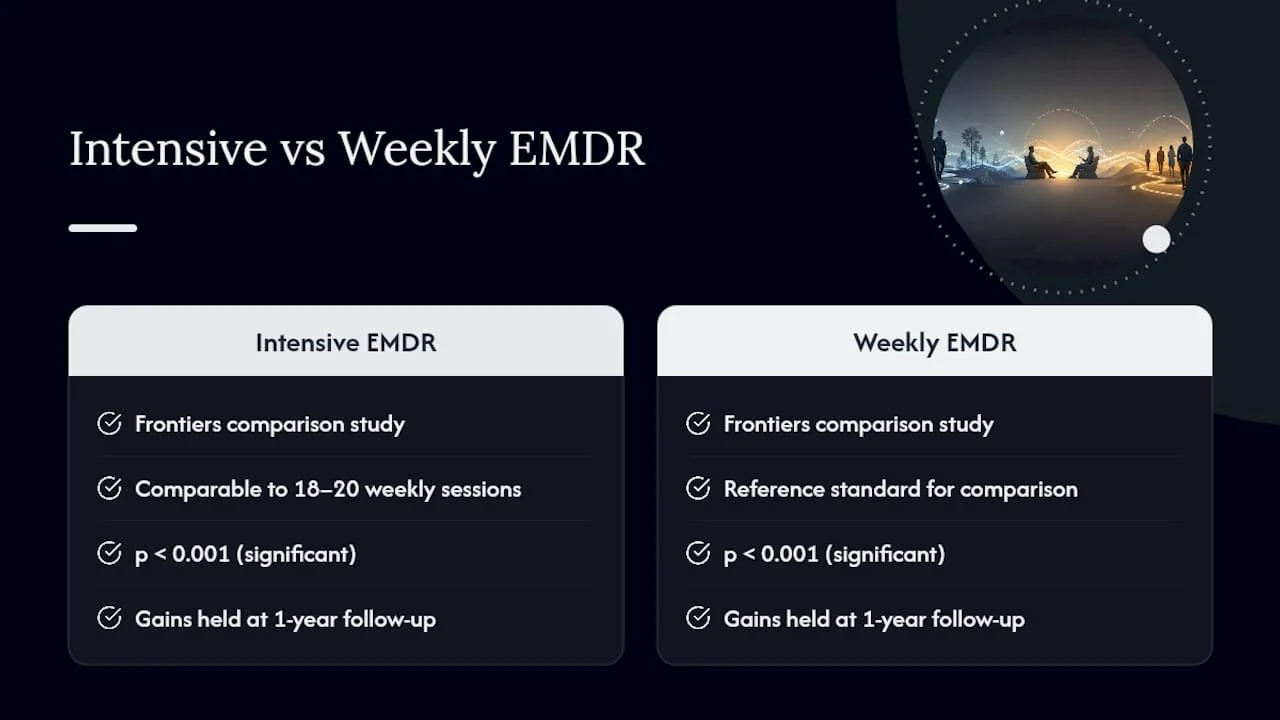
The strongest available evidence comes from a Frontiers in Psychology comparison of intensive twice-daily EMDR over 10 days against standard weekly sessions.
Both formats produced statistically significant symptom improvement (p < 0.001), and intensive treatment achieved outcomes comparable to roughly 18 to 20 weekly sessions, with gains holding at 1-year follow-up.
That's a meaningful finding, but it comes with real limits. The study samples involved specific clinical populations, including veterans, and sample sizes were modest by clinical-trial standards. Broader, larger randomized trials are still needed before intensives can be called a universal replacement for weekly care.
The honest takeaway: intensive formats are evidence-based for appropriately screened candidates. They're not automatically better for everyone, and the research on EMDR effectiveness generally supports both formats depending on the person and the trauma history involved.
How Do You Book an EMDR Intensive and What Does It Cost?
Getting started usually means asking your current therapist about a referral or contacting a clinic directly for an intake consultation. Most intensive programs require prepayment or a deposit before scheduling, given the time blocked off.
Insurance often covers intake and preparation sessions but rarely covers the intensive block itself; confirm this with your insurer and clinician before booking.
Travel planning should build in a buffer day before and after the intensive.
A support person on standby for the days immediately following the intensive helps with the transition back to normal routines.
Ask your clinician for a written breakdown of hours and cost before committing to a specific program length.
What Happens After an EMDR Intensive Ends?
The days immediately following an intensive often bring fatigue, delayed emotional processing, and unusually vivid dreams as the nervous system continues integrating the work. None of that signals something went wrong. It signals the brain is still catching up.
Schedule at least one follow-up check-in with your clinician within a week or two of finishing.
Keep the following days light, avoiding major decisions or high-stress obligations when possible.
Consider weekly sessions afterward if additional targets remain or if new material surfaces during integration.
Pro Tip: Write down any strong dreams, memories, or emotional shifts in the week after your intensive. That list becomes useful material for your follow-up session, even if it feels disorganized in the moment.
If distress spikes sharply or safety becomes a concern, contact your clinician immediately rather than waiting for the scheduled check-in. A brief written plan, covering who to call and what grounding tools to use, is worth building before the intensive even starts.
Who Wrote This Guide on EMDR Intensive Scheduling
This guide was prepared by Juiced, drawing on published EMDR research and clinical guidance from organizations including EMDRIA and the VA. Services offer EMDR intensives with bilingual, trauma-informed clinicians serving clients online across California and New York. Clients move through intake, targeted preparation, and structured follow-up, mirroring the step-by-step preparation process outlined for standard EMDR care.
A Clinician's Honest Take on Choosing an Intensive Format
Intensives make sense when someone has a defined target list and enough stability to handle concentrated work. They don't make sense as a shortcut around preparation just because someone wants faster results. I'd rather set an honest goal, sometimes "significant relief," not "complete resolution," than promise speed a nervous system isn't ready for. Talk to a clinician about your specific readiness before assuming an intensive is the right fit.
— Juiced
Ready to Explore an EMDR Intensive Schedule With Alvarado Therapy?
Weekly therapy has its place, but if you're working through a defined trauma history and want to compress months of weekly sessions into a focused block of days, an intensive schedule built around your specific goals is worth considering. EMDR intensives are structured around the same screening and pacing principles covered here: intake, stabilization prep, concentrated processing days, and a real follow-up plan, delivered by bilingual, trauma-informed clinicians online across California and New York.

Booking starts with a consultation, where you and a clinician map out target memories, realistic timelines, and the schedule length that fits your history. Review what to expect from EMDR care or the practice's approach to PTSD and complex trauma, then request a consultation to find out whether an intensive format fits your situation.
Sources
This article draws on the Frontiers in Psychology comparison of intensive and weekly EMDR, the VA's clinical overview of EMDR's eight-phase protocol, PubMed's summary of EMDR session formats, and EMDRIA's guidance on structuring intensives.
This article is general information, not a substitute for advice from a qualified doctor. Consult a qualified healthcare professional about your own circumstances before acting on anything here.
Frontiers in Psychology study on intensive versus weekly EMDR
Looking Beyond Session Length: Understanding EMDR Intensives — EMDRIA
U.S. Department of Veterans Affairs: EMDR professional overview
FAQ
Do EMDR Intensives Actually Work?
Research on twice-daily 10-day EMDR intensives found statistically significant symptom improvement maintained at 1-year follow-up, with outcomes comparable to 18 to 20 weekly sessions for screened candidates.
Is EMDR the Hardest Type of Therapy to Go Through?
EMDR can feel emotionally intense during processing, but sessions are structured with grounding, breaks, and closure specifically to keep distress manageable rather than overwhelming.
How Often Should EMDR Sessions Be Scheduled?
Weekly EMDR typically runs one 50 to 90-minute session per week, while intensive formats compress that same work into 3 to 6 hour daily blocks across consecutive days.
Why Do Clinicians Recommend Drinking Water After EMDR?
Hydration and rest support the nervous system's recovery process after intensive emotional processing, which is why clinicians recommend light schedules and basic self-care in the hours following a session.
