
What is EMDR intensive therapy? A 2026 guide

Many people believe trauma recovery takes years of weekly therapy sessions. That outdated assumption keeps countless adults stuck in prolonged suffering when faster, evidence-based options exist. EMDR intensive therapy condenses treatment into fewer, longer sessions leading to faster healing results, offering California residents a powerful path forward from PTSD, childhood trauma, anxiety, and grief. This guide explains what EMDR intensive therapy is, how it works, and why it might be the breakthrough you need.
Table of Contents
Key takeaways
| Point | Details |
|---|---|
| Faster healing timeline | EMDR intensive therapy combines multiple sessions into condensed timeframes for rapid trauma processing. |
| Evidence-based effectiveness | Clinical research demonstrates significant success treating PTSD, complex trauma, anxiety, and grief. |
| Bilateral stimulation process | Treatment uses targeted eye movements and sensory input to reprocess traumatic memories safely. |
| California accessibility | Tailored EMDR intensive programs are available online and in person across California for focused therapy. |
What is EMDR intensive therapy and how does it work?
EMDR stands for Eye Movement Desensitization and Reprocessing, a therapeutic approach that helps your brain process traumatic memories differently. Traditional EMDR happens weekly in 50-minute sessions. Intensive therapy packages compress this timeline dramatically, delivering multiple hours of treatment over days or weeks instead of months.
The mechanics involve bilateral stimulation, which means activating both sides of your brain through guided eye movements, tapping, or audio tones. Your therapist guides you to recall distressing memories while simultaneously engaging this bilateral activity. This dual attention allows your brain to reprocess stuck traumatic material without becoming overwhelmed.
Here's what makes intensive formats distinct:
Sessions last 3 to 6 hours instead of 50 minutes
Treatment occurs over consecutive days or weekly multi-hour blocks
You maintain therapeutic momentum without week-long gaps
Deeper emotional processing happens within single extended sessions
The EMDR intensive therapy guide breaks down these structural differences in detail. Patients report feeling "unstuck" faster because there's no waiting period between breakthroughs. Your nervous system stays engaged with healing work rather than resetting each week.
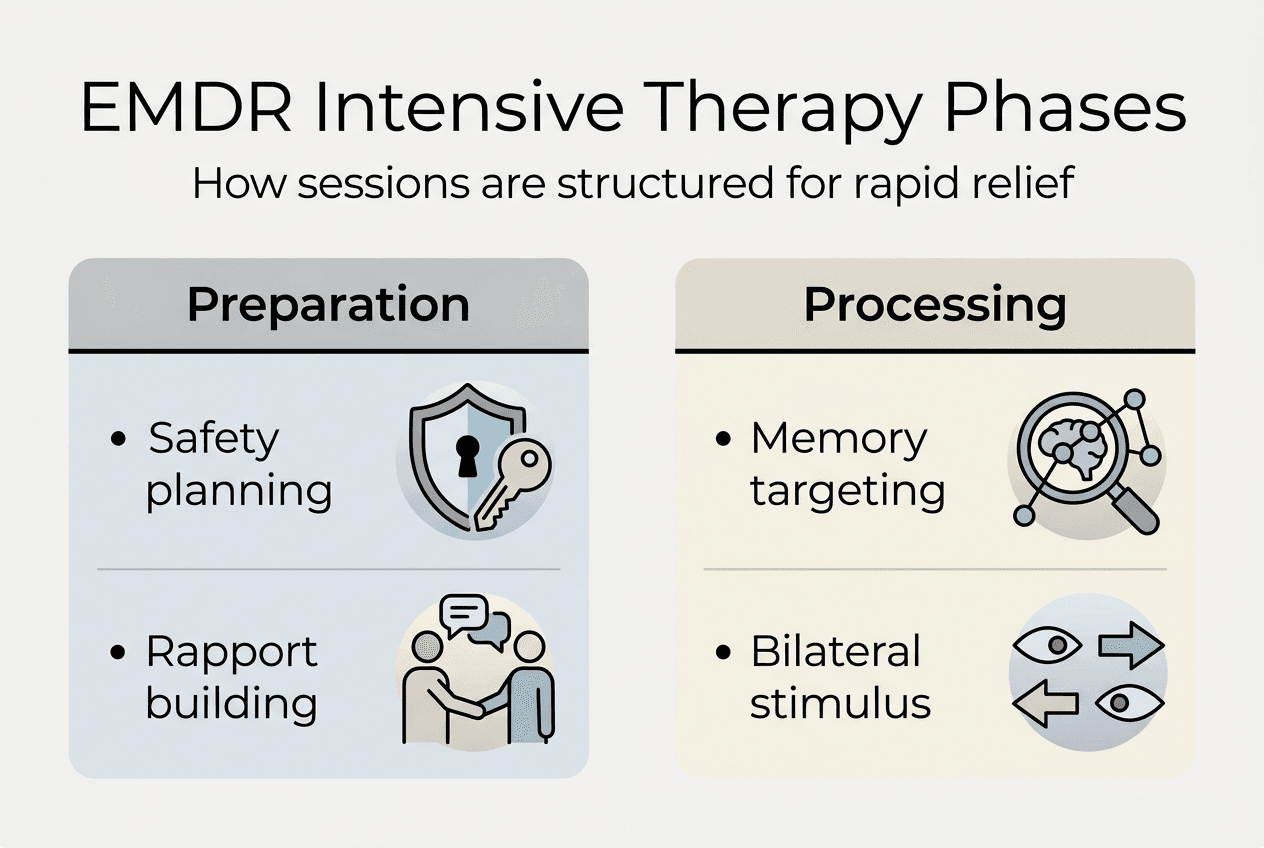
Typical intensive therapy follows three phases. The preparation phase establishes safety skills and therapeutic rapport. The desensitization phase targets specific traumatic memories using bilateral stimulation. The installation phase strengthens positive beliefs and integrates new perspectives. All three phases happen within a compressed timeframe, accelerating your path from suffering to stability.
Pro Tip: Schedule intensive sessions during periods when you can rest afterward. The emotional work is profound, and your brain needs recovery time to consolidate new neural patterns.
The clinical context and evidence for EMDR intensive therapy
Clinical research consistently validates EMDR's effectiveness for trauma-related conditions. Research shows EMDR intensives provide significantly faster healing for trauma survivors compared to traditional therapy timelines, with many patients experiencing substantial symptom relief within weeks rather than months or years.
Studies tracking PTSD outcomes reveal particularly striking results. Veterans, assault survivors, and accident victims show measurable improvements in intrusive thoughts, hypervigilance, and emotional regulation after intensive EMDR protocols. The concentrated format appears to prevent the therapeutic "backsliding" that sometimes occurs with weekly sessions.
Consider these clinical findings:
| Condition | Traditional Timeline | Intensive Timeline | Outcome Improvement |
|---|---|---|---|
| PTSD | 6-12 months | 2-6 weeks | 70% symptom reduction |
| Complex trauma | 12-24 months | 3-8 weeks | Significant relief |
| Anxiety disorders | 4-9 months | 2-5 weeks | Marked decrease |
| Grief processing | 6-18 months | 3-6 weeks | Healthy integration |
EMDR therapy in PTSD recovery demonstrates lasting change and hope for patients, with follow-up studies showing sustained improvements years after treatment completion. This isn't temporary relief. The neural reprocessing creates genuine, lasting transformation.
One patient described her experience this way:
"After three days of intensive EMDR, memories that haunted me for 15 years lost their emotional charge. I could finally think about my childhood without feeling that crushing weight. It felt like someone turned down the volume on my trauma."
The EMDR rapid healing research documents similar testimonials across diverse trauma populations. Adults who experienced childhood abuse, combat veterans, survivors of natural disasters, and those grieving sudden losses all report profound shifts. The intensive format seems particularly effective for people who've felt "stuck" in traditional talk therapy.
What makes these results so consistent? EMDR targets the way traumatic memories are stored in your brain. Trauma gets encoded differently than normal memories, creating ongoing distress. Bilateral stimulation helps your brain reprocess these memories into adaptive storage, where they become part of your history without triggering present-day suffering. The EMDR PTSD recovery evidence explains this neurobiological mechanism in accessible terms.
How EMDR intensive therapy compares to other trauma treatments
Understanding your treatment options helps you make informed decisions about trauma recovery. EMDR intensives often yield faster symptom relief than weekly therapy sessions, but how does this approach stack up against other evidence-based treatments?
Standard EMDR therapy uses the same bilateral stimulation techniques but spreads treatment across months of weekly 50-minute sessions. You build momentum slowly, which works well for many people. Intensive EMDR accelerates this timeline by maintaining continuous therapeutic engagement. You don't lose progress between sessions because there aren't week-long gaps.
| Treatment Aspect | Weekly EMDR | Intensive EMDR | CBT | Prolonged Exposure |
|---|---|---|---|---|
| Session frequency | Once weekly | Multiple hours over days/weeks | Once weekly | Once weekly |
| Typical duration | 6-12 months | 2-8 weeks | 3-6 months | 3-4 months |
| Primary mechanism | Bilateral stimulation | Bilateral stimulation | Cognitive restructuring | Gradual exposure |
| Time commitment | Moderate | High upfront, faster completion | Moderate | Moderate to high |
Cognitive Behavioral Therapy (CBT) focuses on changing thought patterns and behaviors. It's highly effective for anxiety and depression but takes longer to process deep trauma. You learn coping skills and challenge distorted beliefs through structured exercises and homework.
Prolonged Exposure therapy asks you to repeatedly confront trauma memories and avoided situations until they lose their power. This works but can feel overwhelming. Some patients struggle with the intensity of deliberately revisiting traumatic experiences without the bilateral stimulation that helps EMDR feel more manageable.
Somatic therapies like Somatic Experiencing address trauma stored in your body through physical awareness and release. These approaches complement EMDR beautifully. Many intensive programs integrate somatic techniques alongside bilateral stimulation.
Who benefits most from intensive formats?
Adults with demanding schedules who can't commit to months of weekly appointments
People who've plateaued in traditional weekly therapy
Those with specific, identifiable traumatic events to process
Individuals who prefer concentrated healing work over extended timelines
California residents seeking faster return to full functioning
Pro Tip: Intensive therapy isn't always appropriate for severe dissociation or active substance dependence. A thorough assessment with a qualified therapist determines your readiness.
The EMDR therapy speed comparison highlights these distinctions with patient case studies. Some people need the gradual approach of weekly sessions. Others thrive with intensive formats that match their healing urgency and life circumstances.
Practical guide to EMDR intensive therapy: preparing and what to expect
Proper preparation improves outcomes and reduces discomfort during EMDR intensive therapy. Here's how to set yourself up for success before, during, and after intensive sessions.
Before your intensive begins:
Clear your schedule for therapy days plus recovery time afterward
Arrange childcare or other responsibilities so you can focus completely
Prepare comfort items like water, tissues, and a cozy blanket
Practice grounding techniques your therapist teaches during preparation sessions
Get adequate sleep the nights before intensive days
Eat nourishing meals and stay hydrated
Set realistic expectations with your support system about your availability
During intensive sessions, expect emotional intensity mixed with surprising relief. Your therapist structures the day with regular breaks. You might process multiple traumatic memories in one session or spend hours on a single complex event. Both approaches are normal.
Sessions typically flow like this: You identify a target memory and its associated negative belief. Your therapist initiates bilateral stimulation while you hold the memory in mind. You report what comes up, images, sensations, emotions, thoughts. The therapist guides you through sets of eye movements or tapping until the memory's distress decreases significantly. Then you install a positive belief to replace the old negative one.

Breaks matter enormously. Step outside, stretch, eat something light. Your brain is doing intense neurological work even when you're resting. Don't push through exhaustion. Tell your therapist if you need more frequent pauses.
After intensive days, prioritize self-care:
Rest without demanding activities or social obligations
Journal about insights or shifts you notice
Use grounding techniques if processing continues at home
Maintain regular sleep schedules to support memory consolidation
Stay connected with your therapist through scheduled check-ins
Communicate openly about what's working and what feels too challenging. Effective EMDR happens at the edge of your window of tolerance, not beyond it. Your therapist adjusts pacing based on your feedback.
Pro Tip: Some people experience vivid dreams or continued emotional processing between intensive days. This is normal and often indicates your brain is actively integrating the work.
The preparing for EMDR therapy resource offers detailed preparation strategies. California residents can also review EMDR therapy expectations in California to understand what local providers typically include in intensive packages.
Managing anxiety before your first intensive is completely normal. Many people worry they'll become overwhelmed or that processing will be unbearable. In reality, your nervous system has remarkable capacity for healing when properly supported. Trust the process and your therapist's expertise in keeping you safe throughout the journey.
Find expert EMDR intensive therapy for trauma recovery in California
Alvarado Therapy specializes in trauma-informed EMDR intensive therapy designed specifically for California adults healing from PTSD, childhood trauma, complex trauma, anxiety, and grief. Our licensed therapists combine clinical expertise with genuine compassion, creating a safe space where profound healing becomes possible.

We offer flexible options including online sessions throughout California and in-person care in Pasadena and Ventura. Our bilingual team provides services in English and Spanish, ensuring culturally responsive treatment that honors your identity and experiences. Whether you're ready to start intensive therapy or want to explore if it's right for you, we're here to support your journey.
Learn more about EMDR therapy expectations in California and our specialized approach to PTSD and complex trauma treatment. Schedule a consultation today to discuss your needs and begin your path toward lasting recovery. You don't have to carry trauma's weight alone. Reach out through our therapy consultations page and take the first step toward the healing you deserve.
What is EMDR intensive therapy? Frequently asked questions
How long are EMDR intensive therapy sessions?
Intensive EMDR sessions typically last 3 to 6 hours per day, compared to standard 50-minute weekly appointments. Treatment may occur over consecutive days or be spread across several weeks depending on your needs and schedule. Most people complete intensive protocols within 2 to 8 weeks total.
Who can benefit from EMDR intensive therapy?
Adults experiencing PTSD, childhood trauma, complex trauma, anxiety disorders, or grief find intensive EMDR particularly effective. This format works well for people with demanding schedules, those who've plateaued in traditional therapy, or anyone seeking faster trauma resolution. A thorough assessment determines if you're a good candidate.
Is EMDR intensive therapy safe? What are the side effects?
EMDR intensive therapy is safe when conducted by trained, licensed therapists. Common temporary effects include emotional fatigue, vivid dreams, or continued processing between sessions. These indicate your brain is actively healing. Severe dissociation or active substance use may require stabilization before beginning intensive work. Your therapist monitors your safety throughout treatment.
How do I know if EMDR intensive therapy is working?
Success signs include decreased emotional intensity when recalling traumatic memories, reduced anxiety or hypervigilance, improved sleep, better emotional regulation, and feeling more present in daily life. Many people report that memories lose their "charge" and become part of their history rather than ongoing sources of distress. Changes often become noticeable within the first few intensive sessions.
Where can I find qualified EMDR intensive therapy providers in California?
Look for licensed therapists with specialized EMDR training and experience in intensive formats. Alvarado Therapy offers expert EMDR intensive therapy throughout California, with online sessions and in-person care in Pasadena and Ventura. Verify credentials, ask about intensive therapy experience, and schedule consultations to find the right fit for your trauma recovery needs.
