
How to prepare for EMDR therapy in California

Starting EMDR therapy can feel overwhelming. Many individuals worry about revisiting painful memories or question if they are emotionally ready to begin this healing process. Proper preparation enhances therapy effectiveness and helps you feel more confident about your first session. This guide walks you through essential steps to prepare emotionally, mentally, and physically for EMDR therapy in California, so you can approach your healing journey with clarity and readiness.
Table of Contents
Key takeaways
| Point | Details |
|---|---|
| Emotional readiness improves success | Being calm and informed before sessions helps you engage more deeply with the therapeutic process. |
| Preparation reduces anxiety | Taking practical steps like mindfulness and setting intentions eases pre-session nervousness. |
| Safe environments support healing | Creating a quiet, comfortable space for therapy sessions enhances focus and emotional safety. |
| Open communication is essential | Sharing concerns and questions with your therapist builds trust and improves outcomes. |
| Understanding EMDR basics helps | Knowing what to expect during sessions reduces fear and increases your confidence in the process. |
Understanding EMDR and emotional readiness
Eye Movement Desensitization and Reprocessing (EMDR) is a structured therapy designed to help you process traumatic memories and reduce their emotional impact. Unlike traditional talk therapy, EMDR requires emotional engagement to reprocess distressing experiences effectively. The goal is not to erase memories but to change how your brain stores and responds to them, allowing you to move forward without being triggered by past trauma.
Emotional readiness means approaching therapy with a calm mindset, realistic expectations, and a willingness to engage with difficult feelings. When you feel prepared, you can trust the process, communicate openly with your therapist, and recognize that temporary discomfort leads to long-term healing. Self-awareness about your current emotional state helps you identify whether you are ready to begin or if you need additional support first.
Beneficial emotional states before starting EMDR include:
Feeling calm and grounded rather than in crisis
Having motivation to work through trauma
Understanding that EMDR is a gradual process
Trusting your therapist and the therapeutic relationship
Without adequate emotional preparation, you may experience heightened distress during sessions, difficulty staying present, or barriers to processing memories effectively. Some individuals rush into EMDR before building coping skills or stabilizing their current mental health, which can make therapy feel overwhelming rather than healing.
Emotional readiness is not about being free from anxiety. It is about having the tools and mindset to work through discomfort with your therapist's guidance.
Recognizing readiness signs involves checking in with yourself honestly. Ask whether you feel safe enough to explore painful memories, whether you have support systems outside of therapy, and whether you trust that healing is possible. If you answer yes to these questions, you are likely ready to begin your EMDR therapy journey.
Practical steps to prepare for your EMDR therapy session
Taking concrete actions before your EMDR session helps you feel more in control and ready to engage fully. Mental preparation involves building awareness and setting intentions for what you want to achieve. Physical preparation ensures your body is comfortable and supported during the session. Logistical preparation creates an environment where you can focus without distractions.
Mental preparation activities to try before your session:
Practice mindfulness or meditation for 10 minutes daily to build present-moment awareness.
Journal about your goals for therapy and specific memories or feelings you want to address.
Set realistic intentions for your first session, such as building trust with your therapist or understanding the EMDR process.
Visualize a successful session where you feel safe and supported throughout.
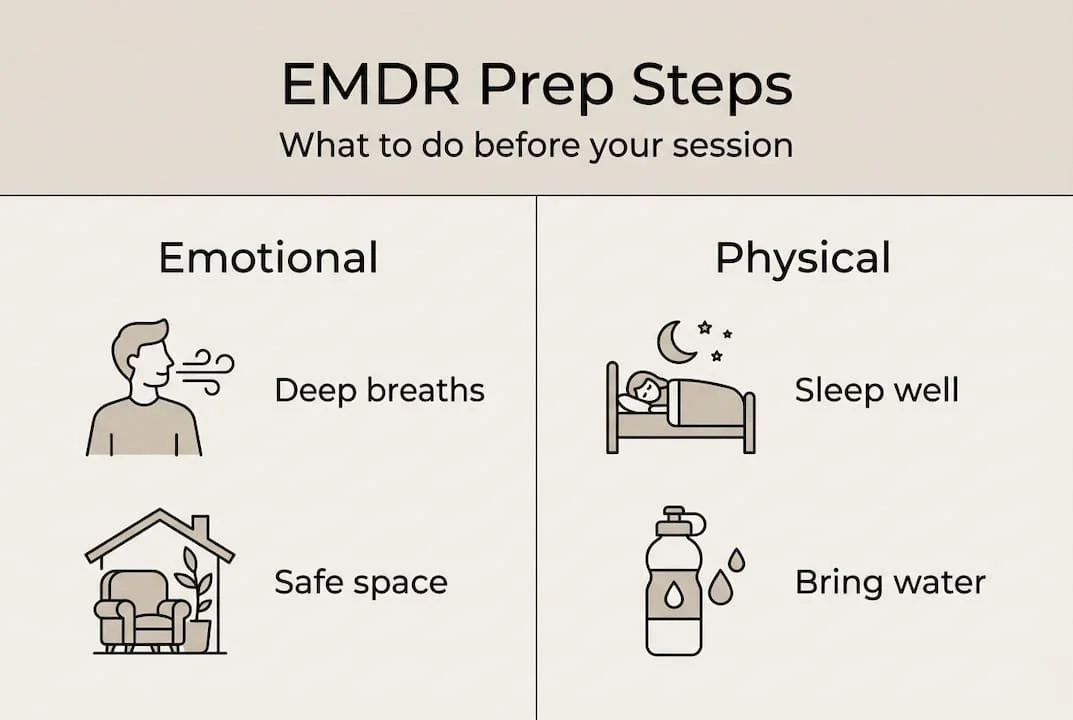
Physical preparation makes a significant difference in how comfortable you feel during EMDR. Get enough sleep the night before your session so you can stay focused and emotionally regulated. Stay hydrated and eat a light meal or snack beforehand to maintain stable energy levels. Wear comfortable, non-restrictive clothing that helps you feel relaxed rather than self-conscious.

Environmental preparation contributes to better outcomes whether you attend sessions in person or online. For in-person therapy, arrive a few minutes early to settle into the space and take deep breaths. For online sessions, choose a quiet room where you will not be interrupted, test your internet connection and audio beforehand, and position your device at eye level for comfortable eye contact with your therapist.
| Item | Purpose |
|---|---|
| Water bottle | Staying hydrated supports emotional regulation and physical comfort |
| Tissues | Processing emotions may bring tears, and having tissues ready reduces distraction |
| Notebook and pen | Jotting down thoughts or questions helps you remember key points |
| Emergency contact info | Having a trusted person’s number available provides extra security |
| Comfort item | A small object like a stress ball or blanket can help you feel grounded |
Pro Tip: Create a pre-session ritual that signals to your mind and body that it is time to focus on healing. This might include lighting a candle, listening to calming music, or doing five minutes of stretching. Rituals build consistency and help you transition into a therapeutic mindset more easily.
Common challenges and how to handle them during EMDR preparation
Many individuals face obstacles when preparing for EMDR therapy, and recognizing these challenges early helps you address them proactively. Fear of revisiting trauma is one of the most common concerns. You might worry that talking about painful memories will make you feel worse or that you will not be able to handle the emotions that surface. Remember that your therapist is trained to guide you through this process safely and will not push you beyond what you can manage.
Uncertainty about the EMDR process itself can create anxiety. You may wonder what bilateral stimulation feels like, how long sessions will take, or whether therapy will actually work for you. Asking your therapist detailed questions during your consultation or first session helps demystify the process. Most therapists welcome questions and will explain each step before you begin.
Difficulty communicating your needs or concerns can prevent you from getting the support you require. Some individuals feel embarrassed about their trauma or worry about being judged. Others struggle to put complex emotions into words. Practice articulating your feelings in a journal before sessions, and remind yourself that therapists are trained to hold space for all emotions without judgment.
Coping mechanisms that support EMDR preparation include:
Using grounding techniques like the 5-4-3-2-1 method to stay present when anxiety rises
Asking your therapist to explain anything that feels confusing or unclear
Setting small, achievable goals for each session rather than expecting immediate transformation
Building a support network of friends or family who can check in with you after sessions
Therapist collaboration is essential for successful EMDR preparation. Your therapist should conduct a thorough assessment before starting EMDR to ensure you have adequate coping skills and emotional stability. They will work with you to identify target memories, develop a treatment plan, and establish safety signals you can use during sessions if you feel overwhelmed. Openness about your concerns allows your therapist to tailor the approach to your specific needs.
Pro Tip: Develop personal grounding techniques before your first session so you have tools ready when emotions feel intense. Try holding an ice cube, pressing your feet firmly into the floor, or naming objects in the room to anchor yourself in the present moment. Practicing these techniques outside of therapy makes them more accessible when you need them most.
What to expect during and after your EMDR session
Understanding the typical flow of an EMDR session helps you feel less anxious about the unknown. Sessions usually begin with a brief check-in where you discuss your current emotional state and any concerns. Your therapist will then guide you through the EMDR protocol, which involves recalling a target memory while engaging in bilateral stimulation, such as following their fingers with your eyes or listening to alternating tones. This process helps your brain reprocess the memory in a less distressing way.
Phases of a typical EMDR session include:
History taking and treatment planning (usually in initial sessions)
Preparation, where you learn coping skills and establish safety
Assessment, where you identify the target memory and related beliefs
Desensitization, where bilateral stimulation helps reprocess the memory
Installation, where positive beliefs are strengthened
Body scan, where you check for residual physical tension
Closure, where you return to a calm state before ending
Reevaluation at the start of the next session
Normal physical and emotional aftereffects vary from person to person. Some individuals feel tired or emotionally drained after sessions, while others feel energized and relieved. You might notice vivid dreams, heightened awareness of emotions, or continued processing of memories between sessions. These responses indicate that your brain is actively working through the material, which is a positive sign of progress.
| Experience Type | During Session | After Session |
|---|---|---|
| Emotional | May feel sadness, anger, or relief | Emotions may continue surfacing or feel lighter |
| Physical | Possible tension, tears, or relaxation | Fatigue, better sleep, or temporary soreness |
| Mental | Focused on memory processing | Clearer thinking, new insights, or continued reflection |
| Behavioral | Engaged with therapist guidance | Increased self-care, journaling, or seeking support |
Post-session self-care is crucial for maintaining emotional stability and supporting continued healing. Give yourself time to rest after sessions rather than rushing back into demanding activities. Engage in gentle activities like walking, listening to music, or spending time in nature. Avoid making major decisions or engaging in stressful situations immediately after therapy.
Communication with your therapist after sessions helps you process what came up and address any concerns. If you experience unexpected distress or have questions about your progress, reach out between sessions. Many therapists offer brief check-ins or resources to support you as you continue processing. Knowing what to expect reduces anxiety and helps you stay committed to the therapeutic process even when it feels challenging.
Tips for effective post-session coping:
Schedule sessions on days when you have time to decompress afterward
Keep a therapy journal to track your progress and notice patterns
Practice self-compassion and remind yourself that healing takes time
Reach out to supportive friends or family if you need to talk
Avoid alcohol or substances that might numb emotions you need to process
Ready to start your EMDR therapy journey in California?
Alvarado Therapy specializes in trauma-informed EMDR therapy designed to help you heal from childhood trauma, PTSD, complex trauma, grief, anxiety, and relationship difficulties. Our licensed therapists serve clients across Pasadena, Ventura, and online throughout California, offering flexible options that fit your schedule and comfort level. Whether you prefer in-person sessions or the convenience of online EMDR therapy, we provide a safe, supportive environment for your healing journey.
We understand that starting therapy can feel intimidating, which is why we offer consultations to discuss your needs, answer your questions, and help you feel confident about beginning EMDR. Our bilingual, culturally responsive practice provides care in both English and Spanish, ensuring you receive therapy that honors your identity and experiences. Take the first step toward emotional freedom by exploring our individual EMDR counseling services and scheduling your consultation today.
FAQ
Is emotional preparation necessary before EMDR therapy?
Yes, emotional readiness helps you engage fully with EMDR and process trauma safely, improving overall outcomes. When you feel calm and informed, you can trust the therapeutic process and communicate openly with your therapist. Preparation does not mean eliminating all anxiety but rather building the tools and mindset to work through discomfort effectively.
How can I reduce anxiety before my EMDR session?
Use breathing exercises, mindfulness, and clear communication with your therapist to ease anxiety before sessions. Practicing grounding techniques like deep belly breathing or the 5-4-3-2-1 method helps calm your nervous system. Journaling about your concerns and setting realistic intentions for your session also reduces pre-therapy nervousness.
What should I do if I feel overwhelmed during EMDR therapy?
Speak openly with your therapist, use grounding techniques, and remember it is normal to experience strong emotions during EMDR. Your therapist can slow down the process, take breaks, or adjust the approach to match your comfort level. Establishing safety signals before you begin therapy ensures you have a way to communicate when you need support.
Are there any materials I should bring to my EMDR sessions?
Bring water, tissues, a list of questions or concerns, and wear comfortable clothes to sessions for best comfort. Having a notebook to jot down insights or homework from your therapist can also be helpful. If you have a small comfort item like a stress ball or fidget tool, bringing it along can support your grounding practice during sessions.
