
Find Trauma-Informed EMDR Therapists in CA: 220+ Options

Finding a therapist who understands trauma can feel overwhelming, especially when you need someone trained in EMDR therapy and culturally responsive to your language needs. Many adults across California struggle to locate qualified trauma-informed EMDR therapists who offer bilingual services in English and Spanish while specializing in childhood trauma, PTSD, and complex emotional healing. This guide provides actionable steps to identify the right therapist, verify their credentials, and start your recovery journey with confidence.
Table of Contents
Key Takeaways
| Point | Details |
|---|---|
| Specialized credentials accelerate healing | Trauma-informed EMDR therapists with EMDRIA certification offer evidence-based treatment for faster recovery from complex trauma. |
| Bilingual therapy improves outcomes | English/Spanish fluency enhances cultural understanding and therapeutic connection, increasing treatment effectiveness in California. |
| Prepare for realistic timelines | Wait times exist for specialized providers; contacting multiple therapists and managing expectations maintains motivation. |
| Verify qualifications before starting | Check EMDRIA certification, trauma specialization, and cultural responsiveness to avoid mismatched therapy relationships. |
| Expect symptom reduction in 6-12 sessions | Most clients experience significant improvement with qualified trauma-sensitive EMDR therapists. |
Understanding Trauma-Informed EMDR Therapy
Trauma-informed therapy recognizes how trauma affects the brain, body, and behavior. Unlike traditional talk therapy, it prioritizes emotional safety, validates your experiences, and uses specialized techniques designed for complex trauma and CPTSD. This approach acknowledges that healing requires more than discussing painful memories.
EMDR (Eye Movement Desensitization and Reprocessing) therapy uses bilateral stimulation to help your brain reprocess traumatic memories. The 8-phase protocol includes history taking, preparation, assessment, desensitization, installation, body scan, closure, and reevaluation. Research shows EMDR accelerates trauma healing compared to traditional approaches because it targets how traumatic memories are stored neurologically.
Cultural sensitivity matters significantly in trauma recovery. When therapists understand your background, language, and cultural context, you feel safer sharing vulnerable experiences. This trauma-informed care philosophy creates the foundation for effective healing.
EMDR therapy effectively treats:
Childhood trauma and adverse childhood experiences
PTSD from single-incident or ongoing traumatic events
Complex trauma involving multiple traumatic experiences
Emotional dysregulation, anxiety, and depression stemming from trauma
Relationship difficulties rooted in attachment wounds
Prerequisites and Preparation Before Starting Therapy
Before searching for a therapist, understanding realistic expectations saves frustration. Wait times for trauma-informed therapists in California can extend weeks or months due to high demand for specialized providers. Patience and persistence in contacting multiple practices increase your chances of finding availability.
Identify your language preferences early. If you need therapy in Spanish or prefer bilingual sessions, specify this when contacting practices. Language compatibility directly affects how deeply you can process emotions and describe experiences. Some trauma survivors find they can access memories more easily in their first language.
Assess your current emotional readiness. EMDR therapy requires engaging with painful memories in a controlled way. You need basic emotional regulation skills to manage distress between sessions. If you're experiencing active crisis or severe dissociation, stabilization work may come first. Learning to prepare emotionally for therapy helps you enter treatment ready to benefit fully.
Pro Tip: Create a list of your trauma symptoms, triggers, and therapy goals before consultations. This helps therapists understand your needs quickly and assess whether they're the right fit for your specific situation.
Practical preparation steps:
Verify your insurance coverage for mental health services and EMDR therapy specifically
Arrange childcare or work schedule flexibility for consistent appointment attendance
Identify support people who can help during difficult processing periods
Research therapist backgrounds and specializations before booking consultations
How to Identify Trauma-Informed EMDR Therapists in California
Verifying credentials protects you from under-qualified providers. Check for EMDRIA (EMDR International Association) certification, which confirms a therapist completed extensive training in the EMDR protocol. Basic EMDR training consists of 50+ hours, but many qualified trauma therapists pursue advanced certification demonstrating deeper expertise.

Specialized training in complex trauma and CPTSD matters because childhood trauma creates different symptoms than single-event PTSD. Therapists need to understand attachment wounds, dissociation, emotional dysregulation, and how developmental trauma affects adult functioning. Not all EMDR therapists have this specialized background.
Prioritize bilingual capabilities when language matters to you. Fluency in both English and Spanish allows you to express yourself naturally and ensures your therapist understands cultural contexts affecting your trauma and healing. Many California practices serve diverse communities with culturally responsive approaches.
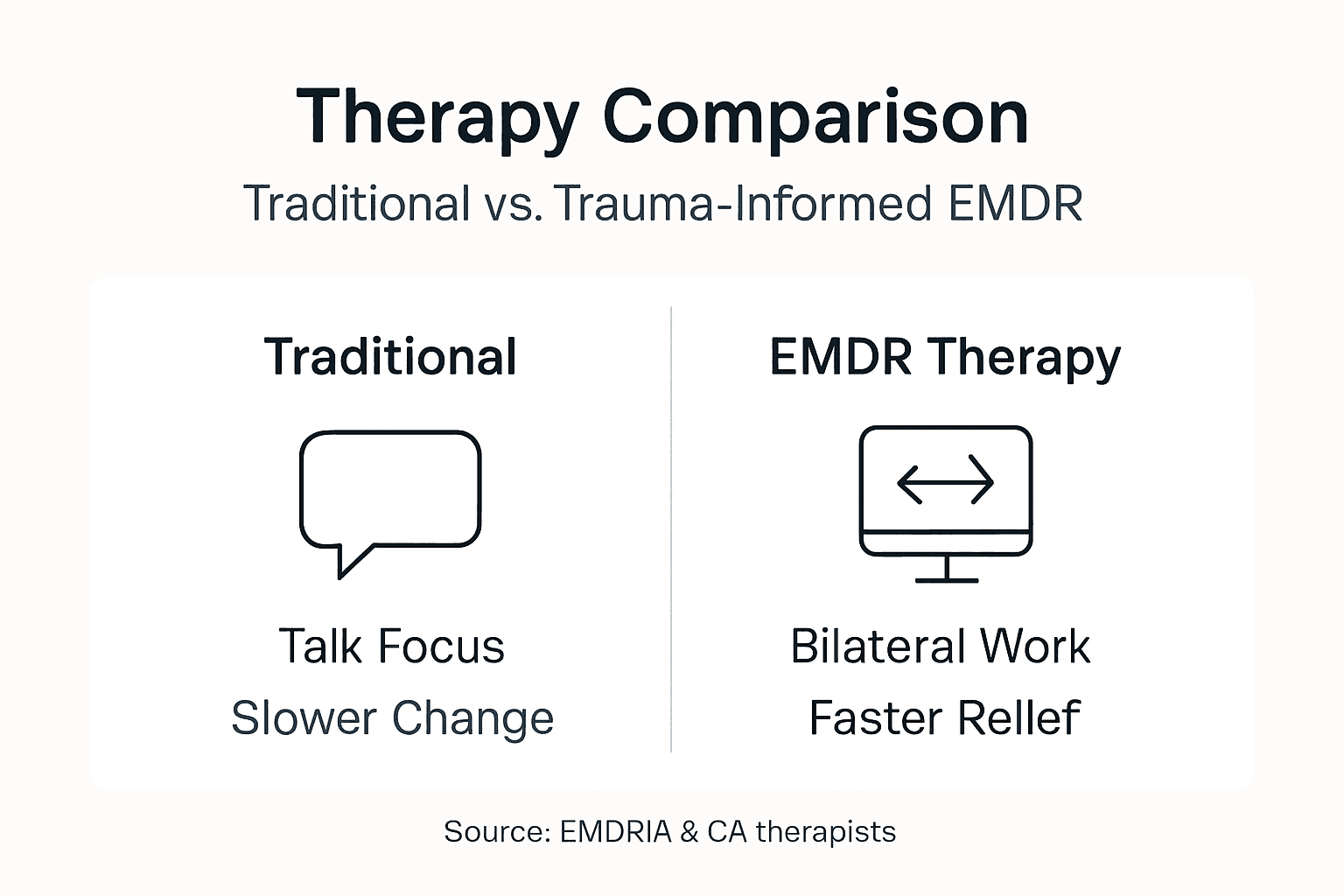
| Aspect | Traditional Therapy | Trauma-Informed EMDR Therapy |
|---|---|---|
| Training Focus | General mental health | Specialized trauma and CPTSD protocols |
| Treatment Approach | Talk-based processing | Bilateral stimulation with structured phases |
| Cultural Responsiveness | Variable | Prioritized through identity-affirming care |
| Typical Timeline | 12-24+ months | 6-12 sessions for specific trauma |
| Language Options | English primary | Bilingual English/Spanish available |
Pro Tip: During consultation services, ask therapists about their most challenging trauma cases and how they approached cultural differences. Their responses reveal experience depth and cultural humility.
Questions to ask potential therapists:
What percentage of your practice focuses on trauma and EMDR therapy?
Have you worked with clients who experienced similar trauma types to mine?
How do you handle cultural differences and language preferences in therapy?
What training have you completed beyond basic EMDR certification?
How do you approach complex trauma differently from single-event PTSD?
Understanding the EMDR Therapy Process
The EMDR protocol follows eight distinct phases designed to process trauma safely. Understanding these EMDR therapy steps reduces anxiety about what happens in sessions and helps you participate actively in your healing.
History and Treatment Planning: Your therapist gathers background about traumatic experiences, current symptoms, and therapy goals. Together you identify specific memories to target and develop a treatment roadmap.
Preparation: You learn coping skills and relaxation techniques to manage distress. Your therapist explains EMDR, builds trust, and ensures you feel safe enough to begin processing.
Assessment: You identify the target memory, negative beliefs about yourself connected to it, desired positive beliefs, and where you feel the trauma in your body.
Desensitization: Using bilateral stimulation (eye movements, taps, or tones), you process the traumatic memory while your therapist guides you through sets of stimulation. The memory's emotional charge typically decreases.
Installation: Positive beliefs identified earlier are strengthened and connected to the traumatic memory, replacing negative self-concepts.
Body Scan: You notice any remaining physical tension related to the memory. Additional processing addresses residual body sensations.
Closure: Your therapist ensures you feel stable before leaving the session, using relaxation techniques if needed. You receive guidance for managing any disturbance between sessions.
Reevaluation: At the next session, you review progress and determine whether additional processing is needed or if you're ready to address new targets.
Your active participation accelerates healing. During bilateral stimulation, you notice whatever comes to mind without forcing anything. Images, thoughts, emotions, and body sensations arise spontaneously as your brain reprocesses the memory. Most clients feel tired after sessions as their brain integrates new neural connections.
Common Mistakes and How to Avoid Them
Booking without credential verification wastes time and money. Common pitfalls include not verifying credentials, ignoring cultural and bilingual fit, and skipping critical experience questions. Some therapists complete basic EMDR training but lack trauma-specific expertise. Always check EMDRIA certification and ask about specialized trauma training.
Ignoring cultural and language needs undermines therapy effectiveness. If you feel uncomfortable discussing certain topics due to cultural taboos or language barriers, you won't fully engage in processing. Therapy dropout rates increase when cultural responsiveness is missing. Prioritize therapists who understand your background and offer services in your preferred language.
Expecting immediate results sets you up for disappointment. Trauma healing takes time, even with effective methods like EMDR. While many people experience relief faster than traditional therapy, expecting overnight transformation creates pressure that interferes with natural processing. Trust the gradual unfolding of healing.
Skipping emotional preparation leads to overwhelm. Starting EMDR therapy without adequate coping skills or support systems can destabilize you. Ensure you have resources in place before beginning trauma processing. Avoiding therapist selection mistakes means thoroughly vetting providers and preparing yourself for the intensity of trauma work.
Mistakes to avoid:
Choosing therapists based solely on availability rather than specialization
Failing to ask about experience with your specific trauma type
Overlooking the importance of feeling safe and understood in therapy
Beginning EMDR without learning emotional regulation skills first
Continuing with therapists who don't feel like the right fit
Expected Results and Outcomes of Trauma-Informed EMDR Therapy
Most clients experience significant symptom reduction within 6 to 12 EMDR therapy sessions when working with qualified trauma-informed therapists. Single-incident trauma often resolves faster, while complex childhood trauma may require longer treatment. Progress depends on trauma complexity, your readiness, and the therapeutic relationship quality.
"EMDR therapy demonstrates effectiveness rates of 77-90% for PTSD treatment in multiple controlled studies, with many clients achieving results in fewer sessions than traditional psychotherapy approaches."
| Measure | Traditional Talk Therapy | Trauma-Informed EMDR Therapy |
|---|---|---|
| Average Sessions for PTSD | 20-30 sessions | 6-12 sessions |
| Symptom Reduction Rate | 50-60% improvement | 77-90% improvement |
| Treatment Dropout Rate | 25-35% | 15-20% |
| Long-term Stability | Requires ongoing maintenance | Often sustained without continued therapy |
You'll likely notice improvements in emotional regulation first. Triggers that previously caused intense reactions become more manageable. You develop space between triggering events and your responses. Sleep quality often improves as nightmares decrease and hypervigilance reduces.
Feelings of safety increase both internally and in relationships. Many clients report feeling more present in their bodies and less disconnected. Shame connected to traumatic experiences diminishes as you reprocess events with adult understanding. Relationship patterns shift as attachment wounds heal and you develop healthier connection styles.
Success depends heavily on the therapeutic relationship. When you feel genuinely understood and safe with your therapist, your nervous system relaxes enough to process trauma effectively. Cultural responsiveness and language compatibility contribute directly to this sense of safety. Trauma-sensitive therapists recognize when to slow down, when to push gently forward, and how to support you through difficult processing.
Start Your Healing Journey with Expert Trauma-Informed EMDR Therapy
Healing from childhood trauma, PTSD, and complex emotional wounds becomes possible with the right support. Alvarado Therapy specializes in trauma-informed, bilingual EMDR therapy throughout California, serving clients in Pasadena, Ventura, and online across the state. Our licensed therapists bring specialized training in complex trauma, cultural responsiveness, and evidence-based EMDR protocols.
Whether you prefer in-person sessions or need the flexibility of online EMDR therapy services, our team provides accessible, culturally affirming care in English and Spanish. We understand the unique challenges of healing from developmental trauma and offer complex trauma treatment options tailored to your specific needs. Schedule a consultation today to discuss your healing goals and begin your journey toward lasting recovery.
Frequently Asked Questions
How can I verify a therapist's EMDR certification?
Visit the EMDRIA website and use their therapist directory to search for certified providers by name or location. Certified therapists appear in this database with their training level clearly indicated. You can also ask therapists directly for their EMDRIA certification number and training completion dates.
What if I need therapy in Spanish?
Specify your language preference when contacting therapy practices. Many California therapists offer bilingual services, and some specialize in serving Spanish-speaking communities. During consultations, confirm the therapist's fluency level and ask whether they conduct entire sessions in Spanish or mix languages.
How long does EMDR therapy usually take to show results?
Most people notice some relief within 3 to 6 sessions, with significant symptom reduction by 6 to 12 sessions for single-event trauma. Complex childhood trauma typically requires longer treatment, potentially 12 to 20 sessions depending on the number of traumatic memories and your specific symptoms.
What if I don't feel comfortable with my therapist's cultural sensitivity?
Trust your instincts about cultural fit. A strong therapeutic relationship requires feeling understood and respected. If your therapist dismisses cultural concerns or seems uncomfortable discussing identity issues affecting your trauma, seek a different provider who demonstrates genuine cultural humility and responsiveness.
Are online trauma-informed EMDR therapy sessions effective?
Research shows online EMDR therapy produces comparable results to in-person sessions when using proper protocols. Many clients appreciate the convenience and privacy of attending therapy from home. Ensure you have a private, quiet space with reliable internet connection for effective online EMDR sessions.
