
EMDR Intensives for Trauma: 70% Faster Healing Results

Many adults feel trapped in a cycle of weekly therapy sessions that seem to barely scratch the surface of childhood trauma or PTSD. Progress feels painfully slow, and the wait between appointments can interrupt momentum just as healing starts to build. EMDR intensives offer a different path: concentrated, multi-hour sessions designed to accelerate trauma resolution while providing the cultural sensitivity and bilingual support critical for true emotional safety.
Table of Contents
Key Takeaways
| Point | Details |
|---|---|
| Accelerated Treatment | EMDR intensives concentrate therapy into longer sessions, reducing overall treatment time by up to 70% compared to weekly formats. |
| Cultural Alignment | Bilingual and culturally sensitive therapy enhances trauma processing by allowing clients to heal in their first language with full emotional authenticity. |
| Continuous Momentum | Extended sessions maintain uninterrupted nervous system engagement, preventing the start-stop pattern that slows recovery. |
| Safety Through Pacing | Structured pacing with grounding techniques ensures emotional safety and minimizes overwhelm during intensive work. |
| Preparation Matters | Thorough assessment and stabilization training before intensives are essential for successful outcomes. |
Understanding EMDR Intensives: Definition and Core Concepts
EMDR intensives are concentrated sessions lasting multiple hours over 1-3 days, fundamentally different from traditional weekly 50-minute appointments. Instead of spreading trauma work across months of brief encounters, intensives immerse you in therapeutic processing that builds and sustains momentum.
Traditional weekly EMDR follows a familiar pattern: you arrive, reconnect with last week's work, process for 30-40 minutes, then stabilize before leaving. The following week, you repeat this cycle. While effective, this approach requires constant reorientation and can feel like climbing a mountain in small increments, losing ground between sessions.
Intensives flip this model entirely. Designed to maintain continuous nervous system engagement and therapeutic momentum, these extended sessions allow your brain to fully enter processing mode without interruption. Think of it like running a marathon versus doing sprints separated by days of rest. The sustained effort creates different physiological and psychological results.
A typical EMDR intensive session structure includes:
Extended preparation phase with somatic grounding and resource building
Multiple processing rounds targeting interconnected trauma memories
Integrated breaks for nervous system regulation without leaving therapeutic space
Thorough closure and stabilization before ending each day
Built-in pacing to prevent emotional flooding or overwhelm
The immersive experience allows deeper excavation of trauma networks. Your therapist can track patterns across memories in real time, adjusting techniques as themes emerge. This responsiveness accelerates the adaptive information processing that EMDR facilitates, helping your brain reorganize traumatic material more efficiently than weekly sessions permit.

How EMDR Intensives Facilitate Trauma Healing
Intensives allow uninterrupted trauma processing without frequent session breaks, creating conditions for rapid neurological reorganization. When you process trauma in concentrated blocks, your nervous system stays engaged in the healing work rather than constantly shifting between therapeutic and everyday states.
The key mechanisms driving faster results include:
Sustained desensitization: Extended bilateral stimulation sessions reduce emotional charge from traumatic memories more quickly than brief weekly exposures
Network processing: Your brain accesses interconnected trauma memories in single sessions, resolving clusters rather than isolated incidents
Somatic integration: Longer sessions provide time to fully process body-based trauma responses, not just cognitive elements
Momentum preservation: Eliminating week-long gaps prevents backsliding and maintains forward progress
Rapid desensitization and adaptive information processing happen in condensed timeframe, allowing your brain to complete cycles of trauma resolution that would otherwise span months. The continuous engagement helps your nervous system recognize it's safe to process difficult material because the therapeutic container remains consistent.
Somatic regulation practices become especially powerful during intensives. Your therapist integrates breathing exercises, grounding techniques, and body awareness throughout the extended session. This prevents emotional overwhelm while keeping you connected to your physiological experience of healing.
Pro Tip: If you notice yourself starting to feel numb or disconnected during an intensive, tell your therapist immediately. Brief grounding breaks preserve your capacity to keep processing safely rather than pushing through to exhaustion.
Therapeutic momentum in intensives operates like compound interest. Each processing round builds on previous gains within the same session, creating exponential rather than linear progress. Your brain begins recognizing patterns and making connections autonomously, a sign that adaptive processing has fully activated.
The Role of Culturally Sensitive and Bilingual Therapy
Processing trauma in first language enhances emotional clarity and authenticity, especially during the intense work of EMDR sessions. When trauma occurred in a specific linguistic and cultural context, healing in that same language allows fuller access to memories and emotions.
Many adults who experienced childhood trauma in Spanish-speaking households find that English therapy creates an emotional distance. The translation process itself becomes a subtle form of dissociation, keeping the deepest feelings at arm's length. Bilingual EMDR eliminates this barrier, letting you connect directly with traumatic material as it was encoded.
Bilingual therapists navigate more than vocabulary. They understand cultural values around family loyalty, gender roles, immigration experiences, and community expectations that shape how trauma manifests. Cultural responsiveness improves client-therapist alliance and engagement, creating the safety necessary for intensive trauma work.
Key benefits of culturally aligned therapy include:
Recognition of cultural strengths and resilience patterns that support healing
Understanding of familial dynamics and obligations that influence treatment decisions
Awareness of immigration-related trauma and its unique processing needs
Validation of experiences within cultural context rather than through dominant culture lens
Integration of cultural healing practices alongside evidence-based EMDR protocols
For California's diverse communities, bilingual EMDR intensives address a critical gap. You shouldn't have to choose between intensive treatment formats and cultural competence. When therapists offer both, you gain the full benefit of accelerated healing without sacrificing the safety that comes from being truly understood.
Cultural alignment also affects how therapists pace intensives. Understanding cultural communication styles helps them read your cues accurately, adjusting session intensity based on subtle signals that might be missed in cross-cultural therapy. This responsiveness protects you from overwhelm while maximizing processing depth.
Benefits of EMDR Intensives for Complex Trauma and PTSD
Intensives reduce overall treatment time by up to 70% compared to weekly sessions, a significant advantage for adults dealing with complex PTSD or multiple trauma sources. When childhood trauma, grief, and PTSD symptoms have accumulated over years, condensed treatment offers hope for meaningful change without endless months of appointments.
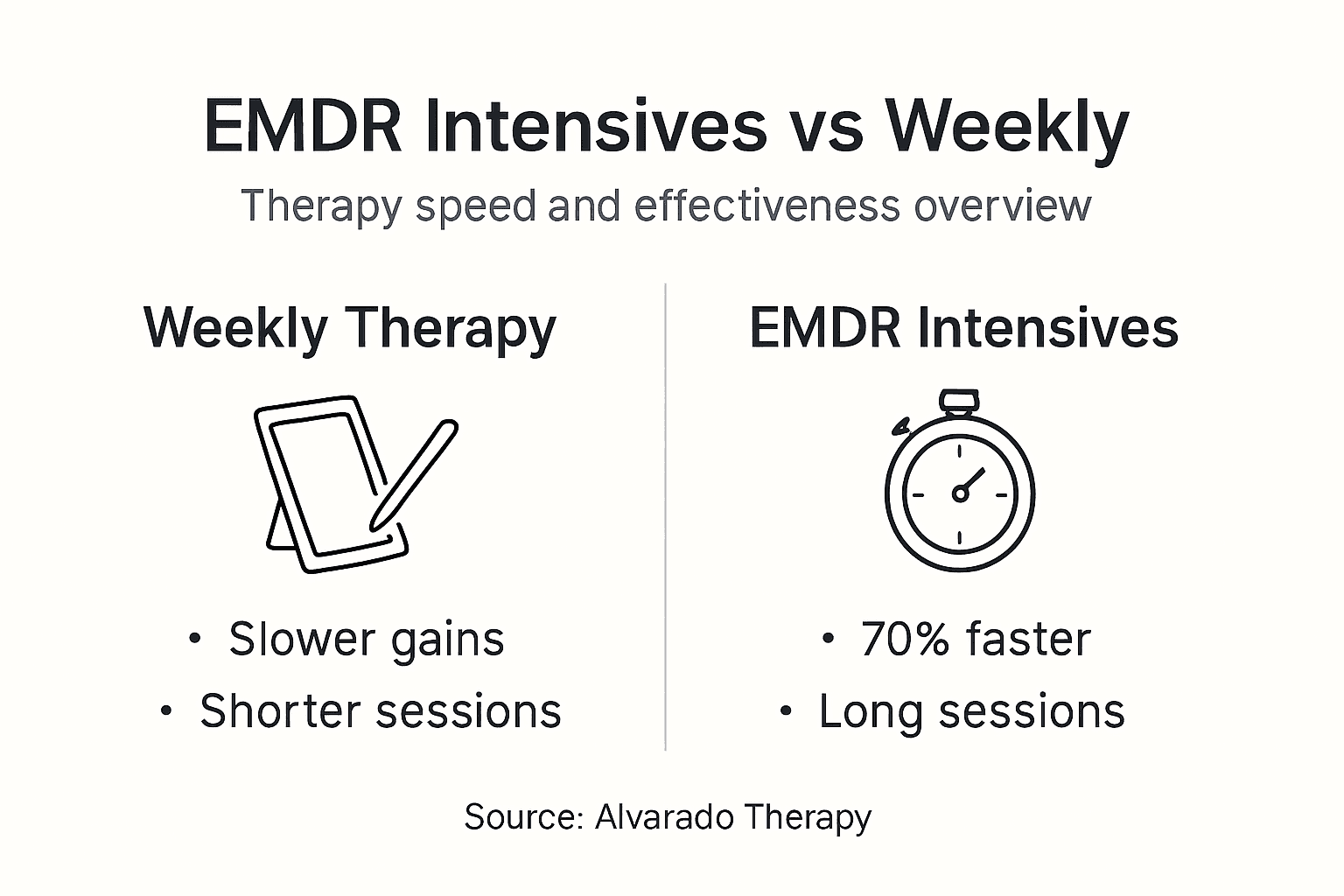
Complex trauma responds particularly well to intensive formats because interconnected memories can be addressed systematically within single sessions. Rather than touching on one traumatic incident per week, intensives allow comprehensive processing of trauma clusters and their relational patterns.
| Aspect | Traditional Weekly Therapy | EMDR Intensives |
|---|---|---|
| Session Length | 50-60 minutes | 4-6 hours per day |
| Total Timeline | 6-12 months typical | 1-3 days concentrated |
| Processing Depth | Single memory per session | Multiple memory networks |
| Momentum | Interrupted weekly | Sustained continuously |
| Cost Efficiency | Lower per session | Higher per session but fewer total |
The structured environment of intensives provides consistent safety throughout processing. Tailored pacing minimizes risk of overwhelm and supports emotional safety, with therapists monitoring your capacity and adjusting intensity in real time. Frequent check-ins and integrated grounding exercises maintain your window of tolerance.
For grief processing, intensives offer space to fully experience and integrate loss without the interruption of returning to daily responsibilities between sessions. The concentrated format honors the depth of grief work while preventing the prolonged exposure to painful memories that can occur with stretched-out weekly processing.
Pro Tip: Intensives work best for complex trauma when you've already established some emotional regulation skills. If daily functioning feels extremely unstable, consider beginning with weekly stabilization sessions before transitioning to intensive processing.
The faster symptom reduction isn't about rushing healing. It reflects the brain's natural capacity to process trauma efficiently when given optimal conditions. Intensives remove obstacles that weekly therapy inadvertently creates, allowing your inherent healing mechanisms to operate at full capacity.
Common Misconceptions about EMDR Intensives and Bilingual Therapy
Several myths prevent adults from considering intensive or bilingual trauma therapy options. Understanding the facts helps you make informed decisions based on evidence rather than misconceptions.
Myth: EMDR intensives are too emotionally overwhelming. Reality: Experienced therapists structure intensives with careful pacing, regular grounding breaks, and continuous assessment of your processing capacity. The extended timeframe actually allows for more thorough stabilization than rushed weekly sessions.
Myth: Switching between languages during bilingual therapy causes cognitive confusion. Reality: Research shows bilingualism enhances cognitive flexibility and emotional processing. Accessing trauma memories in the language they were encoded actually improves treatment outcomes rather than hindering them.
Myth: Long-term weekly therapy is always superior to intensive formats. Reality: For many trauma types, intensives match or exceed the effectiveness of weekly therapy while requiring dramatically less total time. The continuous processing prevents the regression that can occur between weekly appointments.
Myth: Intensives push you too hard too fast. Reality: Therapists continuously monitor your responses and adjust accordingly. If processing becomes too activating, they shift to stabilization techniques or take breaks. You remain in control of pacing through ongoing communication.
Myth: Only severe cases need intensives. Reality: Intensives benefit anyone seeking efficient trauma resolution, regardless of severity. The format simply optimizes conditions for healing, making it appropriate for various trauma presentations.
These misconceptions often stem from understandable caution about trauma work. However, letting fears based on myths prevent you from considering intensives means potentially missing a treatment format that could significantly accelerate your healing journey.
Preparation, Eligibility, and Practical Considerations for EMDR Intensives
Successful EMDR intensives require thorough preparation to ensure you're ready for concentrated trauma processing. Extended intake assessments and grounding technique teaching are necessary foundations before scheduling intensive sessions.
Preparation typically follows these steps:
Complete comprehensive trauma assessment identifying memory networks and treatment targets
Establish emotional regulation skills through practice with grounding and self-soothing techniques
Build internal resources using imagery and positive memory strengthening exercises
Ensure stable external supports including safe housing and reliable transportation
Clear schedule for intensive days plus recovery time immediately following
Arrange childcare or other responsibilities to protect uninterrupted focus
Session logistics vary by therapist and client needs, but typical intensives span one to three days with four to six hours of therapy daily. Some practitioners offer weekend formats, while others schedule weekday intensives to minimize life disruption.
| Consideration | Details | Notes |
|---|---|---|
| Session Length | 4-6 hours per day | Includes breaks and stabilization time |
| Total Days | 1-3 days typical | Based on trauma complexity and treatment goals |
| Cost Range | $200-400 per hour | Higher than weekly but fewer total sessions needed |
| Preparation Time | 2-4 weeks minimum | Establishing skills and resources before intensive |
| Recovery Period | 1-3 days post-intensive | Rest and integration time after concentrated work |
Cost considerations require perspective beyond per-session fees. While intensives cost more upfront, the total investment often proves lower than months of weekly therapy when factoring in time off work, transportation, and cumulative session fees. The faster return to full functioning also has economic value.
Not everyone qualifies for intensives immediately. Active substance dependence, severe dissociative disorders, or acute suicidal ideation typically require stabilization through traditional therapy before intensive processing becomes safe. Your therapist assesses readiness through careful evaluation.
Pro Tip: Have an honest conversation with your therapist about any concerns regarding intensive readiness. Rushing into concentrated trauma work before you're prepared can backfire, while unnecessary caution prolongs suffering. Collaborative assessment finds the right timing.
Explore Expert EMDR Intensive Therapy at Alvarado Therapy
If you're ready to accelerate your trauma recovery through culturally responsive, bilingual EMDR intensives, Alvarado Therapy offers specialized services designed for California adults healing from childhood trauma, PTSD, complex trauma, and grief. Our licensed therapists provide online EMDR trauma therapy throughout California, combining intensive formats with the cultural sensitivity essential for deep healing.
Cost considerations require perspective beyond per-session fees. While intensives cost more upfront, the total investment often proves lower than months of weekly therapy when factoring in time off work, transportation, and cumulative session fees. The faster return to full functioning also has economic value.
Not everyone qualifies for intensives immediately. Active substance dependence, severe dissociative disorders, or acute suicidal ideation typically require stabilization through traditional therapy before intensive processing becomes safe. Your therapist assesses readiness through careful evaluation.
Pro Tip: Have an honest conversation with your therapist about any concerns regarding intensive readiness. Rushing into concentrated trauma work before you're prepared can backfire, while unnecessary caution prolongs suffering. Collaborative assessment finds the right timing.
Explore Expert EMDR Intensive Therapy at Alvarado Therapy
If you're ready to accelerate your trauma recovery through culturally responsive, bilingual EMDR intensives, Alvarado Therapy offers specialized services designed for California adults healing from childhood trauma, PTSD, complex trauma, and grief. Our licensed therapists provide online EMDR trauma therapy throughout California, combining intensive formats with the cultural sensitivity essential for deep healing.

We understand that effective trauma processing requires more than clinical expertise. It demands therapists who recognize your cultural context, speak your language, and create safety through genuine understanding. Our PTSD and complex trauma services integrate evidence-based EMDR protocols with culturally informed care, helping you process traumatic memories without sacrificing the authentic connection necessary for healing. Schedule your consultation to discuss whether EMDR intensives align with your therapy goals and readiness.
Frequently Asked Questions
What makes EMDR intensives more effective than weekly sessions?
Intensives maintain continuous nervous system engagement without the interruption of week-long breaks between appointments. This sustained processing allows your brain to complete trauma resolution cycles that would otherwise fragment across months. The concentrated format prevents the regression that commonly occurs when returning to daily life between weekly sessions.
How do bilingual therapists support trauma healing?
Bilingual therapists enable processing in your first language, providing direct access to emotions and memories as they were originally encoded. This eliminates the subtle dissociation that can occur when translating traumatic experiences into a second language. Cultural understanding accompanies language fluency, creating deeper safety through recognition of values and experiences that shape your trauma.
Are EMDR intensives suitable for everyone with PTSD?
Intensives work well for many PTSD presentations but require adequate emotional regulation skills and life stability first. Active substance dependence, severe dissociation, or acute crisis typically need stabilization through weekly therapy before intensive processing becomes safe. Thorough assessment determines individual readiness and appropriate timing.
What preparations are needed before attending an intensive?
You'll learn grounding techniques, establish internal resources through imagery exercises, and complete trauma assessment identifying treatment targets. External preparation includes clearing your schedule for intensive days plus recovery time, arranging childcare or other responsibilities, and ensuring stable housing and support. Most clients need two to four weeks of preparation work.
How is client safety maintained during extended sessions?
Therapists continuously monitor your processing capacity through verbal check-ins and observation of physiological signs. Regular grounding breaks, pacing adjustments, and immediate stabilization when needed prevent overwhelming activation. The extended timeframe actually allows more thorough regulation than brief weekly sessions where time constraints can rush closure.
