
Growing up with silent pain or unspoken memories can make everyday life feel heavy for many Spanish-speaking adults in California. The struggle to understand trauma—especially childhood trauma or PTSD—often gets tangled in cultural myths and family expectations. Trauma recovery means finding safety and meaning on your own terms, not just returning to the past. This guide unpacks how recovery works, separates truth from myths, and shows what trauma-informed therapy can offer for real, lasting healing.
Table of Contents
Key Takeaways
| Point | Details |
|---|---|
| Understanding Trauma Recovery | Trauma recovery involves regaining stability and safety, and creating a new relationship with past experiences. It's essential to acknowledge that recovery is non-linear and differs for everyone. |
| Addressing Myths That Hinder Healing | Common myths about trauma can prevent individuals from seeking help. Recognizing these misconceptions can empower individuals to engage in their recovery journey. |
| Importance of Cultural Sensitivity | Spanish-speaking adults may face unique barriers during recovery, including cultural stigma and language differences. Seeking culturally responsive therapy is crucial for effective healing. |
| Effective Approaches to Treatment | EMDR is an effective therapy for trauma, allowing the brain to process traumatic memories without needing to relive them. Understanding the phases of EMDR can enhance anxiety reduction and treatment efficacy. |
Defining Trauma Recovery and Common Myths
Trauma recovery is the process of regaining stability, safety, and meaning after experiencing a traumatic event. It's not about "getting over it" or returning to who you were before—recovery is about building a new relationship with what happened and moving forward.
For Spanish-speaking adults in California, trauma recovery often involves addressing childhood wounds, PTSD symptoms, or complex trauma that affects daily life. The path looks different for everyone, shaped by your unique experiences, cultural values, and support systems.
What Trauma Recovery Actually Means
Trauma recovery is about three core shifts:
Restoring physical and emotional safety. Your nervous system learns to feel secure again, reducing fight-or-flight responses.
Processing the experience. You work through the traumatic memories and emotions in ways that don't overwhelm you.
Reclaiming your life. You rebuild relationships, trust yourself, and engage with activities that matter to you.
Recovery isn't linear. Some days feel like progress; others feel like stepping backward. This is normal and expected.
True recovery means learning to live alongside your trauma, not being erased by it.
Myths That Block Healing
Misunderstandings about trauma can prevent people from seeking help. PTSD is a natural response to traumatic events, not a sign of weakness or personal failure. Many Spanish-speaking adults internalize shame around trauma, believing suffering in silence shows strength. The opposite is true.
Here are myths that often hold people back:
"I should be over this by now." Healing timelines are individual. Some people need months; others need years. There's no "correct" schedule.
"Talking about it makes it worse." Avoiding trauma keeps it stuck in your body and mind. Processing it with a skilled therapist actually reduces symptoms.
"Real strength means handling it alone." Seeking help demonstrates courage, not weakness. Healing pathways often require professional support to work effectively.
"I'm broken and can't change." Trauma reshapes the brain, but neuroplasticity—the brain's ability to form new connections—means recovery is always possible.
"Only combat veterans experience real trauma." Trauma from childhood abuse, immigration stress, domestic violence, or loss is equally valid and treatable.
Many Spanish-speaking families carry unspoken rules about emotional expression. Discussing feelings or seeking therapy might feel like betraying family or culture. Recovery work honors your heritage while prioritizing your healing.
Consejo profesional Identify one myth you've believed about your own trauma, then write down why it's no longer serving you—this small act of awareness is where recovery begins.
Variations of Trauma and Their Impact
Trauma is not one-size-fits-all. The type of trauma you experience shapes how it affects your brain, emotions, and relationships. Understanding which variation applies to you helps explain why recovery looks different for each person.
For Spanish-speaking adults, trauma often stems from multiple sources: childhood abuse, family separation due to immigration, domestic violence, or community violence. Some experience a single overwhelming event; others endure years of ongoing harm. Both create real, treatable conditions.
Three Main Types of Trauma
Acute trauma results from a single, sudden event. A car accident, assault, or sudden loss falls here. Your nervous system experiences intense shock, but with proper support, many people recover within weeks or months.
Chronic trauma happens repeatedly over time. Ongoing domestic violence, workplace harassment, or sustained poverty creates a different neurological response. Your brain stays hypervigilant, expecting danger to return.
Complex trauma develops from prolonged exposure to multiple traumatic events, often during childhood. Complex trauma shapes how you relate to others, affecting trust, emotional regulation, and self-perception. Many Spanish-speaking adults who survived childhood abuse, family instability, or immigration trauma experience complex trauma.
Each type affects your brain differently. Different trauma types impact emotional regulation and trust in distinct ways, influencing which healing approaches work best.
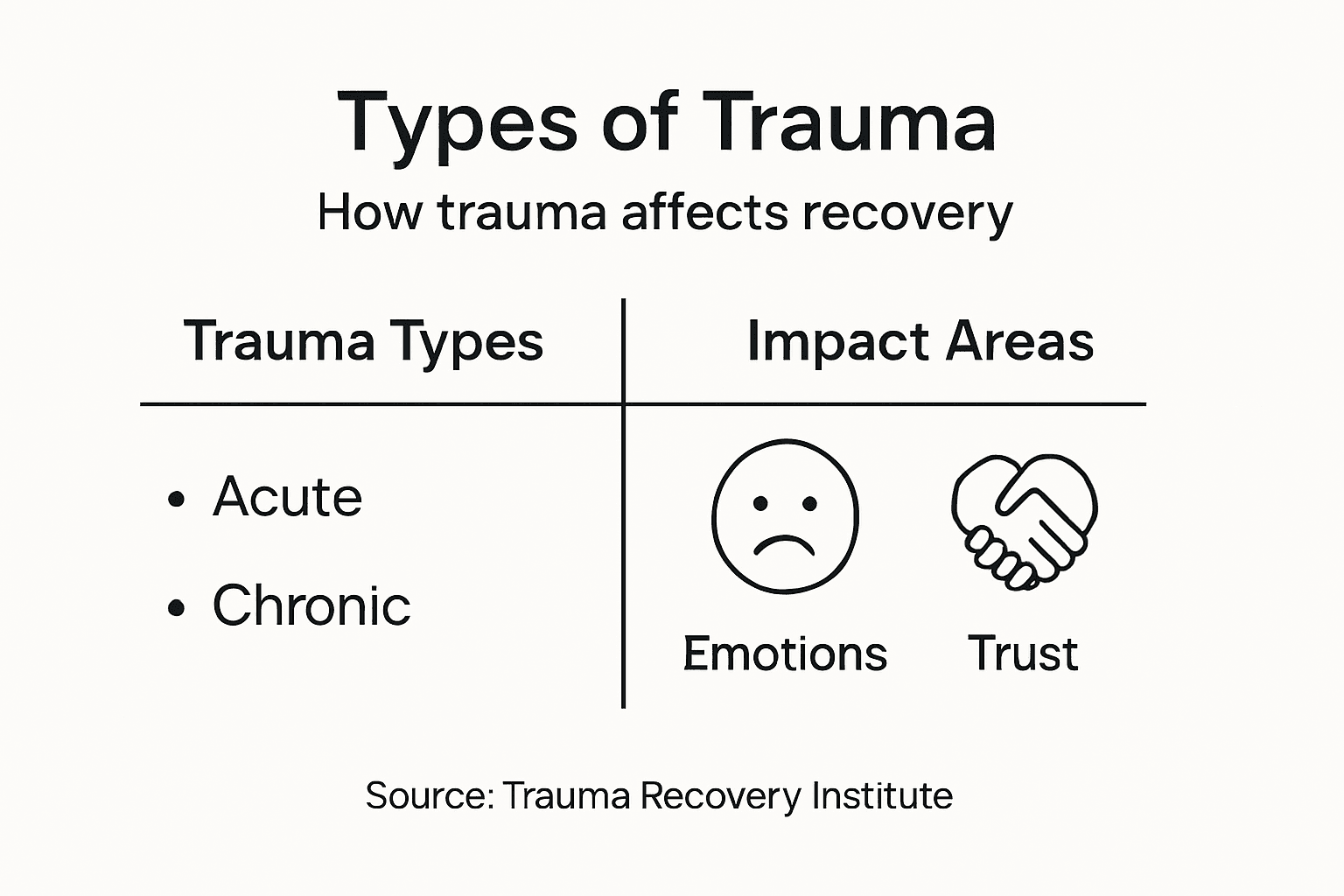
Here is a comparison of trauma types and how they may affect recovery outcomes:
| Trauma Type | Typical Origin | Recovery Challenges | Healing Opportunities |
|---|---|---|---|
| Acute | Sudden, single event | Intense early symptoms | Faster response to treatment |
| Chronic | Repeated, ongoing exposure | Persistent anxiety, exhaustion | Building lasting safety and resilience |
| Complex | Prolonged, multiple traumas | Trust and emotion regulation | Deep restructuring of self and trust |
How Each Type Shows Up
Recognizing your trauma type helps you understand your symptoms:
Acute trauma symptoms: Nightmares, startle responses, difficulty sleeping—usually most intense immediately after the event.
Chronic trauma symptoms: Constant anxiety, exhaustion, difficulty trusting others, feeling unsafe even in safe situations.
Complex trauma symptoms: Shame, difficulty identifying emotions, problems in relationships, fragmented memories, emotional numbness alternating with intense reactions.
For Spanish-speaking families, cultural factors compound these symptoms. You might minimize your pain because your family survived "worse," or feel pressure to stay silent to protect family honor.
Your trauma is valid, no matter how it compares to someone else's experience.
Trauma also affects your body, not just your mind. Your amygdala (the brain's alarm system) becomes hyperactive, triggering fight-or-flight responses to reminders of the trauma. Your hippocampus (memory center) struggles to process what happened, leaving fragmented, overwhelming memories.
The good news: These brain changes respond to treatment. Therapy rewires these patterns, restoring calm and coherent memory.
Consejo profesional Notice which trauma type resonates with your experience, then share this observation with a trauma-informed therapist—this clarity accelerates your healing journey.
Core Principles of Trauma-Informed Care
Trauma-informed care is not a specific treatment—it's a philosophy that shapes how therapists, counselors, and support systems approach your healing. It recognizes that trauma affects every part of who you are and creates safety to prevent re-traumatization.
For Spanish-speaking adults, this approach matters deeply. It honors your cultural values, family dynamics, and the unique ways trauma shows up in your life. A trauma-informed therapist doesn't just treat symptoms; they create an environment where healing is possible.
Six Core Principles
Effective trauma-informed care rests on six foundational principles:
Safety. You feel physically and emotionally safe with your therapist and in the therapy space.
Trustworthiness. Your therapist is transparent about treatment, explains what's happening, and follows through on commitments.
Choice and control. You decide the pace and direction of your healing. Your therapist asks permission, never forces exploration.
Collaboration. Treatment is a partnership, not something done to you. Your insights and goals guide the work.
Empowerment. Therapy builds on your strengths and helps you recognize your resilience and ability to heal.
Cultural sensitivity. Trauma-informed care recognizes cultural differences and addresses how your background shapes trauma and recovery.
These principles apply universally, but the way they show up depends on your specific needs.
What This Looks Like in Practice
A trauma-informed therapist with Spanish-speaking clients might ask permission before exploring painful memories instead of pushing. They validate your experience without judgment, understanding that silence or emotional numbness are survival strategies, not weakness.
They recognize that family loyalty and community values matter. Recovery doesn't mean abandoning your family; it means developing healthy boundaries while honoring relationships.
Trauma-informed care sees your survival strategies as intelligent adaptations, not problems to fix.
Your therapist also understands intersectionality—how immigration status, gender, socioeconomic factors, and other identities shape your trauma and recovery. This is especially important for Spanish-speaking adults navigating systemic barriers alongside personal healing.
When choosing a therapist, look for someone who understands trauma-sensitive approaches to creating safety. They should explain their methods clearly and give you control over the pace.
Therapy should never feel like pressure. If your therapist rushes you, minimizes your experience, or makes decisions without your input, that's not trauma-informed care.
Consejo profesional When interviewing a potential therapist, ask how they apply trauma-informed principles and whether they have experience with your specific background—their answer reveals whether they truly understand your needs.
EMDR Therapy and Recovery Process Explained
EMDR (Eye Movement Desensitization and Reprocessing) is a structured therapy that helps your brain process traumatic memories so they no longer control your life. It sounds unusual—moving your eyes while discussing trauma—but decades of research confirm its effectiveness for PTSD, childhood trauma, and complex trauma.
For Spanish-speaking adults, EMDR offers relief without requiring you to relive trauma in detail. You stay in control while your brain naturally processes what happened.
How EMDR Works
Trauma gets "stuck" in your brain because the memory wasn't processed normally. You remember it in fragments—images, sensations, emotions—without a coherent narrative. EMDR uses bilateral stimulation (usually eye movements) to activate both brain hemispheres, allowing your brain to process the memory and integrate it.
The process mirrors what happens during REM sleep, when your brain naturally processes emotions and experiences. EMDR essentially jumpstarts this natural healing mechanism.
The Eight Phases
EMDR follows structured phasesthat guide your recovery systematically:
History and planning. Your therapist learns about your trauma and current symptoms, building rapport and trust.
Preparation. You learn grounding techniques and coping strategies for emotional regulation.
Assessment. You identify the traumatic memory, the negative belief it created, and associated physical sensations.
Desensitization. While moving your eyes, you focus on the trauma while your therapist guides bilateral stimulation. Distressing emotions typically decrease.
Installation. Your therapist strengthens positive beliefs to replace trauma-related negative thoughts.
Body scan. You check for remaining physical tension connected to the trauma.
Closure. Your therapist ensures you feel stable before ending the session.
Reevaluation. At future sessions, you assess progress and address remaining trauma.
You control the pace throughout. Your therapist never forces faster processing.
EMDR works because it lets your brain do what it naturally wants to do—heal.
Why EMDR Matters for Your Recovery
Unlike talk therapy where you repeatedly describe trauma, EMDR minimizes re-traumatization. You don't need to detail every horrible moment. This is especially important for Spanish-speaking adults who may feel shame discussing personal trauma or who've experienced cultural suppression of emotional expression.
Many clients report significant symptom reduction in 6-12 sessions, though complex trauma may require longer treatment. You'll likely notice flashbacks decreasing, nightmares fading, and emotional reactivity improving.
Consejo profesional Before starting EMDR, ask your therapist to explain each phase clearly and discuss any concerns about the eye movement component—understanding the process reduces anxiety and increases effectiveness.
Cultural and Legal Factors for Spanish-Speaking Clients
Trauma recovery doesn't happen in a vacuum. Your cultural background, family values, immigration status, and legal circumstances shape your healing path. Spanish-speaking adults face unique barriers that mainstream trauma therapy often overlooks.
Effective recovery requires a therapist who understands these complexities and tailors treatment to your specific context, not a one-size-fits-all approach.
Cultural Values and Family Loyalty
Spanish-speaking cultures often prioritize family cohesion, respect for elders, and emotional restraint. Speaking about family trauma or seeking therapy can feel like betrayal. You might worry about shame, judgment, or disrupting family harmony.
Yet healing doesn't require abandoning your values. A culturally responsive therapist helps you honor family bonds while setting healthy boundaries and processing your pain.
Many Spanish-speaking clients struggle with concepts like "toxic family members" because family relationships are non-negotiable in your culture. Recovery work respects this reality, helping you maintain connection while protecting yourself.
Immigration and Legal Concerns
Immigration status creates additional trauma layers. Fear of deportation, separation from loved ones, or undocumented status adds stress that compounds existing trauma. Culturally responsive care addresses the unique trauma experiences of immigrant populations, including legal vulnerability.
Therapist-client confidentiality protects your privacy, but it's reasonable to ask your therapist directly about confidentiality limits and how they handle sensitive immigration information. A trustworthy therapist will explain clearly.
Language and Communication
Speaking about trauma in English—a non-native language—requires emotional energy you don't have. You might minimize symptoms, struggle to find words for feelings, or feel disconnected from your own experience.
Bilingual therapists understand the nuanceof expressing trauma in Spanish versus English. They recognize cultural idioms, family dynamics, and communication patterns that English-only therapists might miss.
Request a Spanish-speaking therapist if possible. If unavailable, discuss language needs openly. Your therapist should check for understanding frequently.
Systemic Barriers to Recovery
Spanish-speaking adults often face:
Limited access to culturally informed mental health services
Financial barriers (many therapists don't accept insurance; therapy costs add up)
Stigma within communities about mental health treatment
Discrimination or bias from healthcare providers
Work schedules that make regular therapy difficult
Your barriers to healing are real. A good therapist acknowledges them and works with your constraints, not against them.
Alvarado Therapy addresses many of these barriers through bilingual services, flexible scheduling, online options throughout California, and sliding scale fees. But if you face obstacles, discuss them with your therapist. Healing shouldn't require sacrificing financial stability or safety.
This summary outlines common barriers Spanish-speaking adults face in accessing trauma recovery:
| Barrier | Impact on Recovery | Strategy for Improvement |
|---|---|---|
| Language differences | Miscommunication, missed nuance | Seek bilingual therapist |
| Financial limitations | Restricted access to therapy | Use sliding scale, flexible options |
| Cultural stigma | Hesitancy to seek support | Education and community engagement |
| Legal/immigration fears | Added stress, confidentiality concerns | Find culturally responsive care |
Consejo profesional: Before your first appointment, write down any cultural, legal, or family concerns you want your therapist to know about—this ensures they understand your full context from day one.
Take the Next Step Toward Healing From Trauma Today
Recovering from trauma as a Spanish-speaking adult comes with unique challenges such as navigating cultural values, immigration stress, and the need for trauma-informed, bilingual care. If you find yourself struggling with childhood trauma, PTSD, or the complex impact of repeated trauma, you are not alone. Alvarado Therapy offers culturally sensitive support designed to restore your safety, empower your choices, and guide you through trauma recovery with methods like EMDR that respect your pace and experience.
Discover trusted therapists who understand your background and needs by exploring our Online in California — Meet Our Team — Alvarado Therapy page. Whether you prefer in-person care in Ventura or the flexibility of online sessions, our bilingual therapists are ready to provide compassionate, trauma-informed therapy. Begin your healing journey now by visiting Alvarado Therapy where you can find detailed service information and easily book your first appointment. Healing starts when you take that first step—don’t wait to find clarity and empowerment today.
Frequently Asked Questions
What is trauma recovery?
Trauma recovery is the process of regaining stability, safety, and meaning after experiencing a traumatic event. It involves restoring physical and emotional safety, processing the trauma, and reclaiming your life.
Why is trauma recovery important for Spanish-speaking adults?
Trauma recovery is crucial for Spanish-speaking adults as they may face unique barriers such as cultural stigma, family loyalty, and legal concerns. Addressing these factors through effective recovery can promote overall well-being and ensure that healing respects cultural values.
What are some common myths about trauma recovery?
Common myths include the belief that one should "get over" their trauma quickly, that talking about it makes it worse, and that real strength means handling it alone. These misconceptions can prevent individuals from seeking help.
What are the types of trauma that can affect recovery?
The three main types of trauma are acute trauma, which results from a single event; chronic trauma, arising from repeated exposure; and complex trauma, stemming from prolonged multiple traumatic events, often in childhood. Each type influences how recovery manifests and the challenges faced.
