
Role of Bilingual Therapists in Trauma Recovery

Many bilingual therapists in California recognize that providing trauma therapy in two languages involves more than simply switching words. The process demands sensitivity to both cultural identity and linguistic context, especially for Spanish-speaking clients whose deepest memories are tied to their first language. Addressing trauma through a bilingual lens means moving beyond common myths and fully embracing the ways culture, language, and healing are interconnected. In this article, you will get insight on how bilingual therapy addresses the whole person and enhances trauma recovery for Spanish-speaking communities.
Table of Contents
Key Takeaways
| Point | Details |
|---|---|
| Bilingual Therapy Benefits | Bilingual therapy allows clients to process trauma in the language where it originated, enhancing emotional understanding and healing. |
| Common Myths About Bilingual Therapy | Misconceptions about bilingualism can hinder effective treatment; bilingual therapy actually offers cognitive and social advantages. |
| Challenges for Spanish-Speaking Clients | Spanish-speaking clients often face barriers like a lack of available bilingual therapists and cultural competence in treatment. |
| Cultural Responsiveness is Essential | A culturally responsive therapist integrates clients’ cultural identities, improving engagement and trust, which is crucial for effective therapy. |
What Bilingual Therapy Involves and Common Myths
Bilingual therapy operates differently than monolingual treatment because your therapist is working in two languages simultaneously. This goes far beyond simple translation. Your clinician maintains therapeutic presence, cultural awareness, and clinical precision while switching between English and Spanish based on what feels most natural for your healing.
During a session, you might discuss childhood memories in Spanish because that's the language tied to those experiences, then shift to English when processing current relationships. The therapist tracks emotional nuances in both languages, recognizing that trauma often lives in the language it was experienced in. Code-switching (moving between languages) isn't confusion. It's how bilingual people think and heal authentically.
Misconceptions about bilingualism create real barriers to effective treatment. One persistent myth claims that using two languages in therapy causes cognitive confusion or slows healing. Research shows this is simply false. Academic evidence on bilingualism myths demonstrates that bilingualism actually provides cognitive and social benefits, and bilingual therapy doesn't harm progress.
Another common myth is that English fluency means you don't need Spanish-language therapy. This misses a crucial point: trauma encoded in Spanish won't fully process through English alone. If you experienced childhood abuse while Spanish was your primary language, your nervous system holds those memories in Spanish. Processing them requires accessing that linguistic and cultural foundation.
Some people believe bilingual therapists simply translate concepts from English therapy models. Actually, trauma-informed bilingual therapists understand that cultural context and language identity are inseparable from healing. They integrate culturally relevant approaches that honor your background while addressing trauma through evidence-based methods like EMDR, which works powerfully across languages.
Much of your trauma recovery depends on feeling truly understood. When a therapist speaks your language and understands your culture, you don't waste energy translating experiences or explaining context. You can focus entirely on healing.
Here is a comparison of monolingual and bilingual trauma therapy approaches:
| Therapy Type | Language Use | Cultural Integration | Impact on Healing |
|---|---|---|---|
| Monolingual Therapy | English only | Limited cultural context | May overlook key trauma |
| Bilingual Therapy | English and Spanish | Deep cultural awareness | Addresses whole person |
Pro tip: When interviewing bilingual therapists, ask specifically how they integrate language choice into treatment rather than assuming they simply offer services "in Spanish."
Unique Challenges Faced by Spanish-Speaking Clients
Spanish-speaking clients navigating trauma recovery in California face obstacles that monolingual English speakers rarely encounter. The most obvious barrier is availability. There simply aren't enough bilingual therapists qualified to provide trauma-informed care in Spanish, leaving many clients either untreated or forced into monolingual English therapy despite their language preferences.

When bilingual therapists aren't available, some clinics rely on interpreters. This creates a significant problem for trauma work. An interpreter sitting in the room changes the therapy dynamic entirely. You can't build the same level of trust and safety when a third party is present. Trauma disclosure requires vulnerability, and many Spanish-speaking clients hold back when a stranger is translating their deepest experiences.
Cultural competency gaps also create real problems. Inadequate training on language switching and cultural practices means therapists may not understand how language choice connects to healing. They might push clients toward English without recognizing that Spanish-language trauma requires Spanish-language processing. This mismatch between the language of the injury and the language of treatment delays recovery.
Another challenge involves immigration-related trauma. Many Spanish-speaking clients in California carry stress from immigration experiences, family separation, or uncertain legal status. These experiences require therapists who understand both trauma response and immigration context. Standard trauma training doesn't address the specific barriers these clients face.
Language itself becomes therapeutic territory that untrained clinicians miss. The word "verguenza" (shame) carries cultural weight that "shame" doesn't capture in English. Cultural concepts of family loyalty, respect for authority, and emotional expression differ significantly between Spanish and American cultures. A truly bilingual therapist recognizes these nuances and works within them rather than against them.
Access barriers also compound the problem. Spanish-speaking clients may distrust mental health systems due to past experiences with discrimination or inadequate care. Finding a bilingual, trauma-informed therapist who also understands these systemic barriers is exceptionally difficult.
Below is a summary of common barriers faced by Spanish-speaking clients and possible solutions:
| Barrier | Impact on Clients | Solution |
|---|---|---|
| Lack of bilingual therapists | Reduced access to care | Expand bilingual recruitment |
| Interpreter reliance | Lower trust, less safety | Train clinicians in bilingual care |
| Cultural competence gaps | Mismatched treatment | Require cultural training |
| Systemic bias/discrimination | Distrust, delayed recovery | Support community partnerships |
Pro tip: When seeking therapy, ask directly whether your therapist has specific training in bilingual trauma treatment and whether they work without interpreters to maintain therapeutic confidentiality and safety.
Cultural Responsiveness in Trauma-Informed Care
Cultural responsiveness isn't an add-on to trauma treatment. It's the foundation. When a bilingual therapist works with you, they're not just translating words. They're honoring your cultural identity as central to your healing journey. This matters because trauma doesn't exist in a vacuum. It lives within your cultural context, your family values, your spiritual beliefs, and yes, your language.
A truly culturally responsive therapist understands that your relationship with authority, family loyalty, and emotional expression varies based on your cultural background. They recognize that American individualism differs sharply from many Spanish-speaking cultures that prioritize family unity and collective identity. Instead of pushing you toward independence as "progress," they help you heal while maintaining the cultural values that sustain you.
Providing services in native languages improves therapy engagementand reduces dropout rates significantly. This isn't surprising. When your therapist speaks your language, you're not managing a language barrier on top of processing trauma. You can access the full emotional depth of your experiences without translation loss. The nuances, the metaphors, the cultural references all land correctly.
Cultural responsiveness also means understanding your specific context. For Spanish-speaking clients in California, this might include immigration trauma, family separation, or experiences with systemic discrimination. A culturally responsive therapist doesn't treat these as side issues. They integrate them directly into your trauma recovery work.
Language shapes how you express and process trauma, influencing the therapeutic relationship itself. Your therapist's awareness of these dynamics prevents misunderstandings and builds genuine safety. When they understand that certain topics carry cultural sensitivity, they approach them with appropriate respect and awareness.
Cultural humility is different from cultural competence. Competence suggests you've "learned" a culture. Humility means recognizing you're always learning, that you don't know everything about your client's experience, and that you remain curious and respectful. This attitude transforms therapy from a provider delivering service to a genuine partnership focused on your unique healing.
Pro tip: _Ask your therapist directly how they integrate your cultural values into treatment and whether they have specific experience working with Spanish-speaking trauma survivors in California."
How Bilingual Therapists Enhance Trauma Recovery
Bilingual therapists bring something essential to trauma work that monolingual providers cannot replicate. They understand the intersection of language, culture, and healing in ways that directly accelerate recovery. This isn't about having two languages. It's about recognizing that your trauma lives in a specific linguistic and cultural context that requires matching precision to heal.
When you work with a bilingual therapist, you're not translating your internal experience into English. You're expressing it in whatever language feels most authentic. Some clients find that Spanish accesses emotional depth that English cannot. Others shift between languages depending on the memory or feeling they're processing. Therapists trained in bilingual trauma counseling understand how language switching supports emotional regulation and deeper expression, making sessions more efficient and effective.
Trust develops differently when your therapist shares your language. There's no intermediary explaining your pain. There's no translation lag. Your therapist hears not just what you say but how you say it, the pauses, the word choices, the metaphors that carry cultural meaning. This creates a therapeutic alliance built on genuine understanding rather than approximation.
Bilingual therapists also recognize systemic barriers that monolingual providers might miss. They understand immigration-related trauma, acculturation stress, and discrimination experiences at a deeper level. They don't ask you to explain your cultural context. They already know it. This saves enormous energy that you can redirect toward actual healing.
The isolation that many Spanish-speaking trauma survivors experience begins to dissolve in bilingual therapy. You're not the only one who understands these experiences. Your therapist gets it. They understand why family separation carries such weight, why certain traditions matter, why some English concepts don't translate to your worldview. Culturally and linguistically congruent care reduces client isolation and enhances trust, creating the foundation necessary for deep trauma processing.
This isn't incremental improvement. Research shows that bilingual clients achieve better outcomes when working with bilingual therapists because the therapy addresses the whole person, not just the trauma in isolation.
Pro tip: _Look specifically for therapists with EMDR or trauma-focused training who also have explicit bilingual counseling experience, not just those who happen to speak Spanish."
Training, Ethics, and Clinical Best Practices
Not every bilingual therapist has training in bilingual trauma work. This distinction matters enormously. Speaking two languages doesn't automatically mean a clinician understands the therapeutic dynamics specific to bilingual clients. Proper training addresses language switching, cultural identity integration, and the ethical complexities that arise when working across languages.
Most traditional therapy training programs treat language as incidental to treatment. A therapist might learn EMDR or cognitive behavioral therapy, but rarely learn how these approaches function differently when clients code-switch or process trauma in their non-dominant language. Training in bilingual therapy requires focused curricula addressing language dynamics and linguistic competency to ensure therapists can actually serve bilingual clients effectively.
Ethics in bilingual trauma work extend beyond standard confidentiality agreements. Your therapist must understand how language choice itself carries therapeutic meaning. When you switch to Spanish, that's not random. It signals something emotionally significant. A trained bilingual therapist recognizes this and explores it intentionally. They also manage the practical challenges like maintaining confidentiality when interpreters might be involved in scheduling or intake.
Cultural humility becomes an ethical obligation. Your therapist must continuously examine their own assumptions about language, culture, and identity. They can't treat bilingual experience as something they've "mastered." Instead, they approach each client recognizing they're learning about that specific person's relationship with language and culture. This requires ongoing reflection and supervision that addresses these unique dynamics.
Safety and efficacy in bilingual counseling depend on ongoing training in cultural competence and language-specific ethical standards. Quality bilingual therapists engage in regular supervision specifically focused on bilingual dynamics. They stay current with research on language and trauma. They recognize gaps in their training and address them proactively.
When selecting a bilingual trauma therapist, ask about their specific training in bilingual counseling, their supervision structure, and how they manage language-related clinical decisions. These questions reveal whether they're simply fluent or actually trained in bilingual therapeutic practice.
Pro tip: _Ask potential therapists about their specific bilingual training credentials and whether they receive supervision addressing language dynamics in treatment."
Barriers and Solutions for Expanding Access
Access to bilingual trauma therapy in California faces real structural barriers. The shortage of trained bilingual therapists is just the beginning. Insurance reimbursement rates often don't reflect the additional expertise required for bilingual work. Training programs rarely include bilingual competency as core curriculum. Even research funding prioritizes monolingual studies, leaving gaps in evidence-based practices for bilingual clients.
Monolingual biases run deep in mental health systems. Many clinics operate under the assumption that English therapy is sufficient if a client speaks English. They don't recognize that fluent English speakers may still process trauma more effectively in Spanish. Overcoming barriers to bilingual access requires challenging monolingual biases in research and clinical settings that systematically underestimate bilingual populations' specific needs.
Solutions exist but require commitment. Training programs need to integrate bilingual competency into their curricula rather than treating it as a specialty. Universities could develop dedicated tracks for bilingual trauma therapy. Insurance companies must adjust reimbursement to account for the specialized expertise required. Policies supporting multilingualism in healthcare settings create systemic change rather than relying on individual therapists to fill gaps.
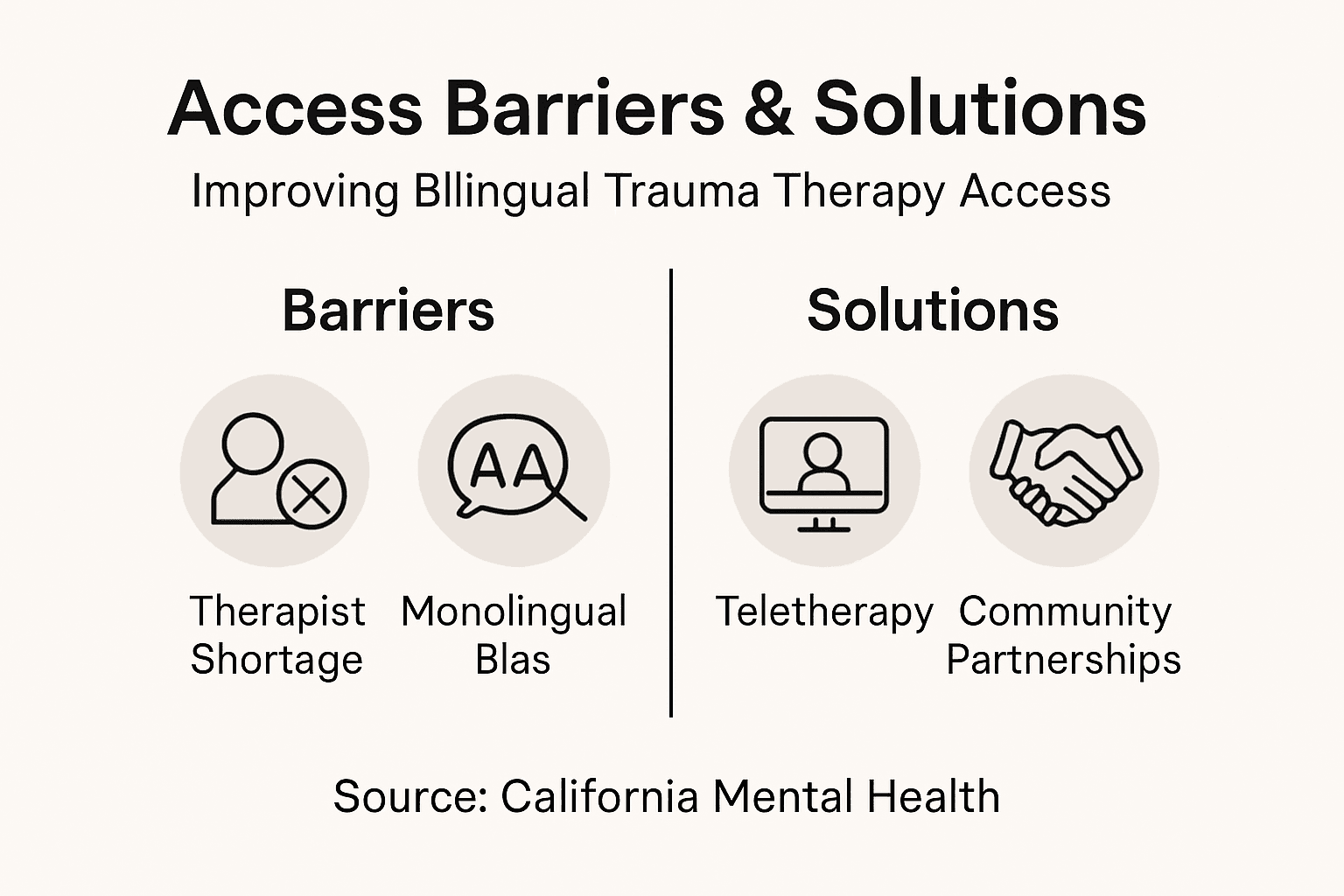
Teletherapy expands geographic possibilities. A Spanish-speaking client in rural California can now access a bilingual trauma specialist in Los Angeles or another region. This removes geographic barriers that previously limited access. Online delivery also accommodates flexible scheduling for clients juggling work and family obligations.
Investing in bilingual therapist recruitment and retention makes economic sense. Healthcare systems that recognize bilingual services as a distinct offering can build dedicated departments. Some California practices are pioneering this model, creating integrated teams where bilingual trauma work is the standard, not the exception.
Community partnerships also increase access. Collaboration between mental health providers and community organizations serving Spanish-speaking populations creates referral networks and culturally grounded pathways to care.
Pro tip: _If you can't find a local bilingual therapist, ask about teletherapy options with California-licensed providers who specialize in Spanish-language trauma treatment."
Discover Healing Through Bilingual Trauma Therapy
Navigating trauma recovery when language and culture are deeply intertwined can feel overwhelming. Many Spanish-speaking individuals face unique challenges such as limited access to bilingual therapists, cultural misunderstandings, and the need for trauma processing in their native language. This is where the role of bilingual therapists becomes essential. They do more than just translate words; they hold space for your story in both English and Spanish, honoring your cultural identity while using evidence-based methods like EMDR to support true healing.
At Alvarado Therapy, based in California, our licensed bilingual therapists specialize in trauma-informed care that respects your whole experience. Whether you live in Pasadena, Ventura, or prefer online sessions, our culturally responsive team understands the power of language in trauma recovery. Choosing a therapist who shares your linguistic and cultural background helps you feel truly understood and safe to explore your healing journey.
Ready to experience trauma therapy that speaks your language and honors your culture? Explore our California — Meet Our Team — Alvarado Therapy or connect with a provider through our Online — Meet Our Team — Alvarado Therapy options today. Visit Alvarado Therapy now to find the support you deserve and start your recovery with a bilingual expert committed to your well-being.
Frequently Asked Questions
What is bilingual therapy?
Bilingual therapy is a therapeutic approach where the clinician utilizes two languages, such as English and Spanish, to facilitate healing. This method allows clients to express emotions and process trauma in the language that feels most authentic to them.
How does bilingual therapy help in trauma recovery?
Bilingual therapy enhances trauma recovery by addressing the emotional nuances and cultural context tied to a client's experiences. When clients can discuss their trauma in their native language, they may access deeper emotional truths and healing that may be lost in translation.
What are common myths about bilingual therapy?
One common myth is that using two languages in therapy may cause cognitive confusion or slow down healing. However, research indicates that bilingualism actually offers cognitive benefits and therapy in both languages does not hinder progress.
Why is cultural competence important in bilingual therapy?
Cultural competence is vital because trauma often intersects with cultural identity. A culturally competent bilingual therapist understands the nuances of cultural values, family dynamics, and emotional expressions, which are crucial for effective treatment and fostering trust in the therapeutic relationship.
