
Practical Guide to Starting Therapy for Healing in California

Nearly one in five American adults faces mental health challenges each year, yet finding truly supportive therapy can feel out of reach for many, especially bilingual individuals in California. For Latinx and BIPOC communities, connecting with a trauma-informed EMDR therapist who understands cultural roots is crucial for true healing. This guide lays out actionable steps for identifying the right therapy goals and providers to help you begin reclaiming your well-being with confidence.
Table of Contents
| Key Point | Explanation |
|---|---|
| 1. Identify Therapy Goals | Reflect on your unique challenges to create clear, personalized goals for effective therapy. |
| 2. Choose Trauma-Informed Therapists | Look for therapists trained in trauma-informed care to ensure safety and emotional support during healing. |
| 3. Select Culturally Responsive Providers | Finding a therapist who understands your culture and language enhances communication and connection. |
| 4. Prepare for Your First Session | Gather relevant information and write down your goals to maximize the effectiveness of your initial meeting. |
| 5. Evaluate Therapy Progress | Regularly assess your growth and communicate with your therapist to adapt your treatment as needed. |
Step 1: Identify Your Therapy Goals and Needs
Starting therapy is a transformative journey that begins with understanding your unique emotional landscape and personal healing objectives. Identifying clear therapy goals helps you create a roadmap for your mental health recovery and ensures that your therapeutic experience remains focused and meaningful.
To effectively outline your therapy goals, start by reflecting on the specific challenges or patterns you want to address. This might include managing anxiety, processing childhood trauma, improving relationship dynamics, or developing healthier coping mechanisms. Research highlights the importance of collaborative goal planning in mental health interventions, which means working closely with your therapist to develop personalized and recovery oriented goals that resonate with your individual experiences.
Consider creating a list of objectives that are specific, realistic, and meaningful to you. These could range from emotional goals like reducing anxiety symptoms to behavioral goals such as learning communication strategies or developing better stress management techniques. Remember that therapy goals are not static they can evolve as you progress in your healing journey and gain deeper self understanding.
Pro Tip: Before your first therapy session, spend time journaling about your current emotional state, challenges, and what a successful therapeutic experience would look like for you.
Step 2: Research Trauma-Informed Therapists in California
Researching the right trauma-informed therapist can be a crucial step in your healing journey. This process involves understanding specialized approaches that prioritize your safety, emotional well-being, and individual experiences.

Begin by exploring therapists who specifically practice trauma-informed care principles that emphasize safety, empowerment, and cultural sensitivity. Look for professionals who demonstrate an understanding of how trauma impacts mental health and who use approaches designed to prevent re-traumatization. Professional directories specialized in California can help you find therapists with specific training in trauma therapy, with particular attention to practitioners who offer culturally responsive and bilingual services that match your background and needs.
When evaluating potential therapists, consider their specific credentials, experience with trauma healing, and approach to treatment. Verify their licensing status with the California Board of Behavioral Sciences, read client reviews if available, and do not hesitate to schedule initial consultations to assess their compatibility with your therapeutic goals. Many trauma-informed therapists offer initial screenings that allow you to ask questions about their methodology and experience working with clients who have similar backgrounds or challenges.
Pro Tip: Request therapist credentials and specialized trauma training certifications during your initial consultation to ensure you are working with a truly qualified trauma-informed professional.
Step 3: Select Bilingual and Culturally Responsive Providers
Choosing a therapist who understands your cultural background and speaks your language can significantly impact your healing journey. This step is about finding a mental health professional who can truly connect with your unique experiences and communicate effectively.
Look for providers who demonstrate specialized training in culturally responsive mental health care, which goes beyond simple language translation. Seek professionals who show cultural humility, understanding of your specific cultural context, and the ability to adapt therapeutic approaches to your individual needs. This means finding a therapist who not only speaks your language but also comprehends the nuanced cultural experiences that shape your mental health challenges.
When researching potential providers, ask specific questions about their experience working with clients from your cultural background. Verify their credentials in bilingual practice, inquire about their understanding of cultural trauma, and assess their approach to creating a safe, affirming therapeutic environment. Many practices now offer detailed profiles that highlight their cultural competence, language skills, and specialized training in culturally sensitive mental health care.
Pro Tip: Request a brief initial consultation to assess the therapist's cultural responsiveness and communication style before committing to ongoing treatment.
Here’s a quick comparison of therapist qualities to look for during your search:
| Therapist Quality | Why It Matters | How to Assess |
|---|---|---|
| Trauma-Informed Approach | Ensures emotional safety and avoids harm | Check training credentials |
| Cultural Responsiveness | Improves connection and relevance | Ask about cultural experience |
| Bilingual Skills | Enables clear communication | Request language proficiency |
| Professional Credentials | Guarantees ethical, effective treatment | Verify license and reviews |
Step 4: Schedule and Prepare for Your First Therapy Session
Scheduling your first therapy session marks an important milestone in your healing journey. This step involves practical preparation and setting realistic expectations for your initial therapeutic encounter.
Before your first appointment, carefully review the recommended steps for preparing for a counseling session. Gather important personal and medical information you may want to discuss, including relevant medical history, current challenges, and specific goals for therapy. Consider creating a brief written summary of your experiences to help guide the conversation and ensure you cover key points during the initial intake. Many therapists recommend preparing a list of questions about their approach, treatment methods, and how they plan to support your specific mental health needs.
During the first session, expect a comprehensive intake process where your therapist will ask detailed questions about your background, current situation, and therapeutic objectives. Be prepared to discuss your emotional history, significant life experiences, and specific symptoms or challenges you are hoping to address. Remember that this initial meeting is also an opportunity for you to assess the therapist fit and determine whether their approach feels comfortable and supportive for your healing journey.
Pro Tip: Arrive 10 to 15 minutes early for your first session to complete any necessary paperwork and allow yourself time to feel grounded and calm before your appointment.
Step 5: Evaluate Your Therapy Experience and Next Steps
Assessing your therapy progress is a critical part of your healing journey, allowing you to understand your personal growth and make informed decisions about your mental health treatment. This step helps you gain clarity about your therapeutic experience and determine the most effective path forward.
Utilize comprehensive therapy evaluation metrics to track your progress systematically. This involves reviewing changes in your symptoms, emotional well-being, and overall quality of life. Pay attention to both quantitative measures such as reduced anxiety levels and qualitative improvements like enhanced communication skills, increased self awareness, and better emotional regulation. Many therapists use structured assessment tools during sessions to help you objectively measure your progress and identify areas that require continued focus or adjustment.
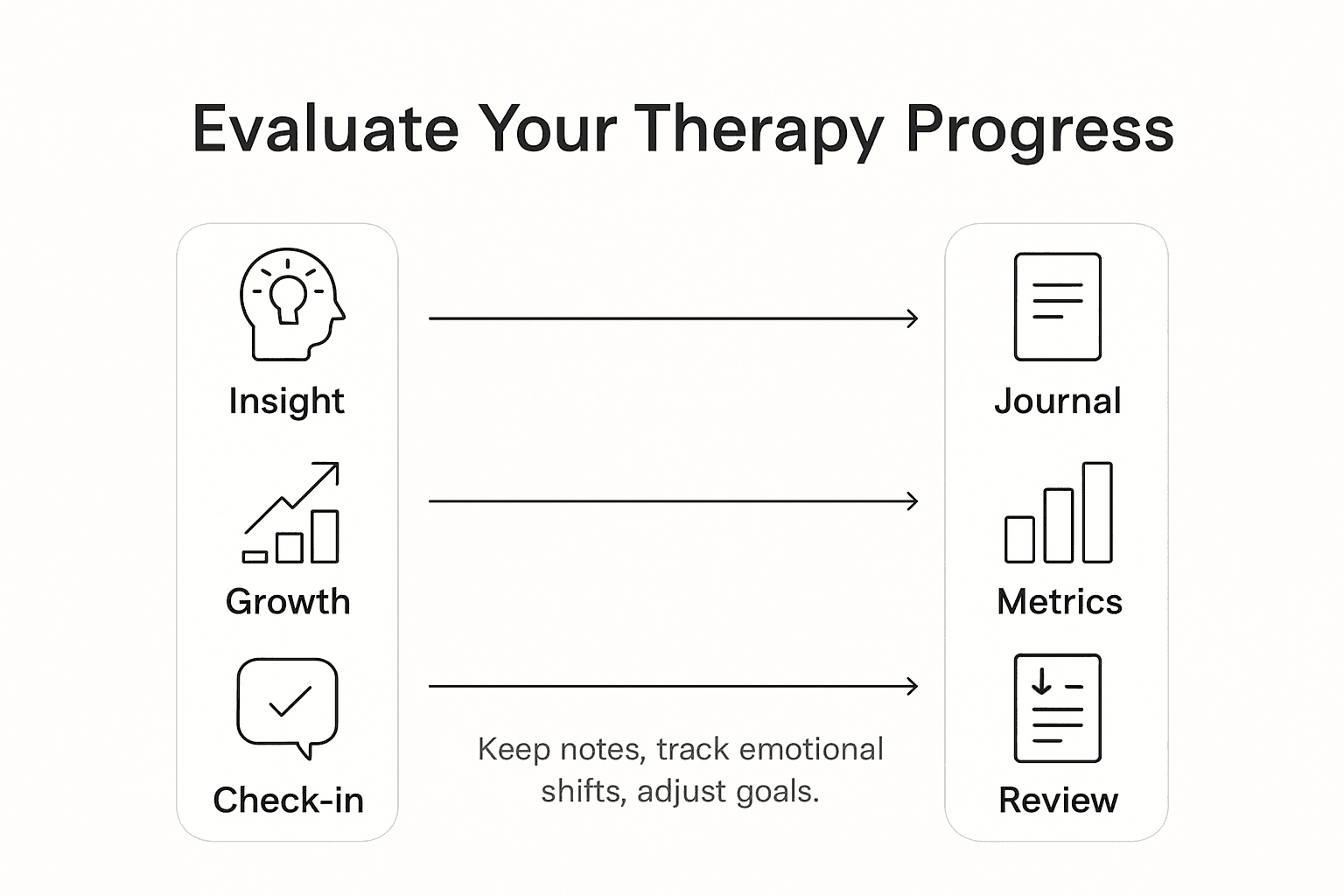
Schedule periodic check-in conversations with your therapist to discuss your treatment goals, current challenges, and potential modifications to your therapeutic approach. These conversations are opportunities to be transparent about what is working well and what might need refinement. Be open to exploring alternative treatment strategies if your current approach is not delivering the desired results. Remember that therapy is a collaborative process, and your active participation and honest feedback are essential for creating meaningful and lasting change.
Pro Tip: Keep a personal journal to track your emotional shifts, insights, and therapy milestones, which can provide valuable context during your progress discussions.
Here’s a summary of progress evaluation methods in therapy:
| Evaluation Method | Monitors | Example Tool |
|---|---|---|
| Symptom Tracking | Changes in anxiety, depression, etc. | Self-report scales |
| Qualitative Feedback | Improved communication, self-awareness | Therapist interviews |
| Structured Assessments | Overall mental health improvements | Standardized questionnaires |
| Journaling | Emotional shifts and personal growth | Private journal |
Begin Your Healing Journey with Compassionate Trauma-Informed Care in California
If you are ready to take the important first step in healing from trauma, anxiety, or relationship challenges, finding a therapist who truly understands your unique needs is essential. This practical guide highlights the importance of trauma-informed, culturally responsive, and bilingual therapy to support your emotional safety and personal growth. At Alvarado Therapy, our licensed professionals are dedicated to helping Californians develop meaningful therapy goals, prepare for their first sessions with confidence, and evaluate their progress for lasting change.
Explore our California — Meet Our Team — Alvarado Therapy page to connect with skilled therapists who specialize in EMDR therapy, individual counseling, and trauma-sensitive approaches tailored to your experiences. By choosing a bilingual and culturally responsive provider from Alvarado Therapy, you ensure that your path toward healing respects your identity and promotes empowerment. Take charge of your mental health today by visiting https://alvaradotherapy.org and scheduling your personalized consultation.
Frequently Asked Questions
How can I identify my therapy goals before starting treatment?
To identify your therapy goals, reflect on your specific challenges or emotional patterns that you want to address. Write down objectives that are realistic and meaningful, such as reducing anxiety or improving communication skills.
What should I look for when researching trauma-informed therapists?
When researching trauma-informed therapists, focus on their training in trauma care, cultural sensitivity, and relevant credentials. Create a list of potential therapists, and schedule initial consultations to assess their approach and compatibility with your needs.
Why is it important to select a bilingual and culturally responsive therapist?
Choosing a bilingual and culturally responsive therapist ensures effective communication and a deeper understanding of your unique cultural experiences. Look for therapists who have specialized training in culturally responsive care and verify their language skills before making a decision.
How can I prepare for my first therapy session?
To prepare for your first therapy session, gather personal information and create a brief summary of your emotional history, current challenges, and therapy goals. Arrive at least 10 to 15 minutes early to complete paperwork and settle in before the appointment.
What methods can I use to evaluate my therapy progress?
To evaluate your therapy progress, track changes in your symptoms and observe improvements in your emotional well-being. Consider journaling about your experiences and scheduling regular check-in conversations with your therapist to discuss your progress and any adjustments needed in your treatment approach.
