
Why Therapy for Young Adults Matters Most

Most American young adults in California report heightened levels of anxiety or emotional ups and downs as they enter adulthood. As cultural expectations shift and childhood memories linger, finding supportive therapy becomes even more challenging for those balancing bilingual identities. This article sheds light on what trauma-informed therapy really involves, explains why so many young American adults seek help, and highlights what makes culturally responsive care vital for real emotional healing.
Table of Contents
Key Takeaways
| Point | Details |
|---|---|
| Tailored Therapy for Young Adults | Therapy for young adults focuses on unique psychological challenges and includes individualized assessments and evidence-based interventions. |
| Addressing Emotional Complexities | Young adults face unique emotional challenges, including anxiety and identity exploration, necessitating compassionate and adaptive support. |
| Importance of Trauma-Informed Care | Trauma-informed therapy significantly benefits young adults by promoting emotional regulation and addressing the effects of past trauma. |
| Culturally Responsive Approaches | Culturally responsive and identity-affirming care enhances therapeutic effectiveness by honoring diverse backgrounds and experiences. |
What Therapy for Young Adults Involves
Therapy for young adults represents a critical intervention designed specifically to address the unique psychological challenges of early adulthood. Specialized psychotherapeutic approaches focus on supporting individuals navigating complex transitions, emotional development, and personal growth during this pivotal life stage.
The therapeutic process typically involves several key components tailored to young adult experiences. These include individualized assessment, collaborative goal-setting, and evidence-based interventions targeting specific mental health needs. Cognitive Behavioral Therapy (CBT) and emotion regulation strategies play a central role, helping young adults develop healthier coping mechanisms and improve emotional awareness. Psychodynamic approaches further complement these techniques by exploring deeper psychological patterns and supporting identity formation.
Therapy for young adults often addresses multiple interconnected domains:
Mental health challenges like anxiety and depression
Professional and academic stress management
Relationship and interpersonal skill development
Identity exploration and personal growth
Trauma processing and emotional healing
Understanding that each young adult's journey is unique, therapists employ flexible, integrative models that respect individual experiences and developmental contexts. The goal is not just symptom management but empowering individuals to build resilience, self-understanding, and effective life strategies.
Here's a comparison of different psychotherapeutic approaches used with young adults:
| Approach | Primary Focus | Techniques Used | Typical Outcomes |
|---|---|---|---|
| Cognitive Behavioral | Thought patterns | Cognitive restructuring, CBT | Improved coping, reduced anxiety |
| Psychodynamic | Unconscious processes | Exploring past experiences | Enhanced self-understanding |
| Emotion Regulation | Managing emotions | Mindfulness, skill building | Greater emotional stability |
| Trauma-Informed | Trauma recovery | Safety, collaborative methods | Increased resilience, healing |
Pro tip: When seeking therapy, prioritize finding a therapist who specializes in young adult transitions and demonstrates cultural sensitivity to your specific background and experiences.
Unique Emotional Challenges in Young Adults
Young adults today face an unprecedented landscape of emotional challenges that distinguish their experience from previous generations. Mental health research reveals heightened rates of anxiety and depression driven by complex societal pressures, technological disruptions, and unprecedented life transitions.

The emotional complexity of young adulthood stems from multiple interconnected factors. Emerging research highlights that this developmental stage involves significant psychological vulnerabilities including workforce entry stress, financial instability, relationship formation challenges, and rapid identity development. Psychological transitions during this period are characterized by intense self-discovery, professional uncertainty, and heightened emotional sensitivity.
Key emotional challenges young adults commonly experience include:
Chronic academic and professional performance anxiety
Difficulty establishing meaningful interpersonal connections
Overwhelming societal and familial expectations
Complex identity exploration and self-understanding
Navigating unprecedented technological and social changes
Understanding these unique emotional landscapes requires recognizing that young adults are simultaneously experiencing profound personal growth and intense psychological pressures. Their emotional experiences are deeply nuanced, requiring compassionate, adaptive support systems that acknowledge the complexity of modern developmental challenges.
Pro tip: Create a personal emotional wellness toolkit that includes professional support, self-reflection practices, and intentional stress management strategies.
How Trauma Affects Emerging Adults
Psychological research reveals profound long-term impacts of traumaon emerging adults, demonstrating how early traumatic experiences can fundamentally reshape psychological development and emotional functioning. Trauma during critical developmental periods can create deep neurological and psychological imprints that manifest through complex emotional and behavioral patterns.
Emergent adults experiencing trauma frequently encounter significant challenges across multiple life domains. Childhood trauma studies indicate persistent psychological vulnerabilities that can dramatically influence mental health trajectories. Trauma responses typically include:
Heightened anxiety and hypervigilance
Difficulty establishing trust in relationships
Emotional dysregulation and unpredictable mood shifts
Compromised self-esteem and negative self-perception
Challenges with emotional intimacy and vulnerability
Understanding trauma's impact requires recognizing its nuanced, pervasive nature. Traumatic experiences do not simply fade with time but can fundamentally alter an individual's neurological and psychological processing, creating intricate patterns of coping and survival mechanisms that persist into adulthood.
Pro tip: Seek trauma-informed therapeutic support that emphasizes safety, collaboration, and empowerment to effectively navigate and heal from traumatic experiences.
Key Benefits of Trauma-Informed Therapy
Systematic research demonstrates significant therapeutic benefits of trauma-informed approaches for young adults, offering a comprehensive pathway to healing and psychological restoration. These specialized therapeutic models go beyond traditional counseling by recognizing the profound impact of traumatic experiences on an individual's neurological, emotional, and behavioral functioning.
Trauma-informed interventions have proven remarkably effectivein addressing complex psychological challenges.Therapeutic benefitstypically encompass:
Significant reduction in PTSD symptoms
Improved emotional regulation skills
Enhanced interpersonal relationship capabilities
Decreased anxiety and depressive responses
Increased self-awareness and psychological resilience
The transformative power of trauma-informed therapy lies in its holistic, patient-centered approach. By creating safe therapeutic environments that prioritize individual experiences, these interventions help young adults reframe traumatic narratives, develop healthy coping mechanisms, and reconstruct their sense of personal agency and emotional well-being.
Pro tip: Choose a trauma-informed therapist who demonstrates cultural competence, offers personalized treatment approaches, and creates a collaborative, empowering therapeutic relationship.
Culturally Responsive and Identity-Affirming Care
Recent research underscores the critical importance of culturally responsive mental health programsfor supporting young adults' psychological well-being. These approaches recognize that mental health is deeply interconnected with cultural identity, systemic experiences, and individual lived experiences, requiring nuanced therapeutic strategies that honor each person's unique background.
Cultural responsiveness in therapy involves more than language translation or surface-level understanding. Comprehensive studies highlight the transformative potential of identity-affirming care that actively addresses systemic barriers and promotes healing within cultural contexts. Key elements of this approach include:
Acknowledging historical and generational trauma
Validating diverse cultural experiences
Challenging oppressive systemic structures
Recognizing individual and community resilience
Creating safe, non-judgmental therapeutic spaces
Successful culturally responsive care requires therapists to continuously educate themselves, challenge personal biases, and develop deep cultural humility. By centering the client's lived experiences and cultural narratives, these approaches move beyond traditional therapeutic models to create truly transformative healing environments.
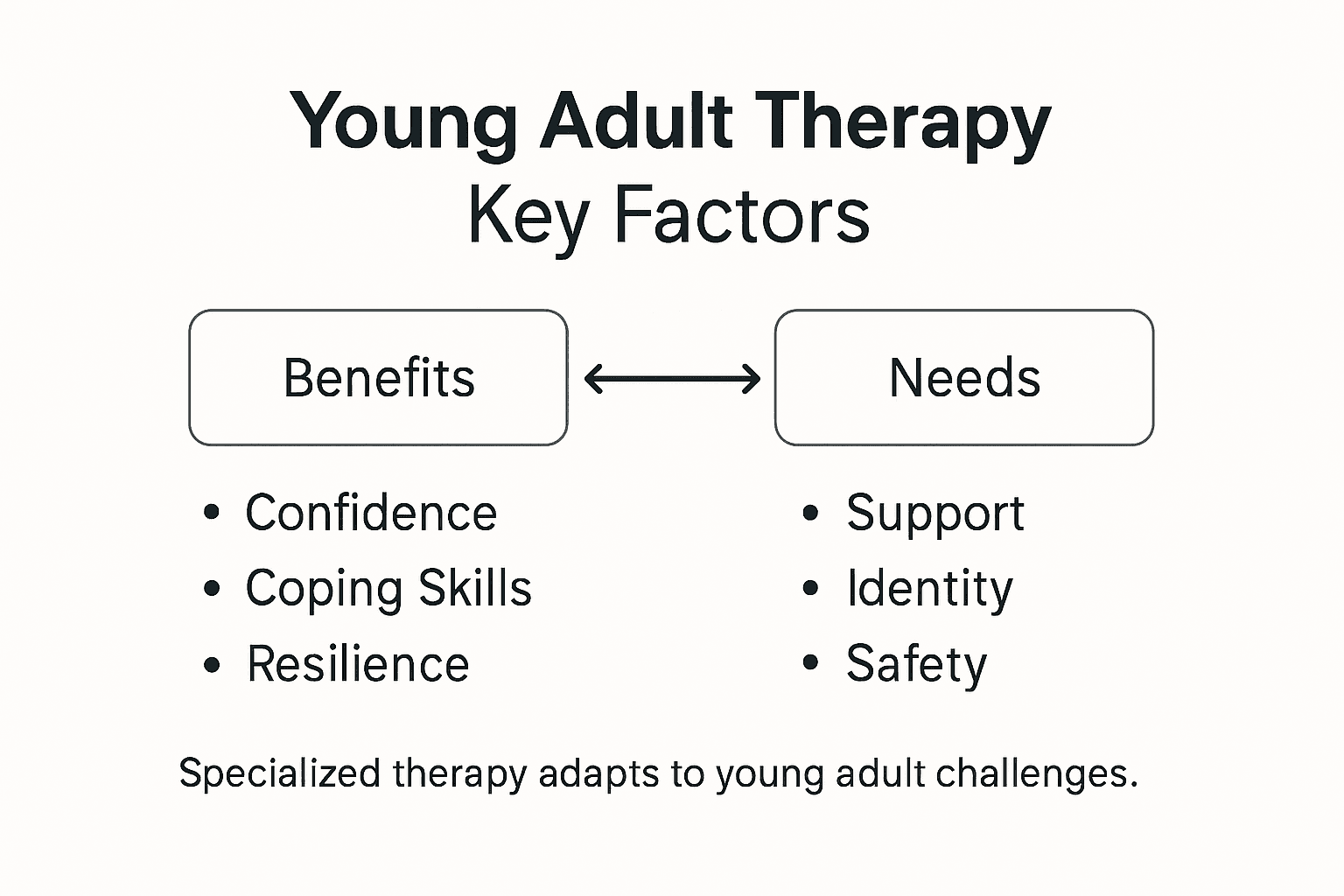
The following table summarizes features of culturally responsive and identity-affirming mental health care:
| Feature | Description | Importance for Young Adults |
|---|---|---|
| Cultural Humility | Ongoing self-reflection by therapist | Builds trust and respectful care |
| Identity Affirmation | Validating unique identities | Supports self-esteem and growth |
| Systemic Awareness | Addresses historic inequities | Reduces barriers to effective support |
| Adapted Communication | Tailored language and approach | Ensures clarity and comfort |
Pro tip: During initial therapy consultations, ask potential therapists about their specific training in cultural responsiveness and how they adapt their approach to support diverse client experiences.
Making the Most of Therapy in California
California's research institutions offer critical insights into optimizing mental health supportfor young adults navigating complex psychological landscapes. Understanding the nuanced therapeutic approaches specific to California's diverse populations can significantly enhance the effectiveness of mental health interventions and personal healing journeys.
Therapeutic engagement requires strategic approaches tailored to individual needs. Recent California youth studies demonstrate the importance of comprehensive, adaptable support systems that address both immediate mental health challenges and long-term developmental goals. Key strategies for maximizing therapy effectiveness include:
Setting clear, personalized treatment goals
Maintaining consistent communication with your therapist
Being open and honest about your experiences
Actively participating in recommended therapeutic exercises
Tracking your emotional and psychological progress
California's unique mental health landscape offers multiple therapy modalities, including in-person and online options, bilingual services, and specialized trauma-informed care. Recognizing that therapy is a collaborative process empowers young adults to take an active role in their healing, leveraging professional expertise while maintaining personal agency and authenticity.
Pro tip: Schedule a preliminary consultation with potential therapists to assess their approach, cultural competence, and alignment with your specific therapeutic needs and personal background.
Support Your Journey Through Young Adult Challenges with Specialized Therapy
Navigating the emotional complexities and unique pressures of young adulthood can feel overwhelming. If you are seeking to overcome anxiety, identity struggles, or the impact of trauma during this pivotal time, therapy tailored to your experiences offers powerful tools for healing and growth. At Alvarado Therapy, our California-based team specializes in trauma-informed, culturally responsive care that meets young adults where they are to build resilience and clarity.
Making the Most of Therapy in California
California's research institutions offer critical insights into optimizing mental health supportfor young adults navigating complex psychological landscapes. Understanding the nuanced therapeutic approaches specific to California's diverse populations can significantly enhance the effectiveness of mental health interventions and personal healing journeys.
Therapeutic engagement requires strategic approaches tailored to individual needs. Recent California youth studies demonstrate the importance of comprehensive, adaptable support systems that address both immediate mental health challenges and long-term developmental goals. Key strategies for maximizing therapy effectiveness include:
Setting clear, personalized treatment goals
Maintaining consistent communication with your therapist
Being open and honest about your experiences
Actively participating in recommended therapeutic exercises
Tracking your emotional and psychological progress
California's unique mental health landscape offers multiple therapy modalities, including in-person and online options, bilingual services, and specialized trauma-informed care. Recognizing that therapy is a collaborative process empowers young adults to take an active role in their healing, leveraging professional expertise while maintaining personal agency and authenticity.
Pro tip: Schedule a preliminary consultation with potential therapists to assess their approach, cultural competence, and alignment with your specific therapeutic needs and personal background.
Support Your Journey Through Young Adult Challenges with Specialized Therapy
Navigating the emotional complexities and unique pressures of young adulthood can feel overwhelming. If you are seeking to overcome anxiety, identity struggles, or the impact of trauma during this pivotal time, therapy tailored to your experiences offers powerful tools for healing and growth. At Alvarado Therapy, our California-based team specializes in trauma-informed, culturally responsive care that meets young adults where they are to build resilience and clarity.
Explore our dedicated California — Meet Our Team — Alvarado Therapy to connect with licensed professionals who understand the nuances of early adulthood transitions and trauma recovery. Whether you prefer in-person support near Ventura Ventura CA (in person) — Meet Our Team — Alvarado Therapy or accessible online sessions, we are here to guide you toward empowerment. Begin your healing journey today by visiting Alvarado Therapy and take the first step toward finding emotional balance and a renewed sense of self.
Frequently Asked Questions
What are the main components of therapy for young adults?
Therapy for young adults typically includes individualized assessment, collaborative goal-setting, and evidence-based interventions like Cognitive Behavioral Therapy (CBT) and emotion regulation strategies tailored to their unique experiences.
Why is trauma-informed therapy important for young adults?
Trauma-informed therapy is crucial as it recognizes the long-term effects of trauma on mental health, allowing therapists to create safe environments and develop personalized treatment plans that address trauma's impact on emotional and behavioral functioning.
How can culturally responsive care benefit young adults in therapy?
Culturally responsive care acknowledges and validates diverse cultural experiences, addressing systemic barriers to mental health support and promoting healing within cultural contexts, which can enhance self-esteem and personal growth.
What strategies can young adults use to maximize the effectiveness of therapy?
Young adults can maximize therapy effectiveness by setting clear treatment goals, maintaining consistent communication with their therapist, being open about their experiences, participating in therapeutic exercises, and tracking their emotional progress.
