
Grief and Trauma Explained: Pathways to Healing

Most American adults will experience grief at least once in their lives, yet many struggle to find relief from the invisible weight that follows trauma and loss. For those in California, the ripple effects of losing a loved one often resurface as both emotional pain and old childhood wounds. This overview explores how understanding the relationship between grief and trauma can transform your healing journey with trauma-informed EMDR therapy.
Table of Contents
Key Takeaways
| Point | Details |
|---|---|
| Understanding Grief and Trauma | Grief and trauma are interconnected yet distinct emotional experiences that reshape an individual's psychological landscape and require unique coping strategies. |
| Types of Grief | Grief manifests in various forms such as acute, complicated, and adaptive grief, each affecting emotional and psychological functioning differently. |
| Signs of Complicated Grief | Complicated grief may involve intense emotional pain and functional impairment lasting longer than six months, requiring specialized therapeutic intervention. |
| EMDR Therapy Approach | EMDR therapy offers a structured method for processing trauma that integrates both mental and physiological aspects, differing from traditional talk therapies. |
Defining Grief and Trauma Experiences
Grief and trauma are deeply interconnected emotional experiences that profoundly reshape an individual's psychological landscape. While often used interchangeably, these concepts represent distinct yet overlapping psychological responses to significant loss or overwhelming life events. Foundational models of grief reveal that our understanding of these experiences has evolved far beyond simplistic linear stages.
Trauma emerges from experiences that overwhelm an individual's capacity to cope, such as unexpected loss, violence, accidents, or prolonged emotional abuse. These experiences fundamentally disrupt a person's sense of safety, triggering complex neurological and emotional responses that can persist long after the initial event. Unlike traditional grief narratives that suggested people progress through neat, predictable stages, contemporary research recognizes grief as a dynamic, nonlinear process deeply influenced by personal, cultural, and social contexts.
Coping with grief and trauma requires acknowledging their multidimensional nature. Individuals may simultaneously experience emotional numbness, intense sadness, anger, and profound disorientation. These responses are not signs of weakness but natural neurobiological reactions to extraordinary stress. The journey through grief is highly personal, with no universal roadmap or timeline. Some people might feel intense emotions immediately, while others experience delayed reactions that emerge months or even years after a traumatic event.
Pro tip: Create a personalized emotional support toolkit that includes trusted contacts, journaling resources, and self-compassion practices to help navigate complex grief experiences.
Key Types and Manifestations
Grief manifests in complex and nuanced ways, with research utilizing a biopsychosocial model revealing distinct types that profoundly impact an individual's emotional and physiological functioning. The primary categories of grief include acute grief, complicated grief, and adaptive grief, each presenting unique psychological and neurological characteristics that shape how individuals process loss.
Acute grief represents the immediate emotional response following a significant loss, characterized by intense emotional pain, profound sadness, and physiological stress reactions. Complicated grief, by contrast, represents a persistent and debilitating form of mourning where individuals struggle to integrate the loss into their life narrative. This type of grief can significantly disrupt daily functioning, leading to prolonged emotional numbness, persistent yearning, and difficulty engaging in normal social and personal activities.

Academic research exploring grief types identifies several critical manifestations that extend beyond traditional emotional responses. These include anticipatory grief, experienced before an expected loss; disenfranchised grief, which occurs when societal norms minimize or invalidate an individual's mourning process; and traumatic grief, which emerges from sudden, unexpected, or violent loss events. Each manifestation carries unique psychological implications, demonstrating the deeply personal and context-dependent nature of grief experiences.
Pro tip: Create a personalized grief journal that tracks your emotional responses and triggers, helping you understand your unique grief journey and identify patterns of healing.
Here's a side-by-side comparison of key types of grief and their main features:
| Type of Grief | Main Emotional Impact | Typical Duration |
|---|---|---|
| Acute Grief | Intense sadness, distress | Days to several weeks |
| Complicated Grief | Persistent yearning, numbness | Months or longer |
| Adaptive Grief | Adjustment with restored balance | Variable, promotes healing |
| Traumatic Grief | Overwhelming shock, disconnection | Long-term if unresolved |
| Disenfranchised Grief | Feeling invalidated, isolation | Depends on social context |
| Anticipatory Grief | Pre-loss worry and sadness | Begins before loss |
How Grief and Trauma Intersect
Grief and trauma are deeply interconnected psychological experiences that fundamentally reshape an individual's emotional landscape. While they are distinct processes, they often intertwine in complex and profound ways, creating a nuanced emotional terrain that challenges traditional understanding. Impact of grief on personal relationships reveals how traumatic loss can dramatically alter an individual's interpersonal dynamics and sense of connection.
Traumatic experiences frequently trigger profound grief responses that extend far beyond typical mourning processes. When an individual experiences sudden, unexpected, or violent loss, the psychological impact goes beyond emotional pain, potentially triggering complex neurological stress responses. These reactions can manifest as hypervigilance, emotional numbness, intrusive memories, and significant disruptions in personal identity and social functioning. The intersection of trauma and grief creates a multifaceted emotional experience where traditional coping mechanisms may feel inadequate or overwhelming.
The neurobiological connection between grief and trauma is particularly intricate. Traumatic losses activate the body's stress response systems, potentially causing long-term changes in emotional regulation, memory processing, and psychological resilience. Individuals who experience traumatic grief may struggle with intense emotional fluctuations, decreased ability to trust, and heightened vulnerability to future psychological challenges. These responses are not signs of weakness but natural adaptations to extraordinary psychological stress, reflecting the human brain's complex mechanisms for processing extreme emotional experiences.
Pro tip: Develop a personalized emotional regulation toolkit that includes grounding techniques, supportive contact resources, and professional guidance to navigate the complex intersections of grief and trauma.
Identifying Complicated Grief Signs
Complicated grief represents a persistent and debilitating emotional condition that extends far beyond typical mourning experiences. Extensive research mapping grief disorder evidence reveals critical diagnostic markers that distinguish complicated grief from normal bereavement, highlighting the profound psychological disruption individuals may experience after significant loss.
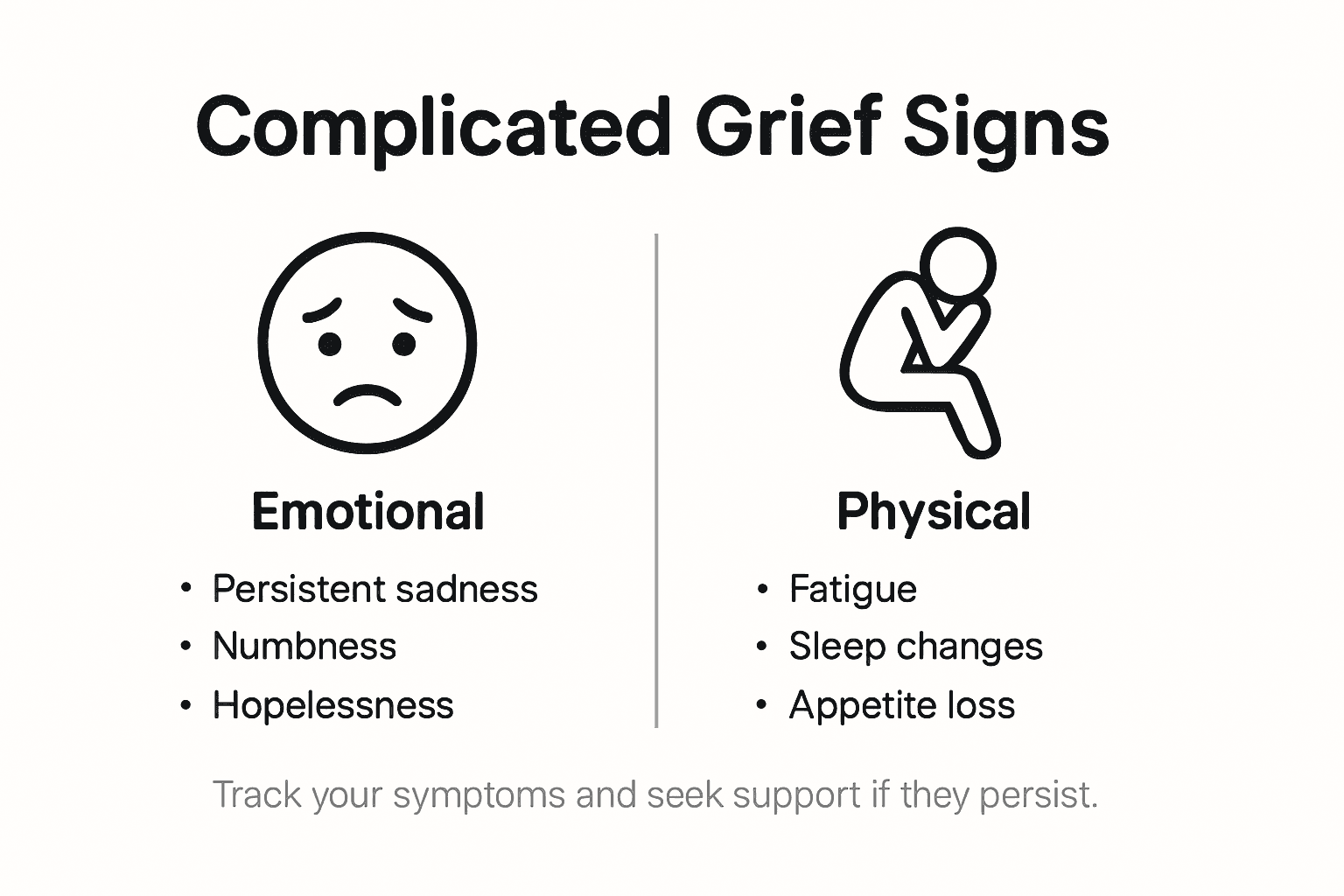
The hallmark signs of complicated grief include persistent and intense emotional pain lasting significantly longer than six months, accompanied by profound functional impairment. Individuals experiencing this condition often demonstrate extreme difficulty resuming daily activities, maintaining relationships, or finding meaning in life. Characteristic symptoms include overwhelming emotional numbness, persistent yearning for the lost person, intrusive and distressing memories, emotional avoidance, and substantial social withdrawal. These responses go beyond typical grief, representing a more complex psychological response that requires specialized therapeutic intervention.
Clinical observations reveal that complicated grief can manifest through multiple psychological and physiological indicators. Individuals may experience chronic depression, extreme difficulty accepting the loss, inability to engage in future-oriented thinking, and persistent feelings of emptiness or disconnection. Physical symptoms can include sleep disruptions, significant weight changes, compromised immune function, and unexplained physical pain. These multifaceted symptoms underscore the profound neurobiological impact of unresolved grief, demonstrating how emotional trauma can fundamentally alter an individual's psychological and physical well-being.
Pro tip: Create a comprehensive emotional tracking journal to document your grief experiences, helping you identify patterns and recognize potential signs of complicated grief that might require professional support.
EMDR and Trauma-Informed Therapy
EMDR therapy represents a revolutionary approach to processing traumatic experiences, offering a structured pathway for healing that goes beyond traditional talk therapies. Comprehensive research on EMDR therapy's efficacy reveals a standardized eight-phase protocol designed to help individuals reprocess traumatic memories and reduce psychological distress through targeted bilateral stimulation techniques.
The fundamental premise of trauma-informed therapy centers on understanding the profound neurological impact of traumatic experiences. Unlike traditional therapeutic approaches that focus solely on symptom management, trauma-informed care recognizes the complex ways trauma reshapes an individual's psychological and physiological responses. Global perspectives on trauma-informed therapeutic approaches highlight the importance of creating healing environments that prioritize safety, empowerment, and individual agency throughout the therapeutic process.
EMDR therapy specifically works by helping individuals reprocess traumatic memories through a structured series of eye movements or alternative bilateral stimulation techniques. This approach allows the brain to naturally integrate and resolve traumatic experiences, reducing their emotional charge and helping individuals develop more adaptive coping mechanisms. The therapy acknowledges that trauma is not just a mental experience but a holistic body-mind phenomenon, addressing the intricate ways unresolved trauma can manifest through emotional, cognitive, and physiological symptoms.
This table summarizes key differences between traditional therapy and trauma-informed EMDR therapy:
| Approach | Focus Area | Therapy Techniques |
|---|---|---|
| Traditional Therapy | Symptom reduction | Talk-based, coping skills |
| Trauma-Informed | Safety, empowerment | Validation, collaborative process |
| EMDR Therapy | Memory reprocessing | Eye movements, bilateral stimulation |
Pro tip: Prepare for EMDR therapy by documenting your trauma history and current emotional triggers, creating a comprehensive narrative that can help your therapist develop a personalized treatment approach.
Find Support on Your Path through Grief and Trauma
Understanding grief and trauma is a crucial first step toward healing. This article highlights the intense emotional pain and neurological complexities tied to complicated grief and traumatic experiences. If you find yourself grappling with persistent grief symptoms, emotional numbness, or difficulty regaining balance, these challenges can feel overwhelming and isolating. Terms like complicated grief, traumatic grief, and trauma-informed therapy are more than concepts they represent real struggles that affect your mental and physical well-being.

At Alvarado Therapy, our California-based team specializes in trauma-informed care including EMDR therapy designed to help you reprocess traumatic memories and regain emotional stability. We offer personalized guidance that respects your unique journey through grief, providing trusted support for issues like PTSD, childhood trauma, and anxiety. Healing starts with safety and empowerment through evidence-based methods. Take the next step today by exploring how EMDR therapy and individualized counseling can help you move forward. Your path to clarity and healing awaits with Alvarado Therapy.
Frequently Asked Questions
What is the difference between grief and trauma?
Grief is an emotional response to loss, while trauma arises from overwhelming experiences that disrupt an individual's sense of safety. Although they intertwine, grief is often more related to the emotional pain of loss, while trauma can involve psychological and physiological distress from traumatic events.
How can I identify complicated grief?
Complicated grief is characterized by persistent emotional pain lasting more than six months, difficulty resuming daily activities, intrusive memories, and emotional numbness. If you find it challenging to accept the loss or engage in future-oriented thinking, you may be experiencing complicated grief that requires professional support.
What are some coping strategies for managing grief and trauma?
Creating a personalized emotional support toolkit with trusted contacts, journaling, grounding techniques, and professional guidance can help navigate complex grief and trauma experiences. It's essential to acknowledge your feelings and seek support when needed.
How does EMDR therapy help with trauma?
EMDR (Eye Movement Desensitization and Reprocessing) therapy helps individuals reprocess traumatic memories using targeted bilateral stimulation techniques. This method integrates traumatic experiences, reducing emotional distress and helping individuals develop adaptive coping mechanisms, making it an effective approach for trauma recovery.
