

Conflict and uncertainty can fill a home when trust has been shattered by infidelity. For many California couples, even starting an honest conversation can feel risky or overwhelming. But creating a safe space for honest conversations is a vital first step toward healing. By learning how to communicate openly and understand each other’s emotions, you begin building the foundation for lasting recovery and genuine connection.
Table of Contents
Quick Summary
| Key Point | Explanation |
|---|---|
| 1. Create a safe conversation space | Choose a quiet, comfortable setting to discuss feelings openly without interruptions or accusations. This builds trust and encourages honest dialogue. |
| 2. Acknowledge and express emotions | Both partners should openly share their feelings, allowing each other to feel understood without judgment. This helps move from blame to healing. |
| 3. Identify and communicate needs | Each partner should list specific emotional needs to rebuild the relationship. Clear, actionable needs prevent misunderstandings and promote healing. |
| 4. Rebuild trust through consistent actions | Trust is rebuilt through transparency and reliability in daily interactions. Small, consistent behaviors demonstrate a commitment to change over time. |
| 5. Seek professional support | Involve a therapist experienced in infidelity to facilitate difficult conversations and teach effective communication skills, accelerating healing for both partners. |
Step 1: Create a Safe Space for Honest Conversations
You'll learn how to build an environment where both of you can express what's really happening inside without fear of judgment or escalation. When trust has been broken, partners often feel guarded, defensive, or afraid to speak openly. This step is foundational because without it, the deeper healing work becomes nearly impossible.
Start by choosing the right setting. Pick a time and place where you won't be interrupted by kids, phones, or work stress. Sitting across from each other, rather than side by side, helps you read facial expressions and body language. The physical environment matters more than you'd think. A comfortable living room beats a kitchen table where you're both half-focused on other tasks. Tell each other in advance what conversation you want to have. This isn't the moment for ambushing your partner with accusations. Instead, say something like, "I'd like to talk about what happened and how we move forward. Is now a good time?" This simple act of asking builds respect immediately.
Once you're settled, focus on active listening. This means when your partner speaks, you're not preparing your defense or mentally fact-checking everything they say. You're listening to understand their experience, not to win an argument. Creating an environment free of secrecy where both partners can be open about their feelings is what transforms these conversations into genuine healing pathways. When it's your turn to speak, use "I" statements instead of accusations. Say "I felt betrayed and scared" rather than "You destroyed me." This keeps your partner from immediately getting defensive. If emotions get too heated, pause. Take a 15-minute break, breathe, and come back when you're calmer. These conversations won't reach resolution in one sitting, and that's okay. You're building a practice of honesty, not solving everything tonight.
Pro tip: Set a specific "conversation agreement" before you talk: agree to no interrupting, no bringing up past grievances unrelated to the current topic, and no walking away mid-conversation without saying you need a break.
Step 2: Acknowledge and Process Emotions Together
You're about to do something most couples skip entirely: naming what you actually feel instead of letting resentment fester. This step means both of you stop trying to stay strong and admit that you're scared, angry, hurt, or confused. When you acknowledge emotions together, you move from blame into understanding. Without this, you'll keep replaying the betrayal in your head without ever processing it.
Start by creating space for each person to express what they're feeling right now, not what they think they should feel. The unfaithful partner might feel shame, guilt, or even defensive emotions about their own unmet needs that led to the affair. The betrayed partner likely feels anger, deep hurt, fear about the future, and maybe even some guilt about their role in the relationship's struggles. These feelings can coexist without anyone being wrong. When your partner shares an emotion, resist the urge to debate whether they should feel that way. If they say "I'm terrified you'll do this again," don't respond with "But I promised I won't." Instead say, "I hear that you're terrified, and that makes sense given what happened." Identifying triggers and understanding complex emotions helps you both recognize what's happening beneath the surface anger or withdrawal.
Use a simple structure to keep these conversations grounded. One person speaks for a few minutes about their feelings while the other listens without interrupting. Then swap roles. You might say, "Right now I'm feeling angry because..." or "I notice I'm scared that..." This removes the accusatory tone and focuses on internal experience. If emotions get overwhelming, that's actually progress. Tears or anger during this process don't mean you're failing. They mean you're finally letting the emotion out instead of keeping it locked inside. Notice what your body does when strong feelings come up. Do you tense your shoulders? Hold your breath? Feel heat in your chest? Naming these physical sensations helps you process trauma more completely. You don't need to solve anything in this step. You just need to say it out loud and have your partner witness it.
Pro tip: Write down three emotions you're experiencing before each conversation, then share why each one shows up, which keeps the focus on your internal world rather than attacking your partner's behavior.
Step 3: Identify Individual and Relationship Needs
This step asks you to get specific about what each of you actually needs to feel safe, valued, and connected again. Most couples skip this because it feels too vulnerable or too complicated. But here's the truth: you can't rebuild something without knowing what it should look like. The affair didn't happen in a vacuum. Something was missing or broken before the betrayal occurred, and both of you have unmet needs that contributed to the relationship's fracture.

Start by each person identifying their individual needs separately. This isn't about blaming your partner for not meeting them. It's about honest self-awareness. The unfaithful partner might realize they needed more validation, felt invisible, or craved excitement outside the relationship. The betrayed partner might discover they need consistent reassurance, more emotional intimacy, or help feeling secure again. Write these down. Be specific. "I need more attention" is vague. "I need you to ask about my day without distractions at least three times a week" is actionable. Then think about your relationship needs as a unit. What does your connection need to survive and thrive? Clarifying personal and mutual needs, including emotional safety and communication preferences, helps you realign the relationship and establish boundaries that actually protect both of you. Maybe your relationship needs more quality time, better conflict resolution skills, or agreements about honesty and transparency.
When you share these needs with each other, listen without getting defensive. If your partner says they need you to be more emotionally available, don't argue that you're already doing enough. Instead, ask what emotional availability actually looks like to them. Do they need daily check-ins? Vulnerability about your own struggles? Initiation of physical affection? The specificity matters because vague needs never get met. You'll also notice some needs overlap and some conflict. Maybe one person needs more social time together while the other needs more space. That's not a dealbreaker. It means you need to negotiate and find a middle ground that feels safe for both of you. This conversation isn't one and done. Your needs will shift as you heal. Revisit this every two months to see what's changed and what's still essential.
Here's a quick reference to common emotional needs for both partners following infidelity:
| Need Category | Betrayed Partner Examples | Unfaithful Partner Examples |
|---|---|---|
| Emotional Reassurance | Affirmation of worth and safety | Forgiveness and acceptance |
| Transparency | Access to information and updates | Freedom from ongoing suspicion |
| Intimacy | Rebuilding trust through closeness | Being emotionally vulnerable |
| Communication | Frequent check-ins and honest talks | Non-defensive listening |
| Consistency | Predictable behaviors and routines | Keeping promises reliably |
Pro tip: Use a simple two-column format: write your needs on the left, your partner writes theirs on the right, then circle the overlapping ones in a different color to visually see where your recovery goals already align.
Step 4: Rebuild Trust Through Consistent Actions
Talk is cheap. After infidelity, your words mean almost nothing until your behavior proves you're serious about change. This step transforms your intentions into daily actions that slowly rebuild the safety your partner lost. Trust isn't rebuilt in one grand gesture. It's rebuilt through hundreds of small, reliable moments that accumulate over time.
Start with full transparency about your whereabouts, communications, and interactions. The unfaithful partner should be willing to share phone passwords, calendar access, and communication logs without being asked. This isn't punishment. It's the price of rebuilding. Your partner's anxiety won't vanish overnight, and checking your phone occasionally isn't a character flaw on their part. It's a reasonable response to betrayal. Beyond transparency, establish new boundaries together that protect your relationship going forward. Maybe that means no private messaging with people from your past, no solo trips without check-ins, or certain social situations you avoid entirely. These boundaries should feel fair to both of you, not suffocating. Consistent trustworthy behavior and accountability require daily actions that demonstrate respect and rebuild emotional safety, transforming transparency into genuine reliability over weeks and months.
The real trust building happens through reliability in small moments. If you say you'll text when you arrive somewhere, text. If you promise to be home by 7 p.m., be home by 7 p.m. If you say you'll initiate a conversation about your feelings, follow through. These micro commitments matter more than dramatic declarations. Your partner is watching to see if you do what you say you'll do, repeatedly, without being reminded. This process takes time. Research shows meaningful trust rebuilding typically takes between 18 months and 3 years, depending on the severity of the betrayal and your consistency. You might feel frustrated that your partner still questions you after months of perfect behavior. That's normal. They're learning to trust again, and their nervous system needs repetition to feel safe. Stay patient with the pace. Continue showing up, being honest, and following through on commitments. Over time, trust shifts from something you're consciously rebuilding into something that exists naturally again.
Pro tip: Create a simple accountability tracker where you note small trust building actions daily, then share it with your partner weekly so they see the pattern of consistency rather than worrying about isolated moments.
Step 5: Strengthen Communication with Professional Support
You've been trying to heal on your own, and you've made progress. But healing from infidelity isn't something most couples can do without professional guidance. A therapist serves as a neutral third party who can interrupt unhelpful patterns, teach you new skills, and help you navigate conversations that keep getting stuck. This step brings in expertise that accelerates your recovery and prevents you from spinning in circles.
Start by finding a couples therapist who has specific experience with infidelity trauma. Not all therapists are trained to handle the complexity of betrayal. Look for someone who uses approaches like Emotionally Focused Therapy or Gottman Method, both proven effective for couples rebuilding after affairs. During your first session, be honest about where you are. Tell your therapist if you're still deciding whether to stay together, if you're struggling with intrusive thoughts about the affair, or if you feel hopeless about recovery. A good therapist won't pressure you toward reconciliation or blame either partner. They'll create a space where both of you feel heard. Professional therapists facilitate healing conversations by providing structured environments that foster empathy and guide couples through difficult discussions about infidelity. They help you manage the overwhelming ambivalence that comes with betrayal, whether that means deciding to rebuild or deciding to separate.
In therapy sessions, you'll learn communication tools that feel awkward at first but transform how you talk. Your therapist might teach you how to express needs without attacking, how to listen without defending, or how to reconnect physically after betrayal. They'll also help you process the trauma your betrayed partner experienced and understand what drove the unfaithful partner toward the affair. Some couples find that weekly sessions work best initially, then space them out to biweekly as they gain traction. Expect to invest 3 to 6 months in regular therapy before you feel real shifts in your dynamic. This isn't a sign of failure. It's a sign that you're serious about understanding what happened and rebuilding something stronger. If your therapist isn't working after a few sessions, change therapists. The relationship between you and your therapist matters as much as their credentials.
Below is a summary of professional therapy approaches for couples healing from betrayal:
| Therapy Approach | Focus Area | Typical Duration |
|---|---|---|
| Emotionally Focused Therapy | Strengthening emotional bonds | 3–6 months, weekly |
| Gottman Method | Improving communication patterns | 3–6 months, weekly |
| Trauma-Informed Counseling | Processing betrayal and triggers | Variable, ~3+ months |
Pro tip: Between therapy sessions, write down one specific communication moment that went well and bring it to your next appointment so your therapist can help you identify what made it work and how to replicate it.
Step 6: Evaluate Progress and Celebrate Growth
You've been doing the hard work for months now. This step asks you to pause and actually recognize how far you've come instead of fixating on how far you still have to go. When you're healing from infidelity, the tendency is to obsess over what's still broken. But growth happens quietly, and you'll miss it unless you deliberately look for it. Celebrating milestones isn't frivolous. It's essential fuel that keeps both of you motivated to continue rebuilding.
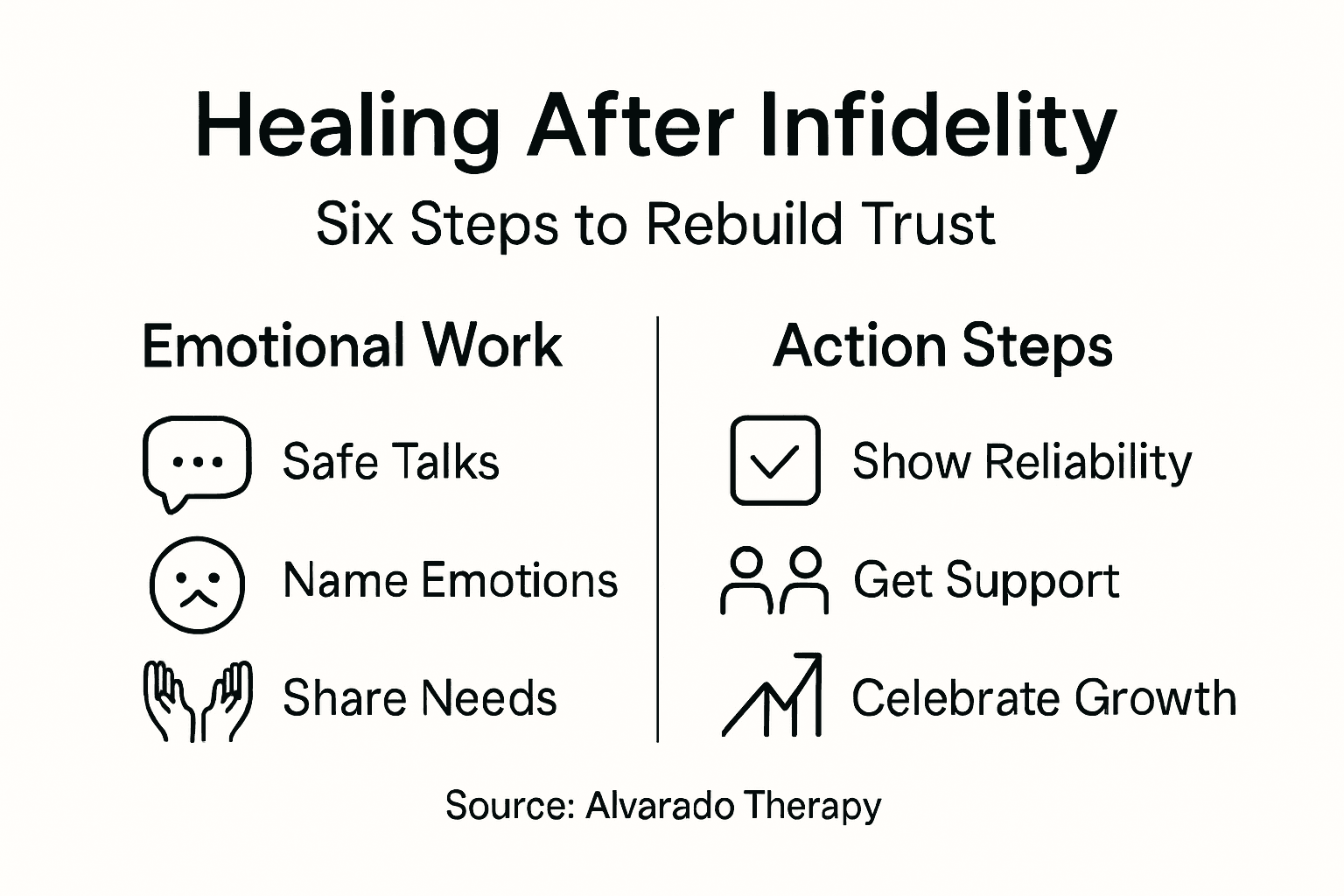
Start by reflecting on specific changes you've noticed. Maybe your arguments now include actual listening instead of just waiting for your turn to speak. Maybe you initiated physical affection without fear, or you had a conversation about something vulnerable and neither of you shut down. Maybe the betrayed partner went a full week without checking their partner's phone, or the unfaithful partner brought up a difficult topic without being asked. These aren't small things. Recognizing milestones of healing and mutual acknowledgment promotes sustained commitment and reinforces the value of the work you're both doing. Write down three specific moments where you felt your partner showing up differently. Did they initiate a conversation? Follow through on a commitment? Show empathy when you were struggling? Name it. Let your partner know you noticed. This exchange of acknowledgment creates positive momentum that counteracts the heaviness of recovery work.
Celebrate these moments intentionally. This doesn't mean throwing a party, though you could. It means taking time to recognize that you're building something new together. Maybe you cook a meal you both love, take a walk where you talk about your healing journey, or simply say to each other, "We handled that differently today, and I'm proud of us." You might also track measurable changes. Are you having fewer arguments? Are they shorter when they happen? Do you feel more connected physically or emotionally? Are you laughing together again? These data points matter because they prove the work is paying off. Set a rhythm for evaluation. Every two months, sit down and ask each other what's improved and what still needs attention. This isn't criticism. It's honest assessment that keeps you accountable and motivated. You'll likely find that the timeline for healing shifts from feeling infinite to feeling manageable. That's growth.
Pro tip: Create a "wins jar" where you both write down moments of progress, then read them aloud together on a monthly basis to remind yourselves that healing is accumulating even on the hardest days.
Find Support to Heal After Infidelity with Trauma-Informed Care
Recovering from infidelity is an emotionally intense journey full of challenges like rebuilding trust, processing deep pain, and meeting individual needs within your relationship. This article highlights essential steps such as creating a safe space for honest conversations and strengthening communication with professional support — strategies many couples struggle to implement on their own. If you feel stuck, overwhelmed by emotional triggers, or want to move from words to consistent healing actions, specialized guidance can make all the difference.
At Alvarado Therapy, our California-based, trauma-informed therapists specialize in helping individuals and couples navigate relationship difficulties including healing from betrayal. Through evidence-based approaches like EMDR therapy and couples counseling, we provide a culturally responsive, bilingual space where you can rebuild emotional safety and connection. Take the next step toward lasting growth by exploring our couples therapy services and individual counseling options available both in person and online throughout California. Don’t wait to find clarity and empowerment in your healing journey today.
Frequently Asked Questions
What is the first step to healing after infidelity?
To begin healing after infidelity, create a safe space for honest conversations. Choose a comfortable setting without interruptions and communicate openly about your feelings and intentions to foster trust.
How can I effectively process my emotions with my partner after infidelity?
Acknowledge and process emotions together by openly sharing what you feel. Use "I" statements to express your feelings without placing blame, allowing both partners to understand each other’s experiences and move toward healing.
What specific needs should I identify after experiencing infidelity in my relationship?
Identify individual and relationship needs by discussing what each person requires to feel safe and valued. Be specific in your requests, such as scheduling regular check-ins or establishing clear boundaries, to ensure both partners' needs are addressed.
How can I rebuild trust after an affair?
Rebuild trust through consistent actions that demonstrate reliability and accountability. Share your whereabouts and maintain transparency in your communications to create a foundation for trust over time.
When should I consider seeking professional support after an infidelity?
Consider seeking professional support when you find it difficult to navigate emotions or conversations on your own. A therapist can help facilitate discussions and guide the healing process, ideally within the first few months post-infidelity.
What milestones should I celebrate during the healing process?
Celebrate milestones such as improved communication or increased emotional intimacy, as these indicate progress. Track specific moments where both partners show growth, like fewer arguments or more vulnerability, and acknowledge them together.
Recommended
7 Empowering Ways to Heal After Breakup Naturally — Alvarado Therapy
7 Steps to a Stronger Relationship Healing Checklist — Alvarado Therapy
How to Heal After Breakup Naturally Step by Step — Alvarado Therapy
Relationship Betrayal Trauma – How It Reshapes Trust — Alvarado Therapy
How to Save a Marriage: A Guide to Rebuilding Your Connection
