
How to Heal After Breakup Naturally Step by Step

After a painful breakup, the weight of emotional distress can feel overwhelming, especially for those balancing Latinx and LGBTQ+ identities in California. This struggle often calls for a space where you feel both supported and understood. By focusing on creating a safe and supportive environment and using trauma-informed strategies, you can begin to rebuild your sense of safety, express your true feelings, and move forward with renewed self-compassion.
Table of Contents
Quick Summary
| Key Point | Explanation |
|---|---|
| 1. Create a Safe Environment | Establish a comforting space by removing reminders and surrounding yourself with supportive people. |
| 2. Express Your Emotions Honestly | Use journaling, art, or conversation to process and validate your feelings after the breakup. |
| 3. Utilize Trauma-Informed Strategies | Practice mindfulness and self-compassion to manage emotional distress and promote healing. |
| 4. Engage in Self-Care Activities | Prioritize personal growth by exploring hobbies and setting clear boundaries to restore your identity. |
| 5. Assess Your Healing Progress | Reflect on your emotional journey regularly to track growth and acknowledge signs of healing. |
Step 1: Set Up a Safe and Supportive Environment
Creating a safe emotional landscape after a breakup requires intentional, strategic actions that protect your mental wellness and facilitate healing. Establishing a supportive environment means curating spaces and relationships that nurture your recovery while minimizing potential emotional triggers.
Start by identifying trusted friends and family members who can provide genuine emotional support. Creating a strong support network helps buffer against isolation and provides critical human connection during this vulnerable period. Focus on individuals who listen without judgment, offer compassionate understanding, and respect your emotional boundaries. These connections should feel safe and validating.
Physically reorganizing your living space can also signal a powerful emotional reset. Remove items that consistently remind you of your past relationship, such as photographs, shared gifts, or mementos that might trigger painful memories. Consider rearranging furniture or redecorating to create a fresh environment that feels distinctly yours. This symbolic transformation helps your mind recognize that you are entering a new chapter of personal growth and independence.
Professional Tip: Designate a specific area in your home as a personal sanctuary for healing, equipped with comforting items like soft blankets, journals, inspirational books, and objects that represent your strength and resilience.
Step 2: Acknowledge and Express Your Emotions Honestly
Healing from a breakup requires courageously facing and processing your complex emotional landscape. This step is about giving yourself unconditional permission to experience and express the full spectrum of feelings that emerge after your relationship ends.
Honest emotional processinginvolves recognizing that no single emotional response is wrong or inappropriate. Sadness, anger, relief, confusion, grief these are all valid reactions to relationship loss. Create space for yourself to feel without judgment by selecting healthy emotional release methods. Journaling can be particularly powerful allowing you to document your feelings privately and trace your emotional journey. Speaking with trusted friends or a therapist provides another meaningful avenue for expressing complex emotions.
Consider exploring creative outlets that help you channel your feelings constructively. Art, music, writing, or physical activities like dancing or running can transform intense emotions into healing experiences. Pay attention to how your body responds these activities often reveal emotional truths that words cannot fully capture. Remember that emotional expression is not linear some days will feel more challenging than others.
Professional Tip: Schedule dedicated time each week for intentional emotional processing where you allow yourself to feel deeply without trying to immediately resolve or minimize your experience.
Compare these emotional release methods to discover their unique advantages:
| Method | How It Helps Heal | Ideal For |
|---|---|---|
| Journaling | Clarifies thoughts, tracks growth | Private reflection |
| Art/Music | Expresses emotions nonverbally | Creative personalities |
| Physical Activity | Releases tension, boosts mood | Active individuals |
| Conversation | Gains perspective, reduces isolation | Socially oriented |
Step 3: Explore Trauma-Informed Coping Strategies
Recovering from a breakup requires a compassionate approach that recognizes emotional pain as a valid form of psychological experience. This step focuses on developing trauma-informed strategies that help you process your emotions with kindness and intentionality.
Positive cognitive processinginvolves understanding how your thoughts and emotions interconnect during healing. Start by practicing self-compassion techniques that acknowledge your pain without judgment. This might include mindfulness meditation, where you observe your feelings without attempting to change or suppress them. Develop a toolkit of emotional regulation skills such as deep breathing exercises, grounding techniques, and gentle self talk that help stabilize your nervous system during moments of intense emotional distress.

Engaging in structured reflection can transform your healing journey. Consider keeping a trauma-informed journal where you explore not just the painful aspects of your breakup, but also your personal strengths, resilience, and potential for growth. Documenting your emotional landscape allows you to recognize patterns, celebrate small victories, and track your healing progress. Remember that trauma-informed coping is not about eliminating pain, but learning to move through it with compassion and self understanding.
Professional Tip: Create a personalized emotional wellness toolkit with 3-5 specific coping strategies you can reliably turn to when feeling overwhelmed.
Step 4: Engage in Identity-Affirming Self-Care Practices
Healing from a breakup is a profound journey of rediscovering and celebrating your authentic self. This step focuses on nurturing your unique identity and creating a compassionate personal care strategy that honors your emotional and physical well-being.
Rebuilding your sense of self requires intentional practices that prioritize your individual needs and aspirations. Start by designing a daily routine that centers your personal growth and emotional recovery. This might involve exploring new hobbies, reconnecting with old passions, or developing skills that reflect your evolving identity. Physical practices like yoga, dance, or martial arts can help you reconnect with your body and rebuild confidence. Pay attention to activities that make you feel strong, creative, and authentically yourself.
Establish clear personal boundaries that protect your emotional energy and support your healing process. This could mean limiting contact with people or situations that drain your emotional resources, and intentionally surrounding yourself with supportive individuals who validate your experience. Create personal rituals that symbolize your resilience such as journaling, meditation, or creating art that represents your emotional journey. Remember that self-care is not selfish it is a necessary act of self love and restoration.
Professional Tip: Design a personal self-care menu with 5-7 activities that nourish different aspects of your well being physical, emotional, creative, and spiritual.
Step 5: Assess Your Healing Progress and Next Steps
Healing from a breakup is not a linear journey but a nuanced process of self discovery and emotional transformation. This step focuses on developing a compassionate and honest framework for evaluating your emotional recovery and determining strategic next steps.
Understanding recovery stages involves creating a personal reflection practice that tracks your emotional landscape. Develop a journaling routine where you document your feelings, triggers, growth moments, and emerging strengths. Consider creating a monthly emotional check in where you honestly assess your healing progress. Ask yourself key questions like how your emotional resilience has changed, what new insights you have gained, and which coping mechanisms feel most supportive.
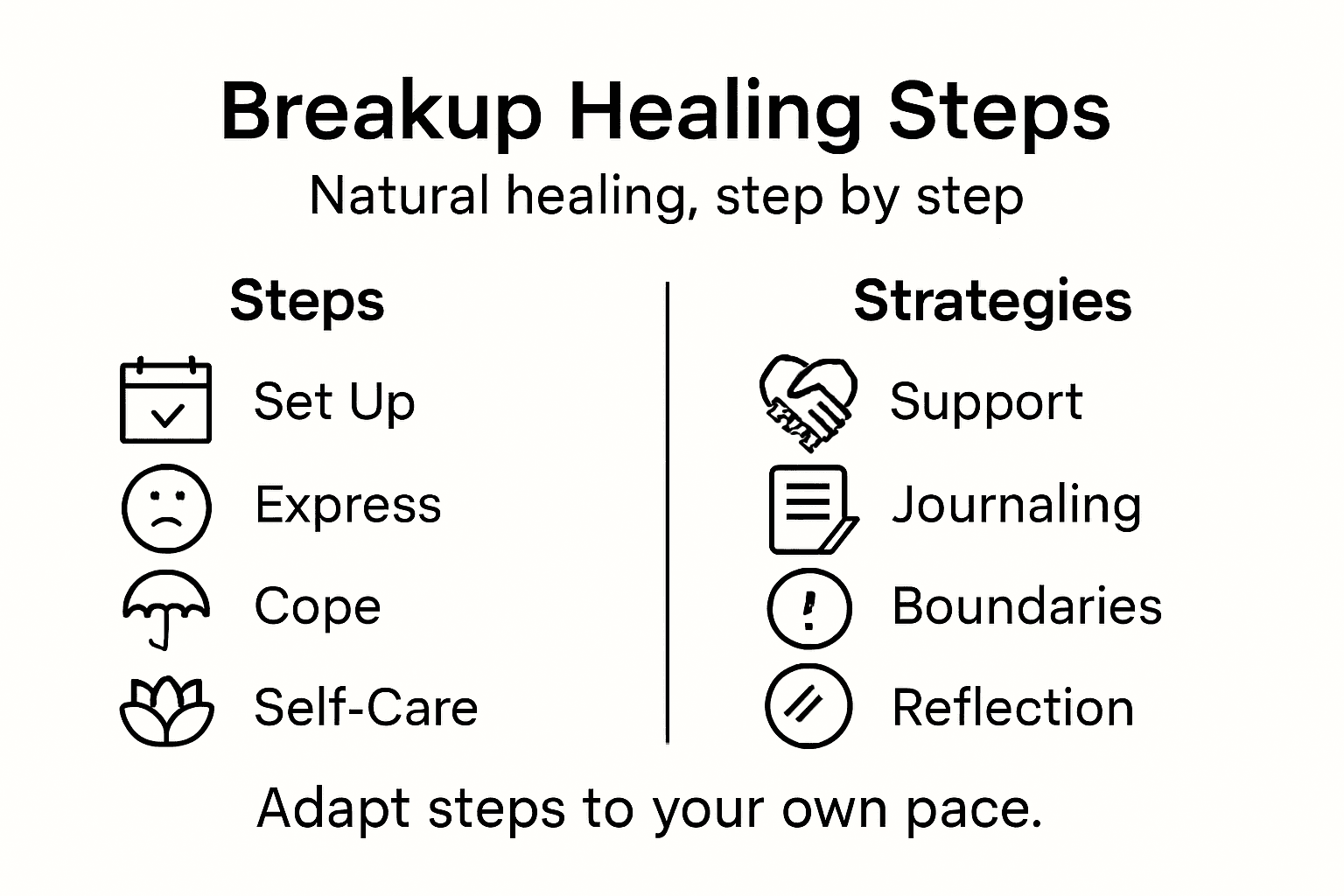
Recognize that healing is not about reaching a perfect endpoint but about cultivating ongoing self awareness and compassion. Some days will feel more challenging than others and that is completely normal. Pay attention to subtle shifts in your emotional well being such as increased emotional stability, reduced reactivity to past relationship triggers, and a growing sense of personal agency. These indicators suggest meaningful progress beyond surface level healing. Trust your intuition and be patient with yourself as you navigate this transformative journey.
Professional Tip: Create a personal healing scorecard with 5-7 personalized metrics that reflect your unique emotional and psychological growth.
Here's a summary of key healing strategies and their main benefits:
| Healing Step | Core Strategy | Main Benefit |
|---|---|---|
| Safe Environment | Remove reminders, seek support | Reduces triggers, fosters comfort |
| Honest Emotional Expression | Journaling, talking, creative outlets | Promotes acceptance, less isolation |
| Trauma-Informed Coping | Mindfulness, self-compassion | Regulates emotions, builds resilience |
| Identity-Affirming Self-Care | Hobbies, rituals, physical activity | Boosts self-worth, renews identity |
| Progress Assessment | Routine reflection, tracking growth | Monitors healing, reveals strengths |
Support Your Natural Healing Journey After a Breakup
Healing from a breakup involves navigating complex emotions, rebuilding your identity, and developing trauma-informed coping strategies. If you are seeking a compassionate space to process your feelings honestly and safely, Alvarado Therapy offers expert guidance tailored to your unique experience. Our trauma-informed approach, including EMDR therapy and individual counseling, is designed to help you cultivate emotional resilience and regain a sense of empowerment.
Discover how our licensed therapists serving California communities can support your next steps toward healing. Take charge of your recovery today by exploring personalized therapy options that honor your story. Visit Alvarado Therapy to learn more about our services and start your journey with care grounded in identity affirmation and trauma sensitivity. Begin transforming your pain into growth now.
Frequently Asked Questions
How can I create a safe environment for healing after a breakup?
Creating a safe environment involves removing reminders of your past relationship and surrounding yourself with supportive friends and family. Start by decluttering your space of any items that bring back painful memories, and make a list of trusted individuals who can emotionally support you.
What methods can I use to express my emotions honestly after a breakup?
To express your emotions honestly, consider journaling or engaging in creative activities such as art or music. Dedicate time each week to write down your feelings, aiming for at least 20–30 minutes to process your thoughts deeply.
What are trauma-informed coping strategies I can practice after a breakup?
Trauma-informed coping strategies include mindfulness techniques and self-compassion practices. Incorporate deep breathing exercises and keep a journal focused on your emotional strengths and growth, revisiting it at least once a week to see your progress.
How can I engage in self-care that affirms my identity following a breakup?
Engage in identity-affirming self-care by developing a routine that prioritizes activities you enjoy and that enhance your sense of self. Create a personal self-care menu featuring 5–7 activities that nurture your emotional and physical well-being, like yoga or creative hobbies.
How do I assess my healing progress after a breakup?
To assess your healing progress, establish a monthly routine to journal about your emotions and reflect on personal growth. Set specific metrics to evaluate your growth, such as emotional stability and coping effectiveness, and track these over time to measure improvement.
What steps should I take if I feel stuck in my healing process?
If you feel stuck, revisit your coping strategies and seek support from trusted friends or a therapist. Schedule intentional time for emotional processing and consider trying new activities aimed at self-discovery, such as exploring new hobbies or joining support groups.
Recommended
7 Empowering Ways to Heal After Breakup Naturally — Alvarado Therapy
Why Seek Couples Counseling After Breakup: Healing, Clarity, Co-Parenting — Alvarado Therapy
7 Steps to a Stronger Relationship Healing Checklist — Alvarado Therapy
Role of Therapy in Divorce Recovery – Pathways to Healing — Alvarado Therapy
Why Choose Gentle Routines for Lasting Glow – EMILY SANDERS LIFESTYLE
