
Role of Therapy in Divorce Recovery – Pathways to Healing

More than half of American adults going through divorce describe the experience as emotionally overwhelming. In California, facing the end of a relationship often brings waves of grief, anxiety, and uncertainty that can feel isolating. Trauma-informed therapy offers tools to manage emotional pain, strengthen mental health, and create new relationship patterns after divorce. This guide breaks down how targeted support can foster personal growth and help you rebuild with confidence.
Table of Contents
Key Takeaways
| Point | Details |
|---|---|
| Therapy Supports Recovery | Professional therapeutic intervention enhances emotional regulation and adaptation for individuals navigating divorce. |
| Diverse Approaches Exist | Various therapy methods, such as individual counseling and trauma-informed care, cater to the unique needs of those recovering from divorce. |
| Emotional Intelligence is Key | Developing emotional intelligence and self-compassion is vital for rebuilding identity and resilience post-divorce. |
| Active Engagement Matters | Engaging in structured self-care and social interactions is essential for transforming emotional pain into personal growth. |
Defining Therapy's Impact on Divorce Recovery
Divorce represents a profound emotional transition that fundamentally transforms an individual's psychological landscape. Understanding therapy's role becomes critical in navigating this complex journey of healing and personal reconstruction. Research demonstrates that professional therapeutic intervention can dramatically improve emotional regulation and adaptation during post-divorce periods, providing essential support mechanisms for psychological recovery.
The therapeutic process serves multiple critical functions in divorce recovery. Emotion regulation strategies play a pivotal role in establishing effective therapeutic connections, enabling individuals to process complex feelings of loss, grief, and potential trauma associated with relationship dissolution. Therapists help clients develop healthy coping mechanisms, rebuild self-identity, and reconstruct personal narratives beyond the context of their previous partnership.
Key therapeutic approaches in divorce recovery typically include individual counseling, group support sessions, and trauma-informed interventions. These strategies aim to address not just emotional pain, but also practical challenges of rebuilding one's life. Techniques might involve processing unresolved emotional experiences, developing communication skills for potential co-parenting scenarios, and creating personalized strategies for moving forward with resilience and self-understanding.
Pro Tip: Begin documenting your emotional journey through journaling, which can provide valuable insights for your therapy sessions and personal growth.
Types of Therapy Approaches for Divorce
Navigating the emotional complexity of divorce requires specialized therapeutic interventions tailored to individual needs and experiences. Different therapy approaches offer unique strategies for processing grief, rebuilding personal identity, and developing resilience during this challenging life transition. Recognizing the diverse psychological impacts of divorce, mental health professionals have developed multiple therapeutic modalities to support individuals through this transformative period.
Compassion-based therapy emerges as a powerful intervention specifically designed to help women rebuild emotional well-being after divorce, focusing on improving life orientation, social acceptance, and emotional adjustment. This approach emphasizes self-compassion, helping individuals reframe their personal narratives and develop stronger emotional regulation skills. Additionally,comparative studies highlight the effectiveness of specialized approaches like structural family therapy and mindfulness-based interventions, demonstrating the importance of selecting a therapeutic method that resonates with individual psychological needs.
The most common therapeutic approaches for divorce recovery include individual counseling, group therapy, trauma-informed therapy, and cognitive behavioral techniques. Each approach addresses different aspects of the divorce experience: individual counseling provides personalized support for processing emotions, group therapy offers community connection and shared healing, trauma-informed therapy helps address underlying emotional wounds, and cognitive behavioral techniques assist in developing healthier thought patterns and coping mechanisms.
Here's a summary comparing common therapy approaches for divorce recovery:
| Therapy Approach | Focus Area | Typical Benefits |
|---|---|---|
| Individual Counseling | Personal emotional support | Tailored coping and self-growth |
| Group Therapy | Community connection | Shared healing and peer empathy |
| Trauma-Informed Care | Emotional safety | Addressing deep emotional wounds |
| Cognitive Behavioral | Thought pattern change | Healthier thinking and resilience |
Pro Tip: Schedule an initial consultation with a therapist specializing in divorce recovery to explore which therapeutic approach might best suit your unique emotional landscape and healing goals.
Trauma-Informed Care and Healing After Divorce
Divorce can trigger profound psychological trauma, creating complex emotional landscapes that require specialized therapeutic approaches. Trauma-informed care represents a comprehensive framework designed to recognize, understand, and address the deep emotional wounds associated with relationship dissolution. By centering the individual's unique experiences and emotional responses, this approach provides a compassionate and empowering pathway to healing.
The therapeutic alliance plays a critical role in post-divorce interventions, emphasizing the importance of understanding trauma's multifaceted impact. Therapists trained in trauma-informed care recognize that divorce is not just a legal process but a deeply transformative experience that can challenge an individual's sense of self, security, and emotional stability. Research consistently highlights the significance of emotion regulation strategies in facilitating healing within group therapy contexts, demonstrating how targeted interventions can help individuals process grief, rebuild resilience, and reconstruct their emotional narratives.
Trauma-informed care encompasses several key principles: creating psychological safety, fostering trust, empowering client autonomy, promoting collaborative decision-making, and recognizing individual strengths. These approaches typically involve comprehensive assessment of past experiences, developing personalized coping strategies, addressing potential triggers, and supporting holistic emotional recovery. Techniques may include cognitive behavioral therapy, Eye Movement Desensitization and Reprocessing (EMDR), mindfulness practices, and narrative therapy, all aimed at helping individuals transform traumatic experiences into opportunities for personal growth and renewed self-understanding.
Key principles of trauma-informed care can guide effective divorce recovery:
| Principle | Core Purpose | Example in Divorce Recovery |
|---|---|---|
| Psychological Safety | Provide a secure environment | Creating safe spaces for sharing |
| Client Empowerment | Support autonomy and control | Setting recovery goals together |
| Strength Recognition | Focus on positive traits | Building self-worth post-divorce |
| Collaborative Decisions | Involve client in therapy planning | Joint decision-making on strategies |
Pro Tip: Create a personal safety plan with your therapist that identifies emotional triggers and develops specific strategies for managing challenging emotional responses during your divorce recovery journey.
Emotional Challenges: Grief, Identity, and Resilience
Divorce represents an intensely personal journey of emotional transformation, challenging individuals to navigate complex psychological terrain marked by profound grief, identity reconstruction, and the pursuit of resilience. The emotional landscape of divorce extends far beyond legal proceedings, demanding deep introspection and intentional healing strategies that address the multifaceted impact of relationship dissolution on one's sense of self and future possibilities.
Post-divorce family resilience emerges as a critical framework for understanding how individuals can successfully adapt to life transitions, highlighting the importance of social support, emotional regulation, and adaptive coping mechanisms. The process of rebuilding involves acknowledging profound loss while simultaneously cultivating inner strength and reimagining personal narratives. Grief in divorce is not linear but a complex emotional experience that encompasses multiple stages of mourning the end of a shared life vision, personal dreams, and established relationship dynamics.

Navigating emotional challenges requires a holistic approach that recognizes the interconnected nature of grief, identity, and resilience. Key strategies include developing emotional intelligence, creating supportive social networks, engaging in self-reflection, and practicing self-compassion. Individuals must learn to distinguish between their former relationship identity and their emerging, autonomous self. This journey involves processing painful emotions, challenging negative self-perceptions, and gradually reconstructing a sense of personal worth and potential that is not defined by marital status or past relationship experiences.
Pro Tip: Create a personal narrative journal documenting your emotional growth, celebrating small victories, and tracking your journey of self-discovery during the divorce recovery process.
Practical Strategies for Moving Forward
Recovering from divorce requires intentional, strategic approaches that transform emotional pain into opportunities for personal growth and renewal. This journey demands more than passive healing – it requires active engagement with one's emotional landscape, deliberate self-care, and a commitment to rebuilding personal resilience and purpose.
Targeted family interventions provide essential mental health support models that emphasize practical coping mechanisms and communication improvements, creating structured pathways for navigating post-divorce challenges. Research suggests comprehensive strategies including resilience training, social support enhancement, and emotional intelligence development can significantly assist individuals in moving forward constructively. These approaches recognize that recovery is not about erasing past experiences, but about integrating them into a stronger, more adaptive personal narrative.
Practical strategies for moving forward encompass multiple dimensions of personal development. Key approaches include establishing clear personal boundaries, rebuilding social connections, investing in self-improvement, and developing new life skills. This might involve exploring personal interests, reconnecting with supportive friends and family, pursuing professional counseling, engaging in physical wellness activities, and creating structured routines that provide stability during transitional periods. The goal is not to return to a previous state, but to construct a more empowered, autonomous version of oneself.
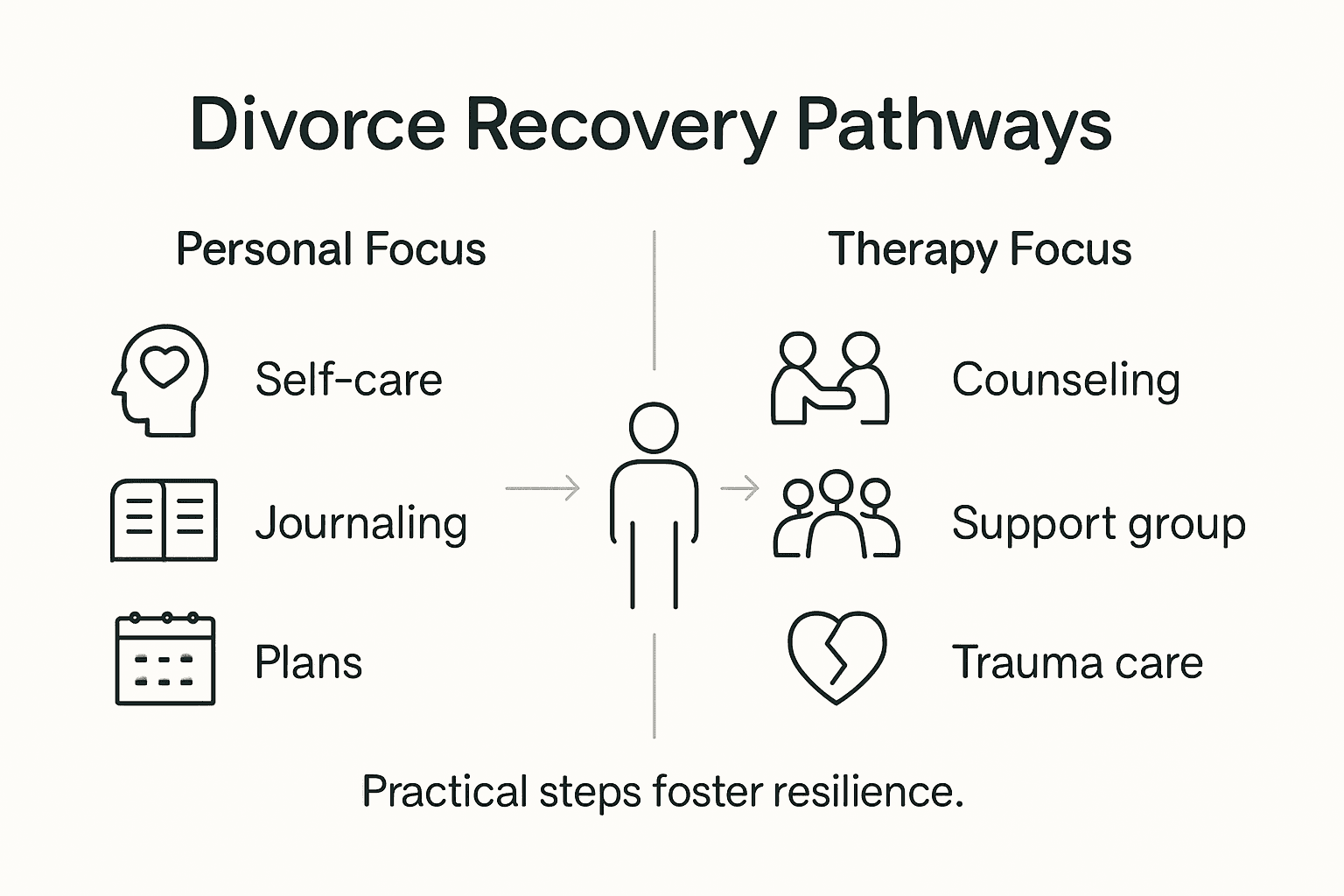
Pro Tip: Create a structured weekly plan that allocates time for self-care, personal growth activities, and purposeful social interactions to maintain emotional momentum during your recovery journey.
Find Healing Support Tailored to Your Divorce Recovery Journey
Divorce can bring overwhelming grief, identity shifts, and emotional trauma that feel impossible to navigate alone. Therapy offers powerful pathways to heal, rebuild resilience, and regain control over your life. At Alvarado Therapy, we understand the importance of trauma-informed care and emotion regulation strategies highlighted in the article. Our licensed therapists specialize in personalized approaches like EMDR and individual counseling that help you process loss, develop healthy coping skills, and foster self-compassion.
Whether you prefer meeting in person at our Ventura CA location or working with a therapist online across California through our Online in California services, we offer culturally responsive care designed to empower you every step of the way.
Take your next step toward emotional renewal and confidence by connecting with a compassionate professional today. Visit Alvarado Therapy to learn more about our expert team and schedule your first appointment. Healing is possible and begins when you choose support that honors your unique healing journey.
Frequently Asked Questions
What is the role of therapy in divorce recovery?
Therapy plays a critical role in divorce recovery by providing emotional support, helping individuals process feelings of loss, and offering coping strategies to adjust to new life circumstances. It facilitates personal growth and aids in reconstructing one's identity post-divorce.
What types of therapy are effective for divorce recovery?
Effective types of therapy for divorce recovery include individual counseling, group therapy, trauma-informed care, and cognitive behavioral techniques. Each approach addresses different aspects of the emotional challenges faced during this transition and supports healing in unique ways.
How does trauma-informed care aid in healing after divorce?
Trauma-informed care aids in healing by recognizing the complex emotions associated with divorce and providing a supportive framework that emphasizes psychological safety, client empowerment, and the collaborative development of coping strategies to manage emotional triggers and promote recovery.
What practical strategies can help someone move forward after a divorce?
Practical strategies for moving forward after divorce include setting personal boundaries, rebuilding social connections, investing in self-improvement, exploring new interests, and developing structured routines that support emotional stability and personal growth.
