
Why Trauma Therapy Matters for Healing and Growth

Over half of American young adults report experiencing anxiety linked to childhood trauma. Living in California, cultural pressures and everyday stress can make healing feel out of reach. Luckily, trauma therapy and EMDR offer targeted support that honors your bilingual identity and unique journey. This guide explains how trauma-informed care empowers personal growth, helps you reclaim emotional safety, and addresses the lasting effects of grief or anxiety.
Table of Contents
Key Takeaways
| Point | Details |
|---|---|
| Understanding Trauma Therapy | Trauma therapy is focused on providing a safe and supportive environment for individuals to process their traumatic experiences and reclaim their emotional resilience. |
| Core Principles | The key principles of trauma therapy include safety, trust, collaboration, empowerment, and cultural sensitivity, which guide the therapeutic relationship. |
| Types of Trauma | Different types of trauma, such as acute, chronic, and complex trauma, have distinct psychological effects that can significantly impact an individual's mental health and relationships. |
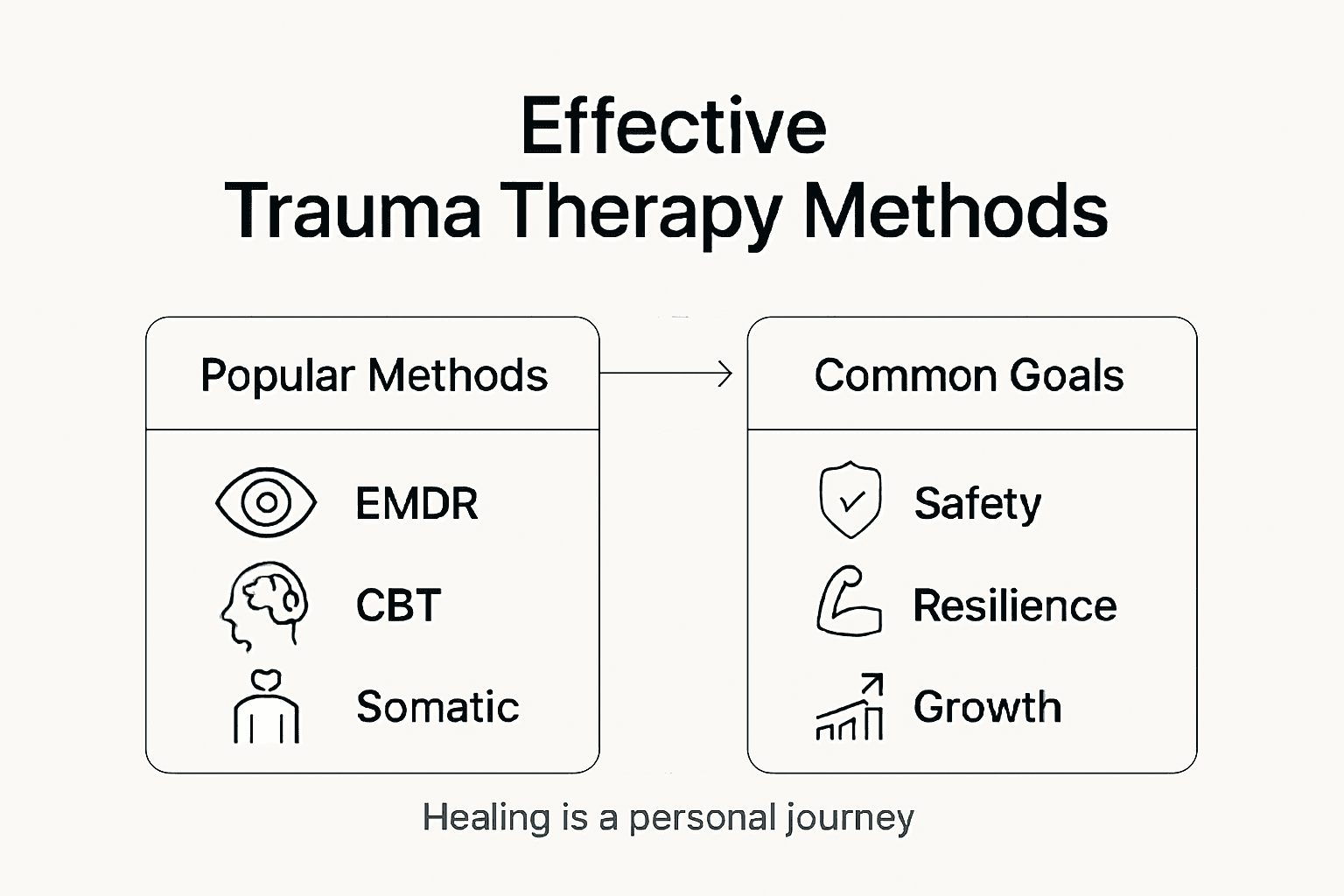
| Effective Methods | Approaches like EMDR, Trauma-Focused Cognitive Behavioral Therapy (CBT), and somatic experiencing are crucial for helping individuals navigate their healing journey through trauma. |
Defining Trauma Therapy and Key Principles
Trauma therapy is a specialized therapeutic approach designed to help individuals process and heal from deeply distressing or traumatic life experiences. Unlike traditional counseling, trauma therapy recognizes the profound neurological and psychological impacts of trauma, focusing on creating a safe, empowering environment for recovery. Trauma-informed care emphasizes understanding how traumatic experiences shape an individual's responses and interactions.
The core principles of trauma therapy center around creating psychological safety, building trust, and supporting client autonomy. These principles include safety, transparency, collaboration, empowerment, and cultural sensitivity. Therapists trained in trauma-informed approaches understand that traumatic experiences can fundamentally alter a person's perception of safety, relationships, and self-understanding. By prioritizing client choice and creating a collaborative healing environment, trauma therapy aims to help individuals reclaim their sense of control and resilience.
Key therapeutic techniques in trauma therapy might include Eye Movement Desensitization and Reprocessing (EMDR), cognitive processing therapy, and somatic experiencing. These approaches focus on understanding how trauma affects an individual's life and responses to health services, recognizing that healing is not about erasing traumatic memories but processing them in a way that reduces their emotional charge and impact.
Pro tip: When seeking trauma therapy, prioritize finding a therapist who demonstrates genuine understanding, offers clear communication about treatment approaches, and creates a sense of safety and trust during your initial consultations.
Types of Trauma and Their Lasting Effects
Trauma encompasses a wide range of experiences that can profoundly impact an individual's mental and emotional well-being. Different types of trauma include abuse, neglect, accidents, loss, violence, and systemic issues like discrimination, each affecting individuals in unique and complex ways. These experiences can range from single acute incidents to prolonged, chronic adversities that fundamentally reshape a person's perception of safety and relationships.
Acute trauma typically results from a single, intense event like a car accident, natural disaster, or sudden loss. Chronic trauma, by contrast, involves repeated or prolonged exposure to distressing experiences, such as childhood abuse, domestic violence, or ongoing discrimination. Research has highlighted the broad psychological impacts of diverse trauma types, including Post-Traumatic Stress Disorder (PTSD), depression, and anxiety. The lasting effects can manifest through various psychological and physiological symptoms, including emotional dysregulation, disrupted relationships, and altered cognitive functioning.
Complex trauma, often experienced during childhood, can have particularly profound and long-lasting consequences. This type of trauma occurs when an individual experiences multiple, chronic, and prolonged traumatic events, typically of an invasive, interpersonal nature. Such experiences can fundamentally alter brain development, emotional regulation, attachment patterns, and an individual's core sense of self. The impacts may include challenges with trust, difficulty maintaining healthy relationships, persistent anxiety, and complex emotional responses that can persist well into adulthood.
Pro tip: Recognize that trauma is not a one-size-fits-all experience, and healing is a personal journey that may require professional support, patience, and compassionate self-understanding.
The following table summarizes the types of trauma and their typical long-term effects:
| Type of Trauma | Key Characteristics | Lasting Psychological Effects |
|---|---|---|
| Acute Trauma | Single severe event | Anxiety, intrusive memories |
| Chronic Trauma | Repeated adversity | Persistent stress, emotional numbness |
| Complex Trauma | Multiple, prolonged events | Attachment issues, identity struggles |
How Trauma Therapy Promotes Healing
Trauma therapy creates transformative healing environments that support individuals in processing and recovering from deeply painful experiences. By establishing a safe, collaborative therapeutic relationship, trauma-informed approaches help individuals rebuild their sense of safety, control, and emotional resilience. The core of this healing process involves understanding how traumatic experiences have impacted an individual's psychological and neurological functioning, then developing personalized strategies to process those experiences.
Therapeutic modalities like cognitive behavioral therapy and Eye Movement Desensitization and Reprocessing (EMDR) play crucial roles in trauma healing. These interventions focus on reducing symptoms of PTSD, depression, and anxiety while enhancing emotional regulation and interpersonal functioning. By providing structured, compassionate approaches to processing traumatic memories, these therapies help individuals gradually reclaim their emotional landscape, develop healthier coping mechanisms, and reconstruct a sense of personal empowerment.
The healing journey in trauma therapy is deeply individualized, recognizing that each person's traumatic experience and recovery path is unique. Therapists work collaboratively with clients, prioritizing their autonomy and creating a non-judgmental space where healing can occur naturally. This approach involves teaching emotional regulation skills, helping clients understand their trauma responses, and supporting them in developing new narratives that integrate their experiences without being defined by them.
Pro tip: Remember that healing from trauma is not linear, and seeking professional support is a courageous step toward reclaiming your emotional well-being.
What Makes Trauma-Informed Care Different
Trauma-informed care fundamentally transforms the traditional approach to mental health treatment by shifting from asking 'What's wrong with you?' to 'What happened to you?'This paradigm shift represents a profound change in understanding human experiences, recognizing that traumatic events can deeply impact an individual's psychological, biological, and social functioning. Unlike traditional therapeutic models, trauma-informed care views an individual's experiences through a lens of compassion, understanding, and holistic healing.
The core distinction of trauma-informed care lies in its comprehensive approach to understanding human resilience and vulnerability. Mental health services integrate trauma knowledge across all levels of service delivery, emphasizing safety, trustworthiness, peer support, collaboration, empowerment, and cultural awareness. This approach means that every interaction, from initial intake to treatment planning, is designed to avoid retraumatization and support the individual's inherent strengths and capacity for healing. Practitioners focus on creating environments that feel physically and emotionally safe, where clients can rebuild their sense of control and agency.
Trauma-informed care goes beyond traditional symptom management by embedding trauma awareness into organizational policies, practices, and interactions. It recognizes that trauma is not just an individual experience but a complex interplay of personal history, social context, and systemic factors. Practitioners are trained to understand how traumatic experiences can manifest in various ways, from emotional dysregulation to physical health challenges, and to respond with nuanced, compassionate interventions that respect each individual's unique healing journey.
Pro tip: When seeking mental health support, look for practitioners who explicitly describe their approach as trauma-informed, demonstrating a commitment to understanding your complete life experience.
Common Myths and What to Avoid
Many prevalent myths about trauma therapy can discourage individuals from seeking the support they need, perpetuating misunderstandings about healing and recovery. One of the most damaging misconceptions is the belief that trauma therapy is only for people with severe, dramatic experiences or diagnosed Post-Traumatic Stress Disorder. In reality, trauma therapy encompasses a broad spectrum of experiences and supports healing for various emotional wounds.
Another critical myth to dispel is the notion that trauma therapy requires immediate, detailed recounting of traumatic experiences. Trauma-informed approaches prioritize client safety, respecting individual pacing and avoiding potential retraumatization. Effective trauma therapy is not about forcing painful memories to the surface, but creating a supportive environment where individuals can process their experiences at a pace that feels comfortable and safe. Practitioners understand that healing is not linear and that each person's journey is unique.
Perhaps the most harmful myth is the idea of a universal, one-size-fits-all treatment approach. Trauma manifests differently across individuals, influenced by personal history, cultural background, and individual resilience. Effective trauma therapy recognizes this complexity, offering personalized, culturally sensitive interventions that respect each individual's context, strengths, and healing potential. This means moving beyond symptom management to address the holistic impact of traumatic experiences on psychological, social, and physiological functioning.
Pro tip: Trust your instincts when choosing a trauma therapist, and don't hesitate to ask about their specific training in trauma-informed approaches and their philosophy of healing.
EMDR and Other Effective Therapy Methods
Eye Movement Desensitization and Reprocessing (EMDR) represents a groundbreaking approach to trauma therapy, integrating neurobiological mechanisms to process and reduce the emotional impact of traumatic memories. Unlike traditional talk therapies, EMDR uses bilateral stimulation techniques, typically involving guided eye movements, to help the brain reprocess traumatic experiences and diminish their psychological hold. This method allows individuals to transform painful memories from sources of ongoing distress into more neutral, manageable recollections.
Beyond EMDR, several evidence-based therapeutic approaches offer powerful paths to trauma recovery. Cognitive Behavioral Therapy (CBT) and its trauma-focused variant work by helping individuals identify and restructure negative thought patterns and behaviors associated with traumatic experiences. Clinical guidelines highlight these therapies as top evidence-based treatments for addressing Post-Traumatic Stress Disorder and complex trauma, focusing on systematically processing trauma memories and developing robust coping strategies. Prolonged exposure therapy, another effective method, gradually helps individuals confront trauma-related memories and situations they've been avoiding, ultimately reducing their emotional intensity.
The most effective trauma therapy approaches recognize that healing is not a one-size-fits-all process. Each therapeutic method offers unique benefits, and the most successful treatment often involves a personalized, integrated approach. Some individuals might benefit from a combination of EMDR, CBT, somatic experiencing, and other trauma-informed techniques. The key is finding a skilled therapist who can carefully assess individual needs, cultural background, and specific trauma history to design a compassionate, effective healing strategy.
Pro tip: When exploring trauma therapy options, prioritize finding a licensed therapist with specialized training in trauma-informed approaches and ask about their experience with multiple therapeutic techniques.
Here's a quick comparison of common trauma therapy methods and their core benefits:
| Therapy Method | Primary Mechanism | Common Goals |
|---|---|---|
| EMDR | Bilateral stimulation, eye movements | Reprocess traumatic memories |
| Trauma-Focused CBT | Cognitive restructuring | Reshape negative thought patterns |
| Somatic Experiencing | Body-focused techniques | Release stored physical tension |
| Prolonged Exposure Therapy | Gradual exposure | Reduce avoidance and fear response |
Begin Your Healing Journey with Trauma-Informed Care
Understanding why trauma therapy matters is the first step toward reclaiming your life from the lasting impact of trauma. If you are navigating challenges like PTSD, complex trauma, or childhood wounds, finding a safe, respectful space to heal is critical. At Alvarado Therapy, our licensed California-based therapists specialize in trauma-informed approaches like EMDR therapy and individualized counseling designed to empower you in your recovery process. We honor your unique story and work with you collaboratively to build emotional resilience and restore control.
Explore the compassionate care offered by our team by visiting California — Meet Our Team — Alvarado Therapy. Whether you prefer in-person sessions in Ventura or accessible online support statewide, we are here to guide you every step of the way. Don’t wait to start your path toward growth and healing. Take the next step today by learning more at https://alvaradotherapy.org and discover how specialized trauma therapy can transform your life.
Frequently Asked Questions
What is trauma therapy?
Trauma therapy is a specialized therapeutic approach designed to help individuals process and heal from deeply distressing or traumatic life experiences, focusing on creating a safe and empowering environment for recovery.
How does trauma therapy promote healing?
Trauma therapy promotes healing by establishing a therapeutic relationship that prioritizes safety and collaboration, allowing individuals to rebuild their sense of control and emotional resilience while processing their traumatic experiences.
What are the different types of trauma?
The different types of trauma include acute trauma, resulting from a single event; chronic trauma, stemming from repeated adverse experiences; and complex trauma, which involves multiple, prolonged traumatic events often occurring during childhood.
What techniques are commonly used in trauma therapy?
Common techniques used in trauma therapy include Eye Movement Desensitization and Reprocessing (EMDR), cognitive processing therapy, and somatic experiencing, all aimed at helping individuals process traumatic memories and reduce their emotional charge.
