
What Is Trauma-Informed Therapy and Its Impact

For many in California’s Latinx and BIPOC communities, finding relief from childhood trauma or anxiety can feel complicated when your experiences are misunderstood. Trauma-informed therapy offers more than symptom management—it recognizes that your reactions are actually survival strategies shaped by your past. Core trauma-informed principles like safety, choice, and cultural sensitivity create a healing relationship where your story is seen and respected. Discover how this approach, including EMDR, is tailored for bilingual individuals and why it makes such a difference for diverse communities.
Table of Contents
Key Takeaways
| Point | Details |
|---|---|
| Trauma-Informed Perspective | Trauma-informed therapy focuses on understanding the impact of trauma on an individual’s mind, body, and behavior rather than solely addressing the traumatic events themselves. |
| Five Fundamental Pillars | Safety, trust, choice, collaboration, and curiosity are essential principles that guide trauma-informed therapy practices. |
| Variability in Effectiveness | The effectiveness of trauma-informed interventions varies by type of trauma and individual circumstances, requiring personalized approaches. |
| Empowerment through Choice | Clients have control over their treatment decisions, promoting a sense of empowerment and agency in their healing journey. |
Defining Trauma-Informed Therapy and Misconceptions
Trauma-informed therapy isn't a fancy clinical technique or a single treatment protocol. It's a perspective that shapes how therapists understand and respond to your healing journey.
At its core, trauma-informed work means understanding not just what happened to you, but how that experience changed your mind, body, emotions, and the way you move through the world. It's about recognizing that behaviors you might label as "problems"—like hypervigilance, avoidance, or emotional numbness—are actually your nervous system's way of protecting you.
Trauma-informed therapy rests on five fundamental pillars:
Safety: Creating an environment where you genuinely feel physically and emotionally secure
Trust: Building genuine connection through transparency and reliability from your therapist
Choice: Giving you control over your treatment decisions and pacing
Collaboration: Working together as partners rather than therapist-as-expert telling you what to do
Curiosity: Exploring what protective mechanisms served you, without judgment
Here's what makes this approach different: your therapist isn't trying to "fix" you. They're trying to understand why your brain and body adapted the way they did.
Why Misconceptions Exist
Most people think trauma-informed therapy is just about talking about what happened. That's incomplete. Many believe healing requires diving into every traumatic detail repeatedly. Not necessarily. Others assume it works equally well for all types of trauma.
The research is clearer than you might think. Trauma-informed interventions focus on reducing PTSD, depression, and anxiety symptoms, but their effectiveness varies depending on the type of trauma and individual circumstances. What works beautifully for childhood emotional abuse might need adjustment for complex trauma or experiences rooted in discrimination and racism.
Here's what actually happens:
Your therapist learns your history without forcing deep details upfront
Together you identify how trauma affects your daily life right now
You choose which tools and approaches feel right for your healing
Treatment adjusts based on your nervous system's response, not a rigid timeline
Trauma-informed therapy recognizes that protective behaviors are survival mechanisms, not character flaws—and that recognition changes everything.
California-based practices like Alvarado Therapy integrate this understanding with culturally responsive care, honoring the unique ways trauma impacts Latinx and BIPOC communities. Why trauma-informed care empowers healing goes deeper than symptom reduction—it addresses the relational and cultural dimensions of recovery.
The bottom line: trauma-informed therapy isn't about one specific method. It's about a stance that says your behaviors make sense given what you've survived, and healing happens when you feel genuinely safe, heard, and in control.
Here's how trauma-informed and traditional therapy approaches differ:
| Aspect | Trauma-Informed Therapy | Traditional Therapy |
|---|---|---|
| Client Control | Client sets pace and topics | Therapist guides sessions |
| View of Behavior | Seen as protective and adaptive | Often labeled as dysfunctional |
| Cultural Sensitivity | Actively addresses diversity | May overlook cultural context |
| Adaptability | Adjusts to individual needs | Follows set frameworks |
| Environment | Prioritizes physical and emotional safety | May not address safety beyond comfort |
Pro tip: When looking for a trauma-informed therapist, ask directly whether they receive ongoing training in trauma neurobiology and cultural competency—these commitments signal genuine, current expertise rather than outdated approaches.
Types and Variations of Trauma-Informed Approaches
Trauma-informed care isn't one-size-fits-all. Different settings, different populations, and different trauma types require different applications of the same core principles.
The field has evolved to recognize that trauma-informed care encompasses multiple frameworks rather than a single rigid model. You'll find these approaches applied in medicine, mental health clinics, legal systems, schools, and even emergency departments. Each adaptation reflects the unique needs and context where healing happens.
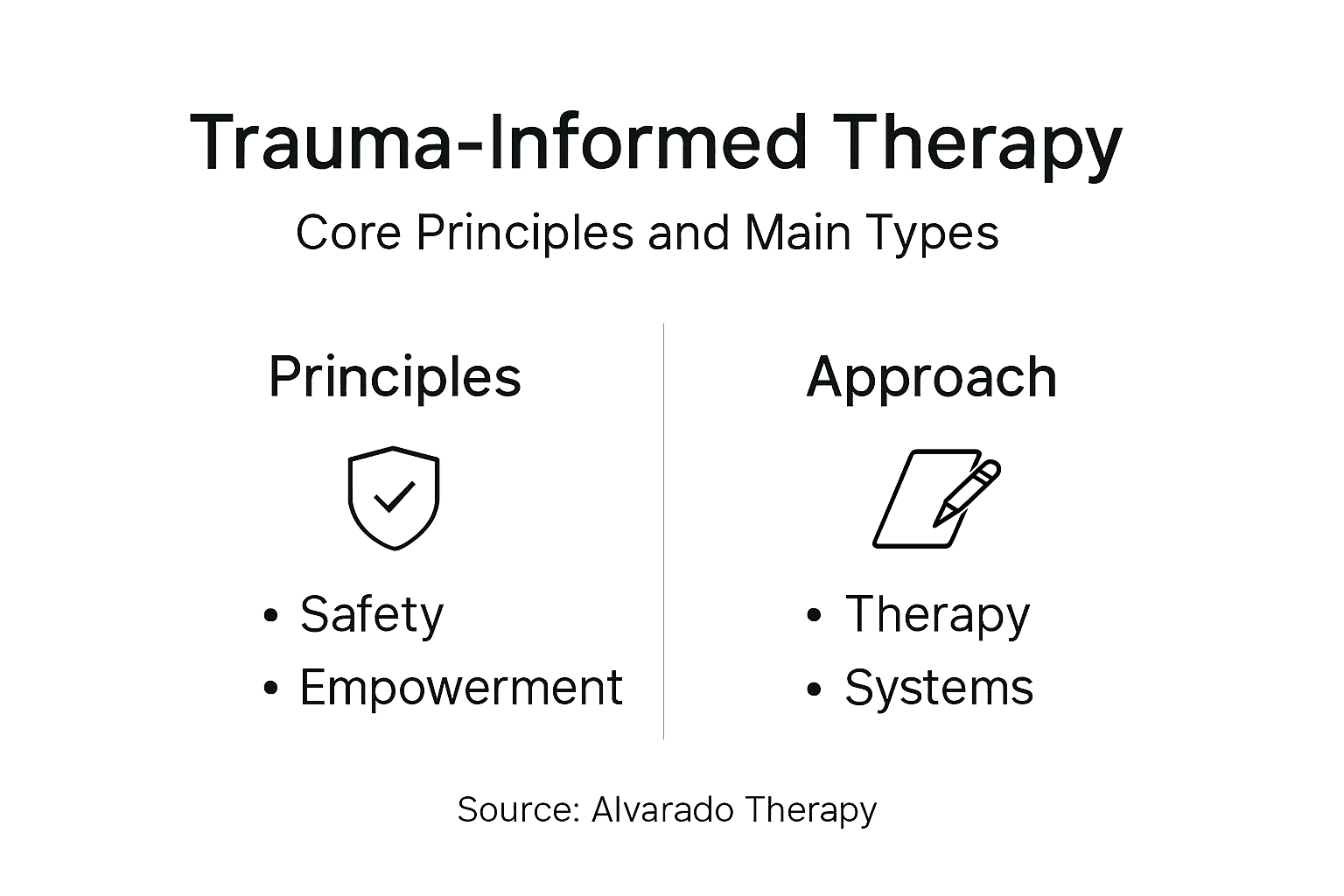
Two Main Branches
There's an important distinction that shapes how therapy works:
Trauma-specific interventions target specific PTSD or anxiety symptoms using evidence-based techniques. These are clinical approaches like EMDR (Eye Movement Desensitization and Reprocessing) or Cognitive Processing Therapy that directly address trauma memories and their neurological imprint.
Trauma-informed systems go broader. They integrate trauma awareness into organizational culture, staff training, and how services are delivered. This means your therapist, the front desk staff, and the waiting room environment all reflect trauma-informed principles.
Explore major trauma-informed branches and their practical impact:
| Approach Type | Main Focus | Who Benefits Most | Example Setting |
|---|---|---|---|
| Trauma-Specific | Processes trauma memories with clinical techniques | PTSD survivors, trauma-focused clients | Mental health clinics |
| Trauma-Informed Systems | Shapes organization and care delivery | All clients, especially vulnerable groups | Hospitals, schools, legal services |
Here's the practical difference:
- Trauma-specific: "We use this evidence-based technique to process your trauma memories"
- Trauma-informed: "Everything we do here—how we greet you, ask questions, and schedule sessions—considers how trauma affects trust and safety"
Variations Across Contexts
Cultural sensitivity significantly shapes how trauma-informed approaches work. What feels safe and respectful for a second-generation Latinx person navigating childhood emotional abuse differs from what works for someone processing immigration trauma or racial discrimination.
The most effective approaches recognize subjective trauma responses. Your therapist won't assume all anxiety symptoms look the same or that everyone needs the same pacing. They adjust based on your nervous system, your background, and what actually helps you feel regulated.
Trauma-informed variations acknowledge that healing pathways differ based on individual experience, cultural background, and the type of trauma carried.
In California clinics like Alvarado Therapy, trauma assessment for effective care integrates cultural responsiveness with clinical expertise. Bilingual therapists understand nuances that English-only practitioners miss—the shame language, family dynamics, and systemic barriers that shape your specific healing needs.
You might work with talk therapy focused on processing, somatic approaches addressing body-held trauma, or combination methods. The framework adapts to minimize distress and prevent retraumatization during treatment itself.
Pro tip: When starting therapy, ask your therapist how they customize their approach for your specific trauma type and cultural background—vague answers suggest they haven't truly individualized your care.
Core Principles: Safety, Empowerment, and Trust
Three principles anchor everything in trauma-informed therapy. Without them, you're just talking about your problems to another person. With them, you're actually healing.
Safety First
Physical and psychological safety form the foundation. This means your therapist creates an environment where you genuinely feel secure—not just intellectually, but in your nervous system.
Safety looks like:
A quiet, private space where interruptions don't happen
Clear explanations about what happens in therapy before it happens
Your therapist respecting your boundaries without question
Predictable routines that help your nervous system relax
No judgment, even when describing shame-filled moments
For many Latinx and BIPOC clients, safety requires more than a comfortable chair. It requires a therapist who understands systemic trauma, cultural context, and the specific ways discrimination affects your healing.

Empowerment Through Choice
Empowerment means you're in control, not your therapist. Core trauma-informed principles include fostering client control and promoting recovery through your own agency.
This looks radically different from traditional therapy:
You decide what to talk about and when
You choose your treatment pace—slower or faster based on your needs
You say "no" to techniques that don't feel right
You celebrate your own insights and progress
Your therapist follows your lead, not the other way around
After trauma, you experienced a loss of control. Empowerment restores it.
Trust and Transparency
Trustworthiness happens through transparency. Your therapist explains their approach, their reasoning, and what to expect. No surprises. No hidden agendas.
Transparency means:
Explaining why they're asking certain questions
Sharing their clinical thinking without jargon
Discussing treatment options so you understand choices
Being honest about what they can and can't help with
Trust isn't given—it's earned through consistency, honesty, and respecting what you've survived.
Bilingual therapists at places like Alvarado Therapy build trust by meeting you in your language, understanding cultural values around family and shame, and never treating your trauma as exotic or unusual.
The collaboration between you and your therapist isn't just helpful—it's essential. You bring expertise about your own life. Your therapist brings expertise about healing.
Pro tip: In your first session, directly ask your therapist how they'll involve you in treatment decisions and what happens if a technique doesn't feel safe—their answer reveals whether they truly practice these principles.
How Trauma-Informed Therapy Works in Practice
Trauma-informed therapy doesn't happen in a vacuum. It's a practical approach that shapes every interaction—from your first phone call to your therapist's office setup to how they respond when you freeze during a session.
Here's what actually happens when theory meets real life.
Recognition and Assessment
Your therapist starts by recognizing trauma signs without assuming. They notice if you're hypervigilant about doors, flinch at unexpected sounds, or struggle to make eye contact.
But they don't jump to conclusions. Instead, they ask curious questions:
What brings you in today?
How do you notice stress showing up in your body?
What helps you feel calm?
What doesn't help?
Implementing trauma-informed care involves recognizing trauma exposures and symptomsto understand how your nervous system learned to protect you. This isn't about diagnosis. It's about understanding your survival story.
Adapting Service Delivery
Once your therapist understands your baseline, they adjust everything:
Pacing: They don't rush you into deep work. You set the speed.
Communication style: They explain things clearly, avoiding clinical jargon that creates distance.
Session structure: They maintain consistency so your nervous system knows what to expect.
Physical environment: The office itself becomes therapeutic—lighting, temperature, seating arrangement all matter.
Flexibility: If something isn't working, they change it.
For bilingual clients, this means therapy happens in your first language, where emotion lives most authentically.
Building Safety Throughout Treatment
Retraumatization prevention is constant, active work. Your therapist watches for signs you're becoming dysregulated and adjusts immediately. This isn't weakness—it's wisdom.
They also teach you about your nervous system. Understanding why your body reacts certain ways removes shame and builds self-compassion.
Trauma-informed practice means the therapy environment itself becomes a container for healing, not another place where things go wrong.
When you work with 6 key benefits of trauma-informed therapy, you experience this shift firsthand. The relationship with your therapist becomes reparative—showing you that trust, boundaries, and genuine connection are possible.
Nothing about this approach is passive. You're actively rebuilding your sense of safety, choice, and control with each session.
Pro tip: Notice how your therapist responds when you say "no" or "stop" in session—their immediate, non-defensive respect for that boundary tells you whether they truly practice trauma-informed principles.
EMDR and Specialized Techniques for Healing
EMDR sounds strange until you understand what's actually happening in your brain. It's one of the most researched and effective approaches for processing trauma, especially PTSD and childhood wounds.
Here's what makes it different from talk therapy alone.
What EMDR Actually Is
EMDR stands for Eye Movement Desensitization and Reprocessing. Developed in the late 1980s, it's based on how your brain naturally processes information during REM sleep—when your eyes move rapidly while your brain sorts through experiences.
Trauma gets stuck. Your brain couldn't process it fully, so the memory stays frozen with all its original intensity, emotions, and physical sensations. EMDR uses bilateral brain stimulation to facilitate processing of trauma memories, reducing their emotional impact and associated symptoms.
During EMDR, you recall the traumatic memory while your therapist guides bilateral sensory input—usually side-to-side eye movements. This activates your brain's natural ability to process and integrate the memory.
How EMDR Works
The process follows structured phases:
Preparation: Building safety and trust with your therapist
Assessment: Identifying the trauma memory and associated beliefs
Desensitization: Processing the memory through eye movements
Installation: Strengthening positive beliefs to replace trauma-based ones
Body scan: Checking for remaining physical tension
Closure: Stabilizing and grounding before leaving session
It sounds clinical. It feels profoundly different. Many clients describe it as watching a traumatic memory lose its grip—like watching a horror movie on mute while understanding it's just a film.
Why EMDR Works for Bilingual Trauma
For Latinx and BIPOC communities, EMDR techniques for trauma healing offer something crucial: processing without needing to talk about every detail. This matters when shame language lives in your mother's tongue, or when discussing discrimination feels unsafe.
Your brain processes the trauma while your therapist creates safety. Language becomes less important than nervous system healing.
Other Specialized Approaches
Beyond EMDR, trauma-informed therapists use:
Somatic therapies: Working with how trauma lives in your body
Internal Family Systems: Understanding parts of yourself protecting you
Cognitive Processing Therapy: Reframing trauma-based beliefs
Sensorimotor psychotherapy: Using movement and body awareness
EMDR isn't magic—it's neuroscience that finally lets your brain finish what it couldn't before.
EMDR intensivescompress multiple sessions into focused healing days, which works well for people managing work, family, or immigration processes alongside recovery.
The right technique depends on your trauma type, your nervous system response, and what feels safe. Your therapist should be willing to adjust, combine, or shift approaches based on what actually helps you heal.
Pro tip: Ask your therapist about their EMDR certification and how many trauma cases they've treated with the method—experience matters significantly for processing complex or layered trauma.
Embrace Healing with Trauma-Informed Care at Alvarado Therapy
If you are navigating the complex effects of trauma and searching for a supportive, trauma-informed approach that truly honors your pace and cultural background, Alvarado Therapy is here for you. Our licensed therapists understand how survival behaviors are protective adaptations and focus on creating a safe, empowering environment designed around your needs and story. Whether you seek EMDR therapy or personalized counseling for childhood trauma, PTSD, or anxiety, our team offers compassionate care tailored to you.
Take the next step toward safety and empowerment with a therapist who practices genuine trauma-informed principles. Visit Alvarado Therapy to explore our Pasadena CA therapists and Ventura CA therapists or book an online session that fits your schedule. Start your healing journey now with culturally responsive care that respects your pace and your power.
Frequently Asked Questions
What is trauma-informed therapy?
Trauma-informed therapy is an approach to healing that focuses on understanding how trauma affects an individual's mind, body, and emotions. It prioritizes the creation of a safe and supportive environment for clients to navigate their healing journey.
How does trauma-informed therapy differ from traditional therapy?
Trauma-informed therapy emphasizes client control, views protective behaviors as adaptive, and actively considers cultural sensitivity. In contrast, traditional therapy may follow a more rigid structure and may not prioritize safety or individual needs as strongly.
What are the core principles of trauma-informed therapy?
The core principles of trauma-informed therapy include safety, empowerment, and trust. These principles ensure that clients feel secure, in control of their healing process, and able to build a trusting relationship with their therapist.
What techniques are used in trauma-informed therapy?
Trauma-informed therapy may incorporate various techniques like EMDR (Eye Movement Desensitization and Reprocessing), somatic therapies, and cognitive processing therapy. These methods are chosen based on individual needs and trauma experiences to promote effective healing.
