
Why Trauma Informed Care Empowers Healing

Growing up with childhood trauma or PTSD can shape how you see the world, trust others, and feel safe even in everyday moments. For many in California's Spanish-speaking community, finding support that truly understands these deep wounds is essential for healthy recovery. Trauma-informed care shifts the focus from simply treating symptoms to honoring your experiences with compassion and cultural respect, creating a path toward healing where your unique story is truly valued.
Table of Contents
Key Takeaways
| Point | Details |
|---|---|
| Trauma-Informed Care | Focuses on understanding the holistic impact of trauma on clients, prioritizing their emotional safety and well-being. |
| Core Principles | Safety, trust, collaboration, and cultural sensitivity are crucial for creating supportive therapeutic environments. |
| Healing Journey | Recovery from trauma is non-linear and complex, emphasizing resilience and the importance of personalized therapeutic strategies. |
| Cultural Sensitivity | Recognizing and respecting clients' diverse backgrounds enhances the therapeutic process and fosters inclusive healing. |
What Trauma Informed Care Means for Therapy
Trauma-informed care represents a profound shift in therapeutic approaches, moving beyond traditional treatment models to create a holistic healing environment. By recognizing that trauma's impact extends far beyond surface-level symptoms, this approach transforms how mental health professionals understand and support their clients' recovery journeys.
At its core, trauma-informed care is about fundamentally understanding trauma's widespread impact. This approach acknowledges that traumatic experiences profoundly reshape an individual's neurological, psychological, and emotional landscape. Key principles include:
Prioritizing client safety and emotional well-being
Recognizing trauma's complex manifestations
Creating environments of trust and transparency
Empowering clients in their healing process
Avoiding re-traumatization through sensitive practices
Therapists practicing trauma-informed care understand that healing isn't about "getting over" past experiences, but about processing them with compassion and expertise. Therapeutic relationships become collaborative partnerships where clients are active participants, not passive recipients of treatment.

By integrating trauma-sensitive principles, therapists can create transformative healing spaces that respect each client's unique experience. This means adapting therapeutic techniques to individual needs, recognizing potential triggers, and providing resources that support comprehensive recovery.
Here's a quick comparison of standard vs. trauma-informed therapy approaches:
| Aspect | Standard Therapy | Trauma-Informed Therapy |
|---|---|---|
| Treatment Focus | Symptom reduction | Holistic healing and empowerment |
| Therapist Role | Authority, directs sessions | Collaborative partner, empowers client |
| View of Trauma | Event-based, sometimes ignored | Central, shapes treatment approach |
| Outcome Definition | Clinical improvement | Emotional safety and long-term resilience |
| Client Participation | Passive, follows plan | Active, voice shapes recovery |
Pro tip: Ask potential therapists about their trauma-informed training and specific approaches to creating emotional safety during initial consultations.
Core Principles and Best Practices Explained
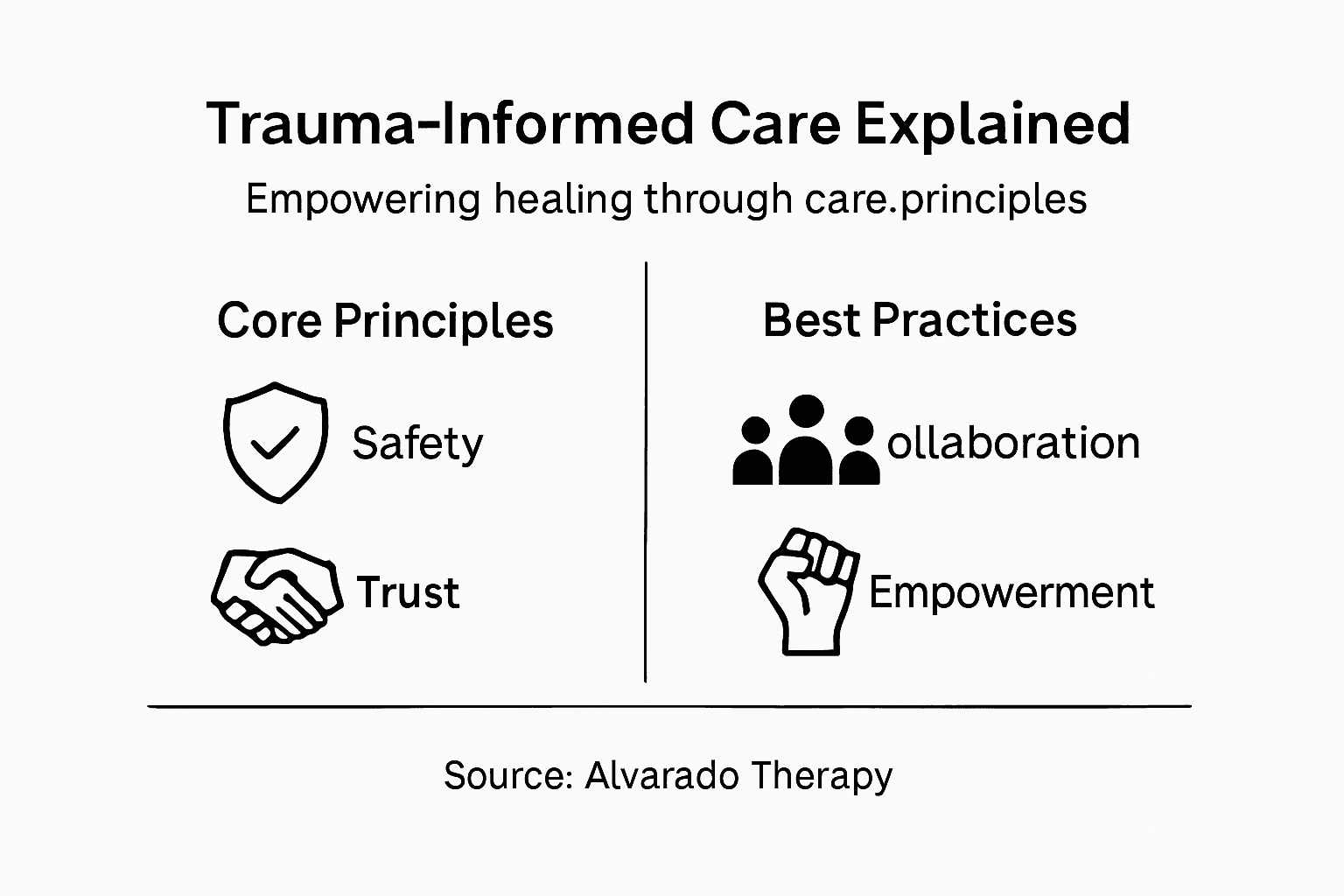
Trauma-informed care is grounded in a holistic approach that recognizes the profound complexity of human healing. Trauma care principles represent a comprehensive framework designed to support individuals through their unique recovery journeys, emphasizing safety, respect, and empowerment.
The six fundamental principles of trauma-informed care provide a robust foundation for therapeutic practice:
Safety: Creating physical and emotional environments that feel secure and predictable
Trust and Transparency: Maintaining open, honest communication
Peer Support: Recognizing the healing potential of shared experiences
Collaboration: Sharing power between therapists and clients
Empowerment: Centering client autonomy and personal strengths
Cultural Sensitivity: Respecting individual backgrounds and identities
Implementing these principles requires a significant shift in traditional therapeutic approaches. Trauma-sensitive providers understand that healing is not about fixing something broken, but about creating supportive conditions that allow natural resilience to emerge. This means adapting communication styles, recognizing potential triggers, and maintaining flexible, responsive treatment strategies.
Trauma-informed care is not about treating a diagnosis, but about understanding a person's entire lived experience.
By integrating these core principles, therapists can create transformative healing environments that honor each client's unique journey, promoting genuine recovery and personal empowerment.
Pro tip: During therapy consultations, ask potential providers how they specifically implement trauma-informed principles in their practice.
How Trauma Impacts the Healing Process
Trauma creates profound disruptions in an individual's psychological and physiological systems, fundamentally altering how people experience safety, trust, and connection. Trauma recovery involves complex healing stages that extend far beyond traditional medical interventions.
The impact of trauma on healing can be understood through several critical dimensions:
Emotional Disruption: Persistent anxiety, depression, and emotional instability
Cognitive Changes: Altered thought patterns and memory processing
Relational Challenges: Difficulty forming and maintaining healthy connections
Physiological Responses: Heightened stress reactions and potential somatic symptoms
Identity Reconstruction: Rebuilding sense of self and personal narrative
Individuals experiencing trauma often navigate a non-linear healing journey characterized by intricate psychological adaptations. Neurological pathways become rewired, creating complex patterns of response that require specialized, compassionate therapeutic approaches. This means recognizing that healing is not about erasing traumatic experiences, but about developing resilience and creating new, empowering narratives.
Trauma healing is a courageous process of transforming pain into personal strength and renewed purpose.
Understanding these multifaceted impacts allows therapists and clients to develop more nuanced, personalized recovery strategies that honor each individual's unique experience and inherent capacity for healing.
Pro tip: Keep a journal documenting your healing journey to track progress and recognize subtle transformations in your emotional landscape.
Cultural Sensitivity in Trauma Informed Therapy
Cultural sensitivity transforms trauma therapy from a standardized approach to a deeply personalized healing journey. Culturally responsive psychotherapy goes beyond technique, representing a profound commitment to understanding each client's unique cultural context and lived experience.
Key elements of culturally sensitive trauma therapy include:
Language Accessibility: Providing therapy in clients' native languages
Cultural Context: Understanding how cultural background shapes trauma experience
Systemic Awareness: Recognizing historical and generational trauma impacts
Respect for Cultural Beliefs: Integrating traditional healing practices
Validation of Cultural Identity: Affirming clients' cultural experiences and perspectives
Trauma doesn't exist in a vacuum. Cultural experiences deeply influence how individuals process, express, and recover from traumatic events. This means therapists must develop cultural humility - an ongoing commitment to self-reflection, understanding personal biases, and respecting clients' diverse backgrounds.
Cultural sensitivity in trauma therapy is not about knowing everything, but about being willing to learn and listen.
By embracing cultural sensitivity, therapists create safe, inclusive spaces that honor each individual's unique journey, recognizing that healing is as diverse as human experience itself.
Pro tip: Ask potential therapists about their specific training in cultural competence and how they adapt their approach to diverse client backgrounds.
Key Benefits for Survivors and Families
Trauma-informed care transforms healing from an individual journey to a comprehensive support system that embraces entire families. Trauma recovery benefits families holistically, recognizing that healing extends far beyond individual therapeutic interventions.
Key benefits for survivors and their families include:
Emotional Resilience: Developing healthier coping mechanisms
Family System Restoration: Rebuilding trust and communication
Generational Healing: Breaking cycles of intergenerational trauma
Empowerment: Reclaiming personal and collective agency
Comprehensive Understanding: Normalizing trauma responses
Trauma recovery is not about erasing painful experiences, but creating pathways for collective healing. By integrating compassionate, systemic approaches, trauma-informed care supports families in understanding complex emotional landscapes, transforming shared pain into collective strength.
Healing is not an individual destination, but a shared journey of understanding, compassion, and resilience.
This approach recognizes that trauma's impact ripples through family systems, requiring nuanced, supportive interventions that honor each member's unique experience while fostering collective healing.
Pro tip: Encourage open family conversations about healing, creating safe spaces for shared understanding and mutual support.
Common Misconceptions to Avoid
Trauma-informed care is often misunderstood, leading to ineffective approaches and missed opportunities for genuine healing. Trauma care misconceptions limit understanding, preventing individuals and organizations from implementing truly transformative practices.
Common misconceptions about trauma-informed care include:
Quick Fix Myth: Believing trauma can be resolved instantly
Training Fallacy: Assuming a single workshop creates trauma expertise
Trauma Talking Trap: Thinking therapy is only about repeatedly discussing traumatic events
Individual Focus Error: Viewing trauma care as solely an individual intervention
One-Size-Fits-All Approach: Treating trauma recovery as a standardized process
Trauma-informed practices require ongoing learning, systemic understanding, and profound respect for individual experiences. They are not about fixing something broken, but creating environments that support healing, resilience, and personal empowerment.
To help clarify trauma-informed care, here's a summary of common misconceptions and the reality:
| Misconception | Why It’s Inaccurate | Reality of Trauma-Informed Care |
|---|---|---|
| “Quick fix is possible” | Healing is complex, not instant | Process is gradual and nonlinear |
| “Anyone with training is expert” | True expertise needs ongoing learning | Requires continual education and practice |
| “Trauma care is one-size-fits-all” | Ignores unique experiences | Therapy is personalized and adaptive |
| “Talking is the only tool” | Fails to address holistic needs | Recovery involves many supportive strategies |
| “Only the individual matters” | Overlooks social impacts | Family and cultural systems also play a role |
“Trauma-informed care is a journey of understanding, not a destination with a predetermined endpoint.”
Effective trauma care recognizes complexity, embraces individual differences, and understands that healing is a deeply personal, non-linear process that involves entire systems and support networks.
Pro tip: Approach trauma healing with curiosity and compassion, understanding that each person’s journey is unique and valid.
Empower Your Healing Journey with Trauma-Informed Care
Understanding trauma's complex impact is the first step toward true healing. If you are seeking a compassionate, trauma-sensitive approach that prioritizes safety, empowerment, and cultural respect, our experienced therapists at Online in California — Meet Our Team — Alvarado Therapy are here to guide you. Whether you are coping with childhood trauma, PTSD, or relationship difficulties, trauma-informed care acknowledges your unique story and supports your path to resilience.
Take the next step now by exploring how Alvarado Therapy’s licensed professionals can help you reclaim emotional safety and build lasting strength. Visit our main website Alvarado Therapy to learn more about our services, or meet our compassionate team in Ventura CA (in person) — Meet Our Team — Alvarado Therapy. Healing starts with the right support and a trusted partner who understands trauma's deep effects. Empower your healing today.
Frequently Asked Questions
What is trauma-informed care?
Trauma-informed care is an approach in therapy that recognizes the widespread impact of trauma on individuals. It prioritizes emotional safety, empowerment, and collaboration between therapists and clients to create a supportive healing environment.
Why is cultural sensitivity important in trauma-informed therapy?
Cultural sensitivity helps therapists understand how a client's cultural background influences their trauma experiences. This personalized approach fosters trust and respect, allowing for more effective and meaningful healing.
How does trauma impact the healing process?
Trauma can disrupt emotional stability, cognitive processing, and relational dynamics, complicating the healing journey. This requires therapists to utilize specialized strategies that honor each client's unique experiences and promote resilience.
What are some misconceptions about trauma-informed care?
Common misconceptions include the belief that trauma can be resolved quickly, that training alone makes one an expert, and that recovery is a standardized process. Effective trauma-informed care acknowledges complexity and is tailored to individual needs.
