
Trauma Therapy Explained: Healing Childhood Wounds

Healing from childhood trauma or PTSD often feels overwhelming, especially for Latinx and BIPOC adults across California searching for relief that honors their unique experiences. Trauma therapy is not just for extreme cases but is a compassionate process designed to support survivors at every stage. With two out of three people globally affected by complex trauma experiences, understanding what trauma therapy truly offers can empower you to find the safety and connection you deserve.
Table of Contents
Key Takeaways
| Point | Details |
|---|---|
| Understanding Trauma Therapy | Trauma therapy focuses on creating a safe environment to process and heal from distressing experiences without forcing individuals to relive trauma. |
| Types of Trauma | Different trauma types, such as acute, chronic, and complex trauma, have unique psychological impacts that can affect emotional responses and relationships. |
| Therapeutic Approaches | Evidence-based methods like EMDR and CBT are effective for treating trauma, emphasizing personalized and compassionate care tailored to individual needs. |
| Choosing a Therapist | Prioritize therapists with specialized training in trauma-informed care to ensure a safe and supportive healing environment. |
Defining Trauma Therapy and Common Myths
Trauma therapy is a specialized therapeutic approach designed to help individuals process and heal from deeply distressing life experiences. Unlike popular misconceptions, trauma therapy isn't about forcing survivors to relive painful memories, but creating a safe pathway toward recovery. Complex trauma experiences affect approximately two out of three people globally, making understanding this therapeutic approach critically important.
At its core, trauma therapy involves several key components:
Establishing emotional safety and trust
Developing healthy coping mechanisms
Processing traumatic memories without retraumatization
Rebuilding a sense of personal empowerment
Restoring healthy relationships and interpersonal connections
Many people misunderstand trauma therapy, believing it's only for extreme cases or that therapy will force them to relive their most painful experiences. However, research demonstrates that trauma-informed approaches are far more nuanced and compassionate. Trauma healing requires structured processing that prioritizes the survivor's emotional regulation and comfort.
Common myths about trauma therapy include believing that talking about trauma will make symptoms worse or that survivors should simply "get over it." In reality, professional trauma therapy provides a controlled, supportive environment where individuals can gradually work through their experiences at their own pace. Trained therapists understand that healing is not linear and requires patience, skill, and personalized care.
Pro tip: When seeking trauma therapy, prioritize finding a therapist who specializes in trauma-informed care and creates a sense of safety and trust in your therapeutic relationship.
Major Types of Trauma and Their Effects
Trauma is not a one-size-fits-all experience, but a complex spectrum of psychological and emotional responses to deeply distressing events. Childhood trauma impacts adult life in profound and often unexpected ways, manifesting through various types of traumatic experiences that fundamentally reshape an individual's emotional landscape.
The major types of trauma include:
Acute Trauma: A single, intense, and overwhelming event like a car accident, natural disaster, or violent assault
Chronic Trauma: Repeated, prolonged exposure to highly stressful situations, such as ongoing domestic violence or childhood abuse
Complex Trauma: Multiple, varied traumatic experiences often occurring during developmental years, typically involving interpersonal relationships
Secondary/Vicarious Trauma: Experienced by professionals or loved ones who are repeatedly exposed to others' traumatic experiences
Intergenerational Trauma: Psychological wounds passed down through generations, particularly common in marginalized communities
Each type of trauma carries unique psychological implications. Acute trauma might trigger immediate post-traumatic stress responses, while complex trauma can fundamentally alter an individual's attachment styles, emotional regulation, and self-perception. These experiences can lead to long-term challenges in relationships, professional settings, and personal development.
Understanding trauma's nuanced nature is crucial for effective healing. Complex trauma significantly shapes adult experiences, influencing everything from emotional responses to neurological patterns. Recognizing these impacts allows individuals to approach their healing journey with compassion, patience, and targeted therapeutic strategies.
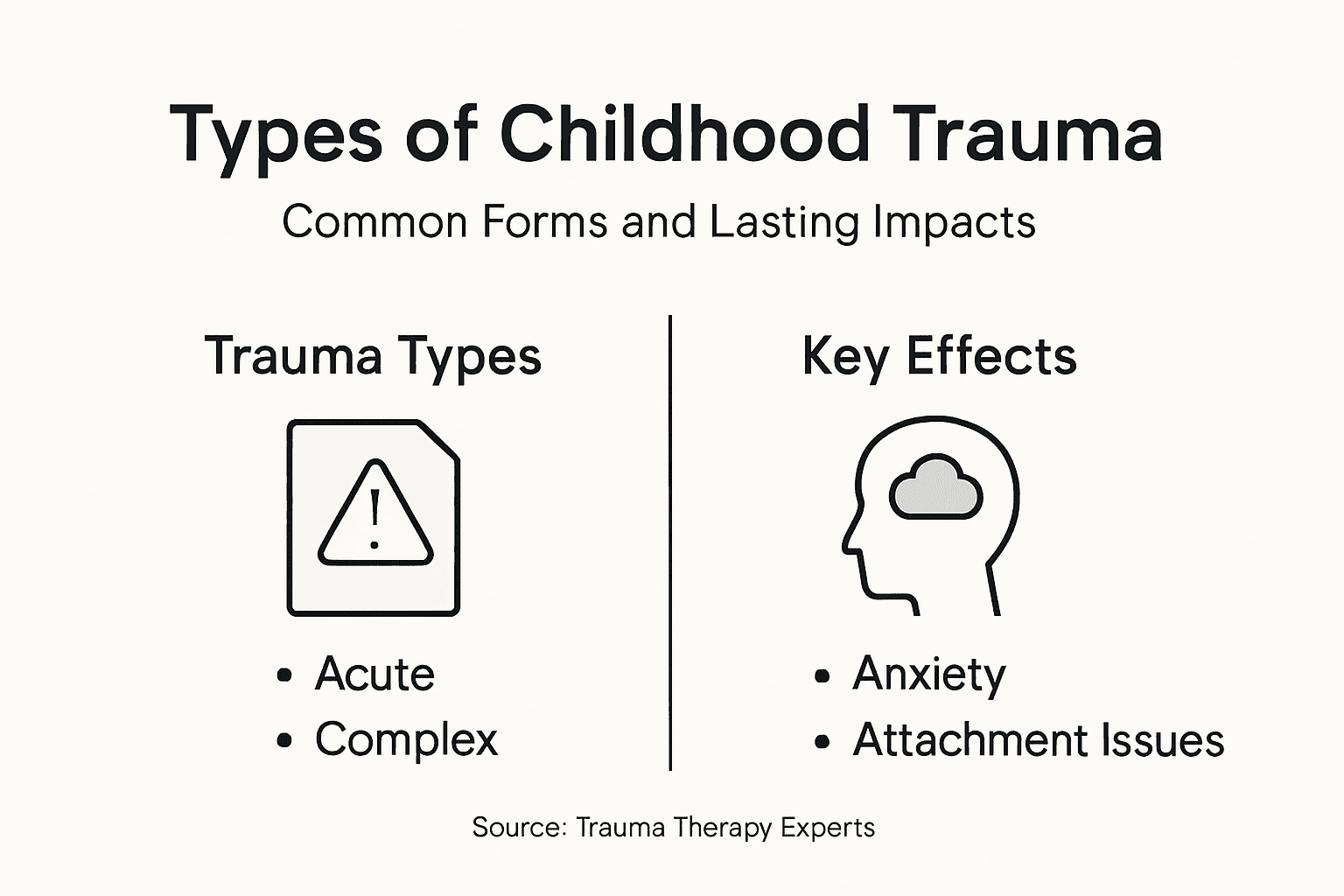
Here’s a quick reference comparing major trauma types and their distinct effects:
| Trauma Type | Key Characteristics | Common Psychological Impact |
|---|---|---|
| Acute Trauma | Single, intense traumatic event | Immediate stress reactions |
| Chronic Trauma | Ongoing, repeated traumatic exposure | Persistent anxiety, mistrust |
| Complex Trauma | Multiple interpersonal traumas | Disrupted identity, emotional numbness |
| Secondary / Vicarious | Exposure to others’ trauma | Compassion fatigue, detachment |
| Intergenerational | Trauma passed between generations | Legacy of fear, cultural distress |
Pro tip: Seek trauma-informed professionals who understand the intricate differences between trauma types and can provide personalized, compassionate healing approaches.
How Trauma Therapy Works in Practice
Trauma therapy is a carefully structured, compassionate approach designed to help individuals heal from deeply painful experiences. Trauma healing involves systematic psychological interventions that focus on restoring emotional safety, processing traumatic memories, and rebuilding personal resilience.
The typical trauma therapy process follows several critical stages:
Assessment and Safety: Establishing trust and creating a secure therapeutic environment
Stabilization: Developing emotional regulation skills and coping mechanisms
Memory Processing: Safely exploring and reframing traumatic experiences
Reconnection: Rebuilding healthy relationships and personal identity
Integration: Developing a coherent narrative and moving toward post-traumatic growth
Trauma-informed practitioners use a variety of evidence-based techniques tailored to individual needs. These might include Eye Movement Desensitization and Reprocessing (EMDR), cognitive behavioral therapy, somatic experiencing, and other specialized approaches. Empirically supported psychological treatments emphasize creating a safe, validating space where survivors can gradually work through their experiences without feeling overwhelmed.

The therapeutic journey is deeply personal and non-linear. Some clients may progress quickly, while others need more time to feel safe and ready to process their experiences. Therapists remain patient, compassionate, and responsive, understanding that healing is not about speed but about creating sustainable emotional wellness and personal empowerment.
Pro tip: Choose a trauma therapist who demonstrates genuine understanding, offers multiple treatment approaches, and prioritizes your emotional safety throughout the healing process.
Key Trauma Therapy Methods: EMDR and More
Trauma therapy encompasses several evidence-based approaches designed to help individuals heal from psychological wounds. Trauma-focused psychological interventions have evolved significantly, offering multiple pathways to recovery tailored to individual needs and experiences.
The primary trauma therapy methods include:
Eye Movement Desensitization and Reprocessing (EMDR): A powerful technique using bilateral stimulation to process traumatic memories
Cognitive Behavioral Therapy (CBT): Focuses on identifying and changing negative thought patterns
Narrative Exposure Therapy: Helps survivors construct a coherent life narrative
Somatic Experiencing: Addresses trauma's physical manifestations in the body
Prolonged Exposure Therapy: Gradually helps individuals confront trauma-related memories and situations
Trauma therapy research demonstratesthat EMDR and Cognitive Behavioral Therapy remain the most extensively studied and effective approaches for treating Post-Traumatic Stress Disorder (PTSD). Each method offers unique benefits, with therapists often combining techniques to create personalized treatment plans. The goal is not just symptom management, but comprehensive healing that restores emotional well-being and personal agency.
Modern trauma therapy increasingly embraces innovative delivery methods, including virtual reality sessions, intensive treatment schedules, and remote therapeutic formats. These emerging approaches aim to increase accessibility and reduce barriers to treatment, recognizing that healing should be flexible and responsive to individual needs.
The following table summarizes key trauma therapy methods and what sets them apart:
| Method | Core Technique | Ideal For |
|---|---|---|
| EMDR | Bilateral stimulation, memory reprocessing | PTSD, flashbacks |
| CBT | Challenging negative beliefs | Anxiety, overthinking |
| Narrative Exposure | Storytelling, life reconstruction | Complex trauma |
| Somatic Experiencing | Body-based trauma release | Physical symptoms |
| Prolonged Exposure | Gradual, repeated trauma exposure | Avoidance behaviors |
Pro tip: When exploring trauma therapy options, prioritize finding a therapist who specializes in multiple approaches and can customize treatment to your specific healing journey.
Therapist Qualifications and Safety Standards
Trauma therapy requires specialized expertise far beyond traditional counseling approaches. Trauma-specific professional competencies demand rigorous training, advanced clinical skills, and a deep understanding of psychological healing dynamics.
Key qualifications for trauma-informed therapists include:
Advanced graduate-level degrees in psychology or clinical counseling
Specialized certification in trauma treatment modalities
Extensive supervised clinical experience with trauma survivors
Ongoing professional development in neuroscience and trauma research
Demonstrated cultural competence and sensitivity
Active professional licensing and ethical credentials
Training in multiple evidence-based trauma intervention techniques
Professional standards for trauma therapists emphasize several critical safety protocols. These include maintaining clear therapeutic boundaries, ensuring informed consent, protecting client confidentiality, and creating emotionally safe treatment environments. Certified trauma professionals are trained to recognize and manage potential triggers, understanding that healing requires a carefully structured and compassionate approach.
The therapeutic relationship itself becomes a crucial healing instrument. Trauma-informed therapists must consistently demonstrate empathy, maintain professional boundaries, and create a sense of safety that allows survivors to explore their experiences without feeling retraumatized. This requires exceptional emotional intelligence, advanced clinical skills, and a commitment to ongoing personal and professional growth.
Pro tip: Before beginning trauma therapy, ask potential therapists about their specific training in trauma-informed care and their approach to creating a safe therapeutic environment.
Risks, Benefits, and What to Avoid
Trauma therapy offers profound healing potential, but requires careful navigation. Trauma therapy interventions demand professional assessment to balance potential risks and transformative benefits for survivors seeking emotional recovery.
The key benefits and potential risks include:
Benefits:
Significant reduction in PTSD symptoms
Improved emotional regulation
Enhanced personal resilience
Restored sense of safety and control
Healthier relationship patterns
Increased self-understanding
Potential Risks:
Temporary emotional intensification
Risk of retraumatization
Potential temporary destabilization
Emotional vulnerability during treatment
Challenging memory processing
Trauma-informed approaches prioritize safetyby creating structured, supportive environments that minimize potential harm. Effective therapy requires carefully paced interventions, respect for individual boundaries, and a collaborative approach that empowers survivors throughout their healing journey.
To maximize benefits and minimize risks, survivors should work exclusively with trauma-trained professionals who understand the complex psychological dynamics of healing. This means choosing therapists with specialized training, demonstrated empathy, and a commitment to personalized, patient-centered care that respects each individual's unique healing process.
Pro tip: Trust your instincts during therapy - if something feels unsafe or uncomfortable, communicate openly with your therapist or seek additional support.
Begin Your Healing Journey from Childhood Trauma with Compassionate Support
Healing childhood wounds requires a trauma-informed approach that prioritizes safety, trust, and personalized care. If the challenges of complex trauma, emotional numbness, or disrupted self-identity resonate with you, know that you are not alone. At Alvarado Therapy, our licensed therapists specialize in trauma-informed care techniques such as EMDR and individual counseling to help you reclaim emotional resilience and rebuild your life.

Explore our compassionate team across California ready to support your unique healing path. Take the important next step today by connecting with experienced trauma therapists who understand the complexities of childhood trauma and are committed to fostering a safe space for your growth. Visit California — Meet Our Team — Alvarado Therapy to discover dedicated clinicians. Learn more about our services and start your empowerment journey now at https://alvaradotherapy.org. For in-person support in Ventura explore Ventura CA (in person) — Meet Our Team — Alvarado Therapy and take the first step toward healing today.
Frequently Asked Questions
What is trauma therapy?
Trauma therapy is a specialized therapeutic approach aimed at helping individuals process and heal from distressing life experiences. It focuses on creating a safe environment to work through trauma without forcing individuals to relive painful memories.
What are some common types of trauma that trauma therapy addresses?
Common types of trauma include acute trauma (single events), chronic trauma (ongoing stress), complex trauma (multiple relational experiences), secondary trauma (exposure through others), and intergenerational trauma (passed down through generations).
How does trauma therapy work in practice?
Trauma therapy generally follows several key stages: assessment and safety, stabilization, memory processing, reconnection, and integration. Therapists use various evidence-based techniques tailored to individual needs to facilitate healing.
What qualifications should a trauma therapist have?
Trauma therapists should possess advanced degrees in psychology or counseling, specialized training in trauma treatment methods, supervised clinical experience, and a commitment to cultural competence and ongoing professional development.
