
Why Seek Identity-Affirming Therapy in California

Facing discrimination from both racial and LGBTQ+ communities can leave deep wounds that standard therapy often overlooks. For BIPOC LGBTQ+ adults in California, finding support that truly understands your intersectional identity makes all the difference in healing from trauma, anxiety, or relationship struggles. This guide explores how identity-affirming therapy embraces your authentic self, with bilingual care options in English and Spanish, highlighting principles proven to nurture acceptance, resilience, and real emotional growth.
Table of Contents
Key Takeaways
| Point | Details |
|---|---|
| Importance of Identity | Identity-affirming therapy emphasizes that personal identity is central to healing and emotional well-being, especially for marginalized communities. |
| Therapist Qualifications | Effective identity-affirming therapy requires therapists to have specialized training in LGBTQ+ and intersectional mental health to ensure culturally responsive care. |
| Risks of Non-Affirming Therapy | Non-affirming therapeutic practices can perpetuate harm, leading to increased mental health challenges and decreased trust in mental health systems. |
| Diverse Therapeutic Modalities | A variety of therapy types, such as Cognitive Behavioral Therapy and Narrative Therapy, can effectively support BIPOC LGBTQ+ individuals based on their unique needs and experiences. |
Defining Identity-Affirming Therapy and Core Principles
Identity-affirming therapy represents a compassionate and progressive approach to mental health treatment that centers on validating an individual's unique identity and lived experiences. At its core, this therapeutic model recognizes that personal identity - including gender, sexuality, neurodiversity, and cultural background - fundamentally shapes an individual's emotional landscape and healing journey.
The core principles of identity-affirming therapy are built around several essential foundations:
Unconditional acceptance of an individual's self-described identity
Challenging systemic barriers and societal stigma
Providing personalized, trauma-informed care
Empowering clients to explore and affirm their authentic selves
Creating a safe, non-judgmental therapeutic environment
According to psychological research on identity-affirming approaches, this therapeutic model goes beyond traditional treatment paradigms by recognizing client identity as fundamental to the healing process. It promotes improved mental health outcomes by validating experiences, allowing for individual accommodations, and fostering holistic identity exploration.
Here is a summary of how identity-affirming therapy differs from traditional approaches and why it matters:
Identity-Affirming Therapy Comparison
| Aspect | Identity-Affirming Therapy | Traditional Therapy | Impact on Client |
|---|---|---|---|
| View of Identity | Central to healing and growth | Often viewed as separate or peripheral | Increased self-acceptance |
| Therapist Role | Active validation and empowerment | Focus on symptom reduction | Greater client trust |
| Treatment Adaptation | Highly personalized to identity | Usually generalized methods | More relevant interventions |
| Approach to Systems | Challenges social barriers | May overlook social context | Reduced stigma and isolation |
For marginalized communities – particularly LGBTQ+, neurodivergent, and BIPOC individuals – identity-affirming therapy represents more than a treatment approach. It is a radical act of recognition, respect, and empowerment. Clinical guidelines emphasize that this approach should be noncoercive, individualized, and rooted in psychological science, recognizing human diversity as a natural variation.
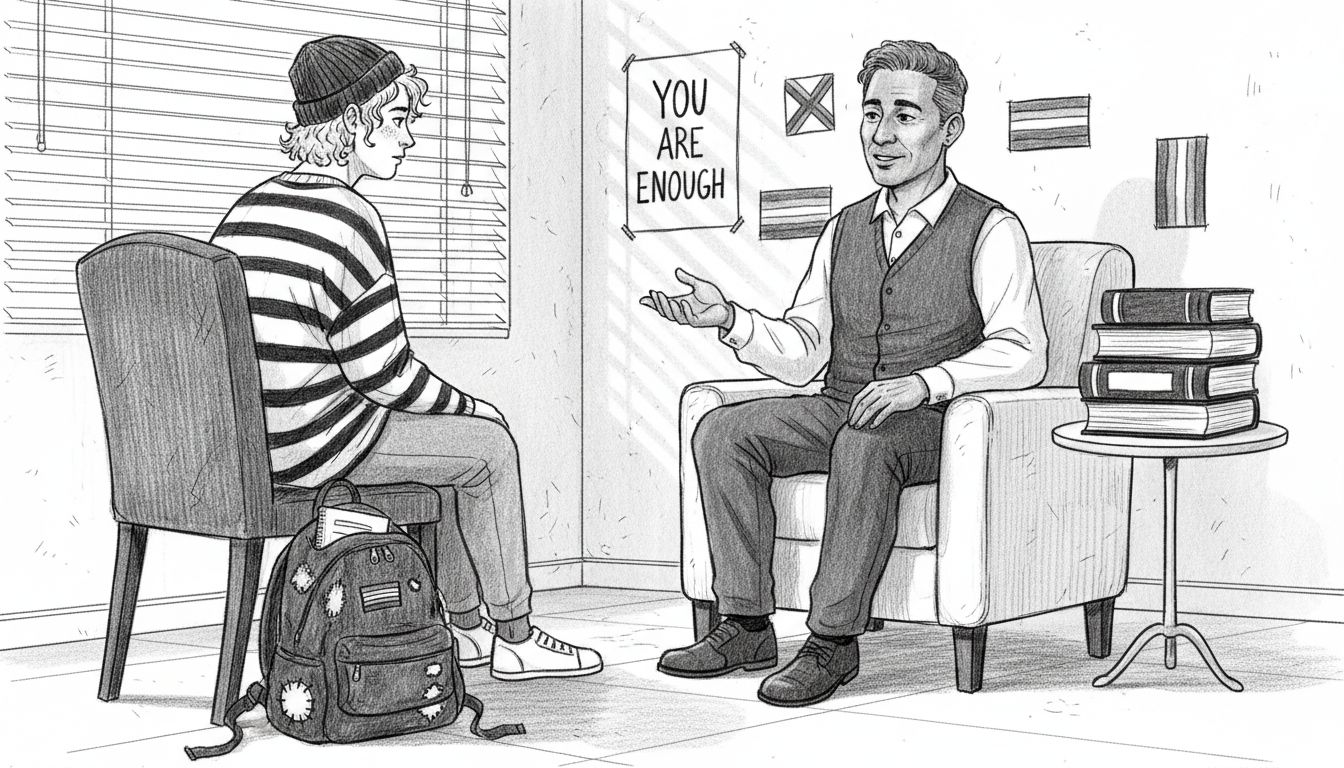
Pro tip: When seeking therapy, ask potential therapists about their specific training and experience in identity-affirming care to ensure you receive supportive, personalized treatment.
Unique Needs of BIPOC LGBTQ+ Communities
BIPOC LGBTQ+ individuals experience a uniquely complex intersection of identity that demands specialized, nuanced mental health support. Their lived experiences are characterized by multiple, compounded layers of marginalization that extend far beyond typical therapeutic approaches.
The challenges faced by these communities are profound and multifaceted:
Navigating systemic racism within LGBTQ+ spaces
Confronting heteronormativity within racial communities
Experiencing heightened rates of discrimination
Managing intersectional trauma and microaggressions
Balancing cultural expectations with personal identity
Intersectional research highlightsthat BIPOC LGBTQ+ individuals encounter complex discrimination stemming from their multiple marginalized identities. This intersectionality subjects them to simultaneous experiences of racism, homophobia, and transphobia, creating unique mental health challenges that require specialized therapeutic approaches.
Social support emerges as a critical factor in affirming these multifaceted identities. Clinical research emphasizes that positive affirmation from communities and mental health professionals can significantly mitigate feelings of isolation, shame, and psychological distress. Therapeutic interventions must therefore be deeply personalized, recognizing the intricate ways race, sexuality, and gender interconnect.
Pro tip: When seeking therapy, prioritize practitioners who demonstrate genuine understanding of intersectional experiences and have specific training in supporting BIPOC LGBTQ+ mental health challenges.
Key Elements of Culturally Responsive Care
Culturally responsive care represents a transformative approach to mental health treatment that goes far beyond traditional therapeutic models. It acknowledges the profound ways that individual identity, cultural background, and lived experiences shape psychological well-being and healing processes.
The core elements of culturally responsive care include:
Deep self-awareness from therapists about their own cultural biases
Active listening and genuine curiosity about client's unique experiences
Flexibility in therapeutic approaches
Respect for diverse cultural communication styles
Recognition of systemic barriers and historical trauma
Commitment to continuous learning and personal growth
Psychological research emphasizesthat culturally responsive therapy requires therapists to understand the intricate intersections of clients' identities, including ethnicity, religion, gender, and socioeconomic status. This approach demands sophisticated skills in building rapport, conducting culturally informed assessments, and adapting interventions to each client's specific cultural context.Clinical guidelines highlightthat cultural responsiveness is not a static skill but a dynamic, ongoing practice of cultural humility. Therapists must continuously challenge their assumptions, remain open to learning, and tailor treatment strategies that authentically align with clients' cultural values and unique lived experiences.
Pro tip: During initial therapy consultations, ask potential therapists about their specific training in cultural responsiveness and how they adapt their approach to individual client backgrounds.
Therapist Qualifications and Ethical Obligations
Identity-affirming therapy requires an exceptional level of professional competence, ethical commitment, and specialized training that goes far beyond traditional therapeutic practices. Therapists working in this sensitive field must demonstrate a profound understanding of complex identity dynamics and an unwavering commitment to client safety and empowerment.
Key qualifications for identity-affirming therapists include:
Advanced training in LGBTQ+ and intersectional mental health
Deep understanding of systemic oppression and trauma
Demonstrated cultural humility and self-awareness
Ongoing professional development in affirming practices
Multilingual communication skills
Advanced certifications in trauma-informed care
Professional ethical standards mandatethat therapists provide competent, non-discriminatory care while maintaining rigorous ethical boundaries. This means continuously updating their knowledge, challenging personal biases, and creating therapeutic environments that prioritize client autonomy, confidentiality, and psychological safety.Counseling ethics guidelines emphasizethe critical importance of honoring diversity and promoting social justice within therapeutic relationships. Therapists must actively work to create inclusive spaces that validate clients' identities, challenge systemic barriers, and support holistic healing across multiple dimensions of human experience.
Pro tip: Request documentation of a therapist's specialized training and ask direct questions about their approach to identity-affirming care during initial consultations.
Risks of Non-Affirming or Inadequate Therapy
Non-affirming therapy can cause profound psychological damage, particularly for BIPOC LGBTQ+ individuals who already navigate complex layers of marginalization. When therapists fail to understand or validate a client's full identity, the therapeutic relationship becomes not just ineffective, but potentially traumatizing.
The specific risks of inadequate therapeutic support include:
Reinforcement of internalized shame and self-doubt
Increased mental health challenges like depression and anxiety
Potential regression or suppression of authentic identity
Higher risks of substance abuse and suicidal ideation
Erosion of trust in mental health systems
Compounded trauma from repeated invalidation
Research on therapeutic practicesreveals that non-affirming approaches like conversion therapy are universally condemned by medical professionals. These harmful practices can dramatically increase risks of depression, substance abuse, and suicide among LGBTQ+ individuals, making proper therapeutic selection critically important.Clinical studies demonstratethat non-affirming therapeutic responses significantly damage client trust and emotional well-being. Inappropriate or dismissive therapeutic interactions can lead to decreased engagement, reduced perceived therapist expertise, and long-term psychological harm - especially for individuals with intersectional identities.
Pro tip: Always request a preliminary consultation to assess a therapist's genuine understanding and commitment to affirming your complete, authentic identity.
Comparing Therapy Types for Identity Support
Identity support therapy isn't a one-size-fits-all approach. Different therapeutic modalities offer unique strengths for BIPOC LGBTQ+ individuals, requiring careful consideration of personal needs, comfort levels, and specific healing goals.
Primary therapeutic approaches for identity support include:
Cognitive Behavioral Therapy (CBT)
Acceptance and Commitment Therapy (ACT)
Mindfulness-Based Cognitive Therapy
Group Counseling
Narrative Therapy
Trauma-Informed Therapy
Somatic Experiencing
Evidence-based research revealsthat multiple therapeutic approaches can effectively support LGBTQ+ mental health. Cognitive behavioral and acceptance-based therapies demonstrate particular promise in addressing minority stress, identity exploration, and psychological resilience.
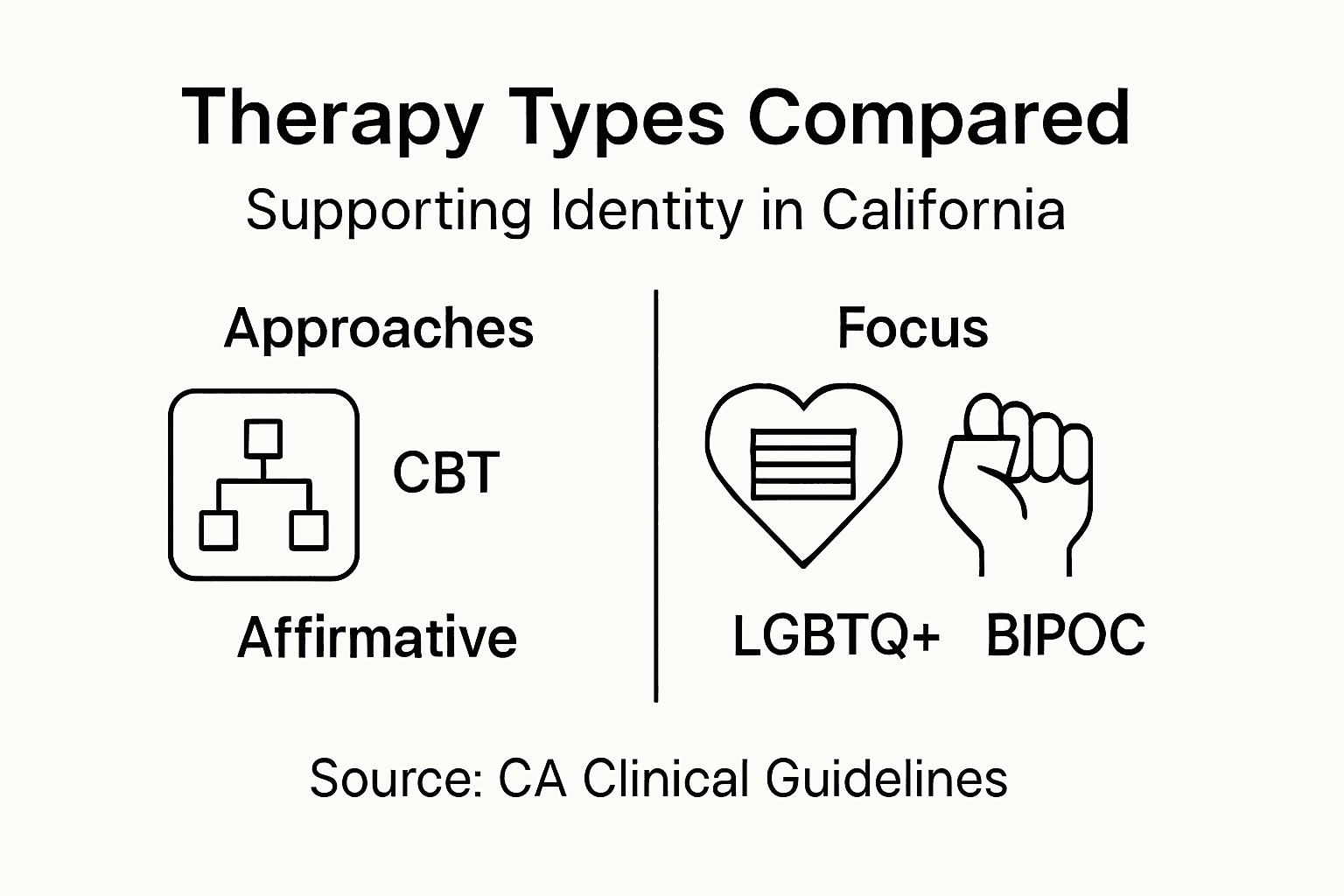
Below is a comparison of common therapy modalities for BIPOC LGBTQ+ identity support:
| Modality | Key Strength | Consideration |
|---|---|---|
| CBT | Addresses negative thought patterns | May need cultural adaptation |
| ACT | Builds acceptance despite adversity | Requires trust in process |
| Narrative Therapy | Reframes personal identity stories | Therapist must honor cultural nuance |
| Group Counseling | Offers community connection | Group diversity is important |
| Trauma-Informed Therapy | Focuses on healing trauma history | Strong rapport needed for depth |
Clinical studies emphasize that successful identity support therapy integrates research evidence, clinical expertise, and individual client preferences. The most effective approaches share common principles of affirming identity, addressing systemic challenges, and promoting holistic emotional well-being.
Pro tip: Request therapist credentials and ask specific questions about their experience with intersectional identity support during initial consultations.
Find Identity-Affirming Therapy That Respects Your Journey in California
Struggling to find mental health care that truly acknowledges your unique identity and lived experiences can feel isolating and overwhelming. Identity-affirming therapy is essential for those seeking support that embraces intersectionality, cultural responsiveness, and trauma-informed care—especially for BIPOC LGBTQ+ Californians navigating compounded marginalization. At Alvarado Therapy, our licensed clinicians are deeply committed to these principles, offering personalized EMDR therapy and counseling designed to empower your authentic self.
Take the next step toward healing with trusted therapists who understand the importance of validating your full identity and cultural background. Explore our California — Meet Our Team — Alvarado Therapy page to connect with experts who offer bilingual, trauma-sensitive care tailored to your needs. Visit Alvarado Therapy today to learn more about how our supportive environment and diverse therapeutic modalities can help you reclaim safety and clarity on your healing journey.
Frequently Asked Questions
What is identity-affirming therapy?
Identity-affirming therapy focuses on validating an individual's unique identity and lived experiences, recognizing how factors like gender, sexuality, and cultural background shape their emotional well-being and healing process.
How does identity-affirming therapy differ from traditional therapy?
Unlike traditional therapy, which often views identity as separate from healing, identity-affirming therapy places personal identity at the center of the therapeutic process, promoting self-acceptance and empowerment.
Why is identity-affirming therapy important for marginalized communities?
Identity-affirming therapy is crucial for marginalized communities, as it provides recognition, respect, and personalized support for individuals facing compounded layers of discrimination, helping to mitigate feelings of isolation and trauma.
What qualifications should I look for in an identity-affirming therapist?
Look for therapists with advanced training in LGBTQ+ and intersectional mental health, a commitment to cultural humility, and ongoing professional development in identity-affirming practices to ensure competent and empathetic care.
Recommended
Why Therapy for Young Adults Matters Most — Alvarado Therapy
Practical Guide to Starting Therapy for Healing in California — Alvarado Therapy
Immigration Therapy: Healing the Emotional Impact — Alvarado Therapy
California Drug Testing Laws: An Employer and Employee Guide
Integrate Healthcare Ottawa Clinical Psychologist - Catherine Kyeremanteng
