
Immigration Therapy: Healing the Emotional Impact

More than half of American immigrants report facing significant emotional stress after settling in a new country. For bilingual Latinx adults in California, the journey often involves not just adapting to American life but also healing from painful memories, anxiety, or trauma related to their migration story. This guide explains how trauma-informed immigration therapy can help you process difficult experiences, build resilience, and regain a sense of emotional safety in your new home.
Table of Contents
Key Takeaways
| Point | Details |
|---|---|
| Immigration Therapy Focus | Immigration therapy addresses the unique psychological challenges immigrants face, integrating cultural perspectives and promoting resilience. |
| Types of Therapy | Key approaches include Trauma-Informed Care and Cultural Adaptation Counseling, each tailored to diverse immigrant experiences. |
| Legal Protections | Immigrant patients have rights protecting confidentiality and preventing discrimination in mental health services. |
| Avoiding Pitfalls | Seek culturally competent therapists who respect individual experiences and avoid oversimplifying immigrant narratives. |
Defining immigration therapy and core concepts
Immigration therapy is a specialized mental health approach designed to address the unique psychological challenges faced by individuals navigating migration experiences. Systemic perspectives on immigrant stress reveal how migration impacts mental wellness beyond traditional therapeutic frameworks, recognizing the profound emotional complexities of leaving one's homeland.
At its core, immigration therapy acknowledges that migration is not just a physical journey but a deeply transformative psychological experience. Therapists working in this field understand that immigrants encounter multiple layers of stress: cultural adaptation, potential language barriers, discrimination, separation from family support systems, and the ongoing negotiation of identity. The therapy aims to validate these experiences, helping individuals process complex emotions like grief, anxiety, cultural dissonance, and potential trauma.
The therapeutic approach integrates intercultural mental health strategies that respect each person's unique migration narrative. Practitioners focus on building resilience, enhancing social support networks, and developing coping mechanisms tailored to the immigrant experience. This means exploring intergenerational trauma, understanding minority stress, and creating safe spaces where clients can authentically discuss their challenges without fear of judgment or misunderstanding.
Pro Tip: When seeking immigration therapy, prioritize therapists who demonstrate cultural competence and have specific experience with immigrant populations' unique psychological needs.
Types of immigration therapy and evaluations
Immigration therapy encompasses multiple specialized approaches designed to address the complex mental health needs of immigrant populations. Intervention strategies for migrant mental health reveal that effective treatments must be tailored to specific cultural contexts and individual experiences.
Key types of immigration therapy include trauma-informed care, cultural adaptation counseling, family systems therapy, and community-embedded psychological support. These approaches recognize that immigrant experiences involve multifaceted challenges such as cultural transition, potential traumatic experiences during migration, and ongoing identity negotiation. Some therapists specialize in psychological assessment techniques that help evaluate the unique stressors and resilience factors within immigrant communities.
Psychological evaluations for immigrants often serve critical legal and therapeutic purposes. These comprehensive assessments may include documenting trauma history, assessing psychological impact of migration experiences, evaluating mental health conditions related to immigration status, and providing professional documentation for legal immigration processes. Clinicians use standardized psychological testing, in-depth interviews, and culturally sensitive assessment tools to create holistic mental health profiles.
Here's a concise summary of major types of immigration therapy and what makes each approach unique:
| Therapy Type | Main Focus | Unique Considerations |
|---|---|---|
| Trauma-Informed Care | Addressing migration trauma | Sensitive to past experiences |
| Cultural Adaptation Counseling | Navigating cultural transitions | Emphasizes identity formation |
| Family Systems Therapy | Supporting family unity | Considers intergenerational effects |
| Community-Embedded Support | Building social connections | Leverages community resources |
Pro Tip: When seeking immigration therapy evaluations, request a therapist with specific cross-cultural training and experience working with immigrant populations to ensure the most effective and compassionate care.
Benefits for trauma, PTSD, and anxiety
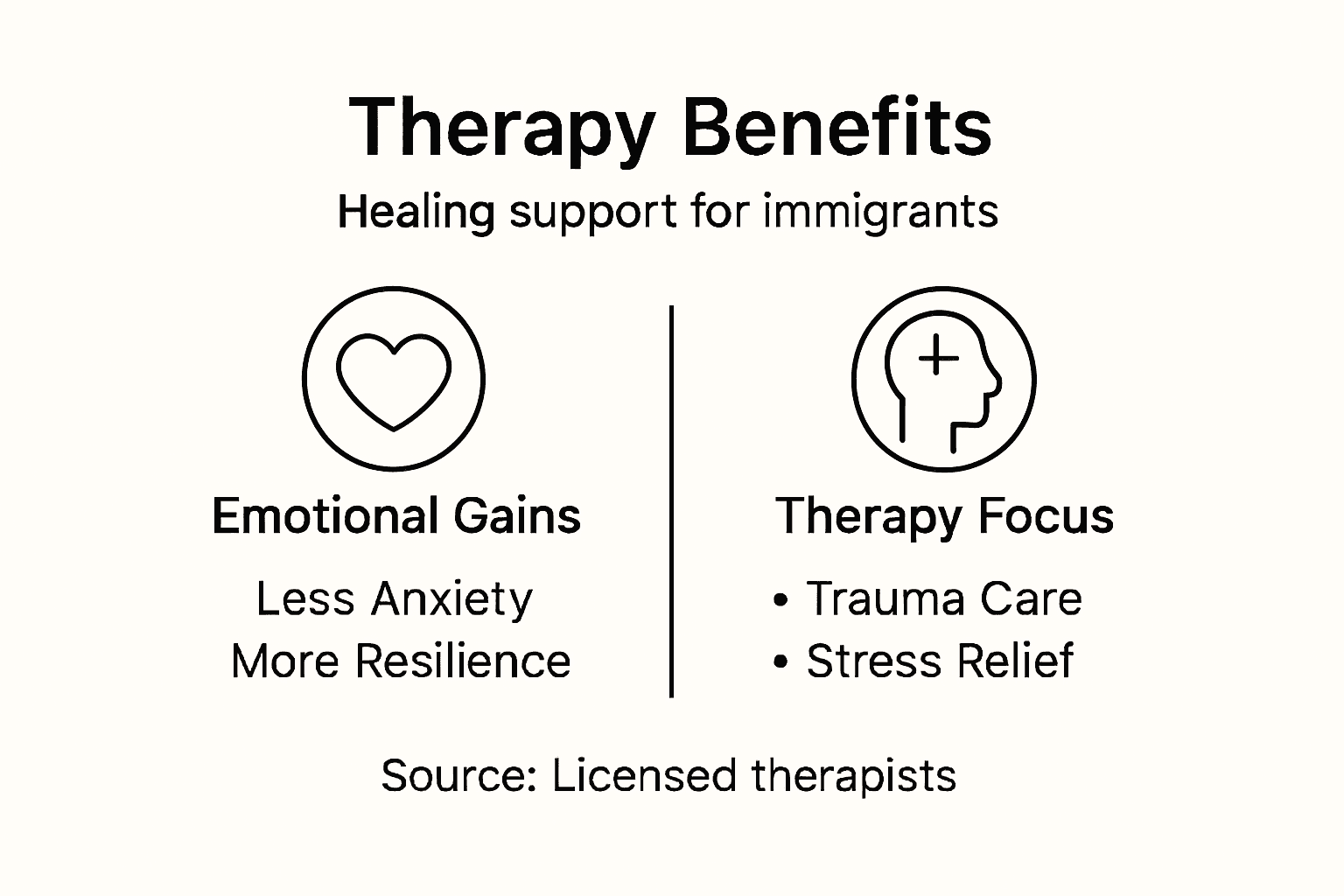
Immigration therapy offers profound healing potential for individuals struggling with trauma, PTSD, and anxiety related to migration experiences. Specialized mental health interventions demonstrate significant improvements in psychological well-being by addressing the unique challenges faced by immigrant populations, providing targeted support that goes beyond traditional counseling approaches.
The therapeutic benefits include comprehensive emotional processing, stress reduction, and rebuilding personal resilience. Immigrants often experience complex layers of psychological distress, including cultural displacement, separation trauma, and ongoing uncertainty. Culturally adapted mental health strategies help individuals develop coping mechanisms, validate their experiences, and create meaningful narratives of survival and strength.

Key therapeutic benefits include reducing symptoms of chronic anxiety, processing unresolved traumatic memories, rebuilding a sense of safety, and developing healthy cross-cultural adaptation strategies. Therapists work collaboratively to help clients understand how migration experiences have impacted their mental health, providing tools to manage triggers, rebuild trust, and create supportive social connections. This holistic approach recognizes that healing involves addressing not just individual symptoms, but the broader context of cultural transition and resilience.
Pro Tip: Document your emotional journey during therapy, as tracking progress can help you recognize subtle improvements and maintain motivation in your healing process.
Legal rights and patient privacy protections
Immigrant patients are protected by comprehensive legal frameworks that safeguard their mental health treatment rights and personal information. Ethical guidelines for patient privacy establish critical protections that ensure confidential and non-discriminatory psychological care, regardless of an individual's immigration status.
Key legal protections include comprehensive confidentiality provisions that prevent therapists from sharing sensitive information without explicit patient consent. Immigration patient rights frameworks emphasize the fundamental right of immigrants to receive mental health services without fear of information being used against them. These protections cover documentation, therapy notes, psychological evaluations, and any details shared during treatment sessions, creating a safe environment for vulnerable individuals to seek healing.
Mental health professionals are legally and ethically bound to maintain strict confidentiality, with only a few legally mandated exceptions such as reporting imminent harm to self or others. For immigrant patients, this means personal information cannot be shared with immigration authorities, employers, or other third parties without written consent. The legal protections extend to protecting patients from discrimination, ensuring equal access to mental health services, and respecting individual autonomy throughout the therapeutic process.
For a quick overview, here are the primary legal and ethical protections immigrant patients should expect when seeking mental health care:
| Protection Type | Scope | Patient Impact |
|---|---|---|
| Confidentiality | All therapy records | Secures private information |
| Anti-Discrimination | Service access | Ensures equal treatment |
| Written Consent | Information sharing | Empowers patient autonomy |
| Legal Safeguards | Therapy sessions | Shields against misuse |
Pro Tip: Always request a written confidentiality agreement from your therapist to clearly understand the specific privacy protections that will safeguard your personal information during treatment.
Common pitfalls and how to avoid them
Immigration therapy can be complex, with several potential challenges that may compromise the effectiveness of mental health support. Common therapeutic approach pitfalls include reductionist perspectives that oversimplify immigrant experiences, treating individuals solely through the lens of their migration status rather than as multifaceted human beings with rich, nuanced backgrounds.
Systemic barriers in immigrant mental health often emerge when therapists lack cultural competence or fail to recognize the broader contextual challenges immigrants face. Potential pitfalls include misinterpreting cultural communication styles, making assumptions about trauma experiences, and not understanding the intersectional nature of immigrant identities. Therapists might inadvertently reproduce systemic discrimination by not acknowledging the complex social, economic, and political factors that impact mental health.
To effectively navigate these challenges, immigrants should seek therapists who demonstrate genuine cultural humility, actively listen without making presumptions, and show a commitment to understanding individual experiences. This means finding professionals who recognize that immigration is not a monolithic experience, but a deeply personal journey shaped by unique family histories, cultural contexts, and individual resilience. Effective therapy requires therapists to continuously educate themselves, engage with immigrant communities, and approach each client's narrative with respect and nuanced understanding.
Pro Tip: During initial consultations, ask potential therapists about their specific training in immigrant mental health and their approach to understanding cultural complexity.
Find Healing and Support with Expert Immigration Therapy in California
Immigration therapy acknowledges the deep emotional challenges of migration such as trauma, anxiety, cultural adaptation, and identity struggles. If you are seeking compassionate, trauma-informed care tailored to immigrant experiences, our licensed therapists at Alvarado Therapy are dedicated to helping you build resilience and find peace. Our bilingual team provides expert individual counseling, EMDR therapy, and immigration psychological evaluations that respect your unique history and protect your rights.
Take the next step to reclaim your emotional well-being by connecting with caring professionals near you. Explore our skilled team California — Meet Our Team — Alvarado Therapy and learn more about our specialized immigration services at Alvarado Therapy. Do not wait to find the support you deserve to heal the emotional impact of your migration journey.
Frequently Asked Questions
What is immigration therapy?
Immigration therapy is a specialized mental health approach that addresses the unique psychological challenges faced by individuals navigating migration experiences, focusing on emotional complexities such as grief, anxiety, and identity negotiation.
What are the types of immigration therapy available?
Types of immigration therapy include trauma-informed care, cultural adaptation counseling, family systems therapy, and community-embedded psychological support, each tailored to meet the specific needs of immigrant populations.
How does immigration therapy help with trauma and anxiety?
Immigration therapy provides targeted support for trauma, PTSD, and anxiety by helping individuals process complex emotions, develop coping mechanisms, and rebuild personal resilience in the context of their migration experiences.
What legal protections do immigrant patients have during therapy?
Immigrant patients are protected by legal frameworks that ensure confidentiality, prevent discrimination, and require written consent for sharing information, allowing them to receive mental health treatment without fear of jeopardizing their immigration status.
