
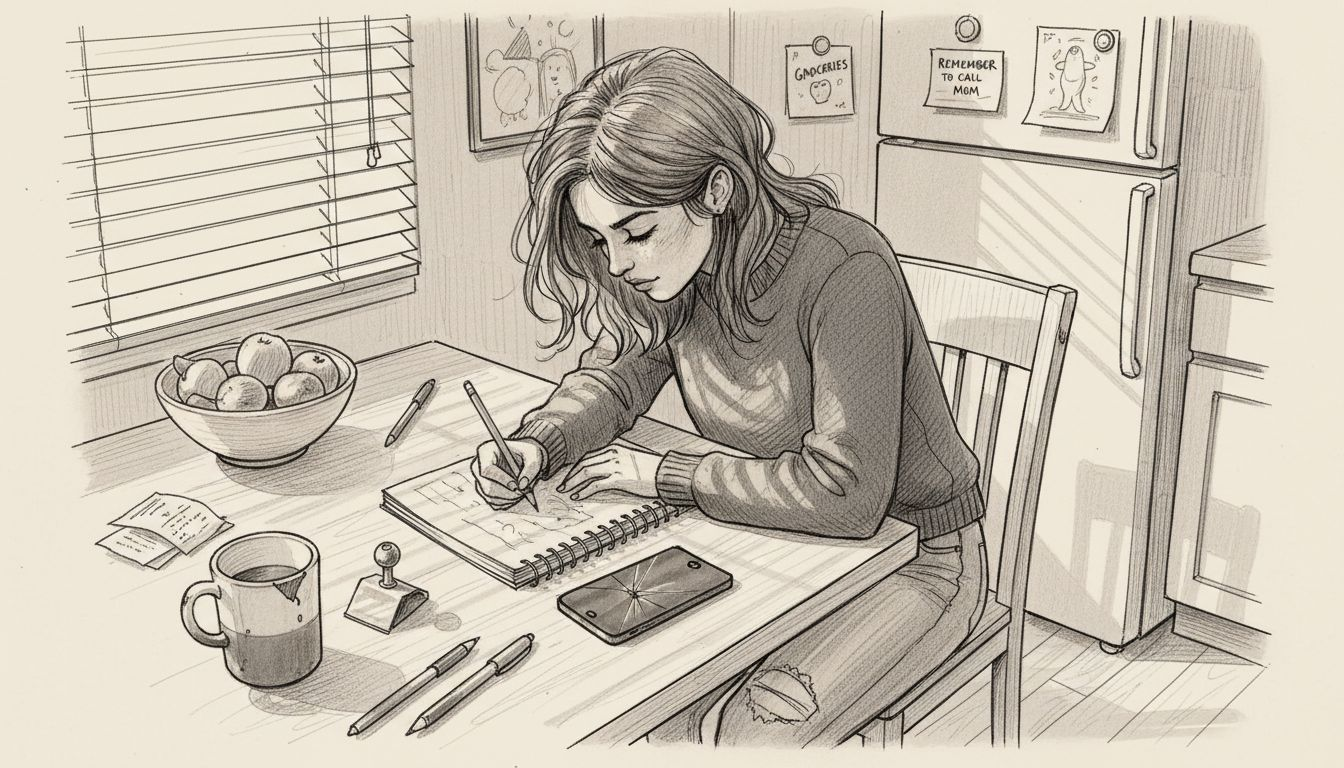
Feeling anxious in everyday California life can feel like navigating a maze, especially when triggers seem to appear out of nowhere. For many Latinx and bilingual adults, daily stress might connect to cultural expectations, family responsibilities, or past experiences. By focusing on evidence-based coping skills and grounding techniques, you can identify your specific anxiety patterns and discover tools that truly fit your background and needs.
Table of Contents
Quick Summary
| Key Insight | Explanation |
|---|---|
| 1. Identify your anxiety triggers | Keep a log of situations, thoughts, and feelings associated with anxiety to pinpoint what triggers it. |
| 2. Establish grounding techniques | Use methods like the 5-4-3-2-1 technique to bring yourself back to the present during anxious moments. |
| 3. Implement self-care routines | Develop daily habits, such as morning breathing exercises, to maintain overall mental health and decrease anxiety. |
| 4. Use evidence-based coping skills | Regularly practice skills like deep breathing and cognitive restructuring to shift your anxiety responses effectively. |
| 5. Evaluate your progress | Track your anxiety frequency and intensity weekly to assess what's working and adjust your strategies as needed. |
Step 1: Identify anxiety triggers and patterns
Your first move is understanding what sparks your anxiety and how it shows up in your life. This foundation helps you respond differently instead of just reacting. You'll start noticing the specific situations, thoughts, or physical sensations that signal anxiety is building.
Begin by tracking what happens before your anxiety intensifies. Pay attention to the context, people, places, or times of day that consistently precede your worried feelings. Many people find that excessive worry and avoidance behaviors follow predictable patterns that become clearer once you start watching for them.
Create a simple log over the next week:
When the anxiety started (time and date)
Where you were and who you were with
What you were doing or thinking about
How intense it felt (scale of 1 to 10)
What happened next (did you avoid something, check something repeatedly, or withdraw)
After a few days of tracking, patterns emerge. You might notice anxiety spikes every Monday morning before work, or when a specific person texts you, or when you're alone at night. Some people's anxiety ties to maladaptive threat expectancies about situations, meaning they expect danger or bad outcomes even when evidence suggests otherwise.
Look for both obvious triggers (a crowded room, a specific deadline) and subtle ones (a particular song, the smell of a place, anniversaries of difficult events). For many in the Latinx community, triggers might include immigration-related stress, cultural conflicts, or memories connected to family trauma.
Recognizing your personal anxiety patterns is the difference between feeling helpless and feeling informed about your own mind.
Once you identify your top three triggers, write them down. You're not trying to eliminate triggers right now. You're simply becoming aware. This awareness is your first tool for change.
When you understand what pushes your anxiety forward, you're ready to develop strategies that actually work for your life. Understanding your triggers also helps if you eventually work with a therapist who uses evidence-based anxiety relief approaches.
Pro tip: Use your phone's notes app or a simple notebook to record triggers as they happen rather than relying on memory later. Real-time tracking reveals patterns you'd otherwise miss, especially the smaller triggers that build up over hours and days.
Step 2: Establish grounding and self-care routines
Now that you understand your triggers, you need concrete tools to manage your nervous system when anxiety rises. This step builds a daily foundation that reduces overall anxiety and gives you reliable techniques to use during tough moments.
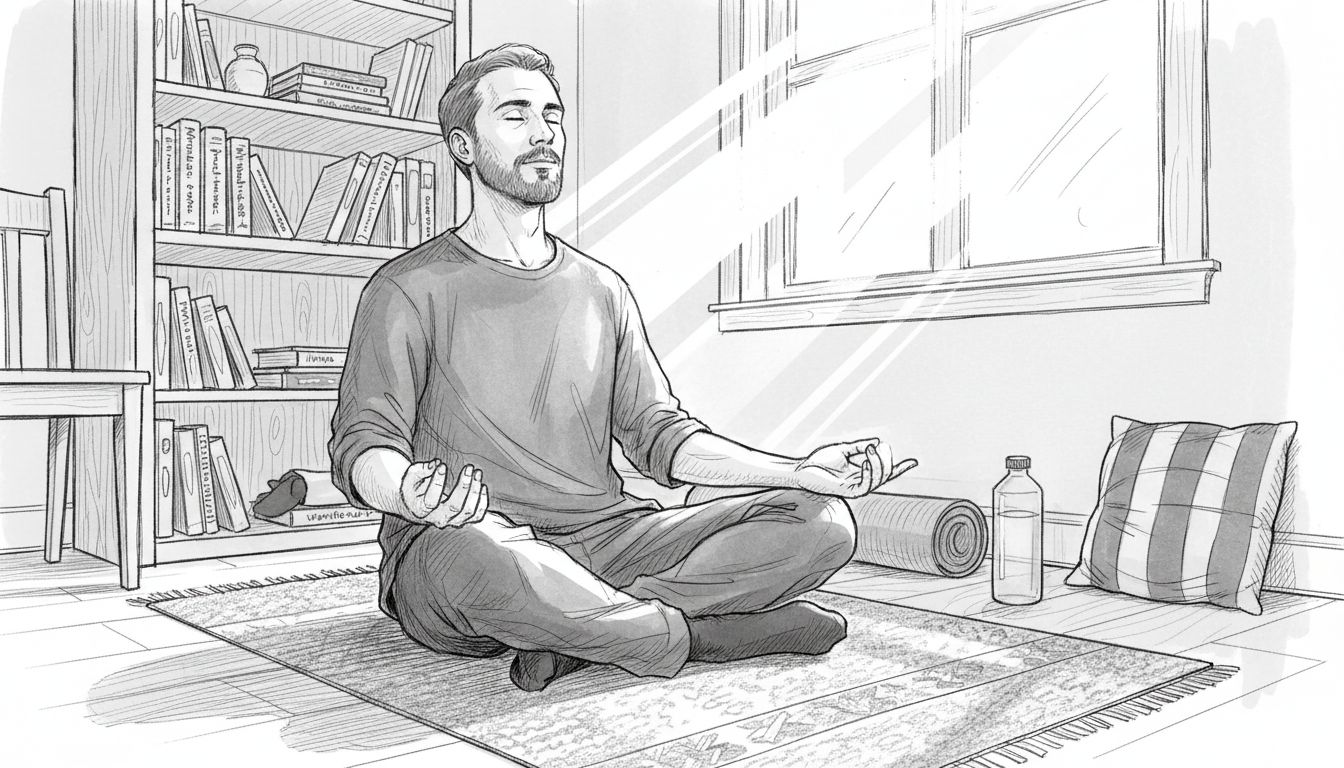
Grounding techniques work because they anchor you to the present moment instead of letting anxiety pull you into worst-case scenarios. When your mind is spinning with "what ifs," grounding brings you back to what's real and happening now.
Start with these practical grounding methods you can use anywhere:
5-4-3-2-1 technique: Name 5 things you see, 4 you can touch, 3 you hear, 2 you smell, 1 you taste. This engages your senses and interrupts anxiety's grip.
Deep breathing: Slow breathing (in for 4 counts, hold for 4, out for 6) signals your nervous system that you're safe.
Body scan: Notice physical sensations from your head to your toes without judging them. Calming and grounding techniques like this build resilience against anxiety.
Grounding through texture: Hold ice, feel your feet on the ground, or touch something warm.
Beyond grounding, establish a daily self-care routine that prevents anxiety from accumulating. Think of this as maintenance for your mental health, not something you do only when you're in crisis.
Your routine might include:
Morning: 10 minutes of breathing or movement before checking your phone
Midday: A short walk outside or time with someone you trust
Evening: Journaling, stretching, or time away from screens
Mind-body practices with consistent routine implementationdirectly reduce anxiety levels. For many Californians in the Latinx community, this might mean incorporating family time, spiritual practices, or connection to your heritage as part of your grounding.
When you practice grounding and self-care regularly, you're not just managing anxiety—you're building a buffer against it.
Start small. Pick one grounding technique and one self-care activity. Practice them for a full week before adding more. Your nervous system learns through repetition, not perfection.
Pro tip: Set phone reminders for your grounding practice at the same time each day so it becomes automatic rather than something you have to remember when you're already anxious.
Step 3: Apply evidence-based coping skills
You've identified your triggers and built a foundation with grounding routines. Now you need specific skills to interrupt anxiety when it strikes. Evidence-based coping skills work because they shift how your brain and body respond to stress in the moment.
These aren't just feel-good techniques. They're strategies backed by research that actually rewire your nervous system over time. The key is practicing them regularly so they become automatic when you need them most.
Start with these proven coping skills:
Deep breathing exercises: Activate your parasympathetic nervous system (your body's brake pedal) to calm the fight-or-flight response.
Cognitive restructuring: Challenge anxious thoughts by asking whether they're actually true. Replace "I'm going to fail" with "I've handled hard things before."
Progressive muscle relaxation: Tense and release muscle groups to release physical tension anxiety creates.
Physical exercise: Movement shifts your neurochemistry and burns off stress hormones.
Journaling: Write down worries to get them out of your head and onto paper where you can examine them.
Mindfulness meditation: Notice thoughts and feelings without judgment, which reduces their power over you.
Evidence-based coping skills for managing stress and anxietywork because they improve emotional regulation and shift both your thinking patterns and physical responses.
Pick two or three skills to start. Try each one for at least a week to see what actually works for you. Some people love journaling while others prefer movement. Some find breathing exercises help immediately while others need meditation's longer-term effects.
The coping skill that works best is the one you'll actually use when anxiety shows up.
For many Latinx individuals managing anxiety in California, combining traditional practices like connecting with community or spiritual grounding alongside modern coping skills creates a powerful approach. Cognitive behavioral strategies focus on modifying thought patterns that fuel anxiety, which is why pairing them with your grounding work creates lasting change.
Write down your chosen skills. Keep them visible on your phone or notebook. When anxiety rises, you'll have a clear menu of options instead of freezing in the moment.
Pro tip: Practice your coping skills during calm moments, not just when you're in panic mode—your brain learns better when you're not flooded with adrenaline, so regular practice builds real neural pathways.
Here's a quick reference comparing grounding techniques and evidence-based coping skills:
| Approach Type | Main Focus | When to Use | Typical Benefit |
|---|---|---|---|
| Grounding Techniques | Returning to present moment | Early anxiety signs | Rapid reduction of distress |
| Coping Skills | Changing thought and body | Escalating anxiety | Long-term anxiety reduction |
| Self-Care Routines | Ongoing prevention | Daily lifestyle | Resilience and stability |
Step 4: Evaluate progress and adjust workflow
Managing anxiety isn't a set-it-and-forget-it process. Your workflow needs regular evaluation to see what's working and what needs adjustment. This step keeps you from spinning your wheels with strategies that aren't actually helping.
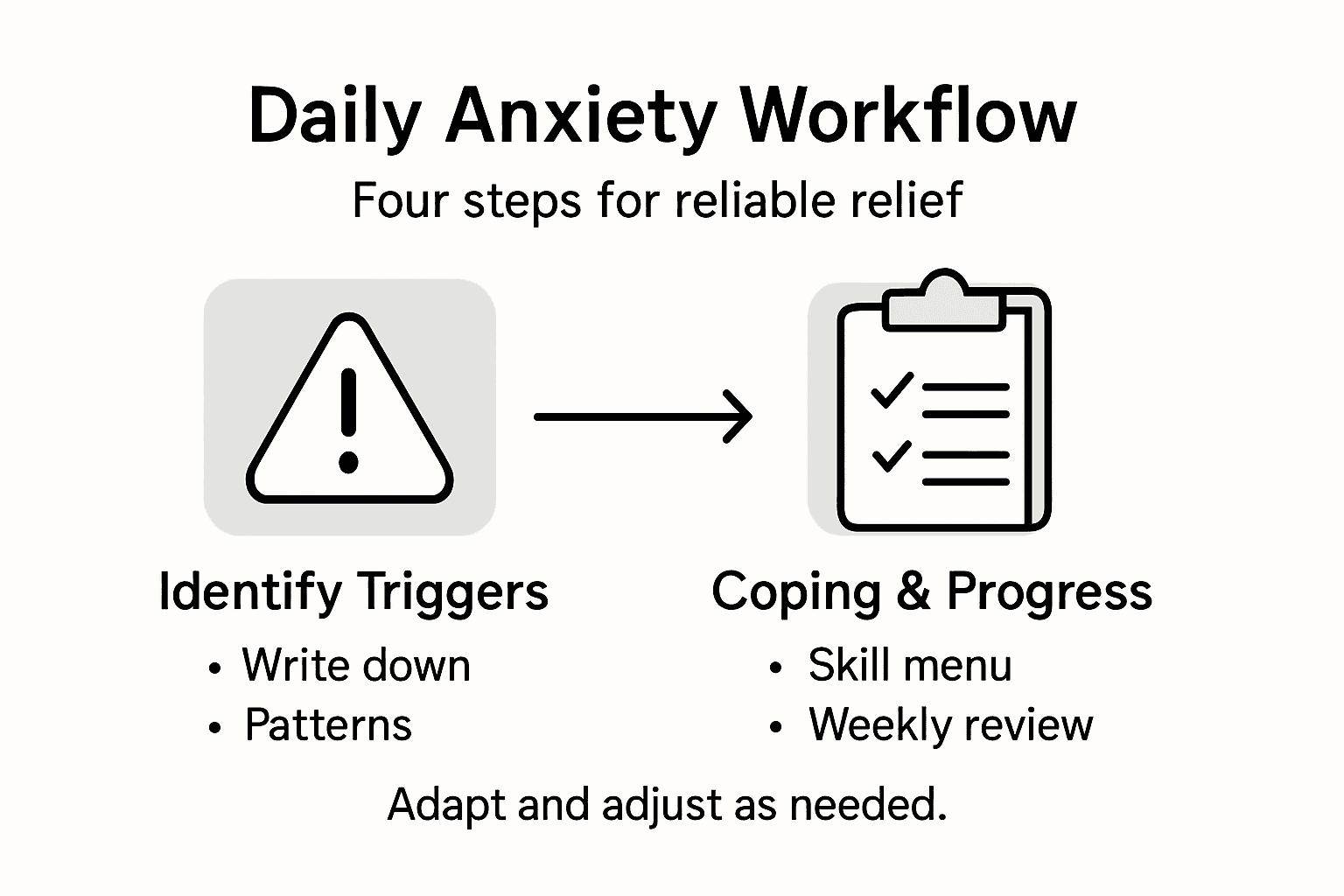
Start by tracking your progress over the past two to four weeks. Look back at the triggers and patterns you identified in Step 1. Are they showing up less often? Are your anxiety levels lower when they do occur? Did you handle difficult situations differently?
Create a simple progress check by measuring these areas:
Frequency: How often is anxiety showing up compared to before?
Intensity: When anxiety does arrive, how severe is it on a scale of one to ten?
Duration: How long does it last before you feel better?
Functioning: Are you doing daily activities, seeing people, and engaging in work or school more easily?
Routine outcome monitoring through self-report measuresallows you to track changes systematically and make real-time adjustments to your approach. This isn't about perfection. It's about gathering honest data about what's helping.
If a coping skill isn't working after a full week of practice, try a different one. If a grounding technique feels awkward, experiment with another. Your anxiety management workflow should feel sustainable, not like punishment.
Write down what's improving and what still feels stuck. Be specific. Instead of "I feel better," notice "I'm sleeping better and my morning anxiety is down by about 30 percent." Structured communication about anxiety patterns supports better engagement with your own care and clarifies what adjustments you actually need.
Progress isn't always linear, and that's normal. What matters is the overall direction over weeks, not day-to-day fluctuations.
If you're not seeing improvement after three to four weeks of consistent practice, consider reaching out to a therapist. Sometimes anxiety requires professional support alongside self-care strategies. There's no shame in that. It's actually wise self-awareness.
Update your workflow based on what you learn. Keep what works. Drop what doesn't. This is your anxiety management system, and it exists to serve you, not the other way around.
Pro tip: Use the same time each week (like Sunday evening) to review your progress in writing so you build an accurate record of changes over time, which also helps you see improvements you might otherwise forget.
Below is a summary of methods for tracking and evaluating anxiety progress:
| Method | What to Track | How Often | Outcome Example |
|---|---|---|---|
| Trigger Log | Events and patterns | Daily (real-time) | Identifies recurring triggers |
| Intensity Scale | Severity (1–10) | Each episode | Quantifies anxiety changes |
| Progress Review | Frequency & duration | Weekly | Monitors long-term progress |
| Functioning Checklist | Daily activities | Weekly or monthly | Measures overall well-being |
Build an Effective Daily Workflow for Anxiety Relief with Expert Support
Managing anxiety can feel overwhelming when triggers keep surfacing and coping skills seem hard to maintain. This article showed you how identifying your unique anxiety patterns and grounding routines creates a solid foundation. Yet real change happens when you combine this knowledge with ongoing professional guidance that adapts to your evolving needs.
At Alvarado Therapy, our licensed therapists specialize in trauma-informed approaches that help you master evidence-based anxiety coping skills tailored to your life. Whether you prefer in-person support in Pasadena CA, Ventura CA, or convenient online sessions, our bilingual team understands the cultural nuances that influence anxiety management. We stand ready to support your journey toward lasting resilience, emotional regulation, and empowerment.
Take the next step today. Visit Alvarado Therapy to explore personalized therapy options, book a consultation, and access resources designed to help you build a sustainable daily anxiety management workflow that truly works for you.
Frequently Asked Questions
How can I identify my anxiety triggers?
Start by keeping a log of when your anxiety occurs. Record the time, location, activities, and intensity to help identify patterns over the next week.
What grounding techniques can I use to manage anxiety?
Employ techniques like the 5-4-3-2-1 exercise, deep breathing, or physical sensations like holding ice to bring your focus back to the present moment. Practice these techniques consistently to enhance their effectiveness during anxious moments.
How often should I evaluate my anxiety management progress?
Evaluate your anxiety management strategies weekly. Track how frequently anxiety impacts you and the intensity of those episodes to make informed adjustments to your approach.
What self-care routines are effective for anxiety prevention?
Incorporate daily activities such as morning breathing exercises, midday walks, and evening journaling into your routine. Aim to dedicate at least 10-15 minutes daily to these practices to build resilience against anxiety over time.
How can I apply evidence-based coping skills when anxiety strikes?
Use coping strategies like deep breathing, cognitive restructuring, or progressive muscle relaxation when you feel anxious. Practicing these skills regularly will make them more effective and instinctual during high-stress situations.
What if my anxiety management techniques aren’t helping?
If you notice no improvement after consistent practice for three to four weeks, consider consulting a mental health professional. Be open to trying new coping techniques to find what works best for you.
