
Step-by-Step Guide to Therapy for Anxiety Relief

Over 40 million American adults experience anxiety each year, making it the most common mental health issue in the United States. Feeling overwhelmed or unsure about where to begin can stop many from seeking help. By breaking the process into clear, manageable steps, you can identify what triggers your own anxiety and start building practical skills for lasting relief. Discover how small changes and thoughtful choices can transform your approach to anxiety care.
Table of Contents
Key Takeaways
| Key Insight | Explanation |
|---|---|
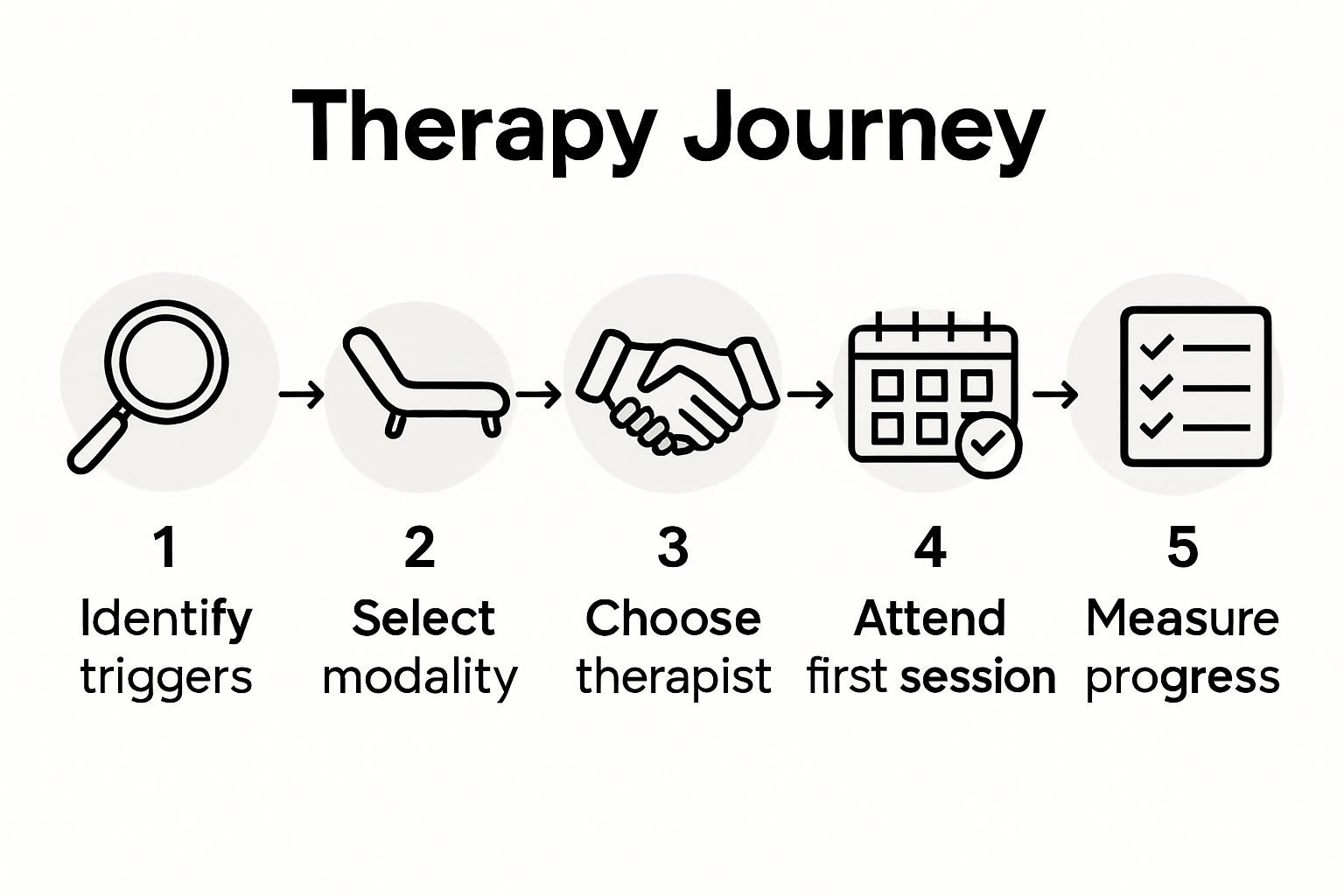
| 1. Identify Your Triggers | Track specific internal and external anxiety triggers to manage responses effectively. |
| 2. Explore Therapy Options | Evaluate different therapy modalities to find the best fit for your needs and symptoms. |
| 3. Choose a Qualified Therapist | Select a trauma-informed therapist who demonstrates empathy and understanding of trauma. |
| 4. Prepare for Your First Session | Reflect on your anxiety patterns and document key experiences to discuss with your therapist. |
| 5. Monitor Progress Regularly | Assess your therapeutic journey consistently and adjust strategies based on your evolving needs. |
Step 1: Identify Personal Triggers and Symptoms
Understanding your personal anxiety triggers is the first crucial step in developing effective management strategies. By recognizing specific internal and external factors that provoke anxiety, you can create targeted techniques to interrupt and reduce anxious responses before they escalate.
Begin by carefully tracking your emotional and physical reactions in different situations. Anxiety triggers can emerge from diverse sources, including internal stimuli like negative thoughts or emotions and external stimuli such as specific social environments or interpersonal interactions. Consider maintaining a detailed journal where you document moments of heightened anxiety, noting the precise circumstances surrounding each experience. Look for patterns in your physical sensations like increased heart rate, sweating, muscle tension, or rapid breathing. Simultaneously, track emotional indicators such as feelings of panic, overwhelming dread, or sudden mood shifts.
As you document these experiences, you will start developing a nuanced understanding of your unique anxiety profile. Recognizing these triggers empowers you to anticipate potential challenging situations and proactively implement coping mechanisms. Remember that identifying triggers is not about judgment but about building self awareness and creating pathways toward emotional regulation.
Pro tip: When documenting triggers, be as specific as possible. Instead of writing “work makes me anxious,” note precise scenarios like “team meetings with more than five people” or “presentations with tight deadlines.” This granular approach helps you develop more targeted strategies for managing your anxiety.
Step 2: Evaluate Therapy Modalities for Anxiety
Evaluating the right therapy modality is a critical step in your anxiety relief journey. Your goal is to find a therapeutic approach that resonates with your unique emotional landscape and addresses your specific anxiety symptoms effectively.

Different therapy modalities offer unique approaches to managing anxiety, each with distinct strategies and techniques. Cognitive Behavioral Therapy (CBT) focuses on identifying and restructuring negative thought patterns, helping you challenge and reframe anxious thinking. Dialectical Behavior Therapy (DBT) provides skills for emotional regulation and mindfulness, particularly useful for individuals experiencing intense emotional responses. Psychodynamic Therapy explores underlying psychological roots of anxiety, examining how past experiences shape current emotional patterns. Somatic Experiencing Therapy takes a body-centered approach, helping you process anxiety through physical sensations and release stored emotional tension.
To select the most appropriate therapy modality, consider your personal history, specific anxiety symptoms, and emotional processing style. Reflect on whether you prefer a structured approach like CBT, a more exploratory method like Psychodynamic Therapy, or a body-focused technique like Somatic Experiencing. Consulting with a licensed therapist can provide professional guidance in matching your unique needs with the most effective therapeutic approach.
Pro tip: Many people benefit from integrative approaches that combine elements from multiple therapy modalities. Be open to exploring and adapting your therapeutic strategy as you progress in your healing journey.
Step 3: Select a Qualified Trauma-Informed Therapist
Selecting the right trauma-informed therapist is a pivotal step in your healing journey. Your goal is to find a professional who understands the nuanced complexities of trauma and can provide compassionate, effective support tailored to your unique experiences.
Therapeutic alliance plays a critical role in successful treatment, with the quality of the patient-therapist relationship directly impacting your healing potential. Look for therapists who demonstrate specific trauma-informed skills such as active listening, emotional safety, and a deep understanding of how traumatic experiences affect mental health. Seek professionals who are licensed, have specialized training in trauma therapy techniques like EMDR or somatic experiencing, and show genuine empathy and cultural sensitivity. Check their credentials, ask about their specific experience with your type of trauma, and inquire about their therapeutic approach and philosophy.
During initial consultations, pay attention to how comfortable you feel and whether the therapist creates a sense of safety and trust. Trust your intuition while also objectively assessing the therapist’s professional qualifications. Consistent and high-quality care is essential in mental health interventions, so do not hesitate to have multiple initial consultations to find the best match for your healing journey.
Pro tip: Many therapists offer a free initial consultation. Use this opportunity to ask detailed questions about their approach, experience with trauma, and treatment strategies to ensure you find a truly qualified trauma-informed professional.
Step 4: Prepare for Your First Therapy Session
Your first therapy session is a significant milestone in your mental health journey. This initial meeting sets the foundation for your therapeutic relationship and provides an opportunity to establish trust, communicate your goals, and begin understanding your emotional landscape.
Recognizing your personal anxiety signals can help you maximize the effectiveness of your first therapy session. Before your appointment, take time to reflect on your specific anxiety patterns, emotional triggers, and the key challenges you want to address. Consider keeping a journal or notes that document your anxiety experiences, including specific situations that cause distress, physical symptoms you experience, and emotional responses that feel overwhelming. This preparation will help your therapist gain a comprehensive understanding of your unique experience and develop a more targeted approach to your treatment.
During the first session, expect a collaborative conversation where your therapist will ask about your background, current challenges, and therapeutic goals. Identifying anxiety triggers can facilitate a more productive therapy experience, so be prepared to discuss specific instances and patterns of your anxiety. Remember that transparency and openness are key to building an effective therapeutic relationship. Your therapist is there to support you without judgment, creating a safe space for exploration and healing.
Pro tip: Arrive 10 to 15 minutes early for your first session to complete any necessary paperwork and allow yourself time to feel calm and centered before the appointment begins.
Step 5: Assess Progress and Adjust Your Approach
Tracking and evaluating your therapeutic journey is essential for achieving meaningful anxiety relief. This step involves actively engaging with your healing process and being willing to adapt your strategies as you gain new insights and experiences.
Systematic evaluation of therapeutic interventions can significantly enhance treatment effectiveness, particularly for anxiety disorders. Begin by establishing clear benchmark indicators with your therapist that measure your emotional resilience, stress management skills, and overall mental health progression. These metrics might include tracking frequency of anxiety episodes, intensity of emotional responses, improvements in daily functioning, and changes in physiological stress symptoms. Maintain a consistent record of your experiences, noting both challenges and positive developments throughout your therapeutic journey.
Exploring innovative therapeutic approaches can provide additional strategies for managing anxiety. Regularly discuss with your therapist whether your current treatment plan continues to meet your evolving needs. Be open to trying different techniques like exposure therapy, cognitive restructuring, or complementary approaches that might offer fresh perspectives on managing your anxiety. Your willingness to experiment and provide honest feedback creates a collaborative environment that supports personalized healing.
Pro tip: Schedule periodic check in sessions specifically dedicated to reviewing your progress, discussing what strategies are working, and making intentional adjustments to your therapeutic approach.
Find the Right Support for Your Anxiety Relief Journey
Anxiety often feels overwhelming when triggers and symptoms seem unpredictable. This guide highlights the importance of understanding your unique anxiety profile and selecting the best therapeutic approach for meaningful relief. If you are ready to take control and want expert help navigating trauma-informed therapy options like EMDR or individualized counseling, Alvarado Therapy is here for you. Our licensed therapists understand the complexities of anxiety and trauma and offer compassionate, culturally responsive care designed to build trust and foster healing.

Explore our California — Meet Our Team — Alvarado Therapy page to find a therapist who fits your needs. Whether you prefer in-person sessions in Ventura or flexible online appointments, you can start by visiting Alvarado Therapy today. Take the next step now toward clarity and empowerment by booking your first appointment and beginning a supportive partnership focused on your mental well-being.
Frequently Asked Questions
How do I identify my personal anxiety triggers?
To identify your personal anxiety triggers, start by tracking your emotional and physical reactions in various situations. Keep a detailed journal to document instances of heightened anxiety, noting specific circumstances, physical sensations, and emotional responses.
What therapy modalities are effective for managing anxiety?
Effective therapy modalities for managing anxiety include Cognitive Behavioral Therapy (CBT), Dialectical Behavior Therapy (DBT), Psychodynamic Therapy, and Somatic Experiencing Therapy. Evaluate each method to find the one that resonates with your unique emotional style and specific symptoms.
How can I find a qualified trauma-informed therapist?
To find a qualified trauma-informed therapist, look for professionals with specialized training in trauma therapy techniques and relevant experience. Schedule initial consultations to assess their qualifications and ensure you feel comfortable and safe in their presence.
What should I prepare for during my first therapy session?
For your first therapy session, prepare by reflecting on your specific anxiety patterns and key challenges. Bring notes or a journal that outlines your anxiety experiences, including specific situations and emotional responses, to help your therapist understand your unique case early on.
How do I assess progress during therapy for anxiety?
To assess your progress during therapy for anxiety, establish clear benchmark indicators with your therapist, such as the frequency and intensity of anxiety episodes. Regularly track these metrics and engage in discussions about your experiences and any necessary adjustments to your treatment plan.
How often should I check in with my therapist to evaluate my anxiety treatment?
Schedule periodic check-in sessions every few weeks or monthly to evaluate your anxiety treatment. Use these sessions to review what strategies are working and to make intentional adjustments to enhance your therapeutic approach.
Recommended
Ready to see what’s possible?
It’s your time to heal in a transformative way.
