
Culturally Responsive Therapy: 30% Better Trauma Recovery

Clients receiving culturally responsive trauma therapy show 30-40% higher retention and 25% faster symptom reduction compared to traditional approaches. For Latinx and BIPOC adults navigating trauma, PTSD, or anxiety, therapy that honors your cultural identity and language isn't just preferred—it's clinically proven to accelerate healing. This guide walks you through what culturally responsive therapy is, why it works better for communities of color, and how to access bilingual, identity-affirming care across California.
Table of Contents
Key Takeaways
| Point | Details |
|---|---|
| Culturally responsive therapy integrates language, identity, and cultural context into trauma treatment | This approach tailors evidence-based interventions to your specific cultural experiences and needs |
| Bilingual therapy improves PTSD symptom management by nearly 60% for Latinx clients | Therapy in your preferred language builds deeper trust and enables more accurate emotional expression |
| Identity affirmation lowers dropout rates by 20-30% in BIPOC therapy | Validating your cultural and historical experiences strengthens the therapeutic alliance |
| Culturally adapted models outperform standard trauma therapies in both retention and symptom reduction | Studies show up to 35% greater improvement when cultural context is woven into treatment |
| Practical resources exist to help you find qualified bilingual, identity-affirming therapists in California | You can evaluate cultural competence through targeted questions during initial consultations |
What is Culturally Responsive Therapy and Why It Matters
Culturally responsive therapy goes beyond traditional trauma treatment by weaving your cultural identity, language preferences, and systemic experiences directly into the healing process. Instead of applying a one-size-fits-all model, therapists trained in culturally responsive care report higher client satisfaction and therapeutic alliance ratings among BIPOC clients. This approach recognizes that your cultural beliefs, family structures, and historical context shape how you experience and process trauma.
When your therapist understands the cultural factors influencing your mental health, you're more likely to stay engaged in treatment and see meaningful progress. This is especially critical for adults from Latinx and BIPOC backgrounds, where cultural stigma around mental health, experiences of systemic racism, and language barriers often create additional obstacles to healing. Trauma-sensitive therapy that centers your identity transforms these barriers into strengths.
Core components of culturally responsive therapy include:
Language accessibility through bilingual or multilingual therapists who understand cultural nuances beyond literal translation
Identity affirmation that validates your experiences of discrimination, immigration stress, or intergenerational trauma
Trauma-informed care adapted to cultural healing practices and family dynamics
Recognition of systemic factors like immigration status, socioeconomic stress, and historical trauma affecting your mental health
This foundation matters because cultural competence improves outcomes by creating safety and trust. When you feel truly seen and understood, you open up more honestly, process emotions more deeply, and engage with therapeutic tools more effectively. The result is faster symptom relief and stronger long-term healing.
The Role of Bilingual Therapy in Trauma and PTSD Treatment
Language barriers don't just create communication challenges—they directly impact diagnostic accuracy and treatment effectiveness. When you're forced to describe complex trauma symptoms in a second language, critical emotional nuances get lost. This leads to misdiagnosis, inappropriate treatment plans, and frustration that drives people away from therapy altogether.
Nearly 60% of Latinx adults who accessed therapy in their preferred language reported significantly better PTSD symptom management compared to those receiving care only in English. This dramatic difference exists because emotional processing happens most authentically in your native language. Traumatic memories are often encoded in the language you spoke when the trauma occurred, making it essential to work through those experiences in that same language.
Bilingual therapy with bilingual therapists in trauma recovery creates a therapeutic environment where you can fully express yourself without translating your feelings. This builds a stronger alliance with your therapist and allows for more precise identification of symptoms, triggers, and healing strategies.
Key benefits of bilingual therapy include:
Accurate expression of complex emotional states without language barriers limiting your ability to describe what you're experiencing
Deeper trust and connection with your therapist when cultural idioms and expressions are understood
Reduced dropout rates because you feel genuinely heard and validated in sessions
Better treatment outcomes as therapists can distinguish between cultural expressions of distress and clinical symptoms
Pro Tip: If you're bilingual but more comfortable discussing emotions in Spanish, communicate this preference clearly from your first consultation. Therapy works best when you can access your deepest feelings without translation barriers.
Identity Affirmation: Central to Therapy for BIPOC Clients
Identity affirmation in therapy means your therapist actively validates and integrates your cultural background, racial identity, and lived experiences of systemic oppression into your treatment. This goes beyond simple acknowledgment—it positions your cultural identity as a resource for healing rather than something to be worked around.
For BIPOC clients, especially those carrying intergenerational or systemic trauma, this validation is transformative. Dropout rates decreased by 20-30% when therapists incorporated clients' cultural values and identities into trauma-sensitive approaches. When your therapist understands how racism, discrimination, or immigration stress compounds personal trauma, they can address root causes instead of just surface symptoms.
Identity-affirming therapyhelps you process experiences that traditional approaches often miss. Your therapist might explore how family separation, acculturative stress, or racial trauma intersect with childhood experiences or relationship difficulties. This comprehensive view accelerates healing because you're not compartmentalizing parts of yourself to fit a narrow therapeutic framework.
How identity affirmation strengthens trauma recovery:
Validates experiences of discrimination and microaggressions as legitimate sources of psychological distress
Integrates cultural strengths like familismo, spirituality, or community connection into coping strategies
Addresses historical and intergenerational trauma affecting BIPOC communities without requiring you to educate your therapist
Creates space for you to explore identity conflicts around assimilation, language loss, or cultural disconnection
Pro Tip: Share your cultural background, immigration story, and experiences with discrimination openly during intake. This information helps your therapist tailor treatment to your specific identity and experiences from day one.
Common Misconceptions About Culturally Responsive Therapy
Several myths persist about the role of culture in mental health treatment, often minimizing its critical importance. Let's clear up the most common misunderstandings that might prevent you from seeking culturally responsive care.
Myth: Clinical skills matter more than cultural understanding. Reality: Cultural responsiveness accounts for up to 40% of treatment adherence and outcomes. A highly skilled therapist who doesn't understand your cultural context will miss crucial factors affecting your mental health and may inadvertently cause harm through cultural insensitivity.
Myth: Language preference has minimal impact on therapy outcomes. Reality: Therapy in your preferred language dramatically improves PTSD symptom management, with Latinx clients reporting nearly 60% better outcomes. Language shapes how you access emotions, recall memories, and process trauma—making it foundational, not supplementary.
Myth: Standard trauma therapies work equally well without cultural adaptations. Reality: Culturally adapted EMDR and other trauma therapies yield 35% greater symptom improvement compared to standard protocols. When therapists integrate cultural metaphors, family dynamics, and community values into evidence-based treatments, you get better results faster.
Myth: Any therapist of color provides culturally responsive care automatically. Reality: While shared identity can help, cultural competence requires specific training in adapting clinical interventions to diverse backgrounds. Look for therapists who demonstrate ongoing education in cultural responsiveness regardless of their own background.
These misconceptions keep people stuck in ineffective therapy or prevent them from seeking help altogether. Understanding that culture is central to effective treatment empowers you to advocate for the care you deserve.
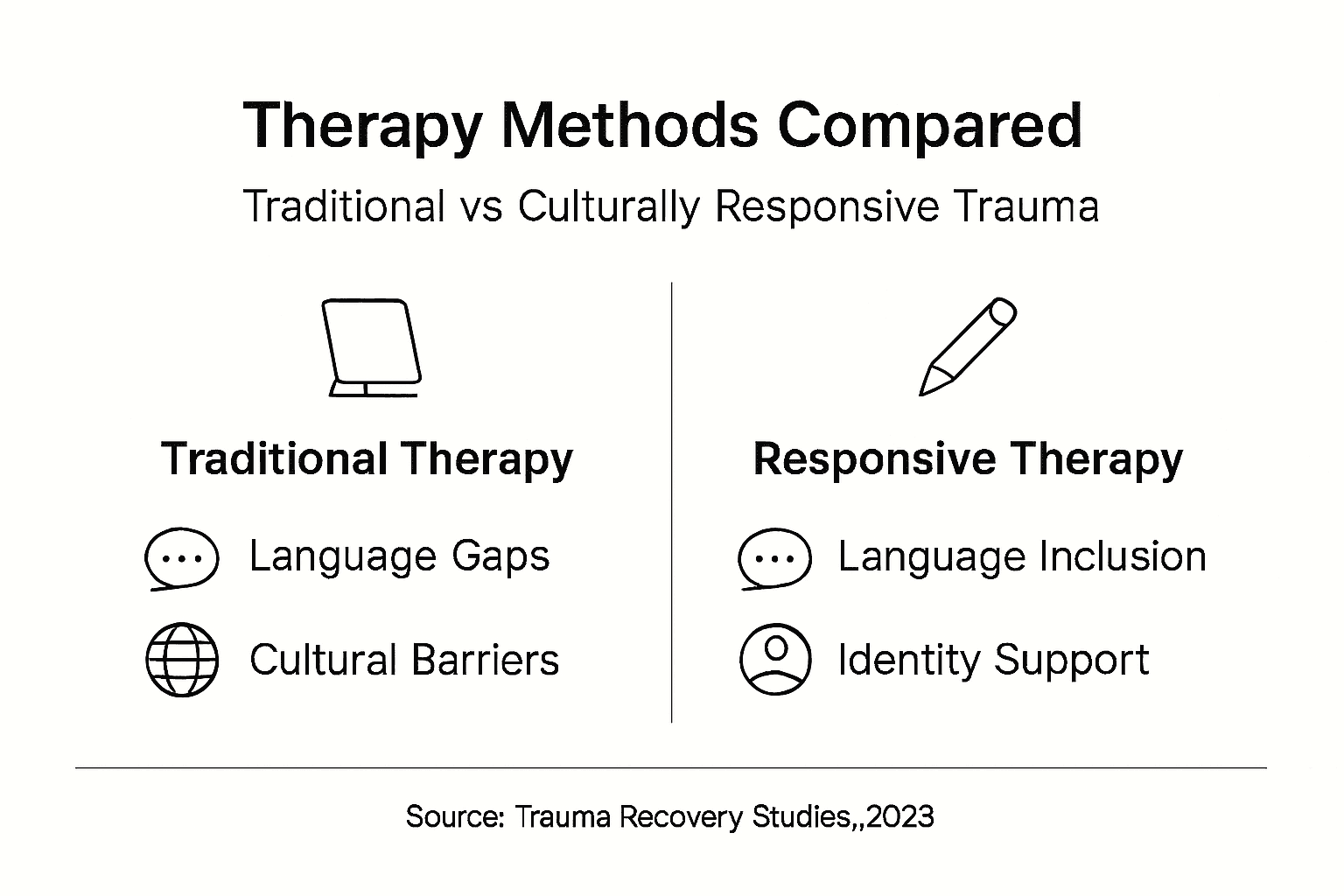
Comparing Traditional and Culturally Responsive Trauma Therapies
The differences between traditional and culturally responsive trauma therapy extend beyond surface-level accommodations. Here's how these approaches compare on key features that directly impact your healing journey.
| Feature | Traditional Trauma Therapy | Culturally Responsive Trauma Therapy |
|---|---|---|
| Language Support | English only or basic interpretation | Bilingual therapists fluent in cultural nuances and idioms |
| Cultural Adaptation | Standard protocols applied universally | Treatment tailored to cultural values, family structures, and beliefs |
| Identity Integration | Identity acknowledged but not central | Cultural and racial identity woven throughout treatment |
| Systemic Trauma | Focus on individual experiences | Addresses historical, intergenerational, and systemic oppression |
| Retention Rates | Higher dropout among BIPOC clients | 20-30% lower dropout rates with identity affirmation |
| Symptom Reduction | Moderate improvement timelines | 25% faster symptom reduction, 35% greater improvement with adapted protocols |

Culturally responsive approaches build on evidence-based treatments like EMDR therapy for PTSD by adding cultural context that makes these interventions more relevant and effective. For example, a therapist might incorporate cultural healing practices, spiritual beliefs, or family consultation into your EMDR protocol.
Key advantages of culturally responsive models:
Faster trust building because you don't waste sessions explaining cultural basics
More accurate assessment as therapists distinguish cultural expressions from pathology
Stronger therapeutic alliance leading to deeper emotional work
Better long-term outcomes because treatment addresses root causes in cultural context
The research is clear: when trauma therapy reflects who you are culturally and linguistically, you heal faster and more completely. This isn't about preference—it's about effectiveness.
How to Access and Evaluate Culturally Responsive Therapy in California
Finding a bilingual, identity-affirming therapist in California has become more accessible, but you still need to know what questions to ask and what qualities to look for. Here's your practical roadmap to identifying culturally competent trauma therapists.
California has a growing network of bilingual mental health professionals specializing in trauma care for Latinx and BIPOC communities. Many practices now offer online therapy, expanding access beyond major cities to underserved areas throughout the state. Starting culturally responsive therapy begins with clear communication about your cultural and language needs.
Questions to ask during initial consultations:
What training have you completed in culturally responsive or multicultural therapy?
Do you provide therapy in Spanish (or your preferred language) throughout the entire session, including clinical explanations?
How do you integrate cultural identity and systemic experiences into trauma treatment?
Can you describe your experience working with clients from my specific cultural background?
How do you address immigration stress, discrimination, or intergenerational trauma in your practice?
These questions help you gauge whether a therapist has genuine cultural competence or just surface-level awareness. Pay attention to how they respond—culturally responsive therapists will answer confidently with specific examples.
Steps to access online culturally responsive therapy in California:
Search for practices explicitly advertising bilingual services and cultural specialization
Check therapist profiles for language fluency and cultural training certifications
Schedule consultations with multiple therapists to compare cultural fit
Ask about their approach to integrating your cultural values into treatment plans
Verify they're licensed in California for online therapy services
Pro Tip: Don't settle for a therapist who only speaks your language without demonstrating cultural understanding. Effective culturally responsive care requires both linguistic fluency and deep knowledge of your community's experiences and values.
Many Californians find success using online platforms to find bilingual therapists with specific cultural expertise. Online therapy removes geographic barriers while maintaining the cultural responsiveness essential for effective trauma treatment.
Bridging Understanding to Healing: Applying Culturally Responsive Therapy
Understanding culturally responsive therapy is just the beginning—applying this knowledge transforms your healing journey. Here's how to actively use your cultural identity as a therapeutic strength while building the relationship that supports deep trauma recovery.
Your cultural background isn't something to overcome in therapy—it's a resource. The values, traditions, and community connections that shape your identity can become powerful tools for healing when properly integrated into treatment. Applying culturally responsive trauma therapy means bringing your whole self into the therapeutic space.
Action steps to maximize culturally responsive therapy:
Assess your cultural and linguistic needs clearly. Before starting therapy, identify which aspects of your identity matter most in treatment. Do you need Spanish-language services? Is understanding immigration trauma essential? Does your therapist need to grasp how discrimination affects your daily life?
Select a therapist with demonstrated cultural competence. Use the evaluation questions from the previous section to interview potential therapists. Don't compromise on cultural fit—it directly impacts your outcomes.
Express your cultural identity and experiences openly from session one. Share your immigration story, family dynamics, experiences with racism, and cultural values that guide your life. This information helps your therapist tailor treatment immediately.
Engage actively in culturally adapted trauma-informed interventions. Ask your therapist to explain how they're integrating your cultural context into techniques like EMDR, cognitive processing, or somatic therapy. Understanding the cultural adaptation enhances your engagement.
Advocate for your needs throughout treatment. If something feels culturally misaligned, speak up. Culturally responsive therapy includes ongoing dialogue about how well the treatment reflects your identity and experiences.
Building trust takes time, but culturally responsive therapy accelerates this process significantly. When you don't have to explain basic cultural concepts or justify your experiences, you can dive deeper into healing work faster. This trust forms the foundation for processing difficult trauma memories and building new coping strategies rooted in your cultural strengths.
Remember that healing isn't linear, and culturally responsive therapy honors this reality by adapting to your pace and cultural healing traditions. Whether you draw strength from family, spirituality, or community, your therapist should help you integrate these resources into your recovery journey.
Explore Culturally Responsive Trauma Therapy with Alvarado Therapy
Alvarado Therapy specializes in bilingual, identity-affirming trauma care designed specifically for Latinx and BIPOC communities throughout California. Our licensed therapists provide PTSD and complex trauma services in both English and Spanish, integrating cultural context into evidence-based treatments like EMDR, individual counseling, and trauma-focused therapy.
Whether you're healing from childhood trauma, immigration stress, or systemic oppression, our team understands how cultural and linguistic factors shape your mental health journey. We offer online EMDR trauma therapy in California, making culturally responsive care accessible from anywhere in the state. Our approach combines clinical expertise with deep respect for your cultural identity, creating the safety needed for transformative healing.
Ready to experience therapy that truly reflects who you are? Schedule a consultation to discuss your cultural and language preferences and learn how our culturally responsive approach can accelerate your healing.
Pro Tip: Early consultation allows you to clarify your cultural needs and find the right therapeutic fit before committing to ongoing treatment.
Frequently Asked Questions
What are the benefits of culturally responsive therapy for trauma?
Culturally responsive therapy increases treatment retention by 20-30% and accelerates symptom reduction by 25% compared to traditional approaches. You experience deeper trust, more accurate diagnosis, and faster healing because your therapist integrates your cultural identity and lived experiences directly into evidence-based trauma treatment.
How do I find a bilingual trauma therapist in California?
Search for practices explicitly advertising bilingual services with cultural specialization, check therapist profiles for language fluency and training certifications, and schedule consultations asking specific questions about cultural competence. Online directories and mental health platforms can help you filter for therapists offering services in your preferred language throughout California.
Does therapy in Spanish really improve PTSD outcomes?
Yes, Latinx adults accessing therapy in Spanish report nearly 60% better PTSD symptom management compared to English-only treatment. Emotional processing happens most authentically in your native language, allowing more accurate expression of symptoms and deeper therapeutic work without translation barriers limiting your healing.
What is identity affirmation in therapy?
Identity affirmation means your therapist actively validates and integrates your cultural background, racial identity, and experiences of systemic oppression into treatment. This approach positions your cultural identity as a healing resource while addressing historical and intergenerational trauma affecting BIPOC communities, resulting in significantly lower dropout rates.
How should I prepare for culturally responsive therapy sessions?
Come ready to share your cultural background, immigration experiences, and how discrimination or systemic factors affect your mental health. Communicate your language preferences clearly and ask your therapist to explain how they'll integrate your cultural context into treatment protocols, ensuring the therapeutic approach aligns with your identity and values from the start.
