
What is relationship anxiety? Understanding and healing
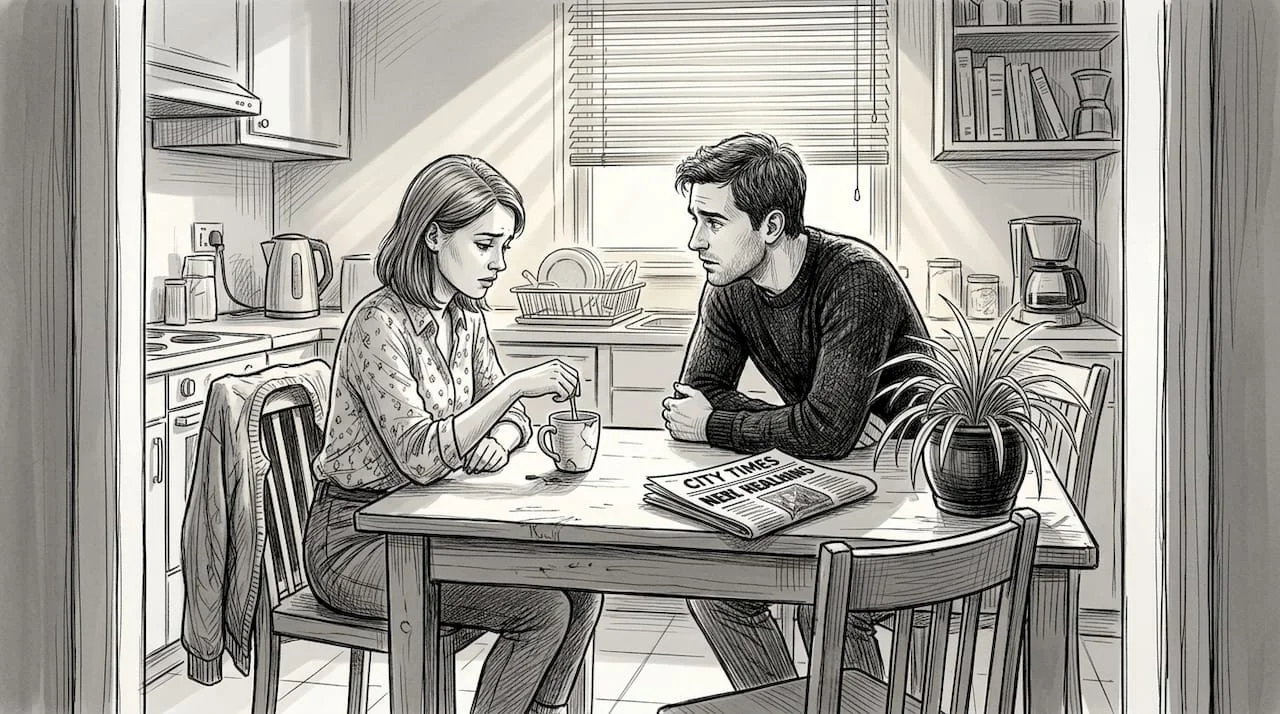
Many people assume relationship anxiety means you don't truly love your partner. That's a harmful myth. Relationship anxiety is a widespread emotional experience rooted in past trauma, insecure attachment, and deep-seated fears of abandonment or rejection. It doesn't reflect the depth of your feelings but rather unresolved wounds that surface in intimate connections. This guide will walk you through what relationship anxiety actually is, how it shows up in your daily life, and most importantly, how trauma-informed therapy can help you heal and build healthier, more secure relationships.
Table of Contents
Key takeaways
| Point | Details |
|---|---|
| What it is | Relationship anxiety involves persistent worry and insecurity about the stability of romantic bonds. |
| Root causes | It often stems from past trauma, attachment wounds, and fear of abandonment or rejection. |
| Common symptoms | Overthinking, jealousy, constant need for reassurance, and physical signs like panic or tension. |
| Healing pathways | Understanding triggers, practicing coping strategies, and engaging in trauma-informed therapy. |
| Professional support | EMDR therapy and couples therapy rebuild trust, address trauma, and improve relationship health. |
What is relationship anxiety? Causes and core symptoms
Relationship anxiety is characterized by chronic fear and uncertainty in romantic bonds. Unlike fleeting doubts that everyone experiences, this anxiety persists and can dominate your thoughts and emotions. It often stems from attachment theory, which explains how early relationships with caregivers shape our ability to connect as adults. If you experienced inconsistent care, neglect, or trauma in childhood, you may develop an anxious attachment style that makes you hypersensitive to signs of rejection or abandonment.
Attachment styles fall into three main categories: secure, anxious, and avoidant. Secure individuals feel comfortable with intimacy and independence. Anxious individuals crave closeness but fear their partner will leave. Avoidant individuals value independence and may withdraw when things get too close. Relationship anxiety is most common in those with anxious attachment, though it can appear in any style when past trauma resurfaces.
Trauma plays a powerful role in triggering relationship anxiety. If you've experienced betrayal, emotional abuse, or sudden loss in previous relationships, your nervous system may remain on high alert. Even in a safe, loving partnership, your brain might interpret normal relationship ups and downs as threats. This is not a character flaw. It's a survival response shaped by your history.
Common symptoms of relationship anxiety include:
Overthinking every text, conversation, or interaction with your partner
Constantly seeking reassurance that your partner loves you or won't leave
Feeling jealous or threatened by your partner's friends, coworkers, or past relationships
Worrying excessively about the future of the relationship
Physical symptoms like rapid heartbeat, nausea, or tension when thinking about your relationship
Difficulty trusting your partner even when they've given you no reason to doubt them
These symptoms can range from mild to severe. For some, relationship anxiety is a background hum of worry. For others, it becomes overwhelming and interferes with daily functioning. Recognizing these patterns is the first step toward healing.
How relationship anxiety differs from general anxiety and attachment styles
Understanding the distinctions between relationship anxiety, general anxiety, and attachment styles helps you identify the right support and treatment. General anxiety disorder is a mental health condition characterized by excessive worry across multiple areas of life, including work, health, finances, and social situations. It's pervasive and not limited to one context. People with general anxiety may feel on edge most of the time, struggle with concentration, and experience physical symptoms like muscle tension or insomnia.
Relationship anxietyspecifically focuses on fears and doubts about romantic connection. It's situational, meaning it intensifies in the context of intimate relationships. You might function well at work, with friends, or in other areas of life, but feel consumed by anxiety when it comes to your partner. This distinction is important because it shapes how you approach healing.
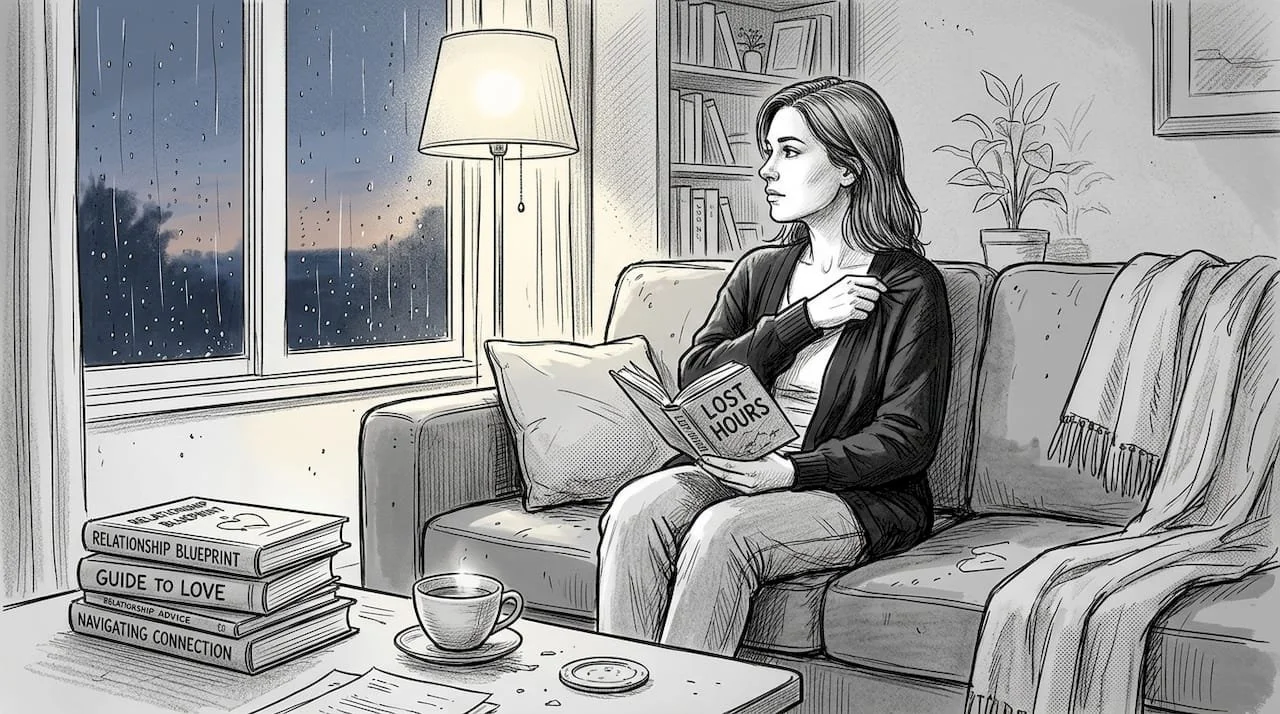
Attachment styles describe patterns of relating to others based on early experiences. They influence how you behave in relationships but are not the same as relationship anxiety. Someone with an anxious attachment style may not always experience anxiety, especially if they're in a secure relationship with a responsive partner. Conversely, someone with a secure attachment style can develop relationship anxiety after a traumatic breakup or betrayal.
Here's a comparison to clarify these concepts:
| Aspect | General anxiety | Relationship anxiety | Attachment styles |
|---|---|---|---|
| Focus | Broad, affects multiple life areas | Specific to romantic relationships | Patterns of relating formed in childhood |
| Triggers | Various stressors unrelated to relationships | Relationship events, partner behavior | Activated in close relationships |
| Treatment | Therapy, medication, lifestyle changes | Trauma-informed therapy, couples work | Therapy to shift relational patterns |
| Duration | Often chronic without treatment | Can be episodic or chronic | Stable but can shift with healing |
Understanding these differences helps you identify whether you need support for general anxiety, relationship-specific fears, or deeper attachment work. Many people benefit from addressing all three, as they often overlap and reinforce each other.
Coping strategies and self-help for relationship anxiety
While professional therapy is often necessary for deep healing, there are practical strategies you can use right now to manage relationship anxiety. These tools won't cure underlying trauma, but they can reduce symptom intensity and help you feel more grounded.
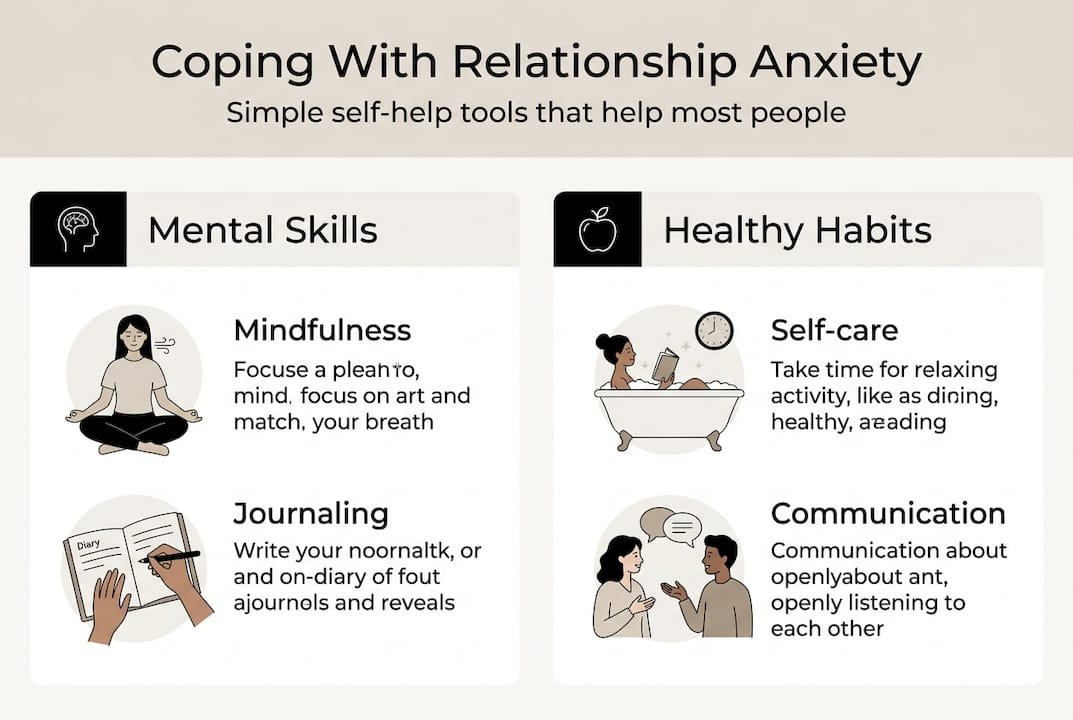
Mindfulness exercises teach you to observe anxiety without judgment. When anxious thoughts arise, notice them without trying to push them away or believe them completely. You might say to yourself, "I'm noticing the thought that my partner will leave me. This is anxiety talking, not reality." This creates distance between you and the anxiety, reducing its power.
Journaling helps you track triggers and patterns. Write down when anxiety spikes, what happened beforehand, and how you responded. Over time, you'll notice patterns. Maybe anxiety increases after your partner spends time with friends, or when they're less responsive than usual. Identifying triggers allows you to prepare coping strategies in advance.
Honest communication is essential. Share your feelings with your partner without blaming them. Instead of saying, "You make me anxious when you don't text back," try, "I notice I feel anxious when I don't hear from you. It's something I'm working on, and it helps when you check in." This invites collaboration rather than defensiveness.
Self-care and boundary setting build emotional resilience. Prioritize activities that soothe your nervous system, like exercise, creative hobbies, or time in nature. Set boundaries around behaviors that trigger anxiety. If scrolling through your partner's social media feeds your insecurity, commit to stopping that habit.
Pro Tip: Practice grounding techniques during anxious episodes to regain calm. Try the 5-4-3-2-1 method: name five things you see, four you can touch, three you hear, two you smell, and one you taste. This brings you back to the present moment and interrupts the anxiety spiral.
Additional strategies include:
Limiting reassurance seeking, which can reinforce anxiety over time
Challenging catastrophic thoughts with evidence from your relationship
Building a support network outside your relationship to reduce emotional dependence
Practicing self-compassion when anxiety feels overwhelming
These tools are most effective when combined with professional support, especially if anxiety is rooted in trauma.
How trauma-informed therapy supports healing relationship anxiety
Trauma-informed therapy addresses the root causes of relationship anxiety rather than just managing symptoms. This approach recognizes that anxiety often stems from past wounds and creates a safe, empowering environment for healing. Therapists trained in trauma-informed care understand how trauma affects the brain and nervous system, and they tailor treatment to help you process these experiences without retraumatization.
EMDR therapy effectively addresses trauma that underpins many cases of relationship anxiety. EMDR stands for Eye Movement Desensitization and Reprocessing. It helps you reprocess traumatic memories so they no longer trigger intense emotional responses. During EMDR sessions, you focus on a traumatic memory while following the therapist's hand movements or other bilateral stimulation. This process helps your brain integrate the memory in a healthier way, reducing its emotional charge.
Couples therapy is another powerful tool for healing relationship anxiety. When both partners participate, they can rebuild trust, improve communication, and develop healthier patterns together. A skilled couples therapist helps you understand each other's triggers, express needs clearly, and create a secure attachment within the relationship. This is especially helpful when relationship anxiety affects both partners or when one partner's anxiety creates tension in the relationship. Couples counseling offers a structured space to address these dynamics.
The therapy process typically unfolds in these steps:
Initial assessment where you discuss your history, symptoms, and goals
Building safety and trust with your therapist through consistent sessions
Identifying triggers and patterns that fuel relationship anxiety
Processing traumatic memories or attachment wounds using EMDR or other modalities
Developing coping strategies and healthier relational skills
Integrating new insights and behaviors into your daily life
Maintenance sessions to support ongoing growth and prevent relapse
Pro Tip: Choose therapists trained specifically in trauma and relationship anxiety for best outcomes. Look for credentials like EMDR certification, attachment-based therapy training, or specialization in complex trauma. A good fit between you and your therapist is just as important as their qualifications, so don't hesitate to try a few consultations before committing.
Trauma-informed therapy doesn't just reduce anxiety. It helps you understand yourself more deeply, develop compassion for your struggles, and build the skills to create secure, fulfilling relationships. Healing is possible, and professional support can accelerate that process significantly.
Healing relationship anxiety with expert trauma-informed therapy
If relationship anxiety is affecting your well-being or your partnership, professional support can make a profound difference. Alvarado Therapy offers specialized online EMDR trauma therapy throughout California, helping you address the root causes of anxiety in a safe, trauma-informed environment. Whether you're struggling alone or as a couple, our licensed therapists provide compassionate, evidence-based care tailored to your unique needs.
We also offer online couples therapy to help you and your partner rebuild trust, improve communication, and create a more secure attachment. Our bilingual, culturally responsive practice serves clients in English and Spanish, ensuring you receive care that honors your identity and experiences. Ready to take the next step? Schedule a consultation today and start your journey toward healing and healthier relationships.
FAQ
What causes relationship anxiety?
Relationship anxiety often stems from past trauma, insecure attachment formed in childhood, and fear of abandonment or rejection. If you experienced inconsistent caregiving, emotional neglect, or betrayal in previous relationships, your nervous system may remain hypervigilant even in safe partnerships. Current relationship stresses, like conflict or distance, can worsen these underlying fears and trigger intense anxiety.
How can I tell if I have relationship anxiety or general anxiety?
Relationship anxiety focuses specifically on fears about romantic relationships, such as worrying your partner will leave or doubting their love. General anxiety is broader and affects multiple areas of life, including work, health, and social situations. If your anxiety intensifies primarily in the context of your romantic relationship but you function well in other areas, it's likely relationship-specific rather than generalized.
When should I seek therapy for relationship anxiety?
Seek therapy for anxiety relief if anxiety causes significant distress, interferes with your daily functioning, or harms your relationship. Signs include constant overthinking, inability to trust your partner despite evidence of their commitment, physical symptoms like panic attacks, or conflict driven by your anxiety. Professional support provides tools and healing beyond self-help strategies, especially when trauma is involved.
What types of therapy help relationship anxiety?
EMDR therapy addresses underlying trauma by helping you reprocess painful memories so they no longer trigger intense anxiety. Couples therapy improves communication, rebuilds trust, and helps both partners understand and respond to anxiety in healthier ways. Individual trauma-informed therapy supports personal growth, teaches coping skills, and creates a safe space to explore attachment wounds and relational patterns.
