
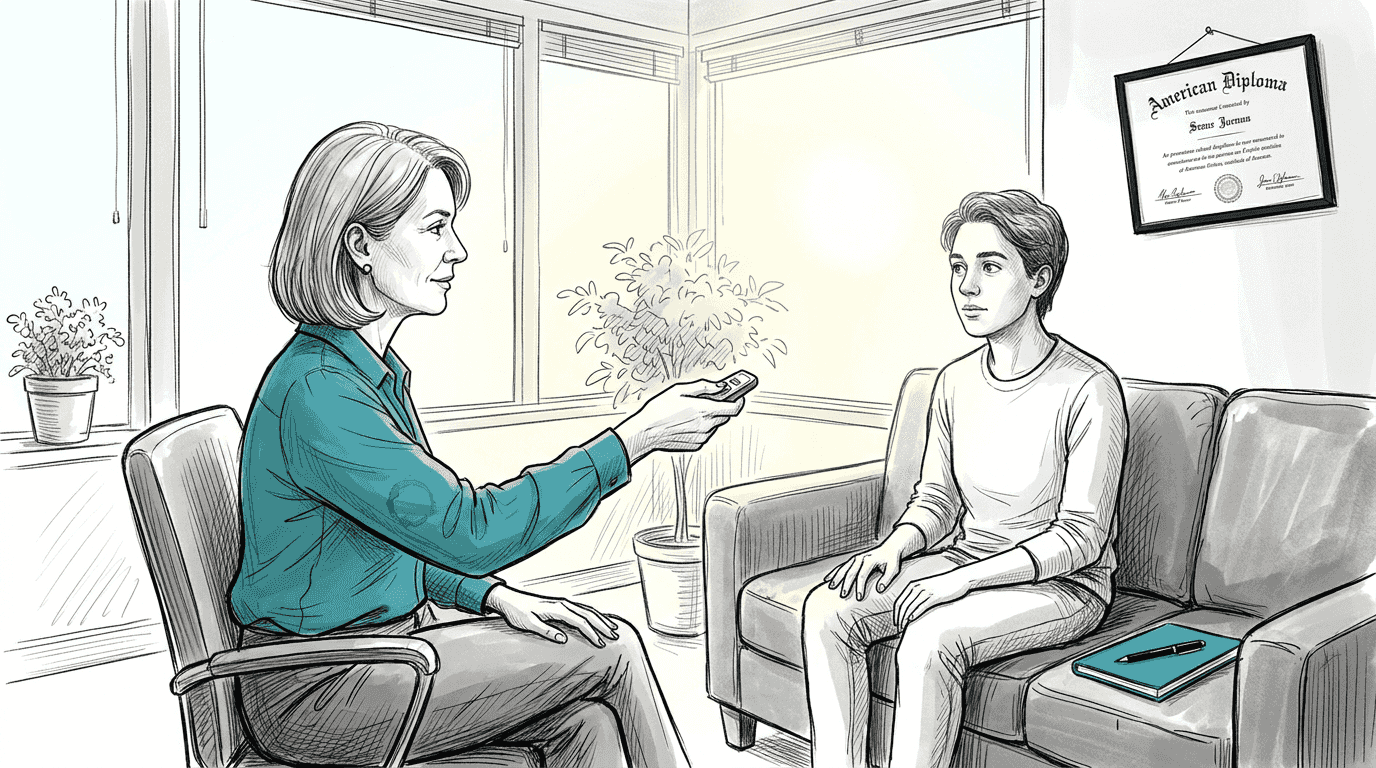
Most people assume anxiety treatment means months of talk therapy or daily medication, yet research shows EMDR therapy can reduce anxiety symptoms faster than traditional approaches. Eye Movement Desensitization and Reprocessing combines memory recall with bilateral stimulation to help your brain reprocess distressing experiences. Major mental health organizations including the American Psychological Association and World Health Organization recognize EMDR as an evidence-based treatment for PTSD and anxiety disorders. Unlike conventional therapies that focus solely on changing thoughts, EMDR targets how traumatic memories are stored in your brain, offering a unique path to emotional relief and lasting recovery.
Table of Contents
Key takeaways
| Point | Details |
|---|---|
| EMDR combines memory recall with bilateral stimulation | This dual process helps your brain reprocess traumatic memories and reduce emotional intensity |
| Recognized by top health authorities | The APA, WHO, and VA endorse EMDR for treating PTSD and anxiety disorders |
| Often works faster than CBT | Clinical studies show EMDR reduces post-traumatic symptoms more quickly than cognitive behavioral therapy |
| Targets memory storage patterns | EMDR helps transform distressing memories from present threats into integrated past experiences |
| Safe with minimal side effects | Most adverse effects are mild and temporary, with proper therapist training and support |
How EMDR therapy works to reduce anxiety
EMDR therapy stands apart from traditional anxiety treatments because it directly addresses how your brain stores and processes traumatic memories. EMDR combines recall of distressing memories with bilateral rhythmic stimulation, such as eye movements, tactile input, or auditory tones. This bilateral stimulation, often called BLS, creates a rhythmic pattern that engages both hemispheres of your brain while you focus on anxiety-triggering memories.
The foundation of EMDR rests on the Adaptive Information Processing model, which explains how your brain naturally processes and stores experiences. When you experience trauma or overwhelming stress, your brain's normal processing system can become overwhelmed. These memories get stuck in their raw, unprocessed form, complete with the original emotions, physical sensations, and negative beliefs. Every time something reminds you of that experience, your brain reacts as if the threat is happening right now, triggering anxiety symptoms.
Bilateral stimulation during EMDR sessions creates a unique neurological effect. Bilateral stimulation decreases amygdala activity and increases connectivity in emotional regulation brain regions. Your amygdala acts as your brain's alarm system, and when it stays hyperactive, you experience persistent anxiety. The rhythmic stimulation helps calm this alarm while strengthening connections to areas that help you process emotions more effectively.
During EMDR sessions, you recall distressing memories while simultaneously engaging in bilateral stimulation. This dual attention allows your brain to reprocess the memory without becoming overwhelmed. Think of it like defragmenting a computer hard drive. The memory doesn't disappear, but it gets reorganized and filed properly. The emotional charge diminishes, and you can think about the experience without triggering the same intense anxiety response.
The reconsolidation process transforms how memories are stored in your brain. Each time you recall a memory, it becomes temporarily unstable and open to modification before being stored again. EMDR takes advantage of this reconsolidation window. By pairing memory recall with bilateral stimulation, you can integrate new, more adaptive information into the memory. What once felt like an immediate threat becomes recognized as a past event that no longer poses danger.
Pro Tip: Understanding what is EMDR therapy and who it helps before starting treatment can reduce initial anxiety about the process and help you feel more prepared for your first session.
This reprocessing creates lasting change because you're not just managing anxiety symptoms or changing thought patterns. You're addressing the root cause by changing how traumatic memories are stored and accessed in your brain. When memories shift from feeling like present threats to being recognized as past experiences, your anxiety naturally decreases.
Scientific evidence supporting EMDR for anxiety treatment
The research backing EMDR for anxiety treatment has grown substantially over the past decade. Major health organizations including the American Psychological Association, World Health Organization, Department of Veterans Affairs, and Department of Defense all recognize EMDR as an effective treatment for PTSD and trauma-related anxiety. This widespread endorsement reflects the robust clinical evidence supporting its use.
Meta-analyses confirm EMDR's effectiveness for PTSD and reduce trauma symptoms faster than CBT. A 2018 meta-analysis examining 11 randomized controlled trials found EMDR produced superior outcomes compared to cognitive behavioral therapy in reducing post-traumatic symptoms. This doesn't mean CBT is ineffective, but rather that EMDR often achieves results more quickly, which matters when you're struggling with daily anxiety.
The evidence extends beyond PTSD to other anxiety conditions. Meta-analysis showed EMDR has a large treatment effect on social anxiety, sustained at six-month follow-up. Social anxiety can be particularly isolating, and knowing that improvements last beyond the therapy period offers hope for lasting change. The sustained benefits suggest EMDR creates fundamental shifts in how you process social situations rather than just temporary symptom relief.
Quantitative research demonstrates impressive effect sizes. EMDR therapy significantly reduces anxiety symptoms with moderate to large effect sizes across multiple studies. Effect size measures how much change occurs, and moderate to large effects indicate clinically meaningful improvements that you would notice in daily life. These aren't subtle shifts but substantial reductions in anxiety symptoms.
| Study Type | Condition Treated | Key Finding | Follow-up Duration |
|---|---|---|---|
| Meta-analysis (11 RCTs) | PTSD | Faster symptom reduction vs CBT | Varies by study |
| Meta-analysis | Social anxiety disorder | Large treatment effect sustained | 6 months |
| Multiple RCTs | General anxiety | Moderate to large effect sizes | 3-12 months |
| Clinical trials | Panic disorder | Significant symptom reduction | 3-6 months |
Research also reveals EMDR's effectiveness extends to conditions often co-occurring with anxiety. Studies show positive outcomes for depression, obsessive-compulsive disorder, and addiction issues. This matters because anxiety rarely exists in isolation. If you're dealing with multiple mental health challenges, EMDR may address several concerns simultaneously by targeting underlying traumatic experiences.
The safety profile adds another layer of confidence. Clinical research indicates adverse effects are mostly mild and temporary. Some people experience emotional intensity during sessions or temporary increases in distressing thoughts between sessions, but these typically resolve quickly. Serious adverse events are rare when EMDR is delivered by properly trained therapists.
Pro Tip: Reading about why choose EMDR for anxiety complete guide can help you understand whether this approach aligns with your specific anxiety symptoms and treatment goals.
The consistency of positive findings across different research teams, countries, and populations strengthens confidence in EMDR's effectiveness. This isn't a treatment that works only in specific settings or with particular populations. The evidence demonstrates broad applicability for various anxiety presentations.
Comparing EMDR with other anxiety therapies
Understanding how EMDR compares to other anxiety treatments helps you make informed decisions about your care. Cognitive behavioral therapy remains the most widely researched and practiced anxiety treatment, making it a natural comparison point. Both approaches have strong evidence bases, but they work through different mechanisms and timelines.
Meta-analysis of 11 studies showed EMDR is better than CBT in reducing post-traumatic symptoms. This advantage appears most pronounced in the early stages of treatment. EMDR often achieves symptom reduction more quickly, which can be crucial when anxiety significantly impairs your daily functioning. Faster relief means less time suffering and quicker return to normal activities.
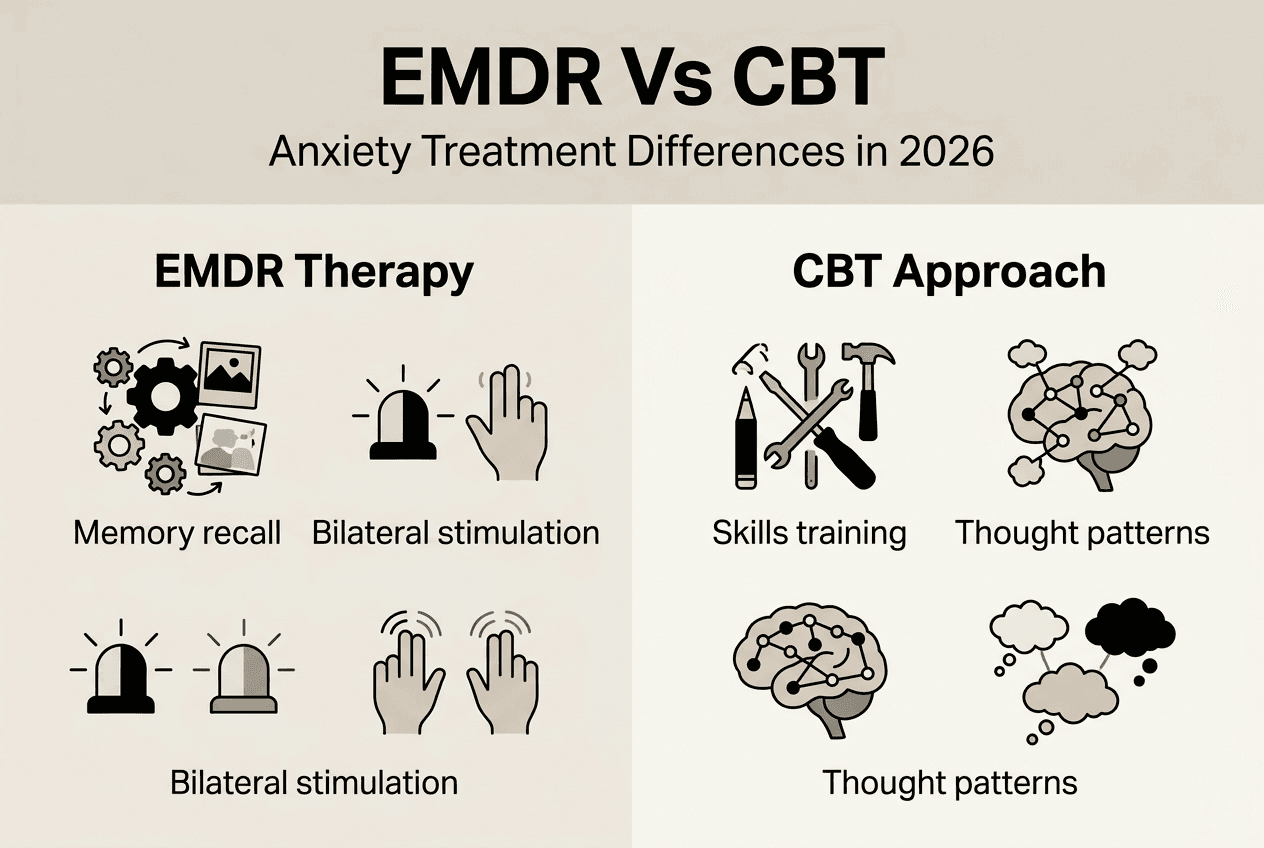
However, the comparison becomes more nuanced over time. At three-month follow-up, no significant difference was found between EMDR and CBT. Both therapies produce lasting benefits, suggesting the initial speed advantage of EMDR levels out as CBT clients continue improving. This finding reassures that either choice can lead to good long-term outcomes.
Session efficiency differs between the two approaches. EMDR typically requires fewer sessions to achieve comparable results, with many clients experiencing significant improvement within 6 to 12 sessions. CBT often involves 12 to 20 sessions or more, particularly for complex anxiety presentations. If time or financial constraints matter, EMDR's efficiency becomes relevant.
The mechanisms underlying each therapy differ fundamentally:
EMDR targets memory storage and processing through bilateral stimulation
CBT focuses on identifying and restructuring unhelpful thought patterns
EMDR requires less verbal processing and homework between sessions
CBT involves regular practice of new thinking skills and behavioral experiments
EMDR can feel less cognitively demanding for some clients
| Aspect | EMDR | CBT |
|---|---|---|
| Primary mechanism | Memory reprocessing via bilateral stimulation | Cognitive restructuring and behavioral change |
| Typical session count | 6-12 sessions | 12-20+ sessions |
| Between-session work | Minimal homework | Regular practice assignments |
| Verbal processing | Less talking required | Extensive discussion of thoughts |
| Speed of initial relief | Often faster | Gradual, cumulative |
Your personal preferences matter when choosing between therapies. Some people prefer EMDR because it requires less talking about traumatic details. You focus on the memory while engaging in bilateral stimulation, but you don't need to describe everything that happened. This can feel safer if verbalizing trauma feels overwhelming.
Others appreciate CBT's structured, skills-based approach. Learning specific techniques for managing anxious thoughts provides a sense of control. The homework assignments, while requiring effort, help you actively practice new skills between sessions.
Emerging evidence specifically addresses social anxiety. Research shows EMDR produces substantial improvements in social anxiety symptoms, with effects maintained over time. This challenges earlier assumptions that exposure-based CBT was the only effective approach for social fears.
Pro Tip: Exploring why choose EMDR therapy the essential guide provides deeper insight into whether EMDR's unique approach matches your learning style and therapy preferences.
Neither therapy is universally superior. The best choice depends on your specific anxiety presentation, trauma history, personal preferences, and practical considerations like session availability and cost. Some therapists integrate both approaches, using EMDR to process traumatic memories while incorporating CBT skills for managing current anxiety.
What to expect during EMDR therapy sessions and safety considerations
Knowing what happens during EMDR sessions reduces uncertainty and helps you prepare mentally. A typical EMDR session follows a structured eight-phase protocol, though you won't necessarily experience all phases in every session. Your therapist begins with history taking and treatment planning, identifying target memories and current triggers contributing to your anxiety.
The preparation phase builds safety and coping skills before memory processing begins. Your therapist teaches you techniques for managing emotional distress, ensuring you can handle whatever emerges during reprocessing. This foundation is crucial because EMDR can temporarily intensify emotions as you work through difficult memories.
During the actual reprocessing phases, you recall a target memory while simultaneously engaging in bilateral stimulation. Your therapist might guide your eyes to follow their fingers moving back and forth, use tactile stimulation like alternating hand taps, or provide auditory tones through headphones. You focus on the memory, noticing whatever thoughts, emotions, or sensations arise, while the bilateral stimulation continues.
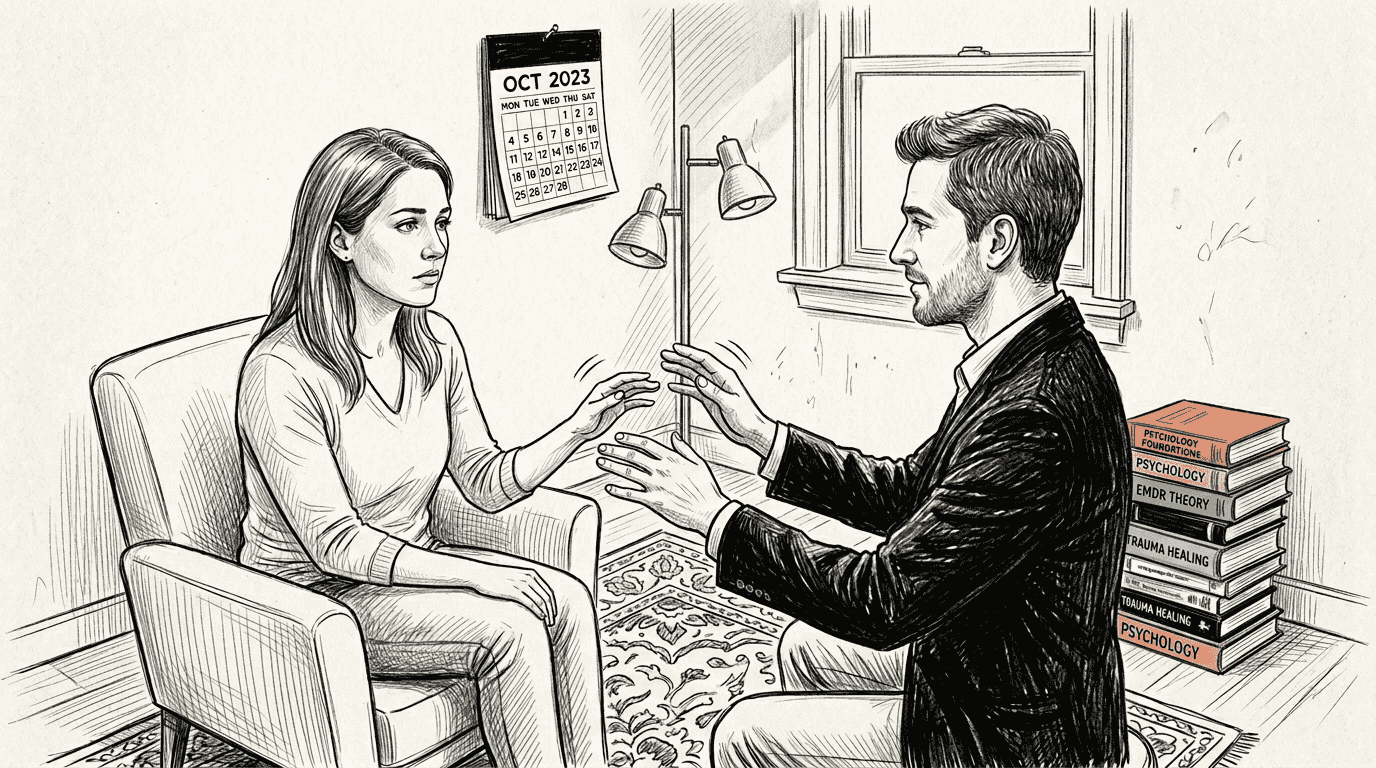
Between sets of bilateral stimulation, your therapist checks in briefly. You might report what you noticed, and they'll guide you to continue processing or shift focus as needed. The session continues until the memory feels less disturbing or until time runs out. Not every memory gets fully processed in one session, and that's normal.
EMDR therapy can be emotionally intense and requires adequate therapist training and client support. You might cry, feel angry, or experience physical sensations related to the trauma. This intensity is part of the healing process as your brain processes what was previously stuck. Your therapist maintains a supportive presence throughout, ensuring you stay within a manageable window of activation.
The safety profile of EMDR is generally favorable. Adverse effects are mostly mild and temporary; however, structured monitoring is limited. Some people experience:
Temporary increases in distressing thoughts or dreams between sessions
Emotional fatigue after processing sessions
Physical sensations like tension or lightheadedness during bilateral stimulation
Emergence of previously forgotten memories
Brief periods of feeling worse before feeling better
These effects typically resolve within hours or days. Serious adverse events are rare when EMDR is delivered by properly trained clinicians who screen clients appropriately and maintain safety protocols.
Not everyone is immediately ready for EMDR. Your therapist will assess whether you have sufficient emotional stability and coping skills. If you're currently in crisis, experiencing active substance abuse, or dealing with severe dissociation, your therapist might recommend stabilization work before beginning memory reprocessing.
Pro Tip: Learning how to prepare for EMDR therapy a step by step guide before your first session helps you understand what to expect and how to maximize the therapeutic benefits.
Building a support network before starting EMDR enhances safety. Having friends, family, or other supports you can reach out to between sessions provides additional resources if you feel emotionally activated. Your therapist should also be clear about how to contact them if you need support between appointments.
The structured nature of EMDR provides predictability even when emotions feel unpredictable. Each session follows a clear format, and your therapist maintains control of the pacing. You can pause or stop at any time if you feel overwhelmed. This sense of control within the process helps many people feel safer engaging with difficult memories.
Discover expert EMDR therapy in California for anxiety relief
If you're ready to address anxiety at its root through evidence-based EMDR therapy, professional support makes all the difference. Alvarado Therapy offers specialized individual counseling EMDR therapy throughout California, with licensed therapists trained in trauma-informed care. Whether you're dealing with PTSD, complex trauma, or persistent anxiety, our team provides the expertise and compassion needed for healing.

We understand that starting therapy can feel overwhelming. That's why we offer online EMDR trauma therapy in CA & NY, making it easier to access care from the comfort of your home. Our bilingual therapists serve clients in English and Spanish, ensuring culturally responsive treatment that honors your identity and experiences. If you're uncertain whether EMDR is right for you, schedule a consultation to discuss your specific needs and explore how our services can support your journey toward emotional freedom and lasting relief.
Frequently asked questions about EMDR and anxiety
How long does EMDR therapy for anxiety usually take?
Most people experience significant anxiety reduction within 6 to 12 EMDR sessions, though this varies based on trauma complexity and individual factors. Simple, single-incident traumas often resolve more quickly, while complex developmental trauma may require longer treatment. Your therapist will assess your specific situation and provide a more personalized timeline.
Is EMDR safe for everyone with anxiety or trauma?
EMDR is safe for most people when delivered by properly trained therapists, but it's not appropriate during active crisis, severe dissociation, or uncontrolled substance use. Your therapist will conduct a thorough assessment to ensure you have adequate emotional stability and coping skills before beginning memory reprocessing. Some people need preparatory stabilization work first.
Can EMDR be combined with other treatments?
Yes, EMDR integrates well with other therapeutic approaches and can be used alongside medication management. Many therapists combine EMDR with CBT skills, mindfulness practices, or somatic techniques to address different aspects of anxiety. Always inform all your healthcare providers about treatments you're receiving to ensure coordinated care.
What should I do if I feel emotional during EMDR sessions?
Emotional intensity during sessions is normal and often indicates productive processing. Your therapist will teach you grounding techniques and ensure you stay within a manageable activation window. If emotions feel overwhelming, you can pause the bilateral stimulation, use coping skills, or end the processing for that session. Communication with your therapist about your experience is essential.
How soon will I notice improvements after starting EMDR?
Some people notice reduced anxiety after just a few sessions, particularly if targeting specific traumatic incidents. Others experience gradual improvement as multiple memories get reprocessed. You might notice changes in how intensely you react to triggers, improved sleep, or decreased physical anxiety symptoms. Lasting change typically builds over the full course of treatment rather than appearing suddenly.
