
What is PTSD? Understanding trauma and healing options

Many people believe PTSD only affects combat veterans or that flashbacks are the primary symptom. These misconceptions prevent individuals from recognizing trauma responses in themselves and others. PTSD develops from various traumatic experiences and manifests through intrusion symptoms, avoidance behaviors, negative mood changes, and heightened reactivity. Understanding what PTSD truly is, how it differs from complex PTSD, and which evidence-based therapies work best empowers you to seek appropriate support. This guide clarifies PTSD's clinical definition, assessment methods, treatment options, and resources available throughout California.
Table of Contents
How is PTSD assessed? Screening tools and clinical evaluation
Explore compassionate PTSD therapy options with Alvarado Therapy
What is PTSD? Defining symptoms and criteria
Post-Traumatic Stress Disorder is a psychiatric condition that develops following exposure to traumatic events. The DSM-5 defines PTSD as exposure to actual or threatened death, serious injury, or sexual violence through direct experience, witnessing, learning about events involving close family or friends, or repeated exposure to aversive details. This clinical definition clarifies that trauma exposure must involve specific threat types, not general stressors.
PTSD manifests through four distinct symptom clusters that persist for more than one month. Intrusion symptoms include unwanted memories, nightmares, flashbacks, and intense distress when reminded of trauma. Avoidance involves actively steering clear of trauma-related thoughts, feelings, people, places, or situations. Negative alterations in cognitions and mood encompass inability to recall key trauma aspects, persistent negative beliefs about oneself or the world, distorted blame, diminished interest in activities, feelings of detachment, and inability to experience positive emotions. Marked alterations in arousal and reactivity manifest as irritability, reckless behavior, hypervigilance, exaggerated startle response, concentration problems, and sleep disturbances.
These symptoms must cause significant distress or impairment in social, occupational, or other important functioning areas. The disturbance cannot be attributable to substance effects or another medical condition. Clinical assessment by trained professionals remains essential because self-reports alone cannot establish diagnosis, even with validated screening tools.
Pro Tip: Normal stress responses typically diminish within weeks after a difficult event. If intrusive thoughts, avoidance patterns, mood changes, or heightened reactivity persist beyond one month and interfere with daily functioning, professional evaluation becomes important for determining whether PTSD treatment would help.
Key diagnostic considerations include:
Symptom duration exceeding one month differentiates PTSD from acute stress disorder
Delayed expression can occur when full criteria are not met until at least six months post-trauma
Dissociative symptoms like depersonalization or derealization may accompany PTSD
Childhood trauma often presents differently than adult-onset PTSD
How is PTSD assessed? Screening tools and clinical evaluation
The PCL-5 is a 20-item self-report measure assessing DSM-5 PTSD symptoms. Each question corresponds to a specific symptom and uses a 0 to 4 rating scale reflecting symptom severity over the past month. Total scores range from 0 to 80, with higher scores indicating greater symptom severity. Researchers and clinicians commonly use cutoff scores between 31 and 33 to identify probable PTSD, though optimal thresholds vary by population and setting.
The PCL-5 serves multiple assessment purposes beyond initial screening. Clinicians use it to monitor symptom changes throughout treatment, with a 10-point score reduction considered clinically meaningful improvement. The measure also helps identify specific symptom clusters requiring targeted intervention. You can complete the PCL-5 in approximately five to ten minutes, making it practical for routine clinical use and research applications.
PCL-5 cutoffs are context-dependent and not diagnostic alone. Pairing self-report screening with structured clinical interviews improves diagnostic accuracy. The Clinician-Administered PTSD Scale for DSM-5 (CAPS-5) represents the gold standard diagnostic interview. This 30-item structured assessment evaluates PTSD symptom frequency and intensity, provides diagnostic clarity, and assesses symptom onset and duration. CAPS-5 administration requires trained clinicians and takes 45 to 60 minutes to complete.
| Assessment Tool | Purpose | Format | Time Required |
|---|---|---|---|
| PCL-5 | Screening and monitoring | 20-item self-report, 0–4 scale | 5–10 minutes |
| CAPS-5 | Diagnostic confirmation | Structured clinical interview | 45–60 minutes |
| Cutoff Scores | Provisional diagnosis | PCL-5: 31–33 typical threshold | N/A |
| Meaningful Change | Treatment response | 10-point PCL-5 reduction | Ongoing |
Pro Tip: Self-screening with the PCL-5 provides valuable initial insight into symptom patterns, but elevated scores warrant professional evaluation for accurate diagnosis and treatment planning. Online screening tools offer convenience but cannot replace comprehensive clinical assessment.
Clinical evaluation considerations include:
Assessing trauma exposure details and timing
Evaluating functional impairment across life domains
Identifying comorbid conditions like depression or substance use
Determining appropriate treatment approaches based on symptom profile
Ruling out alternative explanations for symptoms
Understanding complex PTSD and how it differs from PTSD
Complex PTSD emerged as a diagnostic concept to describe trauma responses following prolonged or repeated traumatic experiences. C-PTSD includes disturbances in self-organization like affect dysregulation, negative self-concept, and relational difficulties beyond standard PTSD symptoms. These additional features typically develop from chronic trauma during developmental periods, such as childhood abuse, domestic violence, human trafficking, or prolonged captivity.

The International Classification of Diseases (ICD-11) recognizes complex PTSD as a distinct diagnosis, though the DSM-5 does not include it as a separate category. This diagnostic debate continues within the mental health field. Some researchers argue C-PTSD represents a more severe PTSD presentation, while others contend it constitutes a unique trauma-related condition requiring specialized treatment approaches. The overlap between C-PTSD and borderline personality disorder further complicates diagnostic clarity, as both involve emotion regulation difficulties and interpersonal challenges.
Recognizing C-PTSD has important treatment implications. Phase-oriented therapy approaches often work better for complex trauma presentations, beginning with safety and stabilization before processing traumatic memories. This sequenced approach can improve treatment retention and address the multiple symptom domains characteristic of C-PTSD. Standard PTSD protocols may prove insufficient when significant self-organization disturbances are present.
| Assessment Tool | Purpose | Format | Time Required |
|---|---|---|---|
| PCL-5 | Screening and monitoring | 20-item self-report, 0–4 scale | 5–10 minutes |
| CAPS-5 | Diagnostic confirmation | Structured clinical interview | 45–60 minutes |
| Cutoff Scores | Provisional diagnosis | PCL-5: 31–33 typical threshold | N/A |
| Meaningful Change | Treatment response | 10-point PCL-5 reduction | Ongoing |
Key distinctions include:
C-PTSD typically involves interpersonal trauma rather than accidents or natural disasters
Emotional regulation challenges extend beyond trauma-related triggers
Identity disturbances and chronic feelings of worthlessness characterize C-PTSD
Relationship patterns show more pervasive impairment in complex trauma presentations
Effective therapies for PTSD and trauma recovery
Evidence-based therapies such as Prolonged Exposure, Cognitive Processing Therapy, EMDR, and Trauma-Focused CBT are first-line treatments demonstrating superior outcomes compared to waitlist or control conditions. These trauma-focused approaches share common elements including psychoeducation about trauma responses, exposure to trauma memories in safe therapeutic contexts, and cognitive restructuring of trauma-related beliefs.
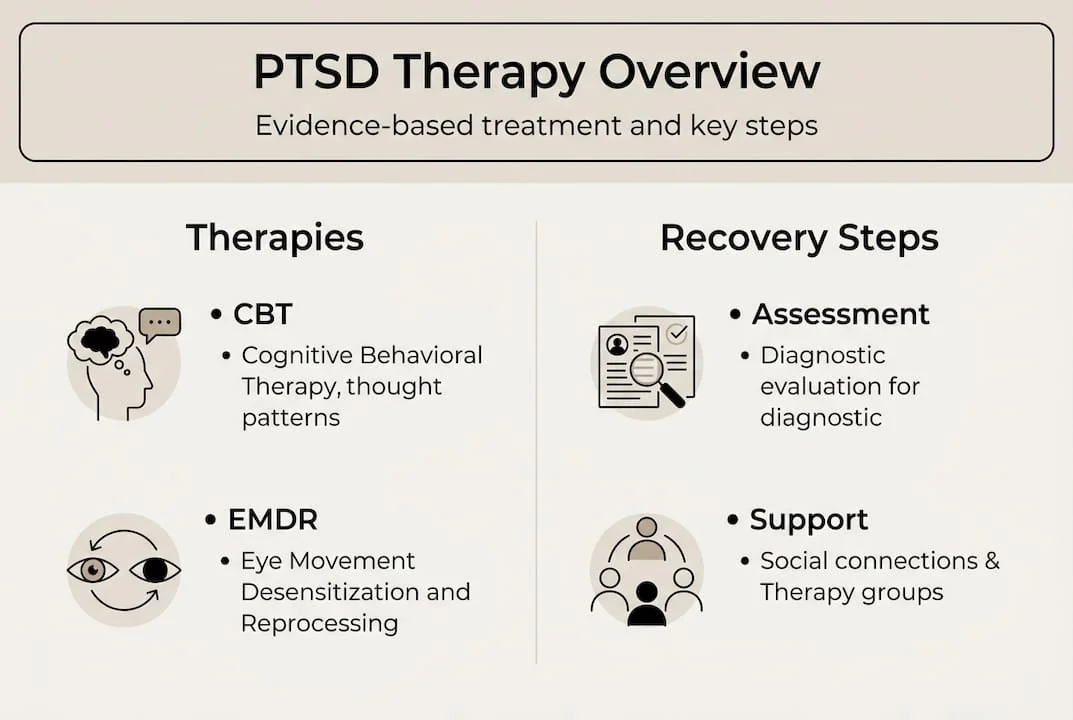
Prolonged Exposure (PE) therapy involves repeatedly recounting traumatic experiences in session and gradually approaching avoided situations in daily life. This systematic exposure helps reduce fear responses and demonstrates that trauma memories, while distressing, are not dangerous. Cognitive Processing Therapy (CPT) focuses on identifying and challenging problematic beliefs about trauma, safety, trust, control, and self-worth. Eye Movement Desensitization and Reprocessing (EMDR) uses bilateral stimulation while processing traumatic memories, facilitating adaptive information processing without requiring detailed verbal recounting. Trauma-Focused Cognitive Behavioral Therapy (TF-CBT) combines cognitive, behavioral, and family therapy techniques, particularly effective for childhood trauma.
Meta-analyses show TF-CBT and EMDR significantly reduce symptoms with long-term benefits maintained at follow-up assessments. However, therapy retention presents challenges, with some individuals discontinuing treatment before completion. Factors affecting retention include symptom severity, comorbid conditions, therapeutic alliance quality, and treatment approach fit with individual preferences. Sequenced or phase-based approaches may improve retention for complex presentations by building coping skills before intensive trauma processing.
Trauma-focused psychotherapies produce clinically meaningful symptom reduction in 50 to 60 percent of participants, with benefits persisting months to years after treatment completion. Early intervention improves outcomes and prevents chronic symptom patterns.
Pro Tip: Selecting the right therapy approach depends on your specific symptoms, trauma history, and personal preferences. Some people prefer exposure-based methods, while others respond better to cognitive approaches or EMDR. Discussing options with a trauma-specialized therapist helps identify the best fit for your healing journey.
Therapy considerations include:
Treatment typically involves 8 to 15 sessions for standard PTSD protocols
EMDR therapy may require fewer sessions than talk-based approaches
Complex trauma often needs longer treatment duration
Addressing comorbid depression or substance use may occur alongside trauma therapy
Intensive treatment formats compress therapy into days or weeks rather than months
Taking action: support and therapy options in California
Finding qualified trauma-focused therapy in California starts with identifying licensed therapists specializing in evidence-based PTSD treatments. Many therapists now offer telehealth services, expanding access for individuals throughout the state. Online EMDR therapy provides effective treatment without geographic limitations, using secure video platforms that maintain therapeutic effectiveness while offering scheduling flexibility.
Scheduling an initial consultation allows you to discuss your symptoms, trauma history, and treatment goals with a therapist. This conversation helps determine whether the therapist's approach matches your needs and establishes rapport before committing to ongoing treatment. Come prepared to share what brings you to therapy, previous treatment experiences if any, and what you hope to achieve through the therapeutic process.
The therapy process typically begins with assessment and psychoeducation about trauma responses. Your therapist will explain how PTSD symptoms develop and what to expect during treatment. Early sessions focus on building coping skills for managing distress, establishing safety, and preparing for trauma processing work. As treatment progresses, you'll engage with traumatic memories through your chosen therapeutic approach, whether exposure, cognitive restructuring, EMDR, or another evidence-based method.
Specialized PTSD and complex trauma services address the full range of trauma presentations, from single-incident PTSD to complex developmental trauma. Therapists trained in multiple modalities can adapt treatment to your specific needs, adjusting approaches based on your response and preferences. Many practices offer flexible scheduling, sliding scale fees, and insurance billing to improve treatment accessibility.
Steps to begin your healing journey:
Research therapists specializing in trauma and PTSD treatment
Verify licensure and training in evidence-based approaches
Schedule consultations with two or three therapists to find the best fit
Prepare questions about treatment approach, duration, and what to expect
Discuss practical considerations like scheduling, fees, and insurance coverage
Commit to the process while remembering healing takes time and courage
Seeking support represents a crucial step toward recovery. PTSD symptoms rarely resolve without intervention, and effective treatments exist that can significantly reduce suffering and restore functioning. California offers numerous qualified providers and treatment options, making professional help accessible to those ready to pursue healing.
Explore compassionate PTSD therapy options with Alvarado Therapy
Alvarado Therapy provides specialized trauma treatment throughout California, offering evidence-based approaches including EMDR therapy, trauma-focused counseling, and comprehensive PTSD support. Our licensed therapists understand the complexities of trauma recovery and create safe, affirming spaces for healing. We serve clients online across California and in person in Pasadena and Ventura, providing flexible access to expert care.
Whether you're addressing recent trauma or long-standing complex PTSD, our team offers tailored treatment approaches that honor your unique experiences and goals. We provide bilingual services in English and Spanish, ensuring culturally responsive care. Schedule a consultation to discuss how online EMDR trauma therapy or other specialized PTSD and complex trauma services can support your healing journey.
Pro Tip: Early intervention significantly improves PTSD treatment outcomes. If you've been experiencing trauma symptoms for several weeks or months, reaching out for professional support now can prevent symptom chronicity and accelerate your path to recovery.
What is PTSD? FAQs
How long do PTSD symptoms typically last?
PTSD symptoms must persist for at least one month to meet diagnostic criteria, but without treatment, they can continue for years or decades. Evidence-based therapy typically reduces symptoms within 8 to 15 sessions, though complex presentations may require longer treatment. Early intervention prevents chronic symptom patterns and improves long-term outcomes.
Can PTSD develop from non-combat trauma?
Yes, PTSD develops from any exposure to actual or threatened death, serious injury, or sexual violence, including car accidents, natural disasters, physical assault, medical trauma, or witnessing violence. Combat represents just one of many potential trauma types. Approximately 6 to 8 percent of the general population experiences PTSD at some point, with higher rates among those exposed to interpersonal violence.
What distinguishes complex PTSD from regular PTSD?
Complex PTSD includes all standard PTSD symptoms plus disturbances in self-organization: affect dysregulation, negative self-concept, and interpersonal difficulties. C-PTSD typically develops from prolonged or repeated trauma, especially during developmental periods. Treatment often requires phase-based approaches that establish safety and coping skills before intensive trauma processing.
How long does EMDR therapy for PTSD usually take?
EMDR therapy for single-incident PTSD often requires 6 to 12 sessions, potentially fewer than traditional talk therapy approaches. Complex trauma presentations typically need more sessions to address multiple traumatic memories and self-organization disturbances. EMDR Intensives compress treatment into full-day or multi-day sessions, offering accelerated healing for some individuals.
When should I consult a professional for PTSD symptoms?
Consult a mental health professional if trauma-related symptoms persist beyond one month, interfere with daily functioning, cause significant distress, or worsen over time. Early assessment and treatment prevent symptom chronicity and improve outcomes. Even if you're unsure whether your experiences constitute PTSD, professional evaluation provides clarity and appropriate support recommendations.
