
Understanding the role of therapy in grief healing

Grief often feels like something you must face alone, but that belief can delay healing and intensify suffering. Therapy offers proven pathways to process loss, manage trauma symptoms, and rebuild emotional stability. Trauma-informed approaches like EMDR and culturally sensitive care provide specialized support for adults navigating complex grief in California. This guide explores how therapy transforms grief healing, addresses trauma intertwined with loss, and honors diverse cultural perspectives. You'll discover practical methods to choose the right therapeutic approach for your unique journey toward recovery and resilience.
Table of Contents
Key takeaways
| Point | Details |
|---|---|
| Trauma informed care | Trauma informed therapy builds safety, trust, and pacing to help grief work without retraumatization. |
| EMDR for grief | EMDR uses bilateral stimulation to help reprocess traumatic memories tied to loss and reduce trauma symptoms. |
| Grounding techniques | When overwhelmed, use a five four three two one grounding exercise to regulate the nervous system during grief. |
| Cultural sensitivity | Therapies that honor cultural perspectives improve engagement and tailor healing paths for diverse grievers. |
How therapy supports grief healing through trauma-informed care
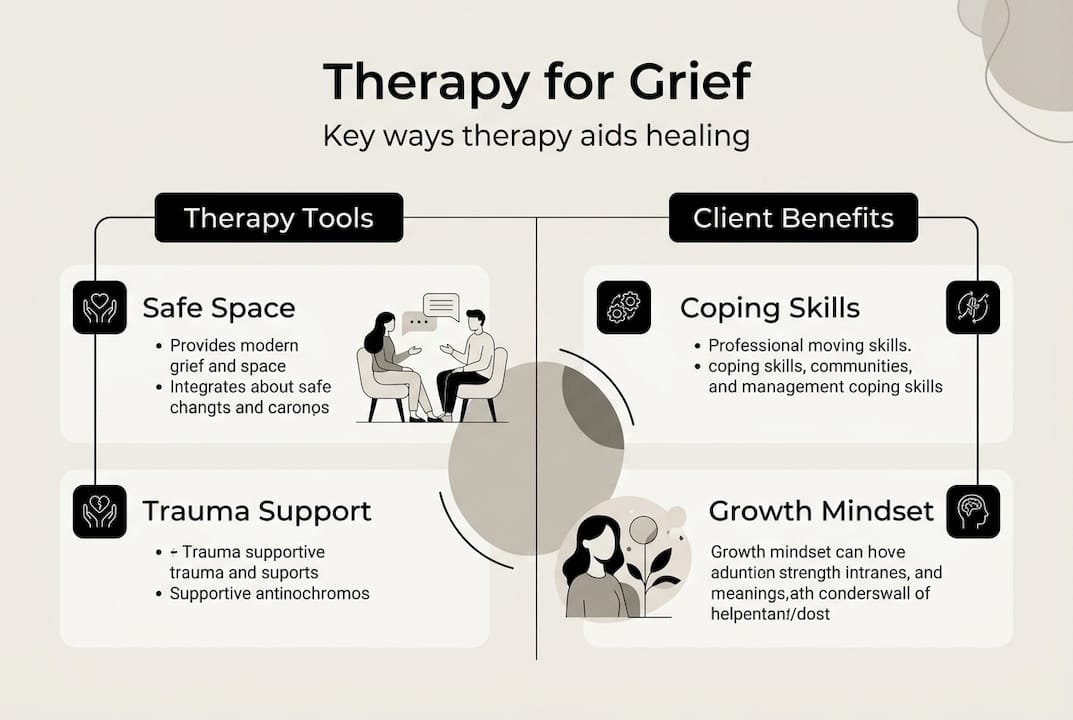
Grief doesn't always follow predictable stages. When loss involves sudden death, violence, or prolonged suffering, grief can trigger trauma responses that complicate healing. Your body may react with hypervigilance, emotional numbness, or intrusive memories that disrupt daily functioning. Trauma-informed therapy addresses emotional and physiological impacts by recognizing how grief affects your nervous system and creates lasting stress responses.
Trauma-informed care creates a foundation of safety before exploring painful memories. Therapists trained in this approach understand that grief can overwhelm your capacity to cope, especially when past traumas resurface alongside current loss. They prioritize building trust, explaining treatment processes clearly, and giving you control over the pace of healing. This framework reduces the risk of retraumatization while helping you develop skills to manage intense emotions.
Key elements of trauma-informed therapy in grief recovery include:
Recognition of how grief triggers affect your body and mind
Techniques to regulate emotional responses and reduce overwhelm
Validation of your unique grief experience without judgment
Strategies to build resilience and restore a sense of safety
Therapists using this model assess how grief intersects with your personal history. They identify patterns that may complicate healing, such as unresolved childhood losses or cultural messages about expressing emotions. By addressing these layers, trauma-informed care helps you process grief more completely rather than suppressing difficult feelings that resurface later.
Pro Tip: If you feel emotionally flooded during grief, try the 5-4-3-2-1 grounding technique. Name five things you see, four you can touch, three you hear, two you smell, and one you taste. This simple practice helps regulate your nervous system when grief feels overwhelming.
The trauma-informed model also recognizes that healing isn't linear. You may experience progress followed by setbacks, especially around anniversaries or triggering events. Therapists prepare you for this reality and provide tools to navigate difficult periods without losing hope. This approach transforms grief from an insurmountable burden into a process you can move through with professional support and self-compassion.
EMDR therapy: a powerful approach for grief and trauma
Eye Movement Desensitization and Reprocessing therapy offers a specific method for addressing traumatic grief. Unlike traditional talk therapy, EMDR uses bilateral stimulation through eye movements, taps, or sounds to help your brain reprocess distressing memories. When grief involves traumatic elements like witnessing a death, sudden loss, or complicated circumstances, these memories can remain stuck in your nervous system, triggering intense reactions long after the event.
EMDR reduces trauma symptoms by helping your brain integrate traumatic memories differently. During sessions, you'll focus on specific grief-related memories while following your therapist's hand movements or listening to alternating sounds. This bilateral stimulation appears to activate the same neural processes that occur during REM sleep, when your brain naturally processes emotional experiences. The result is often a significant reduction in the emotional charge attached to painful memories.
The EMDR process for grief follows these phases:
History taking and treatment planning to identify target memories
Preparation with grounding techniques and coping skills
Assessment of specific memories and associated negative beliefs
Desensitization through bilateral stimulation while processing memories
Installation of positive beliefs to replace negative self-perceptions
Body scan to address any remaining physical tension
Closure and reevaluation to ensure stability between sessions
Ongoing assessment to track progress and address new targets
EMDR proves particularly effective when grief includes guilt, regret, or traumatic imagery. You might replay the moment you received news of the loss, visualize distressing final interactions, or struggle with beliefs like "I should have done more." EMDR helps transform these memories from sources of ongoing pain into integrated experiences you can recall without overwhelming distress.
Pro Tip: EMDR doesn't erase memories or make you forget your loved one. Instead, it changes how your brain stores traumatic aspects of grief, allowing you to remember without reliving the trauma response each time.
"EMDR helped me process my father's sudden death without being consumed by the trauma of that day. I can now remember the good times without the flashbacks that used to paralyze me."
Many clients notice changes within a few sessions, though complex grief may require extended treatment. PTSD and complex trauma therapy through EMDR can address multiple losses or layered traumas that compound grief reactions. The approach works well alongside other therapeutic methods, providing targeted relief for specific traumatic memories while you develop broader coping strategies.
The importance of culturally sensitive grief therapy in California
California's remarkable diversity means grief practices and beliefs vary widely across communities. Your cultural background shapes how you express grief, who you turn to for support, and what healing looks like. Therapy that ignores these cultural factors can feel alienating or even harmful, creating barriers to the very healing you seek.
Culturally sensitive therapy improves client comfort by acknowledging that Western therapeutic models don't fit everyone's needs. Some cultures emphasize collective mourning and extended family involvement, while others value private grief processing. Certain traditions include specific rituals, time frames, or spiritual practices essential to healing. A culturally competent therapist understands these differences and adapts treatment accordingly.
Cultural sensitivity in grief counseling for healing loss addresses several key areas:
Recognition of cultural mourning practices and their therapeutic value
Understanding of family dynamics and collective versus individual healing
Respect for spiritual beliefs about death, afterlife, and connection to deceased loved ones
Awareness of immigration trauma and its intersection with grief
Sensitivity to language preferences and communication styles
For bilingual clients, expressing grief in your native language can unlock emotions that don't translate easily. Therapists who offer services in Spanish, for example, provide space for more authentic emotional expression. This linguistic sensitivity extends beyond translation to understanding cultural idioms, expressions of distress, and ways of describing emotional experiences that vary across languages.
Cultural Considerations in Grief Therapy
| Cultural consideration | Impact on grief therapy | Therapeutic adaptation |
|---|---|---|
| Collectivist values | Family involvement expected in healing | Include family sessions or honor family input in treatment |
| Spiritual/religious beliefs | Afterlife concepts shape grief processing | Integrate spiritual practices and beliefs into therapeutic framework |
| Immigration experience | Loss compounded by separation from homeland | Address dual grief of death and cultural displacement |
| Gender role expectations | Expression of grief may be restricted | Create safe space to explore emotions beyond cultural constraints |
Culturally responsive therapists also recognize how systemic oppression and discrimination affect grief. Communities facing racism, xenophobia, or marginalization may carry additional trauma that complicates loss. Your therapist should understand these intersections and validate how social factors influence your grief experience.
Therapy becomes more effective when your cultural identity is affirmed rather than overlooked. This doesn't mean your therapist must share your exact background, but they should demonstrate genuine curiosity, humility, and willingness to learn from your experience. They should also examine their own cultural assumptions and how these might affect treatment.
Choosing the right grief therapy approach for your healing journey
No single therapy method works for everyone experiencing grief. Your healing needs depend on factors like the nature of your loss, your personal history, cultural background, and current support system. Understanding available options helps you make informed decisions about which approach best serves your recovery.
Individual therapy provides personalized attention focused entirely on your grief experience. You'll work one-on-one with a therapist to process emotions, develop coping strategies, and address specific challenges. This format offers privacy and flexibility to explore sensitive topics at your own pace. Different grief therapy approaches within individual sessions include cognitive-behavioral methods that address thought patterns, psychodynamic approaches exploring underlying emotional conflicts, and somatic techniques addressing how grief manifests in your body.
Group therapy connects you with others navigating similar losses. Sharing experiences reduces isolation and provides perspective on your own grief journey. Groups may focus on specific types of loss, such as death of a spouse, child, or parent, allowing for targeted support. However, group settings require comfort with vulnerability in front of others and may not suit those needing intensive trauma processing.
Couples therapy addresses how grief affects your relationship. When partners grieve differently, misunderstandings and disconnection can occur. A therapist helps you support each other while honoring individual grief styles. This approach proves valuable when loss involves a shared experience like miscarriage or death of a child.
Comparing therapy modalities for grief:
| Therapy type | Best suited for | Key benefits | Considerations |
|---|---|---|---|
| EMDR | Traumatic grief with intrusive memories | Rapid processing of trauma, reduces flashbacks | Requires trained EMDR therapist, may feel intense |
| Cognitive-behavioral | Grief complicated by depression or anxiety | Addresses thought patterns, provides practical tools | Less focus on emotional processing |
| Psychodynamic | Long-term or complicated grief | Explores deep emotional patterns, addresses past losses | Longer treatment duration |
| Somatic therapy | Grief manifesting as physical symptoms | Releases trauma stored in body, improves regulation | Requires comfort with body-focused techniques |
When selecting a therapist, consider these practical steps:
Verify credentials and specialization in grief and trauma therapy
Ask about their experience with your specific type of loss
Discuss their approach to cultural sensitivity and identity-affirming care
Inquire about telehealth options if in-person sessions are challenging
Trust your instinct about whether you feel safe and understood
Telehealth has expanded access to specialized grief therapy approaches throughout California. Online sessions eliminate travel barriers and allow you to access therapists with specific expertise regardless of location. Many clients find the comfort of their own home conducive to emotional vulnerability.
Your insurance coverage may influence therapy choices. EMDR and specialized trauma therapy are increasingly covered, but verification beforehand prevents unexpected costs. Some therapists offer sliding scale fees or payment plans to improve accessibility.
Pro Tip: Schedule initial consultations with two or three therapists before committing. The therapeutic relationship significantly impacts outcomes, so finding someone you trust and feel comfortable with matters as much as their credentials.
Your therapy needs may evolve as grief changes. Starting with intensive trauma processing through EMDR might transition to less frequent maintenance sessions. Remaining flexible and communicating with your therapist ensures treatment adapts to your current needs rather than following a rigid protocol.
Explore therapy options tailored for grief healing in California
Navigating grief without professional support can prolong suffering and complicate your healing journey. Alvarado Therapy specializes in trauma-informed care designed specifically for adults processing loss in California. Their team understands how grief intersects with trauma, cultural identity, and individual circumstances to create unique healing challenges.

The practice offers online EMDR trauma therapy throughout California, making specialized treatment accessible regardless of your location. Their therapists provide culturally responsive care in English and Spanish, honoring diverse perspectives on grief and healing. Whether you're processing recent loss or addressing complicated grief from the past, individual counseling and EMDR therapy services offer personalized support tailored to your needs. Starting with a therapy consultation helps determine which approach best serves your healing journey.
What is the role of therapy in grief healing?
How does therapy help with grief processing?
Therapy provides structured support to navigate intense emotions, identify unhealthy coping patterns, and develop skills for managing grief reactions. A trained therapist helps you process loss without becoming overwhelmed, offering techniques to regulate emotions and maintain daily functioning during difficult periods.
Can EMDR therapy help with grief and loss?
EMDR specifically targets traumatic memories associated with loss, reducing their emotional intensity through bilateral stimulation techniques. This approach proves particularly effective for sudden deaths, complicated circumstances, or when grief includes guilt, regret, or intrusive imagery that disrupts healing.
Why is culturally sensitive therapy important for grief?
Cultural beliefs shape how you experience and express grief, making culturally responsive care essential for effective treatment. Therapy that honors your cultural practices, spiritual beliefs, and family dynamics creates safety and trust, improving outcomes by aligning treatment with your values rather than imposing Western models.
What types of grief therapy are available in California?
California therapists offer individual counseling, group therapy, couples therapy, EMDR, cognitive-behavioral approaches, and somatic techniques for grief. Many providers also offer telehealth services, expanding access to specialized care throughout the state regardless of your location.
How do I know if I need professional grief therapy?
Consider therapy if grief interferes with daily functioning, lasts longer than expected, includes trauma symptoms like flashbacks or hypervigilance, or feels overwhelming despite time passing. Professional support helps when grief triggers depression, anxiety, or unhealthy coping mechanisms that complicate healing.
