
Trauma-sensitive therapy: Your guide to safe healing

Many people believe trauma therapy means reliving painful memories repeatedly until they lose their power. This misconception keeps countless individuals from seeking the compassionate, evidence-based care they need. Trauma-sensitive therapy actually prioritizes your safety and empowerment, using proven methods tailored to your unique healing journey. Whether you're navigating PTSD, childhood trauma, or grief, and whether you prefer sessions in English or Spanish, this guide explains how trauma-sensitive approaches support lasting recovery without re-traumatization.
Table of Contents
Key Takeaways
| Point | Details |
|---|---|
| Safety centered approach | Trauma sensitive therapy emphasizes safety before processing memories to prevent retraumatization and empower paced healing. |
| Evidence based methods | Key methods such as Trauma Focused Cognitive Behavioral Therapy, Cognitive Processing Therapy and Eye Movement Desensitization and Reprocessing and somatic approaches provide the backbone. |
| Effectiveness for PTSD | Evidence shows PTSD symptom reduction and benefits for childhood trauma, with adaptations for grief and complex PTSD. |
| Alliance and bilingual access | A strong therapeutic alliance and bilingual access in English or Spanish support tailored safety and healing for diverse communities. |
What is trauma-sensitive therapy and why does it matter?
Trauma-sensitive therapy is a specialized approach that acknowledges how traumatic experiences affect your brain, body, and relationships. Unlike general therapy that might focus primarily on current symptoms, trauma-sensitive therapy recognizes trauma impact and creates a foundation of safety before addressing painful memories. This distinction matters because traditional talk therapy can accidentally trigger overwhelming emotions that leave you feeling worse rather than better.
The core principles guide every session. Safety comes first, meaning your therapist helps you develop coping skills and emotional regulation before processing trauma memories. Empowerment replaces the helplessness trauma creates, giving you control over the pace and focus of your healing. Trust develops through consistent, predictable therapeutic boundaries. Collaboration ensures you're an active participant in treatment decisions rather than a passive recipient of interventions. Cultural responsiveness honors your identity, values, and language preferences, which is why bilingual empowering trauma-sensitive therapy in English and Spanish makes such a difference for California's diverse communities.
Many people worry that trauma therapy means being forced to talk about painful events before they're ready. Quality trauma-sensitive care never pushes you into distressing material prematurely. Your therapist assesses your current stability, builds your resources, and follows your lead. This careful approach prevents re-traumatization, a genuine clinical concern where poorly timed interventions can intensify symptoms rather than relieve them.
Common misconceptions create unnecessary barriers to care:
Trauma therapy doesn't require you to share every detail of what happened
Healing isn't linear; setbacks are normal parts of recovery
You don't need to "get over it" or reach a point where trauma never affects you
Effective therapy adapts to your needs rather than forcing you into a rigid protocol
Pro Tip: If a therapist pressures you to discuss traumatic memories before you feel ready, or dismisses your need for stabilization work, those are red flags. Trauma-sensitive practitioners respect your timeline and prioritize building safety first.
Key trauma-sensitive therapy methods and how they help
Several evidence-based approaches form the foundation of trauma-sensitive care. Each method offers unique benefits, and skilled therapists often integrate techniques from multiple modalities to match your specific needs.
| Method | Primary Focus | Best For |
|---|---|---|
| TF-CBT | Cognitive restructuring of trauma-related beliefs | Children and adolescents with PTSD |
| CPT | Challenging stuck points and unhelpful thought patterns | PTSD with guilt or shame |
| EMDR | Bilateral stimulation to reprocess traumatic memories | Single-incident trauma, PTSD |
| Somatic Experiencing | Releasing trauma stored in the body | Physical symptoms, dissociation |
| Sensorimotor Psychotherapy | Body-based interventions for regulation | Complex trauma, childhood abuse |
| IFS | Working with different parts of self | Childhood trauma, conflicting emotions |
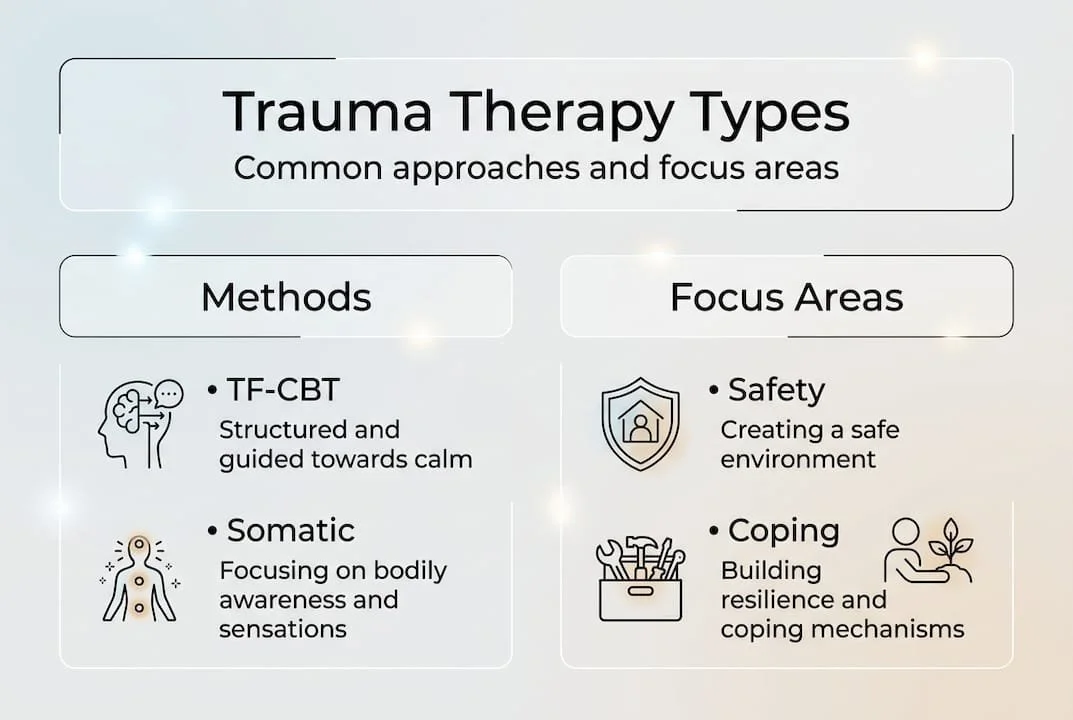
Trauma-Focused Cognitive Behavioral Therapy (TF-CBT) helps you identify and change unhelpful thoughts connected to traumatic experiences. Cognitive Processing Therapy (CPT) specifically targets stuck points where trauma distorts your beliefs about safety, trust, or self-worth. Eye Movement Desensitization and Reprocessing (EMDR) uses bilateral stimulation while you recall traumatic memories, helping your brain reprocess them in less distressing ways. Research shows large effect sizes for PTSD symptom reduction with these approaches.
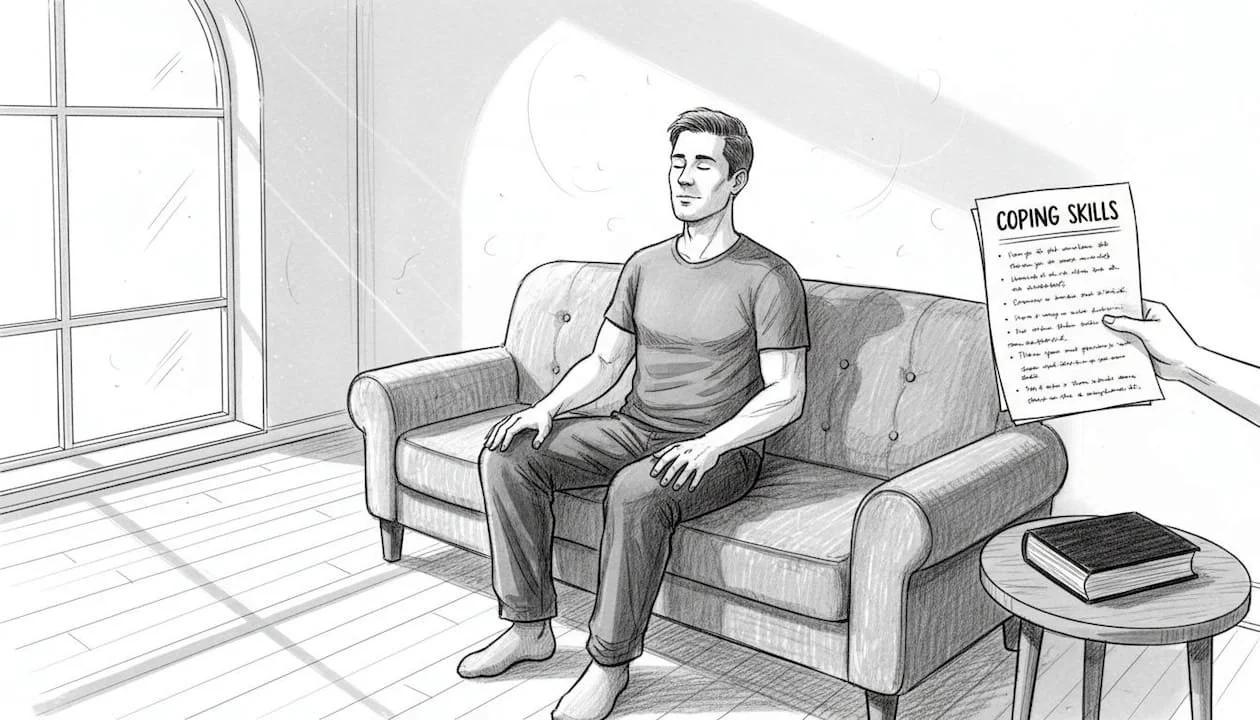
Somatic Experiencing focuses on bodily sensations and helps you complete defensive responses that got interrupted during trauma. Sensorimotor Psychotherapy combines talk therapy with body awareness to address how trauma lives in your physical experience. Internal Family Systems (IFS) views your psyche as containing different parts, helping you develop compassion for wounded aspects of yourself while strengthening your core self.
For complex PTSD involving multiple traumas or prolonged abuse, phase-based treatment provides the most effective framework:
Stabilization phase: Building safety, coping skills, and emotional regulation
Processing phase: Working through traumatic memories when you're ready
Integration phase: Reconnecting with life, relationships, and meaning
Grief often intertwines with trauma, especially when loss involves violence, sudden death, or circumstances that violated your sense of safety. Grief and trauma healing requires addressing both the traumatic aspects of how someone died and the natural mourning process. Meaning-making becomes essential in later stages, helping you integrate loss into your life story without being defined by it.
Pro Tip: The most effective approach depends on your specific trauma history, symptoms, and preferences. A therapist experienced in multiple modalities can adapt treatment as your needs evolve, rather than forcing you into a single rigid protocol.
Navigating complex trauma, childhood trauma, and grief with trauma-sensitive therapy
Complex PTSD differs from single-incident PTSD in important ways. While PTSD typically follows a specific traumatic event, complex PTSD develops from prolonged or repeated trauma, often in childhood. Symptoms extend beyond flashbacks and hypervigilance to include difficulties with emotional regulation, negative self-concept, and relationship patterns. Complex PTSD and childhood trauma require phase-based approaches for better symptom management.
Childhood trauma creates unique challenges because it occurs during critical developmental periods. Your brain and nervous system adapted to survive an unsafe environment, creating patterns that may no longer serve you as an adult. Healing involves not just processing memories but also developing capacities you didn't get to build in childhood, like secure attachment, emotional regulation, and a coherent sense of self.
Somatic therapies become especially valuable for complex trauma because traumatic experiences often get stored in the body as physical sensations, chronic pain, or dissociation. You might notice your heart racing, muscles tensing, or feeling disconnected from your body when triggered. Body-based interventions help you recognize these signals, develop tools to regulate your nervous system, and gradually increase your tolerance for difficult emotions.
The therapeutic alliance matters more in trauma work than in any other type of therapy. Research consistently shows that the quality of your relationship with your therapist predicts outcomes better than the specific techniques used. You need to feel safe, understood, and respected. This is where bilingual support improves therapy accessibility and outcomes, allowing you to express yourself in your native language when emotions run deep.
For California's diverse communities, accessing trauma-sensitive therapy in both English and Spanish removes a significant barrier to care. Cultural responsiveness extends beyond language to understanding how different communities experience and express trauma, what family dynamics look like, and what healing means within your cultural context.
Preparing for trauma therapy sessions helps you get the most from treatment:
Identify your current coping strategies and which ones actually help versus harm
Notice patterns in when symptoms worsen or improve throughout your day or week
Write down questions or concerns between sessions so you remember to address them
Practice grounding techniques your therapist teaches before you need them in crisis moments
Build a support system outside therapy, even if it starts with just one trusted person
| Trauma Type | Average Treatment Duration | Key Therapeutic Focus |
|---|---|---|
| Single-incident PTSD | 12-20 sessions | Memory reprocessing, safety restoration |
| Complex PTSD | 1-3 years | Stabilization, emotional regulation, relational healing |
| Childhood trauma | 1-4 years | Developmental repair, attachment, identity formation |
| Traumatic grief | 6-18 months | Trauma processing, mourning, meaning-making |
Pro Tip: Progress in complex trauma therapy rarely follows a straight line. You might feel worse before you feel better as you begin addressing avoided material. This temporary increase in symptoms often signals you're engaging with important healing work, not that therapy isn't working.
Expected outcomes and what to look for in trauma-sensitive therapy
Recovery from trauma looks different for everyone, but certain markers indicate you're moving in the right direction. You'll notice traumatic memories becoming less intrusive and overwhelming. When triggers do occur, you'll recover more quickly using the coping skills you've developed. Your relationships may improve as you develop healthier boundaries and communication patterns. Physical symptoms like chronic pain, sleep problems, or digestive issues often decrease as your nervous system regulates.
The evidence supporting trauma-sensitive approaches is compelling. Studies show 82-91% of patients show reliable improvement or recovery in PTSD with evidence-based care. These outcomes reflect real symptom reduction measured through standardized assessments, not just subjective feelings of improvement. The timeline varies based on trauma complexity, but most people notice meaningful changes within the first few months of consistent treatment.
"The majority of PTSD patients achieve reliable improvement or recovery with evidence-based trauma therapy. These outcomes represent significant reductions in intrusive memories, hyperarousal, avoidance behaviors, and negative mood changes that characterize post-traumatic stress."
Recognizing qualified trauma-sensitive therapists protects you from ineffective or potentially harmful treatment. Look for licensed mental health professionals (LMFTs, LCSWs, psychologists) with specific training in trauma-focused modalities. Certifications in EMDR, TF-CBT, Somatic Experiencing, or similar approaches indicate specialized expertise. Ask potential therapists directly about their trauma training, typical treatment approach, and how they handle situations where clients feel overwhelmed.
Signs your therapy is working include:
You feel safe enough to discuss difficult topics at your own pace
Your therapist validates your experiences without judgment
You're learning concrete skills you can use between sessions
Treatment goals reflect your priorities, not just symptom reduction
You notice gradual improvements in daily functioning and relationships
The client-therapist relationship should feel collaborative rather than authoritarian. Your therapist explains their reasoning, invites your feedback, and adjusts approaches when something isn't working. They respect your cultural background and language preferences, incorporating these into treatment planning. For preparing for trauma counseling, knowing these relationship qualities helps you evaluate whether a particular therapist is the right fit.
Between formal therapy sessions, many people benefit from complementary strategies for managing PTSD symptoms naturally. These might include mindfulness practices, gentle movement like yoga or walking, creative expression, spending time in nature, or connecting with supportive friends and family. These tools supplement but don't replace professional treatment, especially for complex trauma.
Red flags that should prompt you to seek a different therapist include pushing you to process trauma before establishing safety, dismissing your concerns about the pace of treatment, lacking cultural sensitivity, or making you feel judged for your symptoms or coping strategies. Quality trauma-sensitive care always prioritizes your sense of safety and control over the therapeutic process.
Find compassionate trauma-sensitive therapy in California
Healing from trauma requires specialized support from therapists who understand the nuances of PTSD, childhood trauma, complex trauma, and grief. If you're ready to begin your recovery journey with evidence-based, culturally responsive care, Alvarado Therapy offers bilingual trauma-sensitive therapy throughout California.
Our licensed therapists provide online EMDR trauma therapy and specialized treatment for adults healing from traumatic experiences. We offer services in both English and Spanish, ensuring you can process difficult emotions in the language that feels most natural. Whether you're in Pasadena, Ventura, or anywhere in California, online sessions make quality trauma care accessible.
Services include:
EMDR therapy and EMDR Intensives for trauma reprocessing
Specialized treatment for PTSD and complex trauma
Individual counseling for childhood trauma, grief, and anxiety
Therapy consultation services to determine the best approach for your needs
Bilingual support in English and Spanish
Your healing journey deserves compassionate, evidence-based support. Schedule a consultation to discuss how trauma-sensitive therapy can help you move from surviving to thriving.
Frequently asked questions
What is trauma-sensitive therapy?
Trauma-sensitive therapy is an approach that recognizes how traumatic experiences affect your brain, body, and relationships, prioritizing safety and empowerment throughout treatment. It differs from trauma-informed therapy, which refers to organizational practices and policies, while trauma-sensitive therapy describes the actual clinical methods therapists use. Both concepts emphasize avoiding re-traumatization and creating healing environments.
How does bilingual support help in trauma therapy?
Processing traumatic memories and complex emotions often happens more naturally in your native language, especially when discussing childhood experiences or family dynamics. Bilingual therapy removes the cognitive burden of translating feelings into a second language, allowing deeper emotional access and more authentic expression. For California's Spanish-speaking communities, this accessibility can mean the difference between seeking help and suffering in silence.
How long does trauma therapy typically take?
Single-incident PTSD often responds to treatment within 12-20 sessions over three to six months. Complex PTSD or childhood trauma typically requires one to three years of consistent work, as healing involves not just processing memories but developing emotional regulation and relational skills. Your individual timeline depends on trauma severity, available support systems, and how consistently you can attend sessions. The benefits of trauma-informed therapy often become noticeable within the first few months.
How do I find qualified trauma-sensitive therapists in California?
Look for licensed mental health professionals (LMFTs, LCSWs, psychologists) with specific training in evidence-based trauma modalities like EMDR, TF-CBT, or Somatic Experiencing. Check their credentials, read client reviews, and schedule initial consultations to assess fit. Ask directly about their trauma training, treatment approach, and experience with your specific type of trauma. Many California therapists now offer online sessions, expanding your options beyond your immediate geographic area.
What are realistic expectations for healing from trauma?
Most people experience significant symptom reduction rather than complete elimination of all trauma effects. You'll likely notice intrusive memories becoming less frequent and intense, improved emotional regulation, better sleep, and healthier relationships. Recovery isn't linear; you'll have setbacks alongside progress. With consistent evidence-based treatment, the vast majority of PTSD patients achieve reliable improvement, meaning their symptoms decrease to levels that no longer significantly impair daily functioning.
