

Most American professionals under forty report at least one episode of severe burnout during their careers, a trend seen across California’s busiest industries. Chronic workplace stress leads to anxiety, emotional exhaustion, and a constant sense of pressure that can feel overwhelming. With workplace demands pushing boundaries, learning how counseling addresses these hidden struggles brings timely guidance for those seeking real solutions.
Table of Contents
Key Takeaways
| Point | Details |
|---|---|
| Burnout is a Complex Condition | It is rooted in chronic workplace stress and includes emotional exhaustion, depersonalization, and reduced professional efficacy. |
| Misconceptions Persist | Many professionals incorrectly perceive burnout as temporary fatigue or a personal weakness, hindering their willingness to seek help. |
| Different Subtypes Exist | Burnout manifests in three main types: frenetic, underchallenged, and worn-out, each requiring tailored intervention strategies. |
| Counseling Can Help | Effective therapeutic approaches target emotional exhaustion, enhancing coping mechanisms and promoting resilience among individuals facing burnout. |
Burnout Defined and Common Misconceptions
Burnout is a complex psychological phenomenon that extends far beyond simple workplace stress. Psychiatric research highlights that despite over 140 definitions proposed since 1974, no universal consensus exists about its precise characterization. This lack of clarity often leads professionals to misunderstand burnout as just another form of exhaustion or temporary fatigue.
Contrary to popular belief, burnout is a specific condition rooted in chronic workplace stress. CDC research indicates it involves three critical dimensions: emotional exhaustion, depersonalization, and reduced professional efficacy. Unlike depression or anxiety, burnout is uniquely tied to occupational contexts, making it distinctly different from general mental health challenges. Key misconceptions include thinking burnout is simply about being tired, when it represents a more profound psychological response to prolonged professional strain.
Professionals often misinterpret burnout as a personal weakness or temporary condition, which can prevent them from seeking appropriate support. In reality, burnout is a serious psychological syndrome recognized by international health organizations. It manifests through symptoms like chronic fatigue, cynicism towards work, decreased motivation, and a sense of professional detachment. California professionals, especially those in high-stress industries like technology, healthcare, and finance, are particularly vulnerable to experiencing these complex burnout symptoms.
Pro tip: Track your emotional and physical energy levels weekly using a simple journal to identify early burnout warning signs before they escalate into more serious conditions.
Types of Burnout Among Professionals
Burnout is not a monolithic experience but a complex psychological condition with multiple manifestations. Mental health research reveals three primary burnout subtypes that describe distinct patterns of professional exhaustion: frenetic, underchallenged, and worn-out. Each subtype represents a unique response to workplace stress and requires targeted intervention strategies.
The frenetic burnout emerges among high-achieving professionals who persistently overwork, attempting to compensate for workplace challenges through increased effort and extended hours. These individuals typically experience intense emotional exhaustion, feeling perpetually overwhelmed despite their commitment. In contrast, underchallenged burnout affects professionals experiencing monotony and lack of professional growth, resulting in disengagement and reduced motivation. Employees in repetitive roles or stagnant work environments are particularly susceptible to this burnout type.
Health care provider researchhighlights a third subtype:worn-out burnout. This occurs when professionals feel chronically undervalued, experiencing prolonged stress that eventually leads to complete emotional detachment. California professionals in high-stress industries like technology, healthcare, and finance are especially vulnerable. Symptoms include decreased professional efficacy, cynicism towards work, and a sense of helplessness. Understanding these nuanced burnout types allows for more targeted and effective intervention strategies tailored to individual experiences.
Pro tip: Conduct a monthly self-assessment of your workplace engagement and emotional energy to proactively identify which burnout type you might be experiencing.
Here's a summary of the main burnout subtypes and their unique characteristics:
| Burnout Subtype | Typical Cause | Common Signs | Intervention Focus |
|---|---|---|---|
| Frenetic | Excessive overwork and effort | Overwhelm, emotional exhaustion | Work-life balance, boundaries |
| Underchallenged | Monotony, lack of growth | Boredom, disengagement | New challenges, engagement |
| Worn-out | Chronic neglect and undervaluation | Emotional detachment, cynicism | Recognition, empowerment |
How Counseling Addresses Emotional Exhaustion
Emotional exhaustion represents a complex psychological state that requires nuanced therapeutic intervention. Psychological research demonstrates that counseling can effectively address emotional depletion by developing robust emotional regulation strategies and rebuilding individuals' psychological resources. This approach goes beyond surface-level symptom management, targeting the underlying mechanisms that contribute to chronic stress and burnout.
Counselors employ sophisticated techniques to help professionals recalibrate their emotional landscapes. Clinical approaches emphasize cognitive reframing, which enables individuals to shift perception from overwhelming stressors to manageable experiences. This process involves identifying negative thought patterns, understanding their origins, and developing healthier cognitive frameworks that reduce perceived threat and emotional reactivity. For California professionals experiencing chronic workplace stress, these strategies provide a systematic approach to emotional recovery and resilience building.
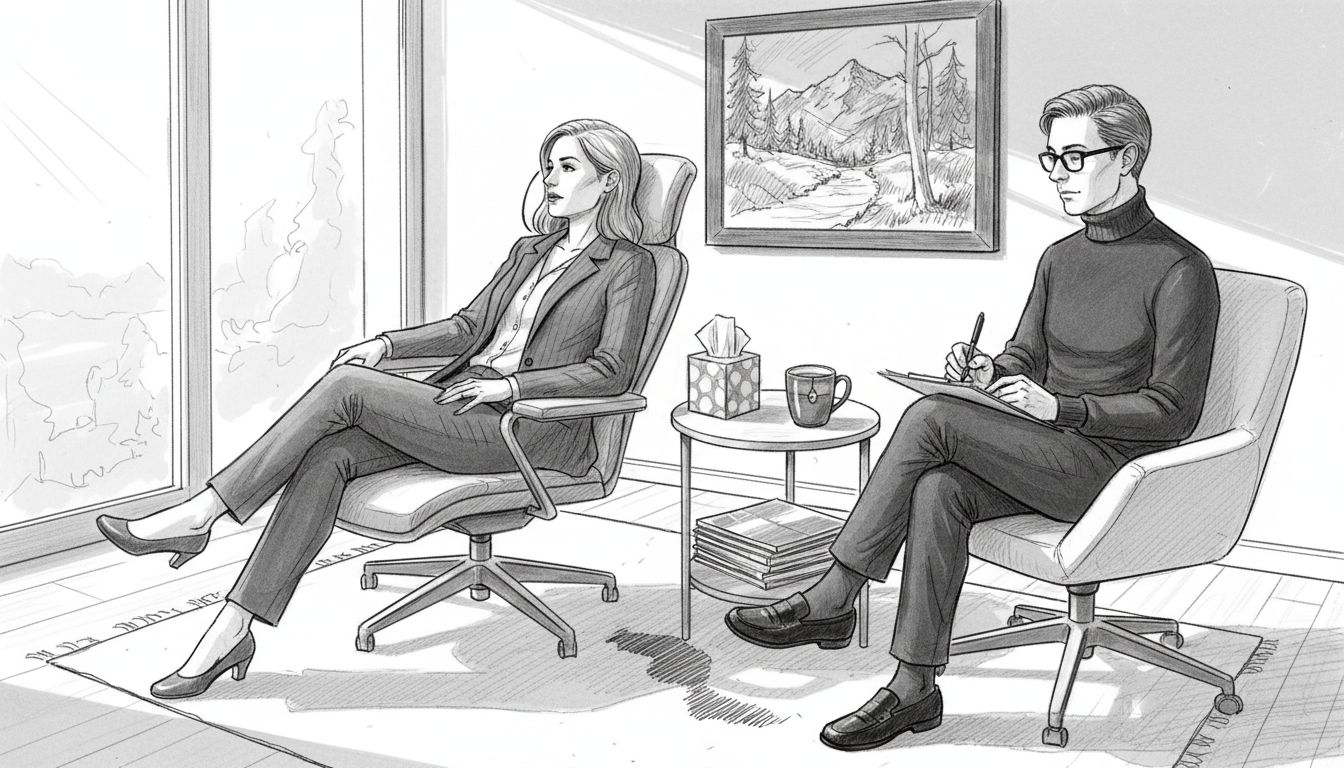
The therapeutic process addresses emotional exhaustion through multiple interconnected strategies. Counselors help clients develop mindfulness techniques, stress management skills, and personal boundary setting. These interventions are designed to restore emotional balance, enhance motivation, and rebuild concentration depleted by prolonged professional stress. By providing a structured, supportive environment, counseling enables individuals to deconstruct complex emotional experiences, understand their stress triggers, and develop personalized coping mechanisms that promote long-term emotional wellness.
Pro tip: Schedule a weekly 15-minute emotional check-in with yourself to track stress levels and identify potential burnout warning signs before they escalate.
Key Counseling Approaches for Burnout
Counseling professionals utilize a comprehensive, multi-dimensional approach to address burnout, recognizing it as a complex psychological condition requiring nuanced intervention. Research on burnout interventions demonstrates that effective treatment involves integrated strategies targeting both individual psychological mechanisms and systemic workplace challenges. These approaches go beyond traditional therapy, incorporating holistic techniques that address the root causes of emotional exhaustion.
The primary counseling approaches for burnout include cognitive-behavioral therapy, mindfulness-based stress reduction, and structured resilience training. Stress management interventions typically combine psychoeducation with practical coping skills development. Cognitive-behavioral therapy helps professionals reframe negative thought patterns, while mindfulness techniques teach individuals to develop emotional regulation and present-moment awareness. These methods are particularly effective for California professionals experiencing chronic workplace stress, enabling them to develop more adaptive responses to high-pressure environments.
Group counseling and structured intervention programs offer additional support for burnout recovery. These approaches create a supportive community environment where individuals can share experiences, learn coping strategies, and develop collective resilience. Techniques may include physical exercise integration, self-assessment tools, and ongoing support mechanisms. By addressing burnout through multiple dimensions - psychological, physiological, and social - counseling provides a comprehensive path to emotional recovery and professional renewal.
Pro tip: Create a personalized stress management toolkit with at least three specific coping strategies you can implement immediately when feeling overwhelmed.
Below is a comparison of key counseling strategies used to address burnout and their main benefits:
| Approach | Main Components | Primary Benefit |
|---|---|---|
| Cognitive-Behavioral Therapy | Reframing negative thoughts, goal setting | Reduces stress, boosts resilience |
| Mindfulness-Based Stress Reduction | Meditation, awareness exercises | Enhances emotional regulation |
| Group Counseling | Peer support, shared experience | Fosters connection and empathy |
Credentials and Qualifications for Therapists
Professional therapists working with burnout recovery must demonstrate rigorous academic training and specialized certifications that validate their expertise. Specialty therapist credentials represent advanced knowledge in managing complex mental health challenges, requiring graduate-level education, extensive supervised clinical hours, and comprehensive proficiency examinations. These qualifications ensure that therapists possess the sophisticated skills necessary to address nuanced psychological conditions like professional burnout.
Key credentials for burnout specialists include advanced certifications such as Certified Cognitive Behavioral Therapist, EMDR Certification, and specialized mental health counseling designations. National certification standards mandate comprehensive requirements that go beyond basic licensure, including graduate degrees from accredited programs, substantial clinical supervision, and passing rigorous national examinations. For California professionals, these credentials signal a therapist's commitment to maintaining the highest standards of professional practice and ongoing psychological education.
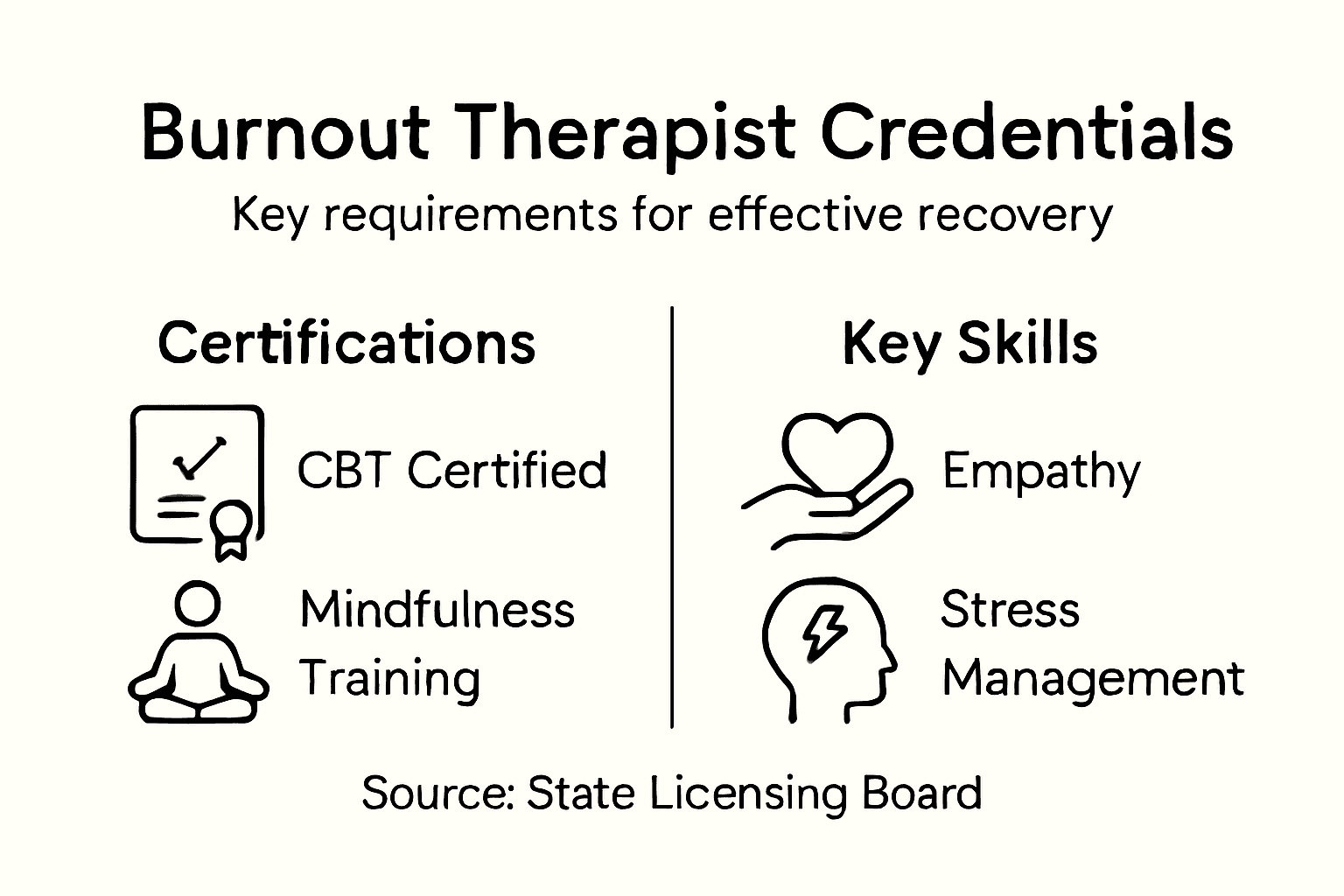
Beyond academic qualifications, exceptional burnout therapists develop unique skill sets that combine clinical expertise with deep empathy and practical understanding. This includes specialized training in stress management techniques, trauma-informed care, and comprehensive approaches to emotional recovery. Professional organizations continually update certification requirements to reflect evolving psychological research, ensuring therapists remain at the forefront of mental health treatment strategies. Professionals seeking burnout recovery should prioritize therapists with demonstrated expertise, verifiable credentials, and a holistic approach to mental wellness.
Pro tip: Always verify a therapist's credentials by checking their professional license number with state licensing boards and requesting information about their specific experience in burnout recovery.
Common Barriers to Effective Burnout Care
Burnout recovery faces significant challenges rooted in systemic workplace dynamics and cultural perceptions. Healthcare workplace stress research reveals multiple complex barriers that prevent professionals from accessing effective mental health support. These obstacles range from organizational structures to individual psychological resistance, creating intricate roadblocks to comprehensive burnout treatment.
Workplace structural issues represent a primary impediment to burnout care. High workloads, unpredictable scheduling, administrative burdens, and insufficient staffing create environments that perpetuate chronic stress. Systemic intervention research highlights how poor management practices and limited organizational support actively contribute to professional exhaustion. California professionals, particularly in high-stress industries like technology and healthcare, often encounter significant challenges in finding supportive work environments that prioritize mental wellness.
Psychological barriers further complicate burnout recovery, with profound stigma surrounding mental health treatment. Many professionals perceive seeking help as a sign of weakness, leading to delayed intervention and increased psychological strain. Cultural expectations of resilience, combined with fear of professional repercussions, prevent individuals from acknowledging their emotional exhaustion. This internalized resistance creates a cyclical pattern where burnout symptoms intensify, making recovery progressively more challenging. Understanding and dismantling these psychological barriers requires a compassionate, systemic approach that normalizes mental health support and reframes vulnerability as professional strength.
Pro tip: Create a confidential personal tracking system to document your stress levels and emotional experiences, which can help you objectively assess your burnout risk without workplace judgment.
Take Control of Burnout with Expert Counseling Support
Burnout is a complex challenge that affects your emotional energy, motivation, and overall well-being. If you find yourself overwhelmed by chronic stress or feeling emotionally detached as described in the article on the role of counseling in burnout recovery, you are not alone. Recognizing the signs like emotional exhaustion, cynicism, or reduced professional efficacy is the first step toward healing. At Alvarado Therapy, we specialize in trauma-informed mental health care tailored to meet the unique needs of California professionals facing burnout.
Take the critical next step in your recovery by exploring comprehensive support that includes individual counseling and specialized therapies like EMDR. Our licensed therapists understand how burnout intersects with past trauma and daily stressors and provide culturally responsive, identity-affirming care in both English and Spanish. Don’t wait for burnout to worsen when personalized healing strategies are within reach. Visit Alvarado Therapy today to learn more about our services and how we can help you restore balance and resilience. Start your healing journey now by scheduling a session online or contacting our team to discuss your needs.
Find out more about our individual counseling services and how therapy can help you regain emotional strength. Empower yourself with expert guidance and compassionate support tailored to your burnout experience.
Frequently Asked Questions
What is burnout, and how does it differ from other mental health issues?
Burnout is a specific condition rooted in chronic workplace stress, characterized by emotional exhaustion, depersonalization, and reduced professional efficacy. Unlike depression or anxiety, burnout is uniquely tied to occupational contexts and represents a deeper psychological response to prolonged professional strain.
How can counseling help with burnout recovery?
Counseling addresses burnout by developing emotional regulation strategies, enhancing psychological resources, and promoting mindfulness techniques. These therapeutic interventions target the underlying mechanisms contributing to chronic stress, providing individuals with coping mechanisms for long-term emotional wellness.
What are the common counseling approaches used to treat burnout?
Common counseling approaches for burnout include cognitive-behavioral therapy, mindfulness-based stress reduction, and group counseling. These methods help professionals reframe negative thought patterns, improve emotional regulation, and foster peer support, creating a comprehensive path to recovery.
Why is it important to choose a qualified therapist for burnout recovery?
A qualified therapist possesses the necessary academic training and specialized certifications to address nuanced psychological conditions like burnout. Their expertise ensures treatment is tailored to individual experiences, increasing the likelihood of effective recovery and emotional well-being.
Recommended
Why Seek Couples Counseling After Breakup: Healing, Clarity, Co-Parenting — Alvarado Therapy
7 Empowering Ways to Heal After Breakup Naturally — Alvarado Therapy
Why Choose Grief Counseling for Healing Loss — Alvarado Therapy
Role of Counseling in PTSD Recovery: Lasting Benefits — Alvarado Therapy
What Is a Recovery Coach and Their Role in Addiction Support | Glendora Recovery Center
