
Role of Couples Therapy in Healing Trust and Connection
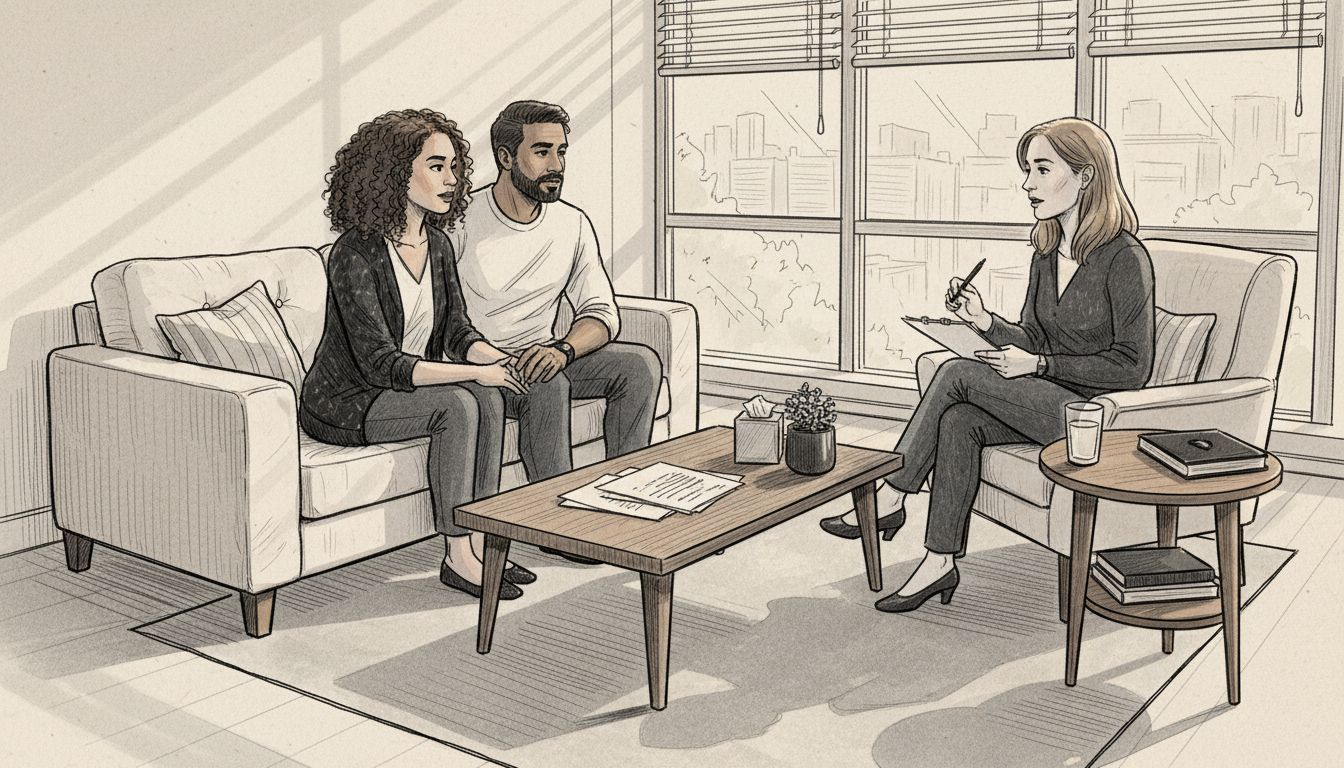
When conversations between partners turn tense or trust feels fractured, the distance can seem impossible to close. Many California couples quietly wrestle with hurt, confusion, or feeling misunderstood as communication breaks down. Trauma-informed couples therapy offers a safe, collaborative space to unpack emotional wounds, repair trust, and rebuild healthier ways of relating. Learn how professional support can help both partners grow together while honoring each person’s experiences.
Table of Contents
Key Takeaways
| Point | Details |
|---|---|
| Purpose of Couples Therapy | Couples therapy aims to improve communication, trust, and emotional connections between partners while addressing relationship challenges. |
| Key Approaches | Evidence-based methods like Behavioral Couple Therapy and Emotionally Focused Therapy focus on modifying negative patterns and enhancing emotional bonds. |
| Emotional Healing | Therapy provides a framework to help partners recognize destructive dynamics and fosters emotional regulation and understanding. |
| Common Misconceptions | Couples therapy is beneficial for all relationship stages and aims for mutual growth rather than placing blame or fixing one partner. |
Defining Couples Therapy and Its Core Purpose
Couples therapy is a specialized form of psychotherapy designed to help intimate partners improve their relationship dynamics, communication, and emotional connection. Professional approaches to relationship counseling focus on understanding the complex emotional interactions between partners and addressing specific challenges that impact their shared life.
At its core, couples therapy serves several critical functions:
Identifying communication barriers and patterns
Exploring underlying emotional dynamics
Developing healthy conflict resolution strategies
Rebuilding trust and intimacy
Strengthening relationship foundations
The goals of couples therapy extend beyond simply resolving immediate conflicts. Intimate relationship counseling aims to help partners develop deeper understanding, empathy, and mutual support. Therapists work collaboratively with couples to unpack complex emotional landscapes, helping them recognize destructive interaction patterns and learn more constructive ways of connecting.
Modern couples therapy recognizes that relationships are dynamic systems where individual experiences, emotional histories, and interpersonal dynamics constantly interact. By providing a safe, neutral environment, therapists help partners explore their relationship's nuanced challenges, facilitating healing and growth.
Pro tip: Consider approaching couples therapy as a collaborative journey of mutual understanding and growth, not as a process of assigning blame or proving who is right.
Key Approaches in Modern Couples Therapy
Couples therapy has evolved significantly, with multiple evidence-based approaches designed to address complex relationship dynamics. Empirically supported treatment methods demonstrate the field's commitment to understanding and healing intimate partnerships through targeted interventions.
Key contemporary approaches in couples therapy include:
Behavioral Couple Therapy (BCT): Focuses on modifying destructive interaction patterns and reinforcing positive behaviors
Emotionally Focused Therapy (EFT): Emphasizes emotional reconnection and understanding underlying attachment needs
Cognitive Behavioral Couple Therapy (CBCT): Addresses negative thought patterns and cognitive distortions affecting relationship satisfaction
Integrative Behavioral Couple Therapy: Combines multiple therapeutic techniques to address individual and relational challenges
Modern therapeutic approaches recognize that relationships are complex, dynamic systems influenced by individual histories, communication styles, and emotional landscapes. Therapeutic approaches to relationship healing now incorporate greater sensitivity to diverse couple demographics, cultural contexts, and individual experiences.
Therapists today utilize a holistic approach that goes beyond traditional conflict resolution. They help couples develop deeper emotional intelligence, improve communication skills, and create more resilient relationship foundations by understanding the intricate emotional dynamics that shape their interactions.
Here's a useful summary comparing prominent couples therapy approaches:
| Approach | Focus Area | Typical Outcomes |
|---|---|---|
| Behavioral Couple Therapy (BCT) | Behavior modification | Improved positive interactions |
| Emotionally Focused Therapy (EFT) | Emotional reconnection | Stronger emotional bonds |
| Cognitive Behavioral Couple Therapy (CBCT) | Thought patterns | Reduced cognitive distortions |
| Integrative Behavioral Therapy | Combined techniques | Holistic relational improvements |
Pro tip: Approach couples therapy as a collaborative journey of mutual growth, where both partners actively participate in understanding and transforming their relationship dynamics.
How Couples Therapy Supports Emotional Healing
Couples therapy provides a powerful framework for emotional healing by helping partners understand and transform their deep-seated relational patterns. Integrative behavioral approaches enable couples to break destructive interaction cycles and develop more compassionate, supportive connections.
Key emotional healing strategies in couples therapy include:
Identifying Negative Interaction Patterns: Recognizing recurring cycles of conflict and miscommunication
Understanding Attachment Needs: Exploring individual emotional landscapes and core relationship fears
Developing Emotional Regulation Skills: Learning to manage emotional triggers and responses
Creating Safe Emotional Spaces: Building mutual trust and vulnerability
Transforming Communication Dynamics: Shifting from defensive to collaborative dialogue
Emotionally Focused Therapy techniquesprovide structured interventions that help couples create secure emotional bonds. By focusing on underlying attachment needs, therapists guide partners in understanding the root causes of their relationship challenges and developing more compassionate ways of connecting.
The healing process in couples therapy goes beyond resolving surface-level conflicts. It involves deep emotional work that helps partners understand themselves and each other more profoundly, creating opportunities for genuine healing, mutual understanding, and long-term relationship resilience.
Pro tip: Approach emotional healing in therapy with curiosity and openness, recognizing that vulnerability is a strength, not a weakness.
The Impact of Trauma-Informed Couples Counseling
Trauma-informed approaches in couples counselingrepresent a revolutionary framework for healing complex relationship challenges. These specialized therapeutic methods recognize that individual and shared traumatic experiences profoundly shape relationship dynamics, requiring sensitive, holistic intervention strategies.
Key principles of trauma-informed couples counseling include:
Establishing Safety: Creating physical and emotional secure environments
Building Trust: Developing transparent, predictable therapeutic relationships
Emphasizing Collaboration: Engaging both partners as active participants in healing
Promoting Empowerment: Supporting individual and collective agency
Recognizing Cultural Context: Honoring diverse experiences and backgrounds
Subtle relational traumasoften underlie persistent relationship challenges, including patterns of emotional neglect, communication breakdowns, and unresolved attachment wounds. Trauma-informed counseling delves beneath surface-level conflicts to address deeper emotional landscapes, helping couples understand how past experiences shape current relationship interactions.
By integrating trauma-sensitive approaches, couples therapists create transformative spaces where partners can explore vulnerability, rebuild trust, and develop more resilient, compassionate connections. This approach moves beyond traditional conflict resolution, offering a profound pathway to mutual healing and understanding.
Pro tip: Approach trauma healing as a collaborative journey of mutual understanding, where vulnerability becomes a source of strength and connection.
Common Misconceptions and What to Expect
Couples therapy is often misunderstood, creating unnecessary barriers for couples seeking support. Relationship counseling insights reveal that many couples delay seeking help due to persistent myths about the therapeutic process.
Common misconceptions about couples therapy include:
Myth: Therapy is only for relationships in crisis
Reality: Therapy can be preventative and supportive for all relationship stages
Myth: The therapist will take sides
Reality: Professional therapists remain neutral and support mutual understanding
Myth: Attending therapy means the relationship is failing
Reality: Seeking help demonstrates commitment and proactive relationship care
Myth: Therapy will instantly solve all problems
Reality: Healing is a collaborative process requiring ongoing effort
Myth: Only one partner needs to change
Reality: Successful therapy involves mutual growth and understanding
What couples can realistically expect during therapy includes a structured, collaborative process of exploration and healing. Trauma-informed relationship approaches emphasize that therapy is a journey of mutual discovery, not a quick fix or blame assignment.
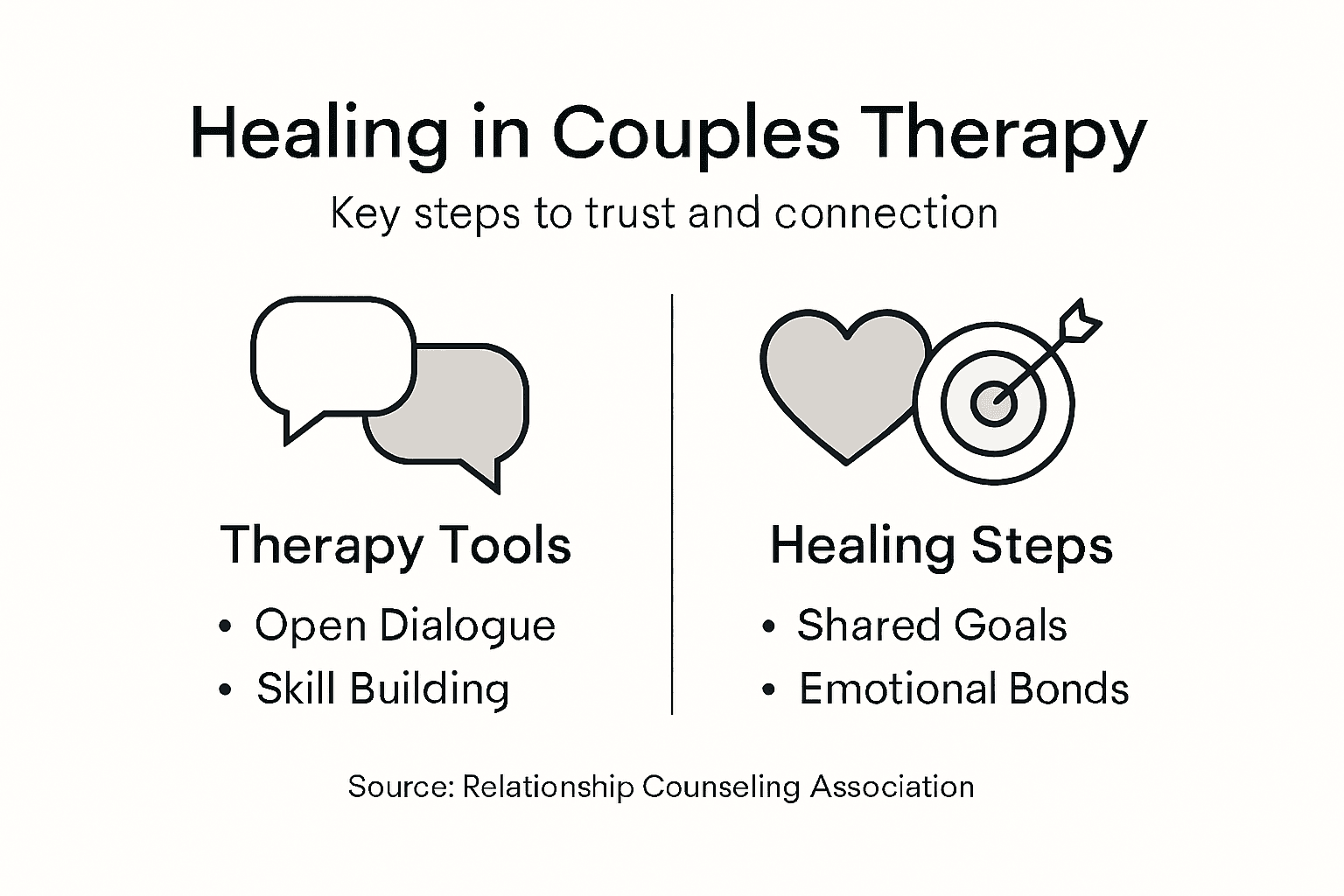
Therapy sessions typically involve open dialogue, guided exercises, and skill-building techniques designed to improve communication, rebuild trust, and develop deeper emotional connections. Couples will learn to recognize destructive patterns, develop healthier interaction strategies, and create more resilient relationship foundations.
For quick reference, here are the main session components couples can expect during therapy:
| Session Component | Purpose | Typical Benefit |
|---|---|---|
| Open Dialogue | Explore issues together | Enhanced mutual understanding |
| Guided Exercises | Practice new skills | Improved communication |
| Skill Building | Learn conflict strategies | Greater relationship resiliency |
| Therapist Feedback | Provide neutral insights | Balanced perspective |
Pro tip: Approach couples therapy with an open mind and commitment to personal and relational growth, understanding that vulnerability and honest communication are the true pathways to healing.
Rebuild Trust and Connection with Expert Couples Therapy Support
Couples therapy plays a vital role in healing trust and strengthening the emotional bond between partners. If you are facing challenges like broken communication, emotional distance, or the need for trauma-sensitive care, couples therapy at Alvarado Therapy offers a compassionate path forward. Our trauma-informed approach helps you identify and transform negative interaction patterns while nurturing vulnerability and mutual understanding.
Take action today by connecting with our skilled California-based therapists devoted to supporting couples through healing and growth. Explore the dedicated professionals serving clients across California or specifically at our Ventura CA in person location. Visit Alvarado Therapy to learn more and schedule your first session toward renewed trust and lasting connection.
Frequently Asked Questions
What is the primary purpose of couples therapy?
Couples therapy is designed to help intimate partners improve their relationship dynamics, communication, and emotional connection. It identifies communication barriers, explores emotional dynamics, and fosters healthy conflict resolution.
How does couples therapy support emotional healing?
Couples therapy aids emotional healing by helping partners recognize negative interaction patterns, understand their attachment needs, manage emotional triggers, and develop better communication skills, ultimately transforming their relationship dynamics.
What are some common misconceptions about couples therapy?
Common misconceptions include the belief that therapy is only for crisis situations, that the therapist will take sides, or that it will instantly solve all problems. In reality, therapy is a proactive measure and requires ongoing effort from both partners.
What can couples expect during therapy sessions?
Couples can expect open dialogue, guided exercises, and skill-building techniques designed to improve communication and develop deeper emotional connections. The therapist will provide neutral insights to support mutual understanding.
Recommended
Why Trust Matters in Couples Therapy Recovery — Alvarado Therapy
Why Seek Couples Therapy—Transforming Connection After Trauma — Alvarado Therapy
7 Key Benefits of Couples Counseling for Healing Together — Alvarado Therapy
Role of Therapy in Recovery: Transforming Lives in LA | Glendora Recovery Center
