
The Couples Counseling Process: What to Expect
TL;DR:
Couples counseling mainly focuses on changing interaction patterns through structured, skills-based modules, rather than just airing grievances. Most couples require 12 to 20 sessions over three to five months, beginning with assessment and progressing through skill-building and maintenance. Early intervention and consistent effort, including homework and honest communication, significantly enhance therapy outcomes and relationship strength.
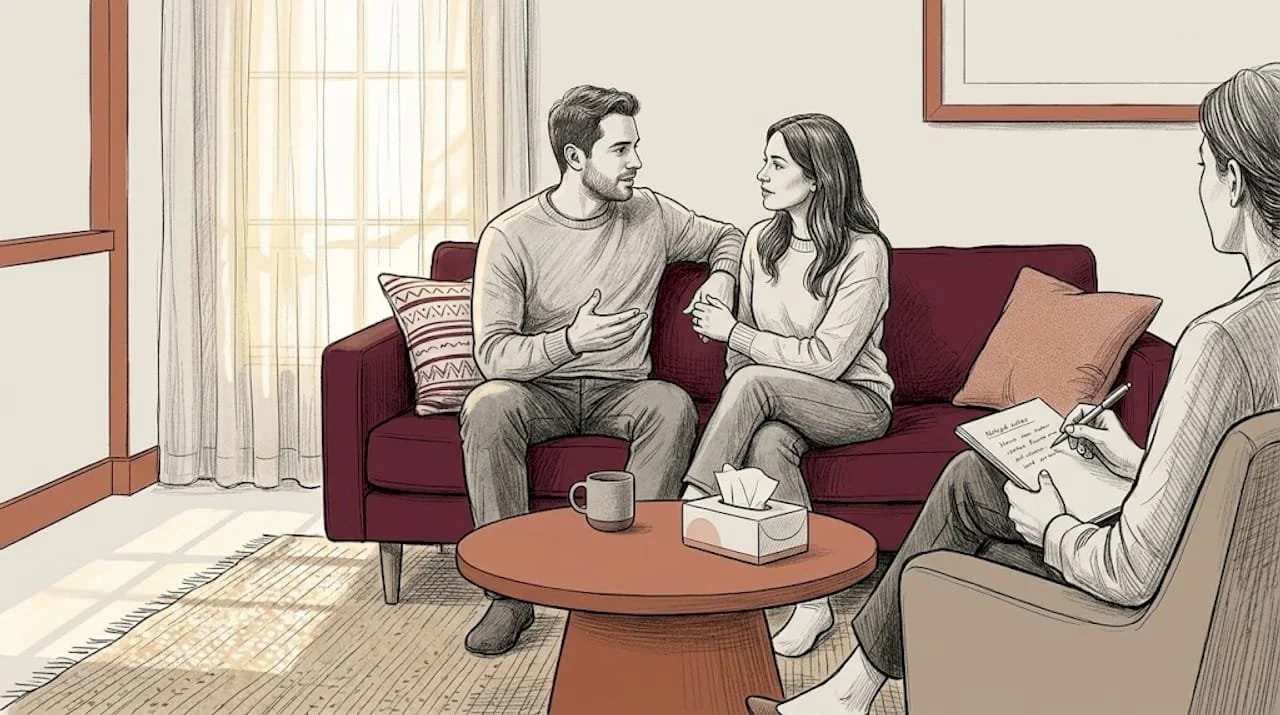
Most people imagine couples counseling as two partners sitting on a couch, taking turns airing complaints while a therapist nods. That picture could not be further from what actually happens. The couples counseling process is a structured, skills-based experience designed to change how you and your partner interact, not just how you feel about each other in the moment. Understanding what the process looks like before you walk in the door makes a real difference. It lowers anxiety, raises commitment, and helps you get more out of every session from the very first one.
Table of Contents
Key Takeaways
| Point | Details |
|---|---|
| Therapy follows a clear structure | The couples counseling process moves through distinct phases: assessment, skill-building, and closing with a maintenance plan. |
| Expect 12–20 sessions | Most couples need a meaningful number of sessions to see lasting change, not just one or two conversations. |
| Assessment comes before advice | The first few sessions focus on understanding your relationship, not solving problems right away. |
| Homework matters as much as sessions | Progress depends on practicing new skills between appointments, not only during them. |
| Early intervention works best | Couples who start therapy before a crisis show significantly better outcomes than those who wait. |
There is also a faster option worth knowing about. Intensive therapy models condense the assessment and early intervention phases into one or two full days, which works well for couples who cannot commit to a long weekly schedule or who need quicker traction. This is not a shortcut so much as a different pacing model.
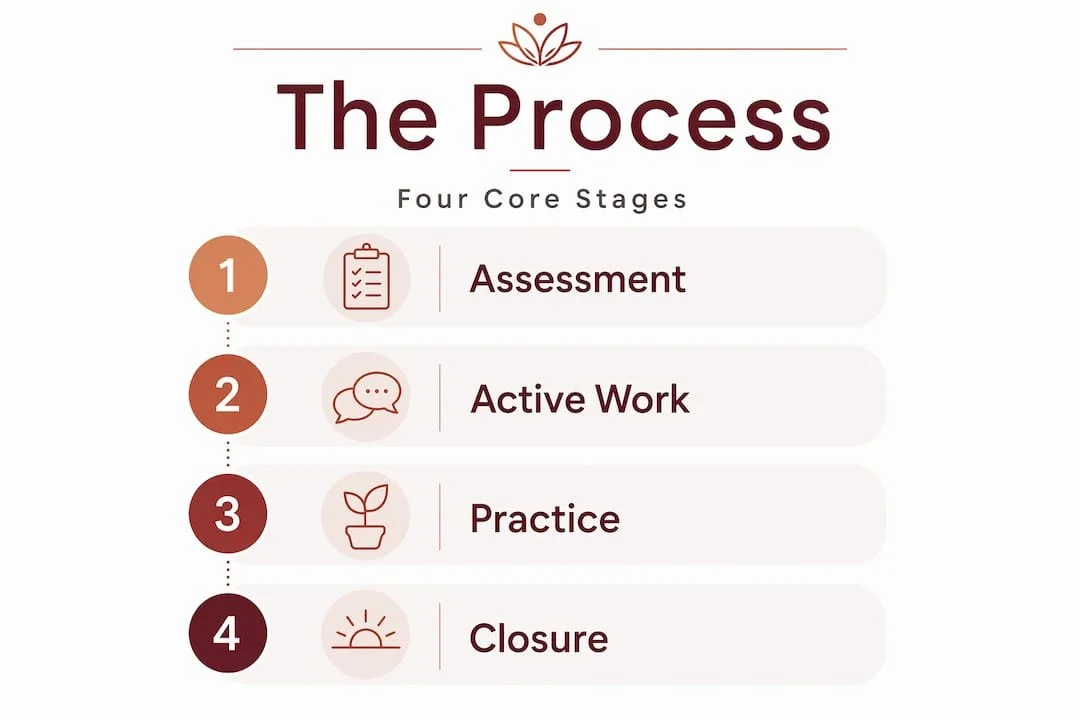
Here is what the typical structure looks like across those sessions:
Initial phase (weeks 1–4): Assessment, goal-setting, and building trust with your therapist
Middle phase (weeks 5–16): Active skill-building, conflict work, and emotional deepening
Closing phase (weeks 17–20): Consolidating gains, preventing relapse, and creating a maintenance plan
What happens during the assessment phase
Most couples arrive in therapy wanting solutions immediately. What they get first is something more useful: a thorough, structured assessment. The assessment phase typically spans 3–4 sessions and includes both joint meetings and individual sessions with each partner separately.
The individual sessions are not about finding out who is "the problem." They give each person a private space to share their own perspective, history, and fears without the other partner present. Therapists look for patterns in how you interact, not just the content of your complaints.
Here is what a well-structured assessment phase covers:
Relationship history: How you met, what drew you together, when things started shifting
Interaction patterns: What your typical conflict cycle looks like and where it breaks down
Individual backgrounds: Personal histories, attachment styles, and any trauma that may affect the relationship
Strengths inventory: What is already working, because therapy builds on what is good, not only what is broken
Shared goals: What both partners want the relationship to look like at the end of therapy
Therapists using the Gottman Method, for example, use specific tools during assessment to measure emotional connection and identify what researchers call the "Four Horsemen": criticism, contempt, defensiveness, and stonewalling. You can learn more about the evidence behind these approaches in this overview of effective couples counseling methods.
Pro Tip: Go into the assessment phase with curiosity rather than defensiveness. Your therapist is building a map of your relationship, not building a case against either of you.
Therapy methods and tools used during sessions
Once assessment is complete, the active work begins. Two frameworks dominate evidence-based couples therapy: the Gottman Method and Emotionally Focused Therapy, often called EFT.
The Gottman Method works on the principle that healthy relationships require a 5:1 ratio of positive to negative interactions. The goal is not to eliminate conflict but to build enough emotional goodwill that conflict does not corrode the relationship. Sessions focus on practical exercises: how to raise a complaint without attacking, how to accept influence from your partner, how to repair after a fight.
EFT takes a different but complementary angle. Rather than coaching communication behaviors directly, EFT helps couples identify the attachment needs underneath their conflict. When one partner shuts down during a fight, EFT helps them recognize that behavior as a fear response, not stubbornness. When one partner escalates, EFT reframes that as an attempt to feel connected, not an attack. This shift in interpretation changes everything about how couples respond to each other.
Here is a look at how these two approaches compare in practice:
| Feature | Gottman Method | Emotionally Focused Therapy (EFT) |
|---|---|---|
| Primary focus | Communication skills and friendship | Attachment patterns and emotional bonds |
| Core tool | Sound Relationship House framework | Cycle de-escalation and bonding exercises |
| Best for | Couples with conflict management issues | Couples with emotional disconnection or withdrawal |
| Session style | Skills practice, guided exercises | Emotion exploration, deepening vulnerability |
Most therapists blend elements from both, tailoring the approach to what your relationship actually needs. You can explore the full range of available approaches in this breakdown of types of couples therapy.
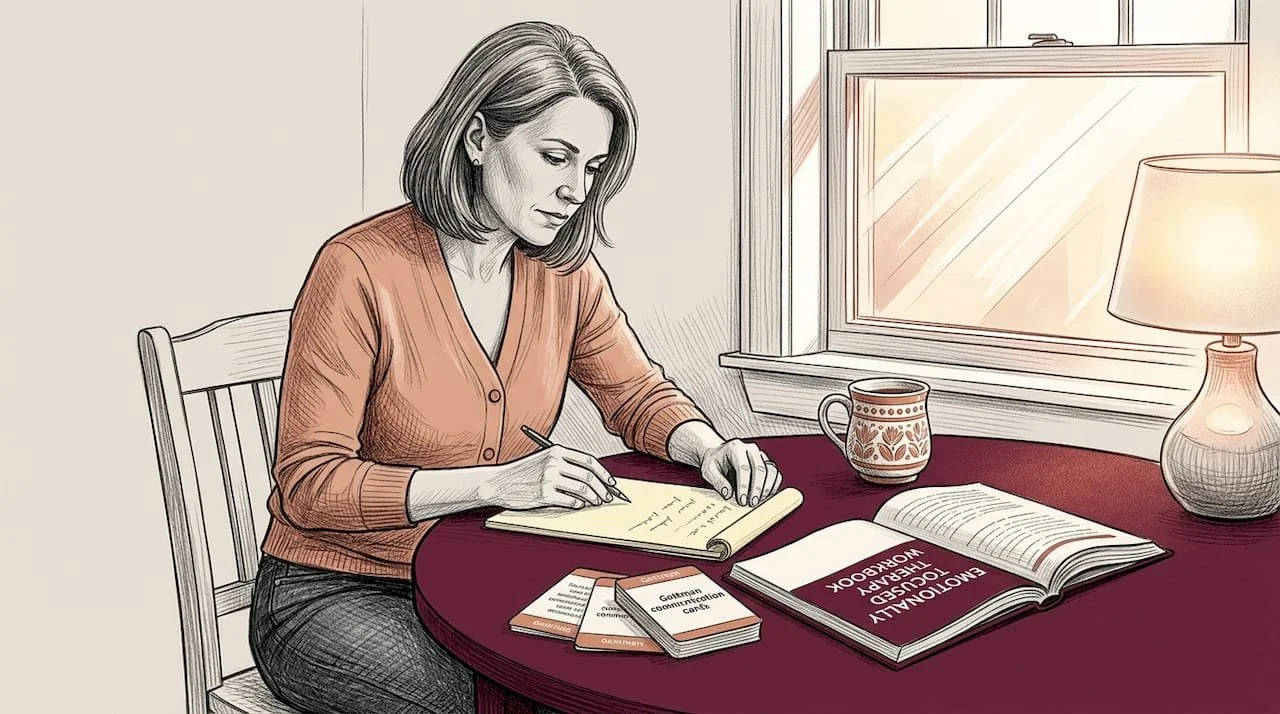
One element couples often underestimate is homework. Homework like communication exercises and scheduling intentional positive interactions directly correlates with better outcomes. Couples who skip homework consistently progress slower than those who treat it as part of the therapy.
Pro Tip: Treat homework assignments like you would a physical therapy exercise. Skipping them does not just slow progress, it lets old patterns rebuild during the week between sessions.
How to get the most out of therapy
Knowing the couples counseling process matters, but what you bring to it matters just as much. Here are the behaviors that separate couples who make meaningful gains from those who plateau:
Show up consistently. Missing sessions interrupts momentum and lets avoidance creep back in. Weekly attendance, especially in the first phase, is one of the strongest predictors of progress.
Watch your language during sessions. Statements that begin with "you always" or "you never" put your partner on defense before the conversation even starts. Effective communication in therapy means describing your experience, not diagnosing theirs.
Be honest about what you are not saying. Therapists can only work with what is in the room. If you are holding back a concern because you are afraid of the reaction, that is usually the most important thing to bring up.
Come early, not at crisis. Early intervention in couples counseling leads to better outcomes and lower rates of separation. Unfortunately, couples wait an average of two years after noticing problems before seeking help. The longer you wait, the more entrenched the patterns become.
Consider individual therapy alongside couples work. Individual therapy complements couples counseling by helping each partner process personal issues that affect the relationship. It is not either/or.
If you want a deeper understanding of when to seek help and what trauma-informed care looks like for couples, this article on why couples seek therapy offers a grounding perspective.
Pro Tip: If you and your partner disagree about whether therapy is working, bring that disagreement into the session. It is valuable material, not a sign of failure.
How to know when therapy is working
Progress in couples therapy does not always look like dramatic breakthroughs. More often it looks like smaller, consistent shifts you can track over time.
Common signs you are making real progress include:
Conflicts resolve faster and leave less damage behind
You feel genuinely heard during disagreements, not just tolerated
You reach for each other during stress instead of retreating
Both partners feel safer being honest about vulnerable feelings
The constructive conflict and emotional connection you are building feels sustainable, not forced
As therapy moves toward a close, your therapist will shift focus from resolving current problems to building a long-term maintenance plan. This might include monthly check-in sessions, returning to therapy if a specific stressor hits, or tools you both keep practicing independently.
Not every couple finishes therapy with every issue resolved. Some couples use the process to clarify that they want different things. That outcome, though painful, is still a success when it comes from a clear and honest process rather than avoidance.
My honest take on what couples miss most
I have seen couples come into therapy thinking the goal is to get their partner to finally understand them. That framing almost always delays real progress. The couples counseling process is not a debate where one person wins. It is a shared investigation into patterns both people are maintaining, often without realizing it.
What surprises most people is how much of the work happens outside the session. The homework, the moments during a real argument when you pause and choose differently, the times you reach toward your partner instead of pulling away. Those moments are where the therapy actually lives.
I also think couples dramatically underestimate the value of starting early. Waiting until things are at a breaking point is like waiting for a serious injury before going to physical therapy. The earlier you go, the more options you have and the faster you recover. Couples who enter therapy before a full crisis tend to leave with stronger skills and more goodwill in the bank.
Therapy is not one-size-fits-all either. A good therapist adjusts based on your dynamic, your history, and what your relationship actually needs. If an approach is not working, say so. That conversation itself is part of the process.
— Alvaradotherapy
Ready to start? Here's how Alvarado Therapy can help
At Alvaradotherapy, the couples counseling process is built on evidence-based methods including the Gottman Method and trauma-informed care. Whether you are navigating ongoing conflict, emotional disconnection, or the aftermath of a painful event, licensed therapists work with both partners to build real, lasting change.
Alvarado Therapy offers online couples therapy for clients throughout California, with sessions available in both English and Spanish. The practice is culturally responsive and designed to meet couples where they are, not where they "should" be.
If you want to understand exactly what your first sessions will look like before committing, the what to expect page walks you through the process in detail. You can also book a consultation to speak with a therapist and find out if the fit is right for you.
FAQ
How many sessions does couples counseling typically take?
Most couples need 12–20 sessions to see meaningful, lasting improvement. The exact number depends on the complexity of the issues and how consistently both partners engage with the process.
What happens in the first couples therapy session?
The first session is usually an intake and assessment. The therapist gathers background information about your relationship history, current concerns, and goals. It is less about solving problems and more about building a clear picture of your dynamic.
Do both partners have to attend every session?
Most couples counseling is done jointly, but individual sessions are common during the assessment phase and sometimes during treatment. Individual sessions are not about blame. They give each partner space to speak freely.
How is couples therapy different from individual therapy?
Couples therapy focuses on the relationship as the client, meaning the therapist works with your shared patterns and dynamics. Individual therapy centers on one person's internal experience. Both can work together for better results.
When is the right time to start couples therapy?
The right time is before you reach a crisis. Early intervention produces better outcomes than waiting for things to deteriorate. If you are noticing recurring conflict, emotional distance, or communication breakdowns, those are signals worth acting on now.
Recommended
How to Prepare for Marriage Counseling: A Step-by-Step Guide — Alvarado Therapy
Couples Therapy Process Workflow: Step-by-Step Guide — Alvarado Therapy
Effective Couples Counseling: Methods, Results, and What Works — Alvarado Therapy
Why Couples Need Therapy: Complete Essential Guide — Alvarado Therapy
