
Effective Couples Counseling: Methods, Results, and What Works

TL;DR:
Effective couples counseling focuses on reducing distress, improving relationship satisfaction, and maintaining long-term changes through structured, evidence-based methods like EFT or Gottman. Success depends on therapist fidelity to the model, a strong therapeutic alliance, and addressing trauma and communication patterns; choosing a qualified, trauma-informed therapist enhances outcomes. The most significant progress occurs when couples trust their therapist and commit to the process, whether online or in person.
Most couples who seek counseling share one assumption: that showing up is the hardest part, and the rest will follow. The uncomfortable truth is that not all couples counseling produces the same results. The method your therapist uses, how rigorously they follow it, and whether they understand the role trauma plays in your relationship all have a measurable impact on whether you see lasting change or just temporary relief. If you've ever wondered why some couples transform through therapy while others feel stuck after months of sessions, this guide breaks down exactly what separates effective counseling from well-intentioned but ineffective support.
Table of Contents
Key Takeaways
| Point | Details |
|---|---|
| Evidence matters most | Choosing a proven therapy method and trauma-informed therapist leads to the best relationship outcomes. |
| EFT and Gottman deliver | Both approaches show strong improvements in intimacy, trust, and satisfaction for most couples. |
| Communication is critical | Negative patterns and unresolved trauma can undermine results, making skill-building and healing vital. |
| Success is an ongoing journey | Real, lasting change comes from consistent effort and choosing the right support. |
What makes couples counseling effective?
To understand what works, you first need a clear definition of "effective." In the clinical world, effectiveness in couples counseling means three things: reducing distress symptoms, improving overall relationship satisfaction, and sustaining those changes over time without constant therapeutic support. A one-time emotional breakthrough does not count. What matters is whether the couple functions better six months after therapy ends.
Research consistently shows that not all methods are created equal. The clearest evidence points to structured, evidence-based approaches as the gold standard. Emotionally Focused Therapy, commonly known as EFT, stands out across decades of research as one of the most validated treatments available. Meta-analyses confirm EFT efficacy with 70% of couples reporting no significant symptoms after treatment, alongside large effect sizes (d=0.93 pretest-posttest) that hold at long-term follow-up.
What makes a counseling approach truly effective includes:
A clearly defined, research-backed model that the therapist follows consistently
A measurable focus on outcomes, not just insight or emotional expression
Active attention to communication patterns between partners
A therapist with specialized training who practices their model with fidelity
Assessment tools that track relationship satisfaction and symptom changes over time
Understanding why couples need therapy in the first place is equally important. Couples often wait an average of six years after serious problems begin before seeking help. By that point, negative patterns are deeply entrenched, which is exactly why the structure and evidence-base of the chosen method matters so much.
Pro Tip: Before committing to a therapist, ask them directly: "What model do you follow, and what does the research say about its effectiveness?" A qualified, confident therapist will give you a clear, specific answer, not a vague description of their general style.
Comparing leading methods: EFT vs. Gottman
With clarity around what makes a counseling method effective, the next step is choosing between top evidence-based options. The two most studied and validated approaches in couples therapy are Emotionally Focused Therapy and Gottman Method Couples Therapy. Both have strong research behind them, but they work differently and may appeal to different couples.
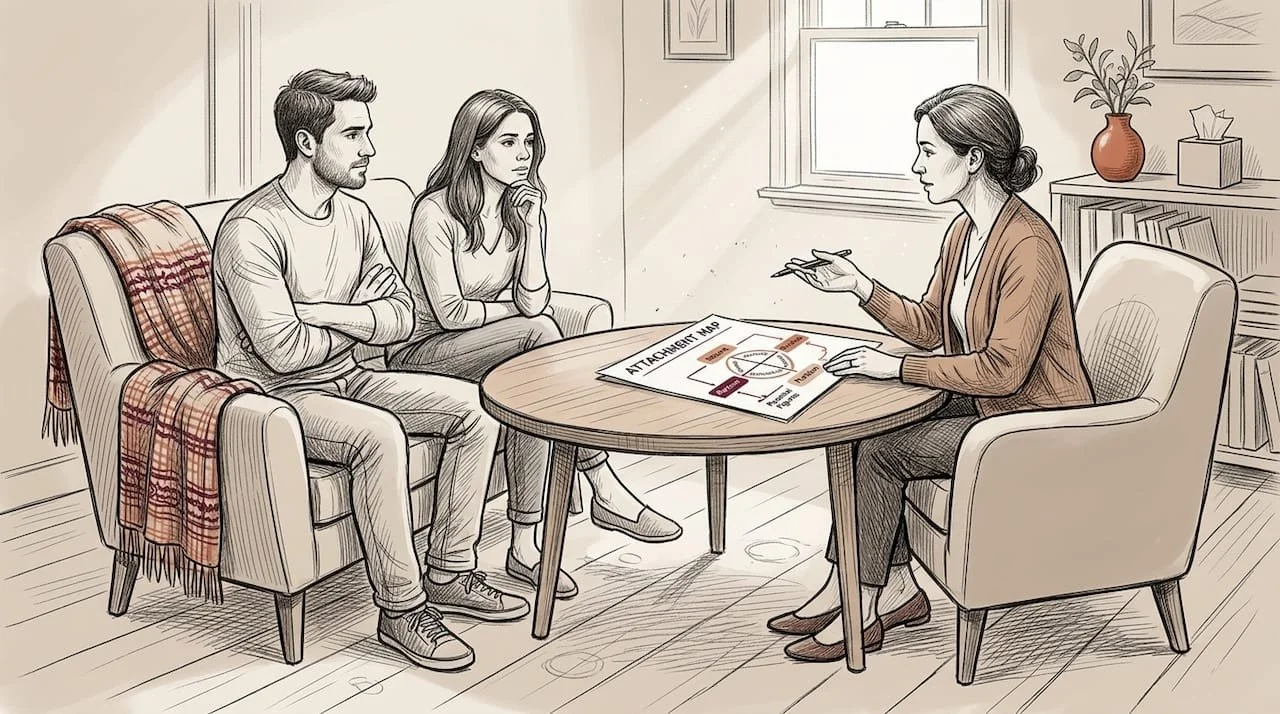
EFT, developed by Dr. Sue Johnson, centers on attachment theory. It treats relationship distress as a disruption in the emotional bond between partners. The therapy works by helping couples identify the emotional fears and needs driving their conflicts, then restructure their interactions around safety and vulnerability. EFT is particularly effective for couples dealing with emotional disconnection, trauma histories, and deep-seated mistrust.
Gottman Method Therapy, developed by Drs. John and Julie Gottman, focuses more on observable behaviors and communication skills. It uses the "Sound Relationship House" model to identify the building blocks of a healthy partnership: trust, commitment, conflict management, and shared meaning. Gottman therapy tends to be practical and skills-oriented, teaching couples concrete tools they can use immediately.
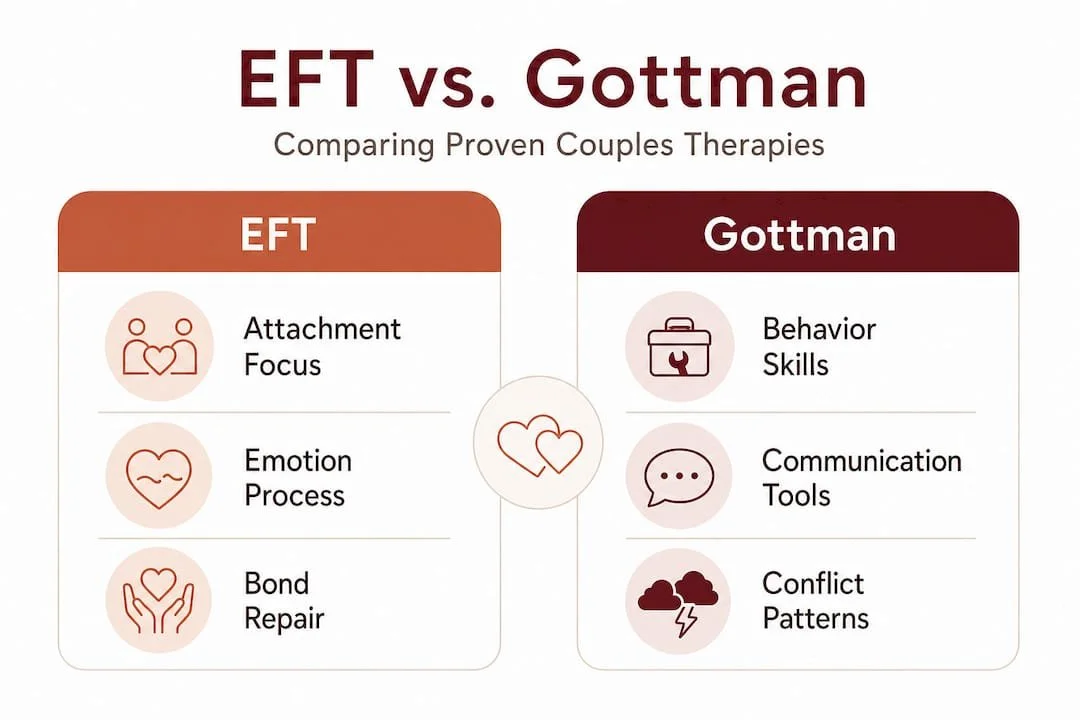
| Feature | EFT | Gottman Method |
|---|---|---|
| Core focus | Emotional attachment and bonding | Communication skills and behaviors |
| Best suited for | Emotional disconnection, trauma | Conflict patterns, communication breakdown |
| Primary technique | De-escalation, restructuring emotional responses | “Four Horsemen” identification, skill building |
| Research strength | Strong, 30+ years of RCT data | Strong, longitudinal observational research |
| Session feel | Emotionally exploratory, often deep | Structured, skills-based, measurable |
| Outcomes studied | Attachment security, satisfaction, symptoms | Intimacy, adjustment, relationship stability |
Research directly comparing these two methods found that both significantly improve marital outcomes including intimacy, marital adjustment, and sexual satisfaction, with comparable effect sizes in head-to-head studies (η² > 0.65). Neither approach clearly outperforms the other in every situation. What matters most is finding the one that matches your specific challenges, and a therapist who applies it skillfully.
"The goal of couples therapy is not to create a perfect relationship, but to create a safe enough relationship that both partners can grow." This principle runs through both EFT and Gottman approaches, even as their methods differ.
When choosing between couples therapy methods, think about what your relationship needs most right now. If you feel emotionally disconnected and find it hard to access vulnerability with your partner, EFT may be the more natural fit. If your relationship is marked by recurring arguments, criticism, and stonewalling, Gottman's behavioral tools may offer faster traction. Many couples find that healing intimacy after trauma requires elements of both, which is why therapist expertise in trauma becomes so critical.
How negative communication and trauma impact results
Now that we've compared leading therapy models, let's examine why communication patterns and trauma history are so critical to results and how the right counselor addresses them.
One of the most researched patterns in couples in distress is the demand/withdraw cycle. In this dynamic, one partner pushes for discussion or resolution while the other pulls back, becomes defensive, or emotionally shuts down. This is not stubbornness or indifference. It is usually an attachment response rooted in fear. Negative communication patterns like demand/withdraw mediate attachment insecurities and lower relationship satisfaction, while dyadic coping (how couples manage stress together) predicts long-term relationship trajectories.
Understanding attachment theory in relationships reveals why this matters so much. When one or both partners carry insecure attachment styles from earlier experiences, especially childhood, these patterns show up in adult relationships as hypervigilance, avoidance, or emotional reactivity. These responses can derail counseling progress unless the therapist recognizes and directly addresses them.
Unresolved individual trauma plays an equally powerful role. A partner who has experienced abandonment, betrayal, or abuse may interpret a neutral tone of voice as criticism or read a moment of silence as rejection. These responses are not irrational. They are the nervous system doing exactly what it learned to do to stay safe. Without trauma-informed care, couples counseling may scratch the surface of conflict while missing the deeper roots entirely.
Here are the four most common patterns that derail counseling progress when trauma goes unaddressed:
Emotional flooding: One partner becomes so overwhelmed during disagreements that they cannot process new information or communicate effectively, making sessions feel unproductive.
Hyper-vigilance to threat: Trauma-informed nervous systems are on constant alert, making it difficult to trust the therapy process or feel safe enough to be vulnerable.
Projection of past experiences: Partners unconsciously project unresolved pain from past relationships or childhood onto their current partner, creating conflicts that are not actually about the present situation.
Avoidance and emotional numbing: One partner may shut down entirely as a protective response, which the other partner frequently misreads as lack of care or commitment.
This is why many therapists now incorporate tools like EMDR for trauma bonds as a complement to couples work, particularly when individual trauma is clearly driving relational conflict. EMDR (Eye Movement Desensitization and Reprocessing) helps process traumatic memories so they no longer hijack present-moment interactions between partners.
Pro Tip: If you or your partner has a significant trauma history, look specifically for a couples counselor who also has training in trauma-focused individual therapies. The combination dramatically increases outcomes.
Applying effective counseling: How to choose and what to expect
Understanding the importance of trauma, communication, and leading models prepares you. Now, let's focus on making the best choices and what to expect in your therapeutic journey.
A typical evidence-based couples counseling process follows a structured flow:
Initial assessment: Both partners complete individual and joint assessments covering relationship history, current concerns, trauma history, and goals. This phase often spans two to three sessions and sets the foundation for targeted treatment.
Psychoeducation: The therapist explains the chosen model, including what the research says about why certain patterns emerge and how the method addresses them. This builds trust and sets clear expectations.
De-escalation work: Before deeper emotional work begins, couples learn to interrupt their most destructive patterns. This may include communication skills, grounding techniques, or learning to recognize emotional flooding in real time.
Core restructuring: This is where the deepest work happens. In EFT, partners learn to express underlying emotional needs rather than surface frustrations. In Gottman therapy, couples build skills around repair attempts, fondness, and conflict resolution.
Consolidation and relapse prevention: The final phase focuses on solidifying gains, identifying early warning signs of regression, and equipping couples with tools to maintain progress independently.
Given that EFT efficacy research shows 70% of couples symptom-free after treatment with sustained results at follow-up, the structure of the process matters enormously. Skipping foundational steps or rushing to deep emotional work before couples are stabilized can actually increase distress rather than reduce it.
When evaluating a potential couples counselor in California, ask these questions:
Are you licensed in California (LMFT, LCSW, or licensed psychologist)?
What specific model do you primarily use with couples?
Have you completed formal training or certification in that model?
Do you have experience working with couples where trauma is a factor?
What does a typical treatment timeline look like for couples with our concerns?
How do you measure progress, and how will I know if we're on track?
Getting familiar with the couples therapy process before your first appointment removes uncertainty and helps both partners arrive more open and less guarded. It also helps to spend time preparing for counseling by reflecting individually on your goals, your patterns, and what a meaningful change would actually look like in your daily life.
If you're still exploring whether couples therapy is right for your situation, reading about what couples therapy is and what it realistically involves can help you make a more informed decision without pressure.
A fresh perspective: Why model fidelity and therapist fit matter most
Here is something most therapy guides won't tell you directly: the branded method your therapist uses matters far less than how faithfully they follow it and whether you and your partner actually feel safe with them.
EFT offers deeper emotional shifts. Gottman provides practical, measurable tools. Research on contrasting views of EFT and Gottman confirms that both are effective, neither is clearly superior, and what actually boosts outcomes is therapist model fidelity. This means a therapist who partially follows EFT while mixing in unstructured techniques performs worse than one who applies a single validated model with skill and consistency.
Generic or "eclectic" approaches, where a therapist borrows a little from various methods without a clear framework, often feel adaptive and personalized in the first session. Over time, though, the lack of a guiding structure means therapy can drift without clear direction. Couples may gain occasional insights but never achieve the sustained shifts that structured, research-backed treatment produces.
The relational fit between therapist and couple is equally real. Both partners need to feel seen, not judged, and safe enough to be honest. This requires a therapist who is genuinely attuned, not just technically competent. In our experience at Alvarado Therapy, the couples who make the most significant progress are those who trust the process and the person guiding it. Healing trust through couples therapy is not just about what happens between partners. It also includes the therapeutic relationship itself.
The most transformative couples therapy is not always the most comfortable. It asks both partners to be vulnerable, to stay in difficult conversations rather than deflect, and to tolerate uncertainty while new patterns are being built. A skilled, trauma-informed therapist creates the safety that makes that level of courage possible.
Take the next step with compassionate, trauma-informed couples counseling
When you're ready to move forward, expert guidance and trauma-informed support can make all the difference. At Alvarado Therapy, our licensed California clinicians bring together evidence-based couples counseling with deep expertise in trauma, EMDR, and attachment-focused care. Whether you're navigating recurring conflict, rebuilding after betrayal, or simply feeling disconnected, we meet you where you are.
Our online couples therapy is available throughout California, with sessions designed to fit real lives and real schedules. If you're unsure what to expect, our what to expect page walks you through the process clearly, so you can arrive to your first session with confidence rather than anxiety. For couples where trauma is a significant factor, our specialized PTSD and complex trauma services integrate individual and couples-focused care to address both partners' healing needs together.
Frequently asked questions
What therapy approach is most effective for couples with trauma?
Evidence supports both trauma-informed EFT and Gottman therapy as strong options, especially when delivered by a therapist with trauma expertise. EFT research shows 70% of couples become symptom-free post-treatment with sustained changes at long-term follow-up.
How long does effective couples counseling usually take?
Many couples see significant improvement within 8 to 20 sessions, though the timeline depends on the depth of the issues, trauma history, and each partner's engagement with the process.
Can couples counseling really rebuild lost trust?
Yes, when guided by evidence-based methods and a skilled therapist, counseling creates safe conditions for genuine repair. EFT and Gottman both show measurable improvements in intimacy, adjustment, and trust in head-to-head research studies.
What should I look for when choosing a couples counselor in California?
Prioritize licensure, formal training in a validated model like EFT or Gottman Method, and demonstrated experience working with couples where trauma or attachment issues are present.
Is online couples counseling as effective as in-person therapy?
Recent research consistently finds that online delivery of validated methods produces comparable outcomes to in-person care, making it a practical and effective option for California couples across different regions and schedules.
Recommended
How to Prepare for Marriage Counseling: A Step-by-Step Guide — Alvarado Therapy
7 Key Benefits of Couples Counseling for Healing Together — Alvarado Therapy
Couples Therapy Process Workflow: Step-by-Step Guide — Alvarado Therapy
7 Essential Types of Couples Therapy for Healing Relationships — Alvarado Therapy
