
Top PTSD resilience-building ideas for healing and growth

TL;DR:
Recovery from PTSD involves building resilience through evidence-based therapies, movement, and social support. Persistence, gentle self-compassion, and consistent effort over time are essential, as progress is often non-linear and gradual. Connecting with professional help can guide this process and tailor strategies to your trauma type and healing needs.
Recovery from PTSD is rarely straightforward. If you've been searching for resilience-building ideas that actually hold up under real pressure, you've probably noticed that not every technique is created equal. Some strategies feel good in the moment but fade fast. Others require professional support to unlock their full potential. This article walks you through the most effective, evidence-backed approaches, explains what makes a resilience strategy worth your time, and helps you figure out which combination might fit where you are right now in your healing journey.
Table of Contents
Key Takeaways
| Point | Details |
|---|---|
| Use evidence-based therapies | CPT, PE, and EMDR have the strongest record for building PTSD resilience. |
| Include movement and exercise | Yoga and resistance training, done consistently, reduce PTSD symptoms and support recovery. |
| Lean on social support | Maintaining relationships and joining support groups helps sustain hope and healing. |
| Combine strategies for best results | Blending professional, physical, and self-help approaches leads to the greatest gains. |
| Healing takes time | PTSD recovery is gradual—patience with setbacks and small wins is key. |
Core criteria for effective resilience building with PTSD
Now that we've set the stage for why resilience selection matters, let's break down what to look for when evaluating different approaches.
Resilience is not a fixed personality trait. It's a set of skills and habits that you actively develop. Research consistently shows that protective resilience factors include optimism, proactive problem-solving, social support, cognitive reframing, and coping self-efficacy. That last one, coping self-efficacy, simply means your belief in your own ability to handle stress. The more you practice a technique and see small results, the stronger that belief becomes.
Not all trauma is the same, and the research reflects this. Lower psychological resilience is more strongly associated with PTSD risk following intentional trauma (like assault or abuse) compared to unintentional trauma (like accidents). This matters when choosing a strategy because some techniques work better when the wound involves a sense of betrayal or violation, while others address more generalized hyperarousal and avoidance.
When evaluating any technique, look for these qualities:
Matched to your trauma type. Intentional trauma often requires deeper relational repair and trust-building.
Builds active coping. Passive strategies, like hoping the symptoms fade on their own, are rarely enough.
Supports self-efficacy. You should feel more capable, not more dependent, over time.
Has real-world evidence behind it. Anecdotes are nice, but clinical data matters.
Exploring stress management techniques that are specifically designed for trauma survivors can also give you a helpful starting point before jumping into more intensive methods.
Pro Tip: Don't try five new techniques at once. Pick one, set a small and specific goal (like practicing for 10 minutes daily for two weeks), and track how you feel before scaling up or adding more.
"Resilience is not about bouncing back to who you were before trauma. It's about growing into who you are becoming because of it." This distinction matters. You are not trying to return to a prior version of yourself. You are building something stronger.
Evidence-based therapies: Core building blocks for PTSD resilience
With the right criteria in mind, let's look at the most validated options for resilience building, beginning with gold-standard professional therapies.
The three most thoroughly studied treatments for PTSD are Cognitive Processing Therapy (CPT), Prolonged Exposure (PE), and Eye Movement Desensitization and Reprocessing (EMDR). According to the VA's own clinical guidance, these first-line treatments build resilience by helping you reprocess traumatic memories, reduce avoidance behavior, and reshape deeply held negative beliefs about yourself and the world.
Here's what each approach actually does:
CPT (Cognitive Processing Therapy): Focuses on examining and challenging trauma-related thoughts. You learn to identify "stuck points," which are distorted beliefs formed around the trauma, and replace them with more accurate, balanced thinking.
PE (Prolonged Exposure): Gradually and safely brings you into contact with avoided memories and situations. Over time, your nervous system learns that these cues are not dangerous, reducing fear and avoidance.
EMDR (Eye Movement Desensitization and Reprocessing): Uses bilateral stimulation (typically eye movements) while you process traumatic memories. It doesn't require you to talk extensively about what happened, which makes it especially helpful for those who find verbal recounting re-traumatizing.
For people in California, access to EMDR-trained therapists has expanded significantly through telehealth, making this no longer only a major-city option. Understanding therapy for PTSD recovery can help you identify which format may work for your situation and timeline.
Statistic callout: Clinical trials consistently show that 60 to 90 percent of people who complete a full course of CPT or PE experience significant symptom reduction. EMDR shows comparable outcomes, often in fewer sessions.
If you're just starting out, creating a therapy treatment plan with a licensed clinician gives structure to your recovery and keeps momentum going when things feel overwhelming. A PTSD recovery journal can also complement therapy by giving you a space to track progress between sessions.
Pro Tip: Before your first session, write down three things you want your life to look like after treatment. This keeps your "why" visible when the process feels hard.
Active approaches: Exercise, yoga, and movement for PTSD recovery
Therapeutic support is powerful, but what about everyday resilience habits you can build yourself? Let's look at movement-based options.
Exercise is one of the most underutilized tools in PTSD recovery. Recent research published in Frontiers in Psychology found that yoga and resistance training significantly reduce PTSD symptoms when practiced three times per week for 30 to 60 minutes over 12 weeks, with yoga showing a standardized mean difference of -0.56 and resistance training at -0.38. These are clinically meaningful numbers, not just feel-good statistics.
| Exercise type | Frequency | Duration | PTSD symptom reduction |
|---|---|---|---|
| Yoga | 3x per week | 30–60 min | SMD = -0.56 (significant) |
| Resistance training | 3x per week | 30–60 min | SMD = -0.38 (moderate) |
| Aerobic exercise | 3x per week | 30–60 min | Moderate benefit noted |
Why does movement help? Several reasons:
Regulates the nervous system. Exercise burns off stress hormones like cortisol and adrenaline that PTSD keeps chronically elevated.
Builds body trust. Trauma often creates a sense of disconnection from your own body. Movement, especially yoga, rebuilds that relationship gradually.
Releases endorphins. These natural mood boosters counteract the emotional blunting and depression that often accompany PTSD.
Creates structure. A scheduled movement routine anchors the day and gives a sense of control.
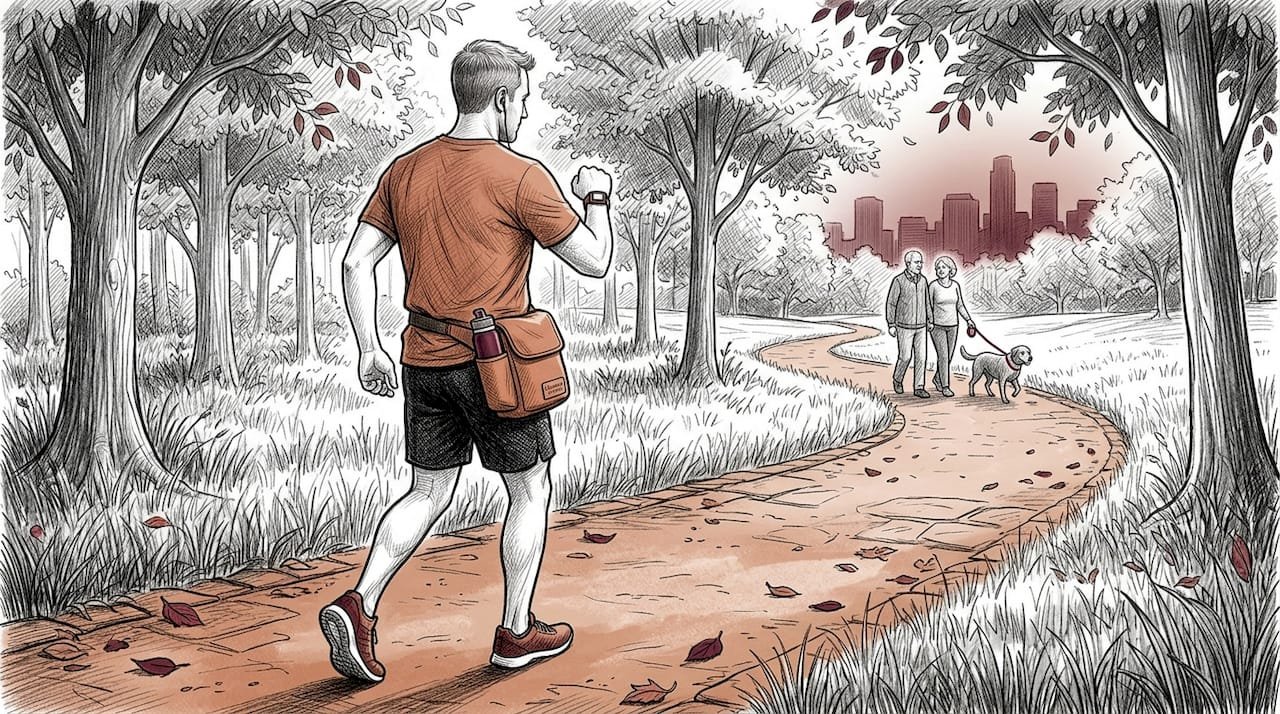
If you're wondering how to fit this in without adding pressure, start with something you already like doing. A 20-minute walk counts. So does a beginner yoga video. For more ideas, the resources on managing PTSD symptoms naturally and PTSD coping strategies can offer practical guidance for building daily habits.
If you're preparing to start therapy and want to integrate movement beforehand, reading about preparing for a counseling session can help you walk in already feeling more grounded. You can also explore self-care strategies for PTSD that include movement, sleep, and daily routine building.
Pro Tip: Schedule your movement session the night before. Lay out your shoes or mat. Reducing decision fatigue in the morning dramatically improves follow-through, especially when your nervous system is dysregulated.
Social support and cognitive reframing: Everyday resilience habits
Physical self-care is only half the battle. Let's explore the power of mindset and social connection.
Human beings are wired for connection, and trauma can severely disrupt our ability to trust others. But rebuilding those connections, even in small ways, is one of the most powerful things you can do for long-term resilience. Research confirms that social support, cognitive reframing, and optimism are core protective factors for PTSD recovery. You don't need a large social circle. Quality matters more than quantity.
Here are five concrete daily practices to build social support and cognitive reframing habits:
Send one text to a trusted person. It doesn't need to be deep. Even "thinking of you" counts. Consistency builds connection over time.
Join a peer support group. In California, there are in-person and online groups specifically for trauma survivors. Shared experience reduces shame and isolation powerfully.
Write one positive takeaway each evening. This isn't toxic positivity. It's training your brain to scan for evidence of safety, not just threat.
Challenge one negative thought daily. When you notice a thought like "I'll never feel normal again," ask yourself: what evidence supports that? What evidence contradicts it?
Practice gratitude with specificity. Instead of "I'm grateful for my friends," try "I'm grateful that my friend called to check in today." Specific gratitude activates the brain's reward systems more effectively than vague statements.
"The goal of cognitive reframing is not to pretend things are fine. It's to stop letting worst-case thinking run the show unchallenged." Reframing is a skill, not a mindset you either have or don't.
For many trauma survivors, isolation feels safer than vulnerability. That feeling is your trauma doing its job. But over time, gentle reconnection, even one small interaction at a time, sends your nervous system the message that people can be safe.
Comparing PTSD resilience ideas: Which fit your healing journey?
With all the main ideas covered, let's compare their strengths and help you identify what might work best now and over time.
| Approach | Best for | Effort level | Timeline for results | Works best when |
|---|---|---|---|---|
| CPT / PE / EMDR | Core trauma processing | High (with therapist) | 12–16 sessions | Paired with ongoing support |
| Yoga / exercise | Nervous system regulation | Moderate | 8–12 weeks | Done consistently, 3x/week |
| Social connection | Ongoing emotional safety | Low to moderate | Ongoing | Used alongside therapy |
| Cognitive reframing | Daily thought patterns | Low | Days to weeks | Practiced consistently |
Research comparing treatment approaches shows that trauma-focused CBT has superior long-term outcomes, while exercise and mindfulness serve as valuable complements. However, evidence-informed treatments may have lower engagement and dose completion than structured evidence-based protocols. This is important: the best technique is the one you actually stick with.
One of the most sobering findings in trauma research is that PTSD symptoms can peak around 10 years post-trauma in some populations, with about 10 percent still experiencing elevated symptoms at 20 years. Median improvement time is 8 to 10 years. This is not meant to discourage you. It's meant to set realistic expectations so you don't give up when progress feels slow.
Understanding the lasting benefits of counseling for PTSD helps you see why consistent therapeutic engagement pays off across years, not just weeks. And if you want to understand your symptoms in context, reading about PTSD in adults offers valuable perspective on how the condition evolves.
The reality of resilience: Healing from PTSD is non-linear
Let's be honest about something that most articles gloss over: resilience doesn't look like a steady upward climb. Real recovery from PTSD involves good weeks followed by hard weeks. A breakthrough in therapy might actually temporarily intensify symptoms before things improve. A life stressor can bring back reactions you thought you'd moved past. This is normal. It is not failure.
What we observe time and again is that people who make lasting progress share one quality: they stay in it without requiring perfection of themselves. They show up for therapy even when they don't want to. They get back to movement after taking a week off. They reach out to a friend even when shame tells them not to. Persistence and gentleness toward yourself, not dramatic overhauls, are what move the needle over time.
One perspective worth sitting with: seeking help is not a sign of weakness. It is a sign that you understand your nervous system well enough to know it needs more than willpower. The people who struggle most with PTSD are often the ones who insist they should be able to handle it alone. That thinking is itself a trauma response, a hyperindependent protective strategy that made sense at one point but no longer serves you.
You can review how PTSD symptom patterns shift over time to better understand why certain periods feel harder than others. Knowing what's happening neurologically and psychologically makes the difficult stretches feel less frightening and more workable. Small, gradual changes to daily habits accumulate into real transformation. Give them time.
Where to find professional support for your PTSD recovery
If you're ready to take your healing further, connecting with the right professional support can help you move forward with guidance and hope.
At Alvarado Therapy, we work with California adults navigating PTSD, complex trauma, and the layered challenges that come with them. Whether you're in Pasadena, Ventura, or anywhere else in California, care is available online in both English and Spanish through a team that understands cultural identity, trauma sensitivity, and evidence-based practice.
Our services include EMDR therapy, EMDR Intensives, individual counseling, and VOCA support for victims of crime. If you're specifically dealing with PTSD or complex trauma, our PTSD and complex trauma services page walks you through what to expect and how we tailor treatment to your specific history and needs. When you're ready, it's easy to schedule a free consultation and talk with someone who can help you find the right match. You don't have to know exactly what kind of help you need. That's what the conversation is for.
Frequently asked questions
How long does it take to build PTSD resilience?
PTSD recovery varies widely, but research shows that symptoms can peak around 10 years post-trauma with median improvement time at 8 to 10 years, though active treatment with evidence-based therapies can accelerate progress significantly.
Which exercise is best for PTSD resilience?
Yoga and resistance training done three times weekly for 12 weeks show the strongest research support, with yoga producing the largest reduction in PTSD symptom severity in recent clinical studies.
Are there fast ways to increase resilience after trauma?
Resilience builds gradually, but daily habits like social support and cognitive reframing can provide early, meaningful boosts, especially when combined with professional therapy from the start.
How do I know if a resilience technique is working?
Look for small but consistent signals: improved sleep quality, slightly less avoidance of triggering situations, or a growing sense that the future holds possibility. These shifts, even when subtle, indicate your nervous system is beginning to regulate.
