
When to Skip Stabilization: EMDR for Complex PTSD in the U.S.

EMDR is an evidence-backed trauma-focused therapy that can reduce symptoms of complex PTSD (CPTSD) for many people, especially when a trauma-informed clinician adapts pacing, safety planning, and session structure to the person in front of them. Individual suitability matters: readiness, dissociation risk, and life stability all shape how EMDR should be delivered. What follows covers the research, realistic expectations, risks, and how to find a qualified clinician.
TL;DR:
EMDR for CPTSD may require more stabilization, affect regulation, and slow pacing to safely process complex trauma memories.
Adaptations like shorter processing sets, multiple shorter sessions, and extra resources improve safety and effectiveness for CPTSD clients.
Evidence shows large symptom reductions in PTSD, with comparable results for immediate versus phase-based EMDR, even in complex cases.
Stabilization is important but not mandatory for everyone; clinical judgment, client readiness, and environment influence sequencing.
Treatment duration can extend to several months, often needing more sessions than standard EMDR for single-incident PTSD.
Alvaradotherapy
Explore Trauma-Informed EMDR Support
Alvarado Therapy offers EMDR and individual counseling for complex trauma, PTSD, anxiety, grief, and related relationship difficulties across California.
Table of Contents
How EMDR Works and How Clinicians Adapt It for Complex Trauma
Phase-Based vs Immediate Trauma Processing: Which Comes First?
What Complex PTSD Is and Why It Changes Treatment Choices
Complex PTSD is not simply a more severe version of PTSD. The ICD-11 framework defines it as the core PTSD symptom cluster (re-experiencing, avoidance, hyperarousal) plus three additional disturbances, known as DSO: affect dysregulation, negative self-concept, and disturbances in relationships. These extra features usually develop after chronic, repeated, or interpersonal trauma, such as childhood abuse, prolonged domestic violence, or captivity, rather than a single discrete event like a car accident.
That distinction matters clinically. A person with single-incident PTSD from a car crash often processes a bounded memory with a clear beginning and end. A person with CPTSD from years of childhood neglect may carry hundreds of overlapping, diffuse memories, alongside a belief system shaped by the trauma itself ("I am unlovable," "I cannot trust anyone"). Treatment has to address both the memories and the self-concept and relational patterns built around them.
Several clinical features commonly show up in CPTSD and shape how therapy unfolds:
Dissociation: Detachment from body, emotion, or surroundings that can interrupt trauma processing if not managed carefully.
Chronic emotional dysregulation: Difficulty returning to a calm baseline after distress, which affects how much processing a session can safely hold.
Relational mistrust: A slower therapeutic alliance-building phase, since the trauma often occurred within relationships.
Negative self-concept: Deep-seated shame or self-blame that may need direct attention alongside memory processing.
Somatic symptoms: Chronic pain, fatigue, or physical tension tied to sustained nervous system activation.
None of this means CPTSD is untreatable with EMDR. It means the standard protocol, built originally around single-incident trauma, often needs deliberate adjustment: more time on resourcing and stabilization, closer attention to dissociation, and a pace set by the client's nervous system rather than a fixed session count. The National Center for PTSD's guidance on complex PTSD reflects this: clinicians are encouraged to personalize sequencing rather than apply a one-size-fits-all timeline.
How EMDR Works and How Clinicians Adapt It for Complex Trauma
Eye Movement Desensitization and Reprocessing works by asking a client to briefly hold a distressing memory in mind while engaging in bilateral stimulation, typically guided eye movements, alternating tones, or tapping. The leading explanation is that this dual-attention task taxes working memory just enough to reduce the vividness and emotional charge of the memory as it gets reprocessed, allowing it to be stored with less distress attached. The mechanism is still debated in detail, but the clinical effect, a memory that feels less raw and less intrusive afterward, is well documented.
Standard EMDR follows eight phases: history-taking, preparation, assessment, desensitization, installation, body scan, closure, and reevaluation. For single-incident PTSD, clinicians often move through these phases in a handful of sessions. For CPTSD, most of the adaptation happens in how phases one and two (history-taking and preparation) are handled, and in how desensitization is paced.
Common adaptations clinicians use for CPTSD include:
Extended resourcing: Building internal "resources," calm-place imagery, container exercises, or a felt sense of safety, before touching distressing material.
Modular sequencing: Borrowing structured skills modules, such as those from ESTAIR (Enhanced Skills Training in Affective and Interpersonal Regulation), to build affect regulation and relational skills alongside or before memory processing.
Shorter processing sets: Briefer rounds of bilateral stimulation with more frequent check-ins, rather than long uninterrupted processing.
Alternative stimulation modes: Tapping or tones instead of eye movements for clients prone to dissociation during visual tracking.
Titrated target selection: Starting with a less distressing memory to build confidence in the process before moving to more charged material.
EMDR intensives: Condensed multi-hour or multi-day formats for clients who are stable, well-screened, and want faster progress than weekly sessions allow.
EMDR also has a practical advantage for CPTSD specifically: it does not require detailed verbal disclosure of trauma content, which can matter for people who feel shame or face cultural constraints around speaking openly about what happened to them.
Pro Tip: If early sessions feel slow or "unproductive," that is often resourcing work doing its job. Skipping it to get to processing faster usually backfires with CPTSD.
For more on how clinicians sequence this work, our guide to phase-based care and direct EMDR walks through how adults healing from childhood trauma typically move through these stages.
What the Research Shows on EMDR for Complex Trauma
The evidence base for EMDR is strongest for classic PTSD and growing for CPTSD-relevant symptom clusters. VA/DoD clinical guidance classifies EMDR as a conditionally recommended, evidence-based treatment for PTSD, with some reviews reporting moderate-to-large symptom reductions.
EMDR is associated with substantial PTSD symptom reduction, with some meta-analyses reporting large effect sizes, according to VA/DoD professional resources. An effect size in that range is considered large in clinical research, meaning the average treated person improves well beyond what would be expected from no treatment at all.
A 2024 randomized controlled trial directly tested one of the central debates in CPTSD care: whether patients need a phase of skills training (STAIR) before starting EMDR, or whether they can begin trauma processing sooner. Both groups, phase-based and immediate EMDR, improved substantially on PTSD severity with large effect sizes, and there was no significant difference between the two approaches. Gains held at 12-month follow-up in both groups.
Smaller feasibility studies extend this picture to more complicated presentations. A pilot study of EMDR in patients with personality disorders, a population that often carries co-occurring CPTSD features, found reductions in PTSD severity, dissociation, and insomnia after a modest number of sessions, suggesting EMDR is feasible even in more complex clinical pictures, not just straightforward PTSD cases.
Key points from the current evidence base:
Meta-analyses generally report moderate-to-large effects for EMDR on PTSD symptoms, with some CPTSD-relevant outcomes improving similarly.
Randomized trials comparing phase-based versus immediate EMDR have not found a consistent advantage for mandatory stabilization across all patients.
Pilot and feasibility studies support EMDR's use in complex populations, though sample sizes in this specific literature tend to be small.
WHO guidance--psychological-interventions---adults) lists EMDR among psychological interventions to consider for adults with PTSD, alongside trauma-focused CBT, with a conditional recommendation based on moderate-quality evidence.
The honest caveat: CPTSD-specific trials remain fewer and smaller than the broader PTSD literature, and conditional recommendations reflect real, not resolved, uncertainty about optimal sequencing for every subgroup. Our overview of EMDR research findings goes deeper into how these effect sizes translate into real-world outcomes.
Phase-Based vs Immediate Trauma Processing: Which Comes First?
For decades, the standard advice was that complex trauma survivors needed a lengthy stabilization phase, building emotional regulation and safety skills, before any direct trauma processing began. The logic was sound on its face: a nervous system that cannot self-regulate might become overwhelmed by trauma memories, risking dissociation or crisis.
Modular programs like ESTAIR formalized this idea, offering structured skills training in effect regulation, interpersonal functioning, and self-concept work, often before or alongside EMDR. Pilot trials of ESTAIR show feasibility and preliminary symptom improvement, supporting its use as one legitimate pathway.
But the evidence for mandatory stabilization before every client starts processing is weaker than the old convention suggested. The 2024 RCT comparing phase-based and immediate EMDR found both approaches worked about equally well, with gains sustained a year later. That does not mean stabilization is unnecessary. It means it is not a universal prerequisite.
In practice, clinicians weigh several factors when deciding how to sequence care:
Favor stabilization first when there is active dissociation severe enough to disrupt daily functioning, ongoing safety risk, or a chaotic living situation that makes consistent sessions unlikely.
Consider starting processing sooner when the client is in a stable environment, has some baseline coping skills, and expresses readiness to engage with memory work.
Reassess continuously rather than treating the initial decision as fixed. Many clients move between resourcing and processing within the same course of treatment as needs shift.
Respect client preference where clinically appropriate. Motivation and sense of agency over the process both affect outcomes.
Our EMDR and phase-based care guide walks through this decision process in more detail for adults working through childhood trauma specifically.
What a Course of EMDR for CPTSD Looks Like
Typical EMDR sessions run 60 to 90 minutes, according to Harvard Health, usually scheduled once or twice weekly. Harvard Health also notes that while many patients see meaningful symptom reduction across roughly 6 to 12 sessions, CPTSD presentations, particularly those rooted in childhood-onset trauma, often require more sessions to address the larger volume and complexity of memories involved.
Several practical elements define what a course of treatment looks like:
Session rhythm: Most weeks alternate between resourcing, targeted processing, and closure work to make sure clients leave each session regulated rather than activated.
Shorter processing sets for CPTSD: Clinicians often use briefer rounds of bilateral stimulation with more frequent pauses, rather than long continuous processing.
More resourcing between sets: Extra grounding or calming exercises interspersed through a session, especially early in treatment.
Progress tracking: Standardized measures (like the PCL-5) and informal check-ins on functioning, sleep, and relational patterns, not just memory distress ratings.
Intensives as an alternative format: Structured multi-hour or multi-day intensives (for example, single sessions of four or six hours, or formats spanning several consecutive days) compress what might take months of weekly sessions into a shorter window for well-screened, stable clients.
Because CPTSD involves accumulated trauma rather than one event, expect the overall timeline to be measured in months rather than weeks for most people, with periodic plateaus as new memory networks or self-concept issues surface. Our step-by-step EMDR guide breaks down what each phase feels like from a client's perspective.
Risks, Side Effects, and Safety Planning in EMDR
EMDR is demanding work, and feeling drained after a session is common. Holding a distressing memory in mind while simultaneously tracking bilateral stimulation places real load on working memory, and processing often triggers autonomic arousal (a faster heart rate, tension, or a wave of emotion) that takes energy to metabolize. Fatigue, vivid dreams, temporary increases in intrusive thoughts, and emotional rawness in the day or two after a session are all common and usually resolve on their own.
Less common but more serious risks include:
Dissociative episodes during processing, particularly in clients with high baseline dissociation.
Destabilization between sessions if processing moves faster than the client's coping capacity.
Re-traumatization if pacing or target selection is mismatched to readiness.
Mitigation strategies that reduce these risks include thorough pre-treatment screening for dissociation, explicit grounding skills taught before processing begins, shorter and more frequent check-ins during sessions, and, when needed, coordination with a prescriber for medication support during an intensive course of treatment.
Pro Tip: A written safety plan for between-session triggers, naming specific grounding steps and who to contact, matters as much as what happens inside the session.
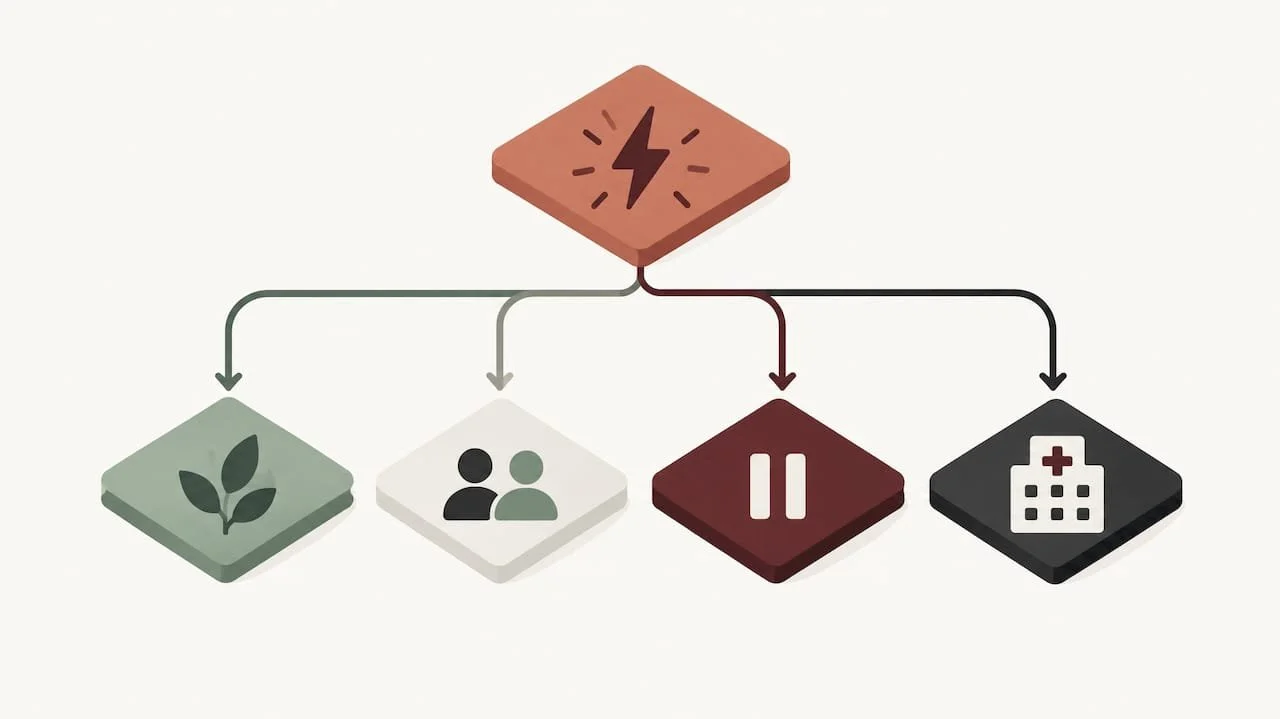
Clear red flags that warrant pausing processing include escalating self-harm thoughts, inability to return to a calm baseline by session's end, or dissociation severe enough to disrupt daily safety. Any of these should prompt a return to stabilization work or referral to a higher level of care before resuming trauma processing.
How to Find and Choose an EMDR Clinician for Complex PTSD
CPTSD treatment outcomes depend heavily on clinician fit, not just technique. A short intake process can reveal whether a provider is equipped for complex cases.
Confirm license and EMDR training: Look for a licensed mental health clinician with completed EMDR training through a recognized program, not just a weekend workshop.
Ask about CPTSD-specific experience: A provider who routinely works with complex, chronic, or relational trauma will have a clearer answer than someone who mostly treats single-incident PTSD.
Ask how they approach sequencing: A thoughtful clinician should explain how they decide between stabilization-first and earlier processing, rather than defaulting to one rigid protocol for everyone.
Ask about intensives if relevant: If a condensed format interests you, ask how they screen for readiness and what aftercare support looks like.
Check practical fit: Bilingual care, identity-affirming practice for LGBTQ+ or BIPOC clients, telehealth availability, and transparent fees and insurance information all affect whether treatment is sustainably long-term.
Our clear guide to what EMDR therapy is covers more background questions worth raising at a first consultation, and grounding practices from trauma-informed self-defense training can offer additional nervous-system regulation tools some clients use alongside formal therapy.
Our Approach to EMDR for Complex PTSD
CPTSD requires individualized sequencing, not a fixed protocol applied the same way to every client. Some people are ready to begin trauma processing early; others need more time building regulation skills and relational trust first, and we adjust based on what each person's nervous system and life circumstances actually call for.
Culturally responsive care matters here too. Bilingual therapy in English and Spanish, with identity-affirming care for Latinx, BIPOC, and LGBTQ+ clients, can be a standard part of trauma-informed practice.
If you are weighing whether EMDR fits your situation, reaching out for a personalized intake conversation is a reasonable next step before committing to a course of treatment.
— Juiced
Where Our EMDR Services Fit Your Next Step
If weekly sessions make more sense for your schedule and stability, our Individual Counseling / EMDR Therapy service offers ongoing, paced treatment built around your specific trauma history.

For clients who are stable and want to move faster, we offer EMDR intensives in three formats: a 3-Day EMDR Intensive (5,750 USD one-off), a 1-Day EMDR Intensive at six hours (2,250 USD one-off), and a 1-Day EMDR Intensive at four hours (1,500 USD one-off). All three are detailed on our EMDR intensives page.
Before your first visit, it helps to prepare:
A brief written history of major trauma events and current symptoms, even if incomplete.
A sense of your current stability, sleep, daily functioning, and any safety concerns.
Questions about pacing, session frequency, or whether an intensive format fits your situation.
We also provide care for related needs, including couples therapy, immigration psychological evaluations, and support for victims of crime, with both in-person appointments in California and online sessions across California and New York. You can review logistics on our what to expect page or book a consultation to talk through what fits your situation.
This article is general information, not a substitute for advice from a qualified doctor. Consult a qualified healthcare professional about your own circumstances before acting on anything here.
FAQ
Does EMDR actually work for C-PTSD?
Evidence supports EMDR as an effective option for many people with CPTSD, though the research base for CPTSD specifically is smaller than for single-incident PTSD. VA/DoD guidance classifies EMDR as a conditionally recommended treatment, and feasibility studies in complex populations report meaningful symptom reductions.
Why is EMDR so exhausting?
EMDR asks your brain to hold a distressing memory in mind while tracking bilateral stimulation, which places real demand on working memory and often triggers autonomic arousal. Fatigue, vivid dreams, and emotional rawness for a day or two afterward are common and typically temporary.
How to heal from C-PTSD?
A 2024 randomized trial found that both phase-based and immediate EMDR approaches led to substantial, lasting improvement, suggesting more than one path can work.
What could go wrong with EMDR?
Common temporary effects include fatigue, emotional intensity, and vivid dreams after sessions, which usually resolve on their own. Less common risks include dissociation or destabilization during processing, which is why careful screening, pacing, and a written safety plan for between-session triggers matter.
Is EMDR better than CBT for treating PTSD?
Neither is universally superior; both EMDR and trauma-focused CBT are listed by the WHO as recommended psychological interventions for PTSD. The right choice often depends on individual preference, trauma history, and whether detailed verbal disclosure feels manageable, since EMDR does not require it the way exposure-based CBT typically does.
Sources
Randomized trial comparing phase-based and immediate EMDR approaches (PubMed entry)
Feasibility of EMDR for PTSD in patients with personality disorders: pilot study (PMC)
