
Healing trauma in relationships: expert therapies for real recovery
TL;DR:
Talking about your past alone does not change its effects, but evidence-based trauma therapies paired with a strong therapeutic alliance can promote healing. Trauma impacts relationships by living in the body and shaping attachment patterns, leading to communication and trust issues rooted in early experiences of neglect, abuse, or witnessing violence. Combining trauma-focused approaches with couple-based therapy helps address both individual symptoms and relationship dynamics, fostering deeper connection and resilience.
Talking about your past is not enough to change it. Many people spend years in conversations about childhood wounds and still find themselves stuck in cycles of withdrawal, conflict, or emotional shutdown with their partners. The real turning point comes with evidence-based trauma therapies like cognitive processing therapy (CPT), prolonged exposure (PE), and trauma-focused CBT, paired with a strong therapeutic alliance. This guide breaks down exactly what works, what the research says, and how to find the right support in California for healing trauma within your relationship.
Table of Contents
Couple-based approaches: improving both trauma and relationship health
Why real relationship healing means more than symptom reduction
Getting professional support for healing trauma in California
Key Takeaways
| Point | Details |
|---|---|
| Attachment issues are common | Childhood trauma often leads to insecure attachment and intimacy struggles in adult relationships. |
| Specialized therapy works best | Trauma-informed and evidence-based therapies provide better outcomes than general counseling. |
| Couple-based approaches help both partners | Therapies involving both people can reduce symptoms and improve relationship health together. |
| Integrated methods have advantages | Combining EMDR, CBT, and other models can address complex trauma and unique relationship needs. |
| Healing requires shared understanding | Open dialogue and joint assessment between partners are keys to lasting relationship repair. |
How trauma impacts intimate relationships
Having set the stage on why healing is possible, let's look at how trauma truly impacts our closest bonds.
Trauma does not stay locked in memory. It lives in the body, in reflexes, and in the automatic assumptions we carry into every close relationship we form as adults. For people who experienced childhood maltreatment, that carry-over can be especially disorienting because the very relationships meant to provide safety become sources of fear and confusion.
The most common types of trauma linked to adult relationship struggles include:
Physical or emotional neglect in early childhood
Sexual abuse, which research associates with some of the strongest disruptions to adult attachment
Emotional abuse and chronic criticism from caregivers
Witnessing domestic violence in the home
Complex or repeated trauma (known as complex PTSD or C-PTSD)
A 2025 BMC Psychology study found that multiple types of childhood maltreatment were associated with adult attachment insecurity, with the strongest associations for emotional neglect and sexual abuse. This matters because attachment insecurity is not just an emotional experience. It shapes how you communicate, how you regulate conflict, and whether you believe a partner can truly be trusted.
In practice, attachment insecurity in relationships looks like this: one partner shuts down during disagreements because emotional intensity feels physically unsafe. Another person stays in constant pursuit, terrified of being abandoned if they relax their vigilance. Both patterns make sense as adaptations to early environments where love was unpredictable or conditional.
"Trauma doesn't just shape memory. It shapes expectations, and those expectations become the invisible architecture of every intimate relationship we build afterward."
Understanding PTSD's impact on relationships helps explain why many couples find themselves having the same argument in different forms. What looks like a communication problem on the surface often has trauma roots underneath.
Why trauma-informed therapy matters
Understanding trauma's effects, it's essential to know why not all therapy approaches are equally effective.
Trauma-informed care is not a single technique. It is a framework built on specific principles that guide how a therapist relates to you and structures the healing process. Those core principles are:
Safety: creating a physical and emotional environment where you are never retraumatized
Trust and transparency: making the process clear so you always know what to expect
Pacing: moving at a speed that your nervous system can actually tolerate
Empowerment: keeping you in control of what you share and when
General counseling can be valuable, but it was not designed for the particular nervous system responses that trauma creates. A therapist without trauma training may accidentally push too fast, interpret avoidance as resistance, or miss the body-based signals that suggest a client has been overwhelmed. This is why specialized modalities matter so much.
Pro Tip: When searching for a therapist in California, ask directly whether they are trained in trauma-specific modalities like EMDR, CPT, or TF-CBT. A general "I do trauma work" answer is not the same as formal certification or supervised training in these methods.
The APA's guidelines on treating PTSD and trauma highlight CPT, prolonged exposure, and trauma-focused CBT as the most evidence-backed psychotherapies currently available. What all three have in common is structure: they are not open-ended conversations but deliberate, phase-based processes designed to help clients process traumatic memories and change the beliefs built around them.
| Therapy modality | Core mechanism | Best suited for |
|---|---|---|
| CPT (Cognitive Processing Therapy) | Challenging and rewriting trauma-based beliefs | PTSD with strong cognitive distortions |
| PE (Prolonged Exposure) | Gradual, guided exposure to trauma memories | Avoidance-heavy PTSD presentations |
| TF-CBT (Trauma-Focused CBT) | Cognitive and behavioral skills with family | Childhood trauma, adolescents, families |
| EMDR | Bilateral stimulation to reprocess trauma memory | Complex trauma, multiple traumatic events |
Another critical factor the APA research emphasizes is the therapeutic relationship itself. The quality of trust between you and your therapist predicts outcomes almost as much as the technique being used. This is why the first few sessions matter so much. Safety is not optional. It is the mechanism through which healing becomes possible. Learn more about what the trauma therapy steps actually look like in practice, and how trauma-specific therapies compare for different presentations.
Couple-based approaches: improving both trauma and relationship health
With trauma-informed principles in mind, let's explore how couple-based therapies add another dimension of practical healing.
Individual trauma therapy is powerful, but it has a limitation: it happens outside the relationship itself. When you leave the therapist's office and return home to a partner who does not understand why certain conversations trigger a shutdown, the progress can feel fragile. This is exactly the gap that couple-based trauma approaches are designed to fill.
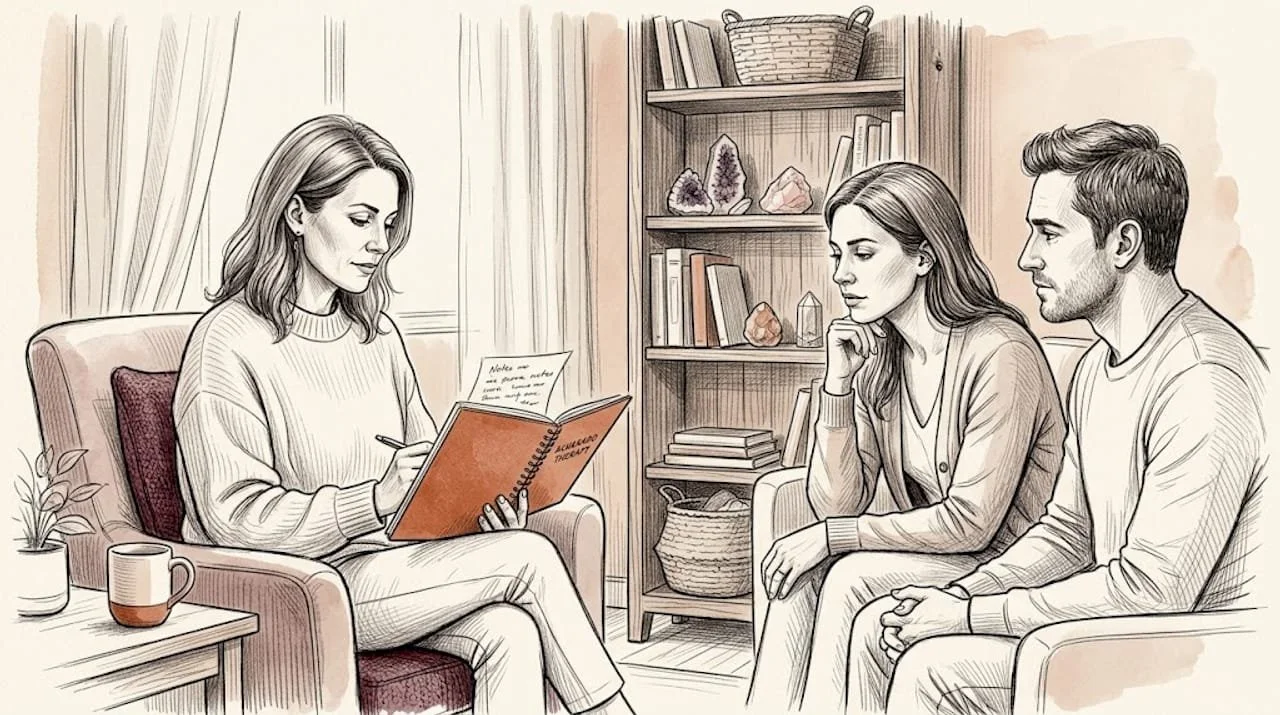
Couple-based trauma therapy involves the partner as an active participant in the healing process. The partner is not positioned as a co-therapist but as someone who needs their own psychoeducation (learning about how trauma works), their own space to process the impact of living with someone recovering from PTSD, and guidance on how to respond in ways that support rather than accidentally destabilize progress.
A 2025 meta-analysis of eighteen clinical studies on couple and partner-involved approaches for PTSD found measurable improvements in both PTSD symptoms and some dimensions of relationship functioning. This is meaningful because it shows that bringing the partner into the process does not dilute the individual healing. In many cases, it accelerates it.
Here is a practical comparison of how individual and couple-based approaches differ:
| Dimension | Individual trauma therapy | Couple-based trauma therapy |
|---|---|---|
| Who is in the room | Client only | Client and partner |
| Partner's role | Supportive at home | Active participant in sessions |
| Relationship focus | Secondary | Primary alongside symptoms |
| Communication skills | Developed individually | Practiced together in real time |
| Risk of misattunement at home | Higher | Reduced through shared understanding |
Some important patterns that couple-based work specifically addresses include:
Partners feeling rejected or shut out when the trauma survivor withdraws
The trauma survivor feeling guilt and shame about the impact on their partner
Miscommunication about triggers, which can lead to repeated conflict
Caregiver fatigue in the partner who has absorbed the emotional load
Learning about EMDR for couples is one practical entry point, and reviewing EMDR intervention examples can help demystify what those sessions actually involve. The research is clear: involving a partner thoughtfully, with proper clinical structure, improves outcomes for both people in the relationship.
Choosing approaches: EMDR, CBT, and integrated methods
Recognizing the value of couple-based healing, let's walk through the major therapy options and how they're practically combined for best results.
Choosing a therapy modality is not like picking from a menu. The right approach depends on your specific trauma history, how your symptoms currently show up, what your relationship looks like, and what you can realistically access in California. Here is a structured way to think through the options.
Start with a thorough clinical assessment. A trauma-trained therapist will gather your history, current symptoms, and relationship context before recommending any modality. This step is not optional. Jumping into exposure-based work without stabilization can cause harm.
Consider EMDR if you have specific traumatic memories that feel stuck. EMDR (Eye Movement Desensitization and Reprocessing) uses bilateral stimulation, often guided eye movements, to help the brain reprocess memories that are stored in a fragmented, high-activation state. The steps of EMDR are structured and phased, beginning with stabilization before any memory work begins.
Consider CPT or PE if your trauma is more recent or involves specific PTSD symptoms like intrusive thoughts, nightmares, and avoidance. These CBT-based models are highly structured and have the largest evidence base in standard PTSD research.
Consider integration if your history is complex. A 2025 article in Psychology Today describes combining Emotionally Focused Therapy (EFT) with EMDR as promising but genuinely complex, noting that EFT alone may not reach the trauma layer deeply enough, and that tailored approaches are necessary. This is not a criticism of EFT. It is a recognition that complex trauma requires multiple tools.
Factor in cultural fit and language access. In California, trauma survivors are a diverse group. Therapy delivered in your primary language with a culturally informed therapist produces better engagement and outcomes. Bilingual care, particularly in Spanish, is not a bonus feature. For many clients, it is the difference between opening up and shutting down.
A 2025 behavioral sciences study reviewing couple therapy for PTSD noted that while early results from integrated couple approaches show large symptom decreases, these are considered preliminary findings due to small sample sizes and uncontrolled designs. This is honest clinical science. The field is moving fast, and evidence is accumulating, but staying grounded in what is established versus what is promising helps you make informed decisions with your therapist.
"The most effective trauma treatment is not the one with the best brand recognition. It is the one that matches your nervous system, your history, and your life context."
Pro Tip: If you are in California and unsure whether to pursue in-person or online therapy, know that online trauma therapy has strong research support for PTSD treatment. Many clients find that the reduced travel barrier actually increases consistency, which is one of the biggest predictors of good outcomes.
Why real relationship healing means more than symptom reduction
Now, let's ground all this research in real-world experience and what's often missed in standard articles about trauma recovery.
There is a version of trauma recovery that looks successful on paper but still leaves people feeling emotionally marooned. Symptoms reduce. Sleep improves. Panic attacks become less frequent. And yet the relationship still feels distant, guarded, like two people circling each other without quite landing.
This is not a therapy failure. It is a signal that symptom reduction is the beginning, not the destination.
Real healing in a relationship means transforming the attachment pattern underneath the symptoms. It means developing the capacity to repair after conflict instead of going cold. It means trusting that your partner's frustration is not a sign they are leaving. It means being able to ask for comfort without shame. These are skills that grow through experience, not through insight alone.
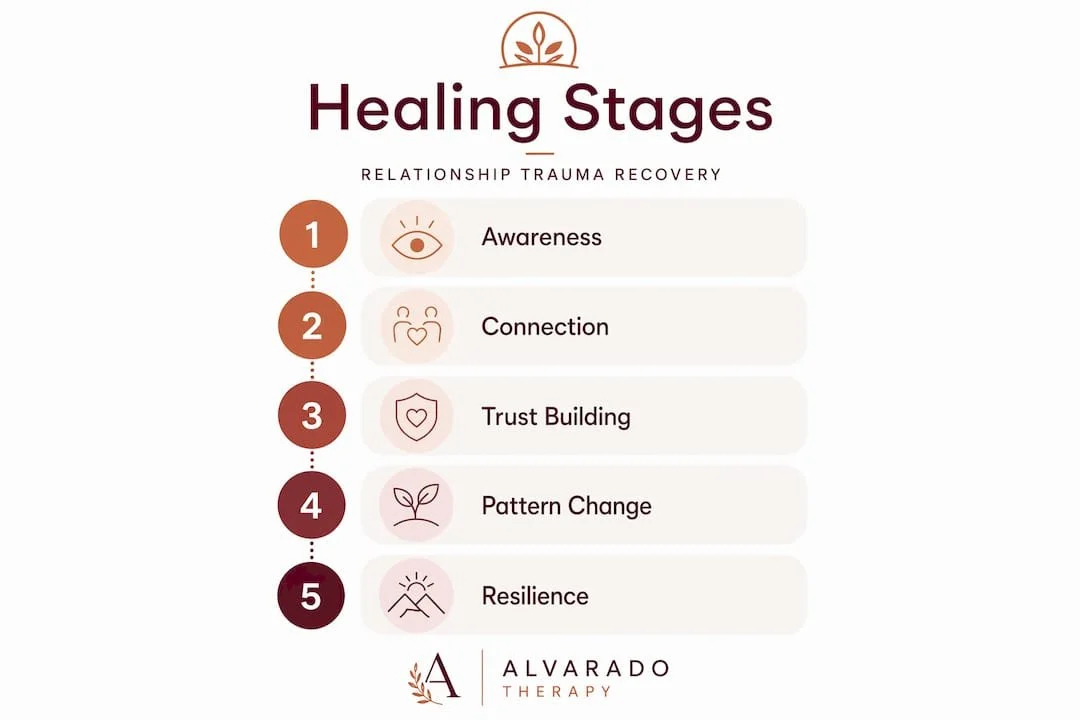
One genuinely underappreciated issue is what happens when partners perceive symptoms differently. Research on perception and PTSD assessment in couples shows that lower agreement about PTSD severity between partners is associated with poorer relationship satisfaction. In plain language: if your partner thinks your trauma responses are overblown, or if they underestimate the severity of what you experience, that gap in understanding becomes a relationship wound in itself.
This is why shared assessment and psychoeducation are not just clinical niceties. They are load-bearing parts of the treatment. A good trauma therapist working with couples will help both partners develop a shared language for what is happening and why. That shared understanding creates the foundation for deeper healing in the relationship in a way that symptom checklists alone cannot.
The practical advice we would offer from clinical experience: do not wait until symptoms are completely resolved to work on the relationship. The two processes can and should run in parallel. The relationship is not a reward you earn after healing. It is part of the healing itself.
Getting professional support for healing trauma in California
If you have read this far, you already understand more about trauma in relationships than most people. The next step is not more information. It is the right support.
Alvarado Therapy works with individuals and couples across California who are navigating the kind of healing this article describes. Whether you are dealing with PTSD and complex trauma from childhood, anxiety that shows up in your relationship, or a partnership that has been strained by trauma's ripple effects, our licensed therapists offer trauma-informed care in English and Spanish, with online therapy available throughout California. You can explore what to expect from the therapy process and find out whether individual sessions, couples therapy, or an EMDR Intensive is the right starting point for you. Healing is not linear, but it does not have to be confusing. We are here to help you find clarity and take that first step with real support.
Frequently asked questions
Can trauma really be healed in a relationship, or does it always cause lasting damage?
With evidence-based trauma-focused and couple-based therapies, many people see significant healing in both symptoms and relationship patterns. A 2025 meta-analysis of eighteen clinical studies supports measurable improvement in both PTSD symptoms and relationship functioning through partner-involved approaches.
How do I know if EMDR, CBT, or couples therapy is right for my situation?
A trauma-trained therapist can assess your history and current needs to recommend the best fit. As clinical research notes, integrating EMDR and EFT can be promising for complex cases, and tailored combined approaches are often more effective than any single modality alone.
Does childhood trauma always show up in adult relationships?
Not always, but the connection is well-documented. A 2025 BMC Psychology study found strong links between childhood maltreatment, particularly emotional neglect and sexual abuse, and adult attachment insecurity in intimate relationships.
What if my partner doesn't think my trauma is that serious?
Different perceptions of trauma severity actively damage relationship satisfaction, according to research on PTSD assessment in couples. Involving a trauma-informed therapist to build shared understanding is one of the most effective ways to close that gap.
Are online trauma therapies as effective as in-person in California?
Research supports strong effectiveness for online trauma therapies for many people, particularly for structured modalities like EMDR and CBT. Individual access needs, technology comfort, and clinical complexity should all factor into that decision with your therapist.
