
Couples therapy for healing: Rebuilding trust and communication
TL;DR:
Many couples delay seeking therapy until they are barely speaking, but early, intentional engagement yields better results. Evidence-based methods like Gottman, EFT, CBT, and IFS effectively rebuild trust, communication, and emotional safety after infidelity or trauma. Healing is a non-linear journey requiring both partners’ dedication, structured support, and patience over months to see lasting change.
Many couples wait until they're barely speaking to each other before they consider therapy. That's understandable, but it's also one of the most common misconceptions about what couples therapy is for. The truth is, evidence-based therapy works best when couples engage with it intentionally, not just desperately. For California couples healing from infidelity, childhood trauma, or PTSD, the right therapeutic framework can restore communication, rebuild trust, and create a relationship that feels genuinely safe again. This article breaks down how that actually happens.
Table of Contents
Key Takeaways
| Point | Details |
|---|---|
| Evidence-based approaches | Gottman Method and EFT support healing after trauma and infidelity. |
| PTSD symptom reduction | Couples therapy improves mental health and relationship functioning. |
| Trust rebuilding framework | Atonement, attunement, and attachment phases guide recovery. |
| Practical communication strategies | Therapists teach actionable skills for better connection and support. |
| California access options | Online couples therapy makes healing feasible for any couple statewide. |
Understanding couples therapy for healing: Foundations and frameworks
After setting the stage, let's break down the proven approaches that guide couples through healing. When most people think of couples therapy, they imagine a mediator sitting between two people who can't stop arguing. The reality is far more structured and far more effective than that image suggests.
Primary methodologiesfor couples therapy healing from trauma or infidelity include the Gottman Method, Emotionally Focused Therapy (EFT), and integrations with Cognitive Behavioral Therapy (CBT), Imago, and Internal Family Systems (IFS). Each of these approaches targets a specific aspect of relational breakdown, and many therapists weave them together depending on what a couple needs most.
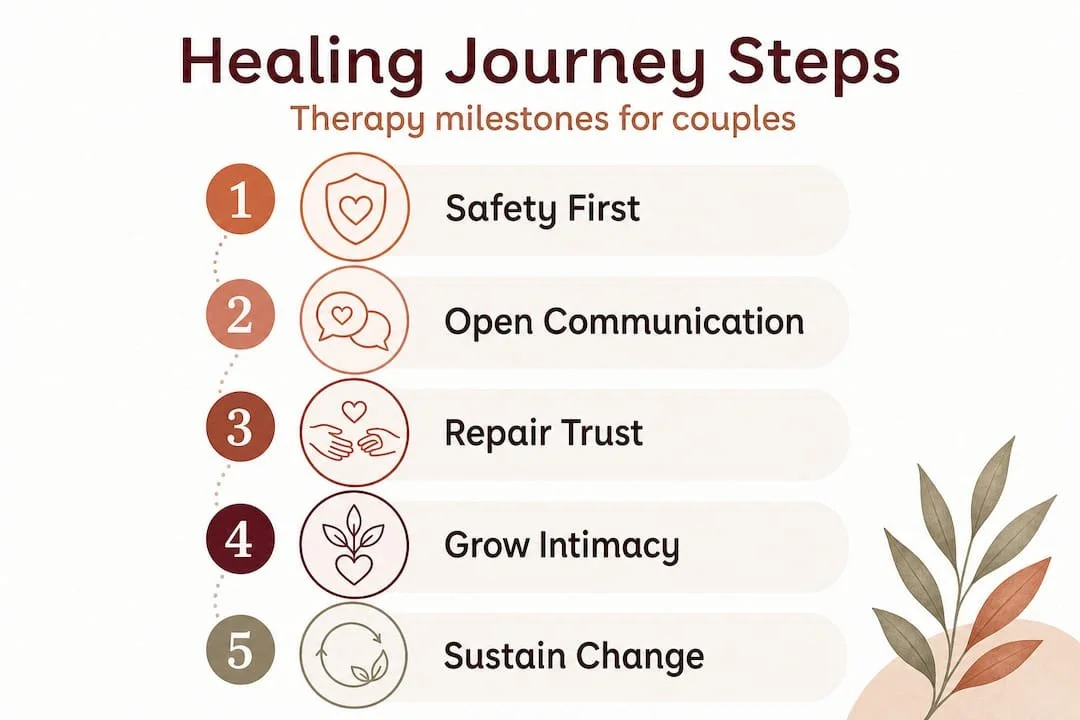
The Gottman Method is one of the most researched frameworks in couples therapy. For healing after infidelity, it uses a three-phase model called Trust Revival:
Atone: The partner who caused harm takes responsibility through genuine remorse, radical transparency, and consistent accountability. This isn't a one-time apology. It's an ongoing posture of openness.
Attune: Both partners learn to process the betrayal together. This means building communication skills, developing deep listening practices, and creating space to talk about painful emotions without defensiveness.
Attach: Once safety is restored, the couple works on rebuilding physical and emotional intimacy, rediscovering shared meaning and reconnecting as partners rather than adversaries.
Emotionally Focused Therapy (EFT) takes a different but equally powerful angle. Developed by Dr. Sue Johnson, EFT is grounded in attachment theory, which means it focuses on the emotional bonds between partners rather than just their behaviors. EFT therapists help couples identify the negative cycles they've fallen into, understand the deeper attachment needs driving those cycles, and create new, more secure patterns of connection. For couples dealing with trauma, EFT is particularly effective because it addresses the emotional wounds underneath the surface conflicts.
CBT and IFS integrations are often brought in when individual trauma is affecting the relationship. For example, if one partner has unresolved childhood trauma that's being triggered inside the relationship, IFS can help them work with those internal parts so they stop driving reactive behaviors. CBT helps couples recognize and challenge the distorted thinking patterns that often follow betrayal, things like "I'll never be able to trust anyone again" or "I must have caused this."
| Therapy Method | Core Focus | Best For |
|---|---|---|
| Gottman Method | Trust, communication, intimacy | Infidelity recovery, communication breakdown |
| EFT | Attachment bonds, emotional cycles | Emotional distance, fear of abandonment |
| CBT | Thought patterns, behavior change | Anxiety, negative belief systems |
| IFS | Internal parts, personal trauma | Couples where one partner has complex trauma |
| Imago | Childhood wounds in adult relationships | Long-term patterns rooted in early experiences |
Understanding the importance of trust in this process cannot be overstated. Trust isn't rebuilt through grand gestures. It's rebuilt through thousands of small, consistent actions over time.
How couples therapy addresses trauma and infidelity
Now that you know the frameworks, here's how they play out for couples dealing with trauma or infidelity. The mechanics of healing are worth understanding because they demystify the process and make it less frightening to begin.
When infidelity happens, it doesn't just damage trust. It creates a trauma response. The betrayed partner often experiences symptoms that look remarkably similar to PTSD: intrusive thoughts, hypervigilance, emotional numbing, sleep disturbances, and a shattered sense of safety. This is why treating infidelity recovery without a trauma lens is often ineffective.
EFT targets attachment injuries from infidelity, reducing shame and increasing intimacy through structured emotional dialogues. What this looks like in session is one partner being guided to express their deepest hurt and fear, while the other is coached to stay present, listen without defending, and respond with genuine empathy. It sounds simple. It is extraordinarily hard to do. That's why a skilled therapist is essential.
Research strongly supports this approach. Couples therapies improve PTSD outcomes, dyadic functioning, and partner symptoms across a range of trauma types, not just infidelity. This means therapy helps both partners, not just the one who was hurt.
Here's a general picture of what the healing process looks like across sessions:
Assessment and stabilization: The therapist gets a clear picture of the relationship history, the nature of the trauma or betrayal, and each partner's individual mental health needs. Safety is established before any deep emotional work begins.
Identifying negative cycles: The couple learns to see the pattern they're stuck in, often a pursue-withdraw dynamic where one partner pushes for connection and the other shuts down. Naming the cycle reduces its power.
Deepening emotional access: Each partner begins to access and share the vulnerable emotions beneath their reactive behaviors. Anger often masks fear. Withdrawal often masks shame.
Restructuring interactions: New patterns are practiced in session. Partners learn to reach toward each other instead of attacking or retreating.
Consolidation: The couple reflects on their growth, acknowledges the work they've done, and builds a shared narrative about how they moved through the hard season together.
"Healing from betrayal isn't just about forgiving. It's about rebuilding the very foundation of how two people understand and trust each other." This is why a structured therapeutic process matters more than good intentions alone.
The PTSD healing guide we've developed at Alvarado Therapy speaks directly to this kind of relational trauma. And our trauma recovery tools offer additional support between sessions, which research consistently shows accelerates the healing process.
Communication and rebuilding trust: Practical strategies
With a clearer sense of how healing happens, let's look at how couples can actively build trust and communicate with strength. Therapy provides the structure, but real change happens in the daily moments between sessions.

The Gottman phases map directly onto practical skills couples can use every day:
Atonement in daily life means the partner who caused harm stays transparent without being asked. Sharing location proactively. Checking in before and after social events. Not minimizing the hurt partner's pain when it resurfaces unexpectedly. Atonement isn't a single moment. It's a sustained commitment to rebuilding safety through consistent, visible behavior.
Attunement in daily life looks like setting aside dedicated time to talk about hard feelings, without the goal of resolution. Not every painful conversation needs to end with answers. Sometimes, being truly heard is the entire point. Deep listening means putting down the phone, making eye contact, and reflecting back what your partner said before you respond. It sounds basic. Most couples have never done it consistently.
Attachment in daily life involves reintroducing touch, playfulness, and shared experiences gradually and intentionally. This doesn't mean pretending things are fine. It means consciously choosing to invest in the relationship while also holding space for the grief that's still present.
Here are several practical communication tips that work well between sessions:
Use "I feel" statements rather than "You always" accusations
Agree on a signal word to pause heated conversations before they escalate
Schedule a weekly check-in where both partners share one appreciation and one need
Keep a shared journal for thoughts that are hard to say out loud
Celebrate small repairs, the moments when a fight de-escalated faster than it used to
Pro Tip: If a conversation is getting too hot to be productive, it's okay to take a 20-minute break. Physiological arousal (racing heart, shallow breathing) literally shuts down the brain's capacity for empathy. Pausing isn't avoidance. It's strategy.
Common pitfalls to avoid include bringing up multiple grievances in a single conversation, using therapy language as a weapon ("You're being defensive right now"), and expecting linear progress. Some weeks will feel like regression. That's normal and doesn't mean therapy isn't working.
Following a thoughtful infidelity recovery plan gives couples a shared framework so they're not reinventing the wheel every time things get hard. The rebuilding trust process also requires both partners to understand that trust isn't restored by a single conversation. It's the cumulative result of hundreds of kept promises and moments of genuine presence.
Therapy outcomes: What California couples can expect
Bringing it all together, here's what California couples can expect from the healing journey in therapy. Managing expectations is important because unrealistic timelines lead to premature dropout, which is one of the biggest obstacles to lasting change.
A meta-analysis of 18 studies found an adherence rate of 69% and significant standardized mean difference (SMD) reductions in PTSD symptoms for couples who completed treatment. In plain terms: most couples who stick with therapy see real, measurable improvements. The ones who don't fully benefit are often those who stop before the process is complete.
Here's what progress realistically looks like across different timeframes:
First 4 to 6 sessions: Couples typically feel understood, identify their main negative cycle, and begin to feel marginally safer in conversations
3 to 4 months in: Communication patterns shift noticeably. Conflicts still happen, but they de-escalate faster. Trust starts to feel like a possibility rather than a fantasy.
6 months and beyond: Intimacy begins to return. Both partners have a more nuanced understanding of each other's trauma responses. The relationship feels like a place of growth rather than just survival.
What healing looks like in everyday life is actually less dramatic than most people expect. It doesn't look like a movie moment where everything clicks. It looks like your partner saying something that would have triggered a three-hour fight six months ago, and instead you both take a breath, use a skill, and move forward in fifteen minutes.
Understanding the lasting benefits of counseling helps couples stay motivated during the harder stretches. And knowing the counseling benefits specific to trauma and infidelity recovery means you can enter the process with realistic hope, not blind optimism.
California couples also have the advantage of being able to access online therapy, which removes barriers like commute time, work schedules, and geographic distance from qualified specialists. For couples in Pasadena, Ventura, or anywhere else in the state, this matters enormously.
Our perspective: Healing is a journey, not a single session
One thing we see repeatedly in clinical work with California couples is the painful collision between the desire for a quick resolution and the reality of what genuine healing actually requires. People come in hoping that six sessions will fix years of accumulated hurt. That's not a character flaw. It's a completely understandable wish. But it sets couples up for discouragement when the fifth session feels harder than the first.
Here's what the research and clinical experience both confirm: healing is not linear. There will be weeks that feel like enormous breakthroughs and weeks that feel like you've slid backward. Both are part of the process. The couples who fare best are the ones who can hold that complexity without catastrophizing it.
We also see a common misconception that one partner doing the "real work" is enough. Healing after infidelity or trauma requires both people to engage. The partner who caused harm needs to sustain accountability far longer than feels comfortable. The hurt partner needs to work through their trauma response, which is not the same as excusing what happened. Both of these are difficult. Neither is optional.
What effective therapy does is provide a container for that difficulty. It doesn't make healing easy. It makes it possible by giving couples a structured, safe space to do the work that would otherwise be too frightening to attempt on their own.
We also want to challenge the idea that evidence-based therapy is cold or clinical. In practice, the best couples therapy is deeply human. It creates space for grief, for anger, for tenderness, and for genuine transformation. Staying current with therapy trends in 2026 means we continue integrating approaches that honor the full emotional reality of what couples go through.
Ready to start your healing journey?
If this article has resonated with you, it may be time to take a concrete step forward. Alvarado Therapy specializes in exactly this kind of work: trauma-informed couples therapy for California couples navigating infidelity, PTSD, and relational breakdown.
Our licensed therapists serve clients across Pasadena, Ventura, and throughout California via secure online sessions. Whether you're just starting to consider therapy or you've been waiting for the right moment to reach out, we're here to help you move from survival mode into genuine healing. Explore what to expect in therapy so you can walk into your first session with clarity and confidence. If trauma is a significant part of your story, our PTSD and trauma treatment services offer specialized support. And for couples ready to take the next step, our couples therapy options page has everything you need to get started.
Frequently asked questions
What therapy methods work best for couples healing after infidelity?
The Gottman Method and Emotionally Focused Therapy (EFT) are both highly effective for healing after infidelity, focusing on rebuilding trust, processing betrayal, and restoring connection. Both methodologies structure the recovery process through clear phases that address remorse, communication, and intimacy in sequence.
Does couples therapy help reduce PTSD symptoms?
Yes, couples therapies significantly reduce PTSD symptoms and improve dyadic functioning, according to multiple meta-analyses. Both the partner with PTSD and their partner tend to show improvement when evidence-based couples therapy is used.
How long does healing through couples therapy take?
Healing timelines vary, but most couples begin seeing measurable change between three and six months of consistent work. A meta-analysis of 18 studies showed significant symptom reductions among couples who completed treatment, with adherence being a key factor in outcomes.
Can couples therapy rebuild intimacy after trauma?
Yes, structured sessions targeting emotional safety and vulnerability help couples restore intimacy after trauma. EFT reduces shame and increases intimacy through guided emotional dialogues that help partners reconnect safely.
Is online couples therapy effective for California couples?
Online couples therapy delivers similar benefits to in-person sessions, especially when using evidence-based frameworks. Established methodologies like the Gottman Method and EFT translate effectively to virtual formats, making quality care accessible across California.
