
How to Navigate Divorce Emotionally: A Healing Guide

TL;DR:
Managing emotions actively is essential for healing after divorce, as grief triggers similar responses to major loss.
Physical exercise and breathing techniques like box breathing effectively reduce stress and improve emotional regulation.
Divorce emotional recovery is the process of actively managing your feelings, thoughts, and behaviors to regain stability after a marriage ends. The clinical term for this process is grief processing, and it applies directly to divorce because the loss of a marriage triggers the same neurological and psychological responses as any major loss. This guide gives you practical tools, evidence-based coping strategies, and clear guidance on when to seek professional support so you can move forward with clarity and confidence. Whether you are weeks into the process or months out, the strategies here work.
How to navigate divorce emotionally: understanding the process
Divorce grief does not follow a straight line. You will not move neatly from denial to acceptance. Instead, expect waves. You may feel relief one morning and profound sadness by afternoon. Recognizing emotional phases can normalize these intense feelings and point toward a clearer path of healing.
The most common emotions people report during divorce include grief, anger, guilt, fear, and relief. These feelings often arrive together, not in sequence. Guilt and relief, for example, frequently coexist, especially when you initiated the divorce. That combination confuses people and makes them question whether their feelings are valid. They are.
Emotions during divorce also carry real information. Feelings act as signals that reveal your core values and can guide both legal negotiations and personal growth. A surge of anger about custody arrangements, for instance, signals how deeply you value your role as a parent. Treating that anger as data rather than noise changes how you respond to it.
One common misconception is that the emotional stages of divorce are a checklist you complete and move past. They are not. Many people cycle back through earlier stages, sometimes triggered by a court date, a holiday, or an unexpected encounter. Expecting this reduces the shock when it happens.
"The goal is not to stop feeling. The goal is to stop being controlled by what you feel."
What coping strategies actually work during divorce?
Physical exercise is the most effective immediate tool for managing divorce-related emotional distress. 20–30 minutes of moderate activity such as walking, swimming, or cycling 3–5 times per week reduces cortisol and improves mood regulation. That is not a wellness platitude. Cortisol is the stress hormone that keeps your nervous system in a state of alarm, and exercise is one of the few interventions that reliably lowers it.
Box Breathing is the second tool worth learning immediately. This technique involves four steps:
Inhale slowly for 4 seconds.
Hold your breath for 4 seconds.
Exhale fully for 4 seconds.
Hold again for 4 seconds before repeating.
Box Breathing activates the parasympathetic nervous system, which is the body's "rest and recover" mode. Use it during panic, before difficult conversations, or when you feel overwhelmed at 2 a.m.
Self-compassion is not optional in this process. Treat yourself the way you would treat a close friend going through the same experience. That means allowing yourself to grieve without judgment, maintaining basic routines like regular meals and sleep, and resisting the urge to evaluate your progress daily.

Avoid making major life decisions in the early months after divorce. Heightened nervous system arousal impairs long-term decision-making clarity. Signing a new lease, quitting your job, or starting a new relationship before you have stabilized emotionally often creates a second wave of disruption you did not need.
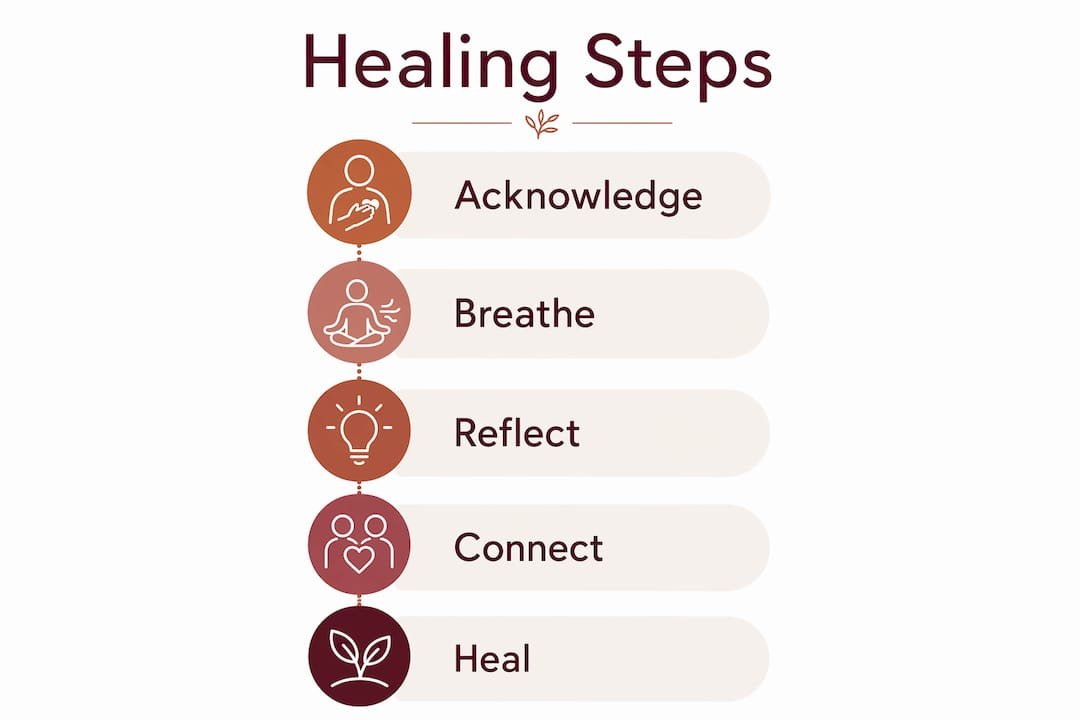
Pro Tip: Keep a feelings journal. Write for 10 minutes each morning. Do not edit yourself. Research consistently shows that expressive writing reduces emotional intensity and helps you identify patterns in your reactions.
How can support networks and professional help improve your recovery?
Isolation is one of the most damaging responses to divorce, and it is also one of the most common. Talking with trusted friends and family members provides emotional validation and breaks the feedback loop of rumination. You do not need people to solve your problems. You need people to witness your experience.
Support groups offer a specific benefit that friends and family cannot always provide: shared experience. Online support groups are as effective as in-person groups and are especially useful for people with childcare responsibilities or unpredictable schedules. Knowing that others have survived the same feelings reduces shame and builds perspective.
Professional therapy becomes necessary when your symptoms cross certain thresholds. The clearest indicators include:
Persistent depression or anxiety that does not lift after several weeks
Inability to function at work or care for your children
Substance use as a primary coping mechanism
Intrusive thoughts or flashbacks related to the marriage or divorce
Complete social withdrawal lasting more than a few weeks
Emotional support during divorce is as critical as legal strategy. Clients who lack emotional guidance often pursue unfeasible legal outcomes and incur extra expenses as a result. A therapist does not just help you feel better. A therapist helps you think more clearly, which directly affects the quality of your legal and financial decisions.
Grief counseling and trauma-informed care are the two most relevant clinical approaches for divorce recovery. Grief counseling addresses the loss itself. Trauma-informed care addresses cases where the marriage involved abuse, betrayal, or chronic emotional harm. Both are available through Alvaradotherapy, which serves clients across California in English and Spanish.
What emotional pitfalls should you watch for during divorce?
The most underrated skill in divorce recovery is learning to distinguish thoughts from feelings. Labeling "I feel anxious" as a feeling and "I will lose my house" as a thought prevents unnecessary panic. Thoughts are predictions. Feelings are present-moment experiences. Treating a thought as a fact creates a spiral that is hard to exit.
Several other pitfalls consistently slow recovery:
Emotional suppression. Pushing feelings down does not eliminate them. It delays them and often intensifies them.
Rebound relationships. Starting a new relationship before you have processed the old one transfers unresolved pain onto a new person.
Excessive contact with your ex-spouse. Every unnecessary interaction can reset your emotional baseline and delay stabilization.
Rushing major changes. Moving cities, changing careers, or dramatically altering your appearance in the first six months often reflects avoidance rather than growth.
Emotional "stuckness" is a real clinical phenomenon. Symptoms persisting beyond 12 months indicate complicated grief requiring professional clinical support. If you are still unable to function, maintain relationships, or imagine a future after a year, that is not a character flaw. It is a clinical signal that you need more support than self-help strategies can provide.
Pro Tip: Set a "contact boundary" with your ex-spouse. Limit communication to practical matters like co-parenting logistics or legal requirements. Every unnecessary conversation is an opportunity for emotional regression.
You can read more about recognizing when grief has crossed into clinical territory in this guide on complicated grief signs from Alvaradotherapy.
What daily habits build resilience after divorce?
Resilience after divorce is built through small, consistent actions, not dramatic transformations. The one-day-at-a-time mindset is not a cliché. It is a neurological strategy. Your brain processes manageable chunks of time more effectively than open-ended uncertainty.
Start with these daily practices:
Anchor your morning. Wake at the same time each day. Eat breakfast. Move your body for at least 20 minutes. These three actions stabilize your circadian rhythm and cortisol levels before the day's stressors arrive.
Set one small goal per day. Not a life goal. A task goal. "I will call my attorney." "I will cook dinner." Small completions rebuild the sense of agency that divorce erodes.
Practice a mindfulness technique. Box Breathing, body scans, or five-minute meditation apps like Headspace or Calm reduce the intensity of intrusive thoughts.
Protect your sleep. Sleep deprivation amplifies every negative emotion. Prioritize 7–8 hours even when anxiety makes it difficult. Limit screens for an hour before bed.
Redefine your identity deliberately. Divorce removes a role you held, sometimes for decades. Reconnect with interests, friendships, and goals that existed before the marriage. This is not about forgetting. It is about remembering who you are outside of it.
Nutrition matters more than most people acknowledge during this period. Chronic stress depletes B vitamins and magnesium, both of which support mood regulation. Eating regular meals with protein, vegetables, and complex carbohydrates is not a luxury. It is part of your recovery protocol.
For additional guidance on grief support strategies tailored to California adults, Alvaradotherapy has published practical resources that complement these daily habits.
Key Takeaways
Effective divorce emotional recovery requires combining physical self-care, emotional awareness, and professional support rather than relying on any single strategy alone.
| Point | Details |
|---|---|
| Exercise reduces distress fast | 20–30 minutes of moderate activity 3–5 times per week lowers cortisol and stabilizes mood. |
| Emotions carry information | Feelings signal core values and can guide better decisions in legal and personal matters. |
| Thoughts and feelings differ | Labeling thoughts separately from feelings prevents panic spirals and improves coping. |
| Seek help after 12 months | Persistent symptoms beyond a year indicate complicated grief requiring clinical intervention. |
| Daily routines rebuild agency | Anchoring mornings, setting small goals, and protecting sleep restore a sense of control. |
What I have learned from watching people heal after divorce
The most consistent pattern I have seen in divorce recovery is this: the people who heal fastest are not the ones who feel the least. They are the ones who feel fully and then act deliberately. They cry, they journal, they call their therapist, and then they make their next small decision. They do not wait to feel better before they start living.
The conventional advice to "give yourself time" is incomplete. Time alone does not heal. Time plus intentional action heals. I have watched people spend three years in the same emotional place because they were waiting for the pain to pass on its own. Pain does not pass. You move through it.
The other thing worth saying directly: asking for help is not weakness. The people who reach out to therapists, support groups, and trusted friends consistently recover faster and make better decisions than those who go it alone. That is not an opinion. It is what the research on therapy in divorce recovery shows repeatedly.
Be patient with yourself. Be honest about where you are. And do not mistake movement for healing or stillness for failure. Both are part of the process.
— Juiced
Ready to stop surviving and start healing?
Alvaradotherapy is a California-based trauma-informed practice with licensed therapists who specialize in grief, PTSD, and divorce-related emotional distress. The team serves clients across Pasadena, Ventura, and online throughout California in both English and Spanish.
If your symptoms have persisted for months, if you are struggling to function, or if you simply want professional guidance through this process, Alvaradotherapy offers EMDR trauma therapy and individual counseling designed for exactly this kind of recovery. You can also schedule a consultation to speak with a therapist and find the right fit before committing to a full program. Healing is not a solo project.
FAQ
What does it mean to navigate divorce emotionally?
Navigating divorce emotionally means actively managing your feelings, thoughts, and behaviors during and after the divorce process to regain stability and move forward. It involves using coping strategies, building support networks, and seeking professional help when needed.
How long does emotional recovery from divorce take?
Recovery timelines vary widely, but symptoms persisting beyond 12 months signal complicated grief that requires clinical support. Most people begin to stabilize within the first year when they use consistent coping strategies and maintain social connections.
What is the most effective coping strategy for divorce stress?
Physical exercise is the most effective immediate intervention for divorce-related distress. Twenty to thirty minutes of moderate activity 3–5 times per week reduces cortisol and improves mood regulation.
When should I see a therapist during divorce?
Seek professional support if you experience persistent depression, inability to function at work or home, substance use as a coping tool, or complete social withdrawal lasting more than a few weeks. These are clinical signals, not personal failures.
What is complicated grief in the context of divorce?
Complicated grief is a clinical condition where normal grief symptoms do not resolve over time. In divorce, it is indicated by emotional stuckness, inability to imagine a future, or persistent inability to function beyond 12 months after the separation.
