
Therapeutic Process for Couples: A Step-by-Step Guide

TL;DR:
Couples therapy is a structured process guided by a therapist to improve communication and rebuild emotional bonds. Key phases include assessment, goal setting, skill-building, and outside practice, with techniques like EFT and the Gottman Method targeting underlying emotional patterns. Consistent effort, open honesty, and practicing new skills outside sessions are essential for lasting relationship improvements.
The therapeutic process for couples is a structured, therapist-guided collaboration designed to improve communication, resolve conflict, and rebuild emotional connection between partners. Unlike informal conversations or self-help books, couples therapy follows a deliberate arc: assessment, skill-building, and sustained practice. Models like Emotionally Focused Therapy (EFT) and the Gottman Method give therapists a clinical framework to work from, while sessions typically run 50–75 minutes to allow both partners enough time to engage fully. What you get out of this process depends heavily on what you both put in.
What are the key stages in the therapeutic process for couples?
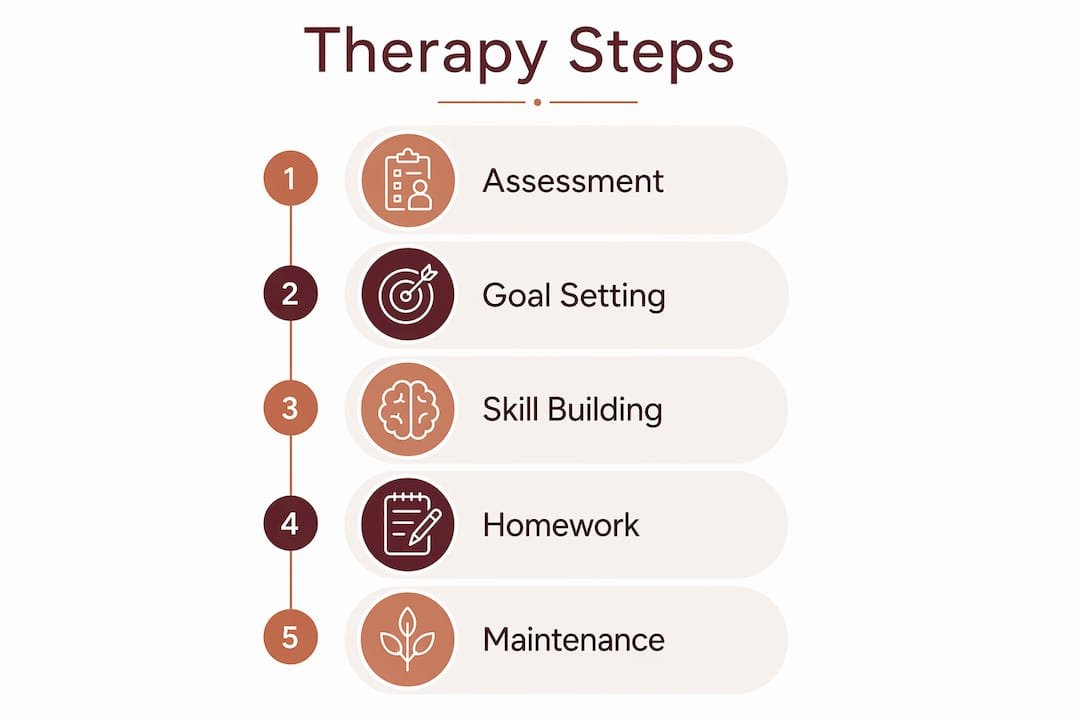
The relationship counseling process moves through distinct phases, and knowing what to expect at each stage reduces anxiety and increases commitment. Most couples enter therapy feeling overwhelmed. A clear roadmap changes that.
Initial assessment. Your therapist gathers a detailed relationship history, identifies each partner's goals, and maps out the dynamics driving conflict. Structured assessment tools like the Gottman Checkup and Prepare/Enrich are commonly used here. These tools reveal strengths you may not have noticed and pinpoint patterns that are quietly eroding trust.
Goal-setting and treatment planning. After the assessment, your therapist builds a plan tailored to your specific needs. One couple may need conflict de-escalation first. Another may need to rebuild emotional intimacy before tackling communication breakdowns. The plan is not fixed. Therapy plans are adjusted as new concerns surface or goals shift.
Skill-building sessions. This is the core of the process. You and your partner practice communication techniques, conflict resolution strategies, and emotional attunement exercises directly in session. The therapist coaches in real time, which is something no workbook can replicate.
Consolidation and transfer. Progress made in the therapy room only sticks if you practice outside it. Meaningful progress depends on couples completing homework and applying new skills in daily life. This phase is where real change either takes root or stalls.
Follow-up and maintenance. Sessions taper as the couple gains confidence. Some couples schedule monthly check-ins for accountability. Others return briefly when a new stressor arises.
Pro Tip: Write down one specific goal before your first session. Couples who arrive with even a rough idea of what they want to change move through the assessment phase faster and feel more invested from day one.
Which couples therapy techniques are most effective?

Not all couples therapy techniques work the same way for every relationship. The most widely researched approaches share one thing: they target the emotional and behavioral patterns underneath the surface conflict, not just the arguments themselves.
Emotionally Focused Therapy (EFT)
EFT centers on attachment injuriesand works by identifying and repairing the negative interaction cycles that keep couples stuck. Developed by Dr. Sue Johnson, EFT is a short-term, trauma-informed model that treats emotional disconnection as the root of most relationship distress. It is one of the most researched approaches in the field, with strong outcomes for couples dealing with conflict, infidelity recovery, and emotional withdrawal.
Gottman Method
The Gottman Method, developed by Drs. John and Julie Gottman, focuses on building friendship, managing conflict, and creating shared meaning. It uses specific exercises like the "Four Horsemen" framework to help couples recognize destructive communication patterns such as contempt, criticism, defensiveness, and stonewalling. The method is highly structured and gives couples concrete tools they can use immediately.
Behavioral and communication-based techniques
Beyond full therapy models, therapists draw on a set of proven techniques regardless of their primary orientation:
Reflective listening: You repeat back what your partner said before responding. This slows the conversation and reduces misinterpretation.
Cycle tracking: Identifying pursue-withdraw patterns helps couples see the loop they are caught in rather than blaming each other for individual moments.
De-escalation protocols: Structured time-outs with agreed re-engagement windows prevent conversations from turning into shutdowns.
Trauma-informed approaches: When one or both partners carry unresolved trauma, therapists integrate trauma-sensitive techniques to keep sessions emotionally safe.
| Technique | Primary focus | Best suited for |
|---|---|---|
| Emotionally Focused Therapy (EFT) | Attachment and bonding repair | Emotional disconnection, recurring conflict |
| Gottman Method | Communication and friendship | Conflict patterns, trust rebuilding |
| Reflective listening | Active communication | Daily misunderstandings, reactive arguments |
| Cycle tracking | Behavioral pattern awareness | Pursue-withdraw dynamics |
| Trauma-informed approaches | Emotional safety | Couples with trauma history |
The most effective therapy combines elements from multiple approaches based on what the couple actually needs, not what fits a single model.
How do couples build effective communication during and after therapy?
Effective communication in couples is not a personality trait. It is a skill set, and it can be learned at any stage of a relationship. Therapy accelerates that learning by giving you a structured environment to practice without the conversation spiraling.
Active listening, mirroring, and validation are the three foundational skills therapists return to repeatedly. Active listening means giving your full attention without planning your rebuttal. Mirroring means reflecting your partner's words back to confirm understanding. Validation means acknowledging that your partner's feelings make sense, even when you disagree with their interpretation.
Here is how to reinforce these skills between sessions:
Schedule a weekly check-in. Set aside 20 minutes with no phones, no distractions, and a single topic. Use it to share one appreciation and one concern using "I" statements only.
Practice the pause. When a conversation heats up, agree to a 20-minute break before continuing. This is not avoidance. It is physiological regulation.
Use your therapist's language. If your therapist introduced a specific phrase or framework, use it at home. Shared vocabulary builds a private communication culture between you and your partner.
Track your wins. Write down one moment each week when you communicated well. Couples who notice progress stay motivated through harder stretches.
Homework and real-world practice are not optional extras. They are the mechanism through which therapy actually works. The session is the lab. Your daily life is the experiment.
Pro Tip: If a conversation is escalating, try saying "I'm feeling flooded right now" instead of going silent or raising your voice. This phrase signals a need for a break without triggering your partner's fear of abandonment or dismissal.
Explore communication exercises that work to build a stronger daily practice between sessions.
What challenges do couples face during therapy, and how do they overcome them?
Every couple hits friction during the relationship counseling process. Knowing the most common obstacles in advance means you are less likely to interpret them as signs that therapy is failing.
Emotional discomfort in session. Therapy sessions can feel uncomfortable as couples surface suppressed emotions and long-avoided topics. This discomfort is not a sign something is wrong. It is evidence that the process is working. Expect some sessions to feel harder than others.
Expecting quick results. Most couples enter therapy hoping for rapid transformation. The reality is that meaningful change takes weeks to months of consistent effort. Couples who frame therapy as a long-term investment rather than a short-term fix stay engaged longer and see better outcomes.
One partner is more reluctant than the other. This is one of the most common issues in couples therapy. The reluctant partner often fears being blamed or exposed. A skilled therapist creates a safe, validating environment where both partners feel heard rather than judged. If your partner is hesitant, acknowledge their concern directly rather than pressuring them.
Uneven effort outside sessions. When one partner completes homework and the other does not, resentment builds fast. Address this directly with your therapist rather than letting it fester. It is a solvable problem, not a character flaw.
Stagnation or plateau. Progress sometimes slows after an initial breakthrough. This is normal. Your therapist can adjust the treatment plan, introduce new techniques, or shift focus to a different area of the relationship.
The couples who get the most from therapy are not the ones with the least conflict. They are the ones who stay honest with their therapist and with each other, even when it is uncomfortable.
Key Takeaways
The therapeutic process for couples succeeds when both partners commit to structured skill-building inside sessions and consistent practice outside them.
| Point | Details |
|---|---|
| Assessment comes first | Tools like Gottman Checkup and Prepare/Enrich identify patterns before treatment begins. |
| EFT targets the root cause | Emotionally Focused Therapy repairs attachment injuries, not just surface-level arguments. |
| Practice outside sessions is required | Homework and daily communication exercises are where lasting change actually happens. |
| Discomfort signals progress | Emotional difficulty in sessions is a normal and necessary part of the healing arc. |
| Plans must stay flexible | Effective therapy adjusts goals and techniques as the couple's needs evolve. |
What I have learned from watching couples do this work
Most couples arrive in therapy believing the problem is their partner. That belief is understandable. It is also the single biggest obstacle to progress. The shift that changes everything is when both people stop trying to win the argument and start trying to understand the cycle they are both caught in.
I have seen couples who seemed completely stuck make remarkable progress once they understood that their conflict was not about dishes or money or parenting. It was about fear of disconnection. That reframe, which EFT makes central, is genuinely powerful. It moves the conversation from blame to vulnerability.
The other thing I want you to know is that couples therapy advantages are not reserved for relationships in crisis. Some of the most productive therapy I have observed involves couples who are functioning reasonably well but want to build something stronger before stress hits. Preventive work is underrated.
Therapy is not a passive experience. You do not sit in a room and get fixed. You practice, you get uncomfortable, you try again. The couples who treat sessions as a place to rehearse new behaviors rather than a place to vent old grievances are the ones who leave with something real.
— Juiced
Ready to start couples therapy with Alvarado Therapy?
If you and your partner are ready to move from conflict to connection, Alvarado Therapy offers online couples therapy designed for California couples who want professional, trauma-informed support without the barrier of in-person scheduling. Sessions are available in English and Spanish, with licensed therapists who understand the full complexity of relationship repair.
Alvaradotherapy brings a trauma-sensitive, culturally responsive approach to every session, whether you are working through communication breakdowns, rebuilding trust, or navigating a major life transition together. Book a free consultation to find out whether couples therapy is the right next step for you.
FAQ
What does the therapeutic process for couples involve?
The therapeutic process for couples involves structured sessions with a licensed therapist focused on communication, conflict resolution, and emotional reconnection. It typically moves through assessment, skill-building, and a maintenance phase.
How long does couples therapy usually take?
Most couples see meaningful progress after 8–20 sessions, though this varies based on the complexity of issues and how consistently both partners practice skills outside sessions.
What is Emotionally Focused Therapy (EFT) in couples counseling?
EFT is a short-term therapy that identifies and repairs negative interaction cycles rooted in attachment insecurity. It is one of the most researched models in couples counseling.
What if one partner does not want to go to therapy?
A reluctant partner is one of the most common issues in couples therapy. Therapists are trained to create a non-judgmental space where both partners feel heard rather than evaluated, which often reduces initial resistance over time.
Do couples need to do homework between sessions?
Yes. Progress in couples therapy depends directly on practicing new communication and self-regulation skills outside sessions. Homework is not optional. It is where the real change takes hold.
