
How Couples Counseling Works: What to Expect
TL;DR:
Couples counseling is a structured, goal-oriented process that improves communication, rebuilds trust, and fosters lasting change. It typically involves assessment, goal-setting, and skill-building, with a neutral therapist guiding productive dialogue. Evidence-based approaches like the Gottman Method and EFT have strong research support and deliver meaningful long-term improvements.
Most people assume couples counseling is a last resort, the kind of thing you try before deciding to walk away. That assumption stops a lot of couples from getting help they actually need. Understanding how couples counseling works changes that picture entirely. It's a structured, goal-oriented process designed to improve communication, rebuild trust, and shift the patterns that keep you stuck. Whether you've been together two years or twenty, the process follows a clear path from assessment through skill-building to genuine, lasting change.
Table of Contents
Key Takeaways
| Point | Details |
|---|---|
| Counseling is structured, not open-ended | Sessions follow a clear arc from assessment to goal-setting to practiced skill-building. |
| Therapists stay neutral | Your counselor guides dialogue without taking sides, so both partners feel heard and respected. |
| Two main models dominate | The Gottman Method and Emotionally Focused Therapy (EFT) have the strongest research backing of any approach. |
| Change requires practice outside sessions | Skills taught in sessions only stick when couples actively use them in daily life. |
| Starting early produces better results | Couples who seek help before a crisis hit see faster progress and longer-lasting improvements. |
How couples counseling works: the structure and therapist role
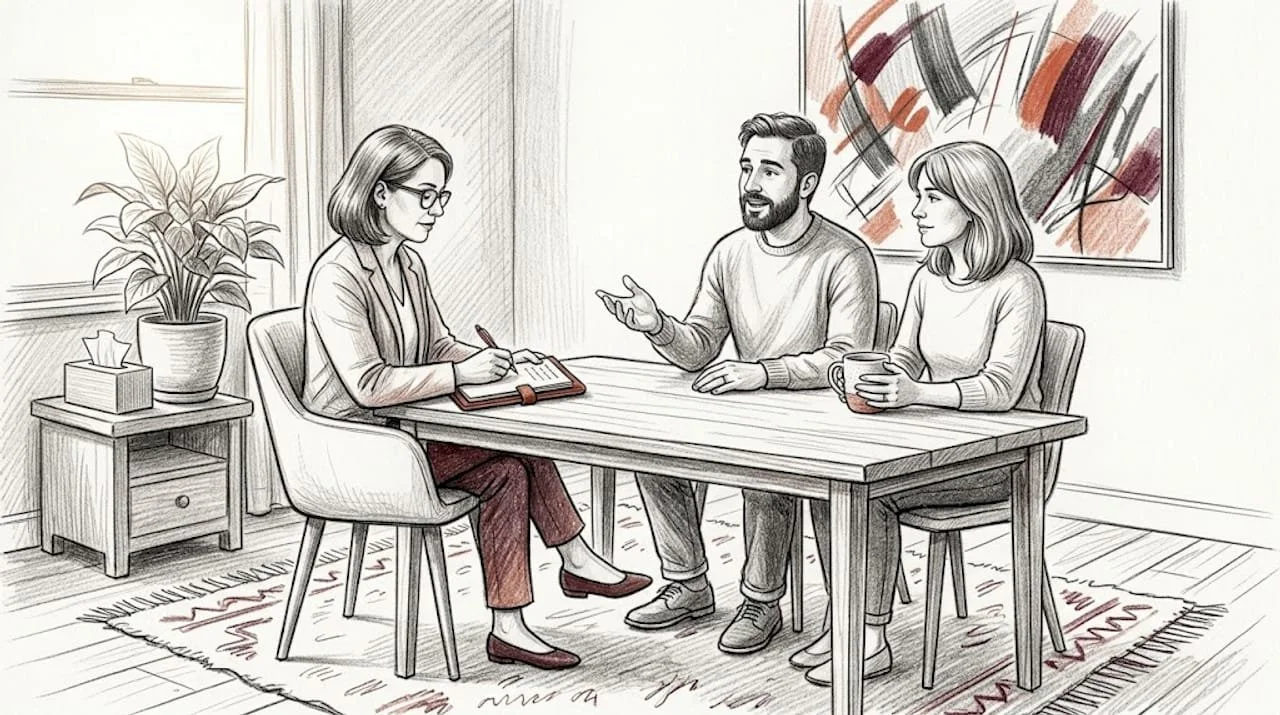
Couples therapy is structured psychotherapy focused entirely on relationship dynamics, not on diagnosing or labeling either individual. That distinction matters. You are not walking into a room where one of you will be identified as the problem. The therapist is there as a neutral facilitator, not a judge.
A typical course of couples counseling moves through three broad phases. Here's what that progression looks like in practice:
Assessment. The first one to three sessions focus on gathering information. Your therapist will ask about relationship history, communication patterns, recurring conflicts, and individual backgrounds. Many therapists use a structured intake questionnaire to map out where both of you currently stand.
Goal-setting. Once the therapist has a clear picture, you'll collaboratively define what success looks like. Some couples want to stop fighting about the same things. Others want to feel emotionally close again. The goals shape every session that follows.
Skill-building and practice. The bulk of sessions focus on learning and applying specific communication tools, conflict resolution strategies, and connection rituals. The therapist models, guides, and gives feedback in real time.
The therapist remains neutral, does not take sides, and works to create an environment where both partners feel equally heard. This is not group therapy where peers weigh in. It's a controlled, focused space designed for productive dialogue.
Both partners' willingness to engage is the single biggest variable in outcomes. A therapist can offer every tool available, but if one partner is there physically but checked out emotionally, progress will stall.
Pro Tip: If you're nervous about the first session, write down three things you want your partner to understand about your experience. It doesn't have to be shared, but having it written grounds you and gives the therapist something concrete to work with.
The two main evidence-based approaches
When you start researching how relationship counseling works, two names come up repeatedly: the Gottman Method and Emotionally Focused Therapy, known as EFT. Both have strong research support. They approach the work from different angles.
| Feature | Gottman Method | Emotionally Focused Therapy (EFT) |
|---|---|---|
| Core focus | Communication skills and conflict management | Emotional bonding and attachment |
| Main technique | De-escalation, attunement, connection rituals | Identifying emotion cycles, vulnerability, restructuring responses |
| Tone | Structured and skills-based | Experiential and emotionally driven |
| Best for | Couples stuck in repetitive conflict patterns | Couples with emotional distance or attachment wounds |
| Research support | Strong empirical backing for sustained outcomes | 70 to 75% of couples show meaningful improvement |
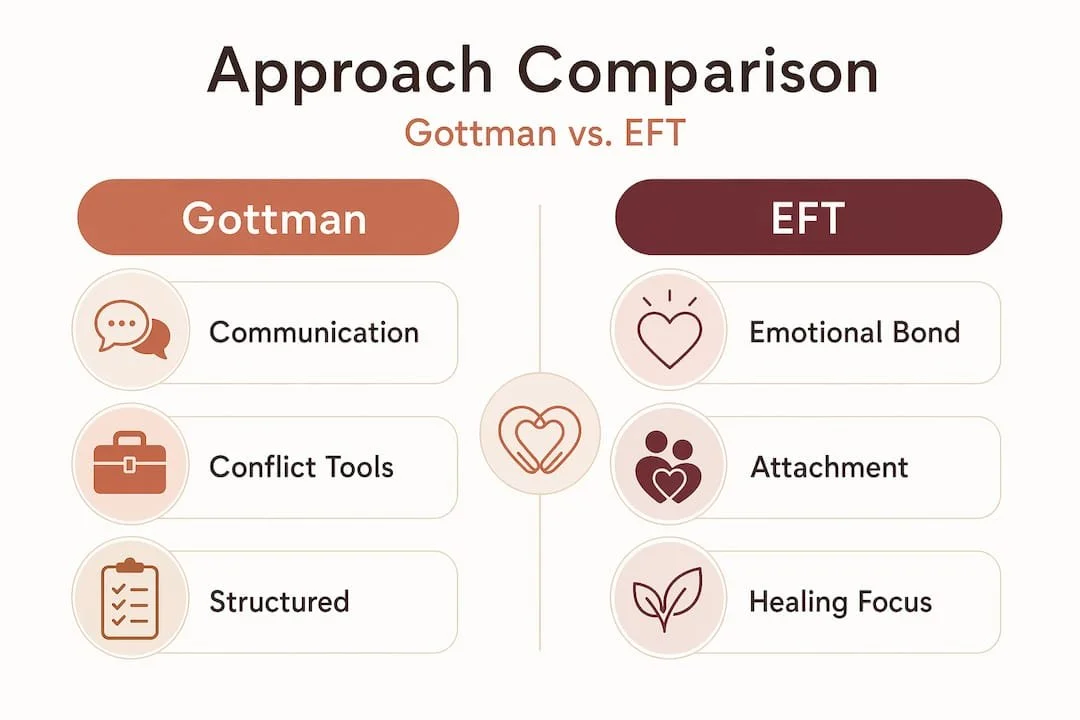
The Gottman Method does not aim to eliminate all disagreement. Instead, it focuses on managing conflict with respect and empathy, teaching couples to de-escalate arguments, increase attunement, and express needs without blame. One of its most practical ideas is the concept of "rituals of connection," small, repeatable behaviors that build closeness over time.
EFT takes a different route. It centers on uncovering the underlying emotions driving the conflict, things like fear, longing, or feeling unseen. EFT focuses on creating new emotional responses rather than just changing conversational habits. When a partner learns to show vulnerability instead of shutting down, the cycle that keeps both people stuck begins to break.
Key things to know about choosing between these approaches:
Neither approach is universally better. No single best model exists, but both Gottman and EFT consistently outperform unstructured talk therapy in research.
Many therapists are trained in both and will draw from each based on your specific needs.
If trauma is part of your relationship history, a trauma-informed lens matters alongside either approach. You can explore more about different therapy methods to understand which might fit your situation.
The counseling process step by step
Knowing what happens inside the sessions removes a lot of anxiety about starting. Here's how the process typically unfolds once you get past the first assessment:
Individual and joint intake. Many therapists conduct at least one individual session with each partner in addition to joint meetings. This creates space to share things that feel difficult to say in front of the other person. Some practices use the Gottman Relationship Checkup, a detailed questionnaire that generates a report revealing how each partner perceives the relationship, often surfacing differences neither had noticed.
Identifying negative cycles. The therapist helps you recognize the recurring interaction pattern that escalates conflict. It might look like one partner withdrawing while the other pursues, or both shutting down at the same time. Naming the cycle takes it out of the realm of personal attacks and into something both of you can actually address together.
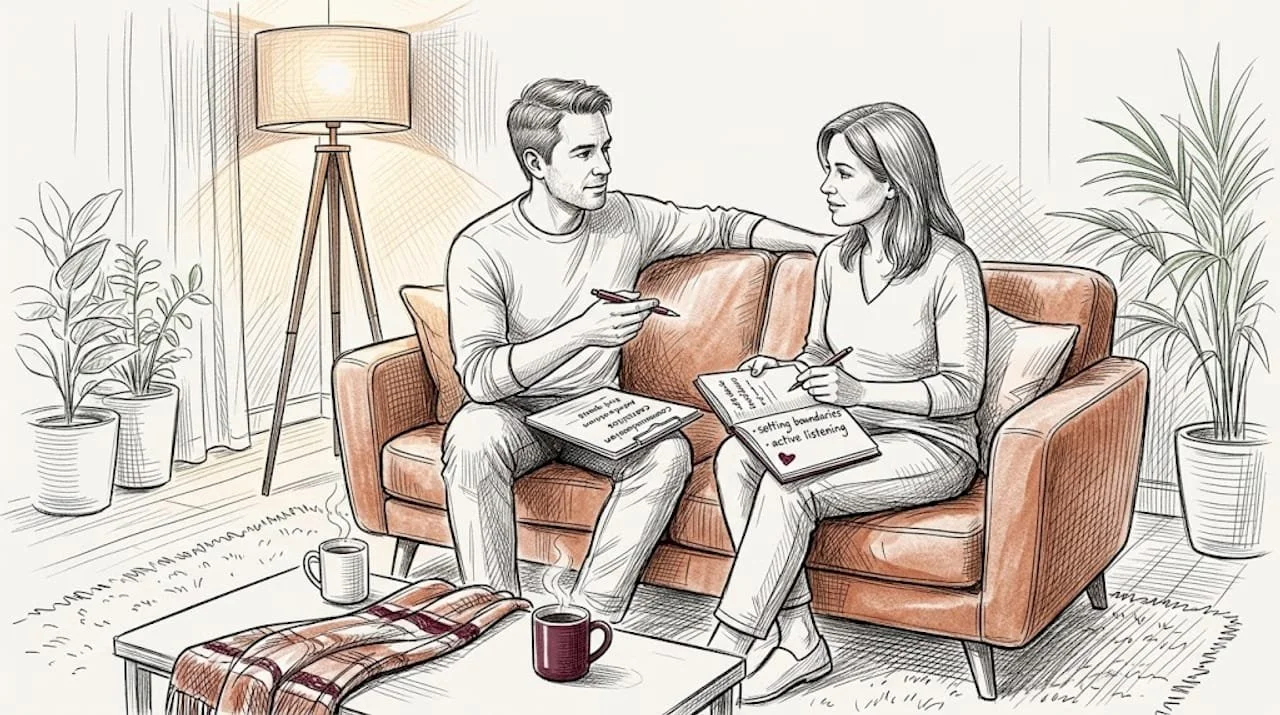
Learning and practicing skills. Therapists teach structured communication skills including active listening, emotional validation, and repair attempts. A repair attempt is any action that interrupts an argument before it spirals. It could be a specific phrase, a pause, or a physical gesture. Practicing these inside the session builds the muscle memory to use them at home.
Rebuilding emotional intimacy. As the conflict patterns soften, sessions shift toward reconnection. This involves intentional vulnerability, expressing needs and fears without the armor of anger or defensiveness. For many couples, this phase is where the deepest change happens.
Pro Tip: Between sessions, try a 10-minute check-in each day where each partner shares one feeling from the day without the other problem-solving or responding defensively. It sounds simple. It's actually hard at first, and that's exactly why it works.
You can find a more detailed look at what to expect during sessions in Alvaradotherapy's process guide.
Benefits and realistic outcomes
Is couples counseling effective? The research says yes, with some important caveats about commitment and timing.
EFT produces clinically meaningful improvements for 70 to 75% of couples, and those gains hold up for up to two years after treatment ends. That's a significant finding. It means the skills and shifts that happen in therapy tend to stick rather than fade once sessions stop.
What couples realistically gain from the process:
Improved communication. Most couples report feeling more heard and less defensive after just a few sessions of focused skill work.
Conflict that doesn't spiral. Arguments still happen, but couples learn to recognize warning signs and use repair skills before things escalate.
Rebuilt trust and emotional closeness. Through structured vulnerability, many couples rebuild intimacy they believed was gone permanently.
Greater self-awareness. Many people come in thinking the problem is their partner and leave understanding their own role in the dynamic.
The most important caveat: counseling is not a passive experience. It requires both partners to actively practice what they learn between sessions. A therapist can teach you the tools, but they cannot use them for you at 10 p.m. on a Tuesday when things go sideways.
Couples who seek help early, before the relationship reaches a crisis point, consistently see faster and more sustained progress. Premarital counseling techniques apply this same principle proactively: building communication skills and mapping differences before they become entrenched patterns. If you want a clearer picture of what outcomes look like, Alvaradotherapy's article on evidence-based counseling outcomes breaks it down by approach.
For a broader look at what couples gain, the key benefits of counseling resource at Alvaradotherapy goes deeper into each area of growth.
What I've learned from seeing couples in therapy
One thing surprises couples more than anything else when they start the process. It's not the difficult conversations. It's how often each partner has been experiencing the same relationship in completely different ways, sometimes for years, without knowing it.
I've seen couples where one partner felt totally abandoned while the other genuinely believed things were fine. That gap doesn't mean someone is dishonest. It means people filter experience through their own history, fears, and attachment patterns. The assessment phase often reveals this more powerfully than any single conversation could.
The other thing I consistently notice: couples who try to power through without practicing between sessions plateau quickly. The sessions themselves create insight. But insight without repetition doesn't change behavior. The couples who grow the most treat the skills like any other habit they're trying to build. Consistent, imperfect repetition over time.
My honest take on the "we're not in crisis" hesitation is this: waiting for crisis is like waiting until your car breaks down to check the oil. The problems that bring couples to crisis usually started years earlier as small, unaddressed patterns. Starting counseling when things feel manageable, not desperate, is not indulgent. It's practical.
— Alvaradotherapy
Ready to take the next step?
If you've been weighing whether couples counseling is right for you, the clearest next step is talking to someone who can actually assess your situation. Alvaradotherapy offers online couples therapy throughout California, with licensed therapists trained in trauma-informed care and evidence-based methods including the Gottman approach and EFT. Sessions are available in English and Spanish. Whether you're facing active conflict, emotional distance, or simply want to strengthen what you already have, you can book a consultation to get a clearer sense of what the process would look like for you specifically.
FAQ
What actually happens in the first couples counseling session?
The first session is primarily an assessment. Your therapist gathers background on your relationship history, communication patterns, and what brought you in, then begins to collaboratively set goals with both partners.
How long does couples counseling typically take?
Most couples see meaningful progress within 8 to 20 sessions, though this varies based on the depth of issues and how consistently both partners practice skills between meetings.
Is couples counseling effective even if only one partner is fully on board?
Counseling works best when both partners are genuinely engaged. One partner being reluctant at the start is common and often shifts once the process feels safe and productive, but sustained progress requires both people's active participation.
What is the difference between the Gottman Method and EFT?
The Gottman Method focuses on communication skills and conflict management, while EFT centers on emotional bonding and uncovering the deeper feelings that drive conflict. Many therapists combine elements of both based on each couple's needs.
Can couples counseling work online?
Yes. Online couples counseling options are just as effective as in-person sessions for most couples, according to current research, and remove the logistical barriers of scheduling and commuting that often delay people from starting.
