
Couples Therapy Success: What Actually Works
TL;DR:
Couples therapy success focuses on rebuilding emotional safety and communication, rather than solely staying together. Early intervention and active participation, such as practicing skills between sessions, significantly improve outcomes. Therapy can provide clarity and healing, even if the relationship ultimately ends, by fostering understanding and personal growth.
Most people walk into couples therapy expecting a referee. What they find, when therapy actually works, is something far more useful. Couples therapy success is less about proving who was right and more about rebuilding the foundation that makes a relationship feel safe and worth staying in. The research is clearer than most people realize, the outcomes are often better than expected, and the factors that separate progress from stagnation are surprisingly within your control. Here is what the evidence says, and what you can do with it.
Table of Contents
Key takeaways
| Point | Details |
|---|---|
| Success means more than staying together | Improved communication, emotional safety, and clarity are all valid therapy outcomes. |
| EFT produces strong results | 70 to 75% of couples show meaningful improvement through Emotionally Focused Therapy. |
| Active engagement accelerates progress | Couples who practice skills between sessions improve faster than those who treat therapy as venting. |
| Early help leads to better outcomes | Seeking therapy before patterns become entrenched significantly improves counselling for couples success. |
| Therapy gains can last years | Emotional security built in therapy often holds for 2 to 5 years after sessions end. |
Couples therapy success rates and what they mean
Here is a statistic worth holding onto. Research shows that 70 to 75% of couples report improvements in relationship satisfaction after Emotionally Focused Therapy (EFT), with nearly 90% showing meaningful gains overall. EFT is backed by the American Psychological Association and consistently outperforms purely skill-based approaches because it targets the emotional attachment patterns underneath the conflict, not just the surface behavior.
But what does "improvement" actually mean? That is where most people get confused. Couples therapy outcomes do not follow one standard definition, and that ambiguity can set people up for disappointment or cause them to miss real progress. Success in therapy looks different depending on what a couple came in needing.
For some, success means:
Communicating without conversations turning into screaming matches
Feeling emotionally safe enough to be honest
Understanding each other's emotional triggers instead of weaponizing them
Learning to repair conflict rather than let it fester
Reaching a compassionate, clear decision to separate rather than dragging out resentment
That last point matters more than most people acknowledge. Success can mean improved communication and safer interactions even when the relationship ends. Couples therapy success is not synonymous with staying together. It is about leaving the process more equipped, more clear, and less damaged than you entered.
What effective therapists actually do
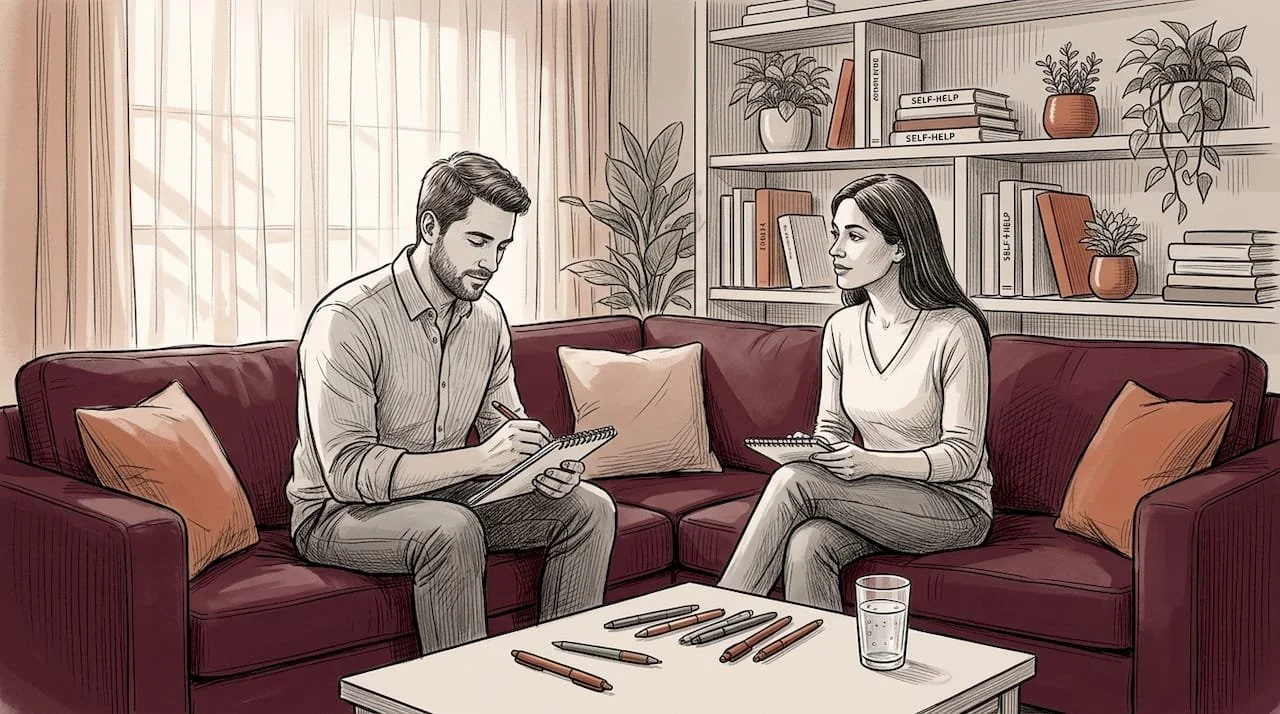
Relationship counseling effectiveness depends heavily on what happens inside the room, and not all therapy is created equal. Effective couples therapists do not just sit back and let two people argue at each other for fifty minutes. They actively shape the session.
Effective therapists use positive focus, skill-building, and emotional management to guide conversations toward productive ground. They manage the temperature of the session, stepping in before things escalate and redirecting blame into curiosity. They help both partners understand the cycle they keep getting stuck in, the back-and-forth pattern of pursuing and withdrawing, criticizing and shutting down, rather than treating each other as the problem.
Strong therapists also prioritize neutrality. A therapist who sides with one partner, even subtly, destroys the trust that makes therapy work. A strong therapeutic alliance predicts better outcomes across all types of couples counseling. When both partners feel heard and understood by the therapist, they engage more honestly and stay in the process longer.
Key practices that distinguish effective therapy for couples:
Identifying negative cycles rather than focusing on individual blame
Managing emotional intensity so sessions stay productive, not traumatizing
Building concrete skills like repair attempts, reflective listening, and asking for needs clearly
Assigning meaningful homework that extends the work beyond the office
Maintaining collaborative problem-solving rather than adjudicating disputes
Pro Tip: Before committing to a therapist, ask directly how they handle sessions when conflict escalates. A confident, specific answer tells you a lot about their actual skill level.
The therapist's method matters, but so does the fit. If one or both partners feel judged or dismissed, progress stalls regardless of the therapist's credentials. Trust your gut on the relationship with your therapist. It is part of the therapeutic data.
How to actively improve your therapy outcomes
Successful relationship therapy is not something that happens to you. It is something you participate in. The couples who get the most out of therapy are not necessarily the ones with the smallest problems. They are the ones who treat sessions as a starting point, not the whole process.
Couples who practice skills between sessions achieve faster and more lasting improvements. Therapy is a skill-building process. Treating it like a weekly venting session stalls progress in a way that is predictable and frustrating for everyone involved. Here is how to improve couples therapy outcomes on your end:
Do the homework. If your therapist assigns a conversation exercise, an emotion journal, or a structured check-in format, do it. This is not busywork. It is where the real rewiring happens.
Come prepared with specifics. Vague complaints produce vague results. Track specific moments during the week, what happened, what you felt, and what you did. That detail gives your therapist real material to work with.
Notice patterns, not just incidents. One argument is an event. The same argument repeated in six different forms is a pattern. Learning to recognize the pattern is one of the clearest signs of therapy progress.
Expect discomfort early. Many couples feel worse in the first few sessions before they feel better. This is normal. Surfacing avoided issues creates temporary tension. It is not a sign that therapy is failing.
Reassess at three months. Approximately 3 to 6 months of consistent work typically reveals noticeable shifts. If nothing has changed and neither partner feels safer or more understood, raise that directly with your therapist.
Pro Tip: After each session, each partner should write down one thing they want to try differently before the next meeting. This small habit transforms passive attendance into active change.
Learning effective couples communication outside of sessions is one of the highest-leverage things you can do to accelerate your results.
Why timing changes everything
There is a reason therapists often say they wish couples had come in sooner. Waiting until a relationship is at a crisis point does not disqualify you from therapy, but it does make the work harder. Early intervention is linked with higher relationship quality and significantly lower divorce rates. Patterns that have repeated for a decade take longer to interrupt than patterns that are six months old.
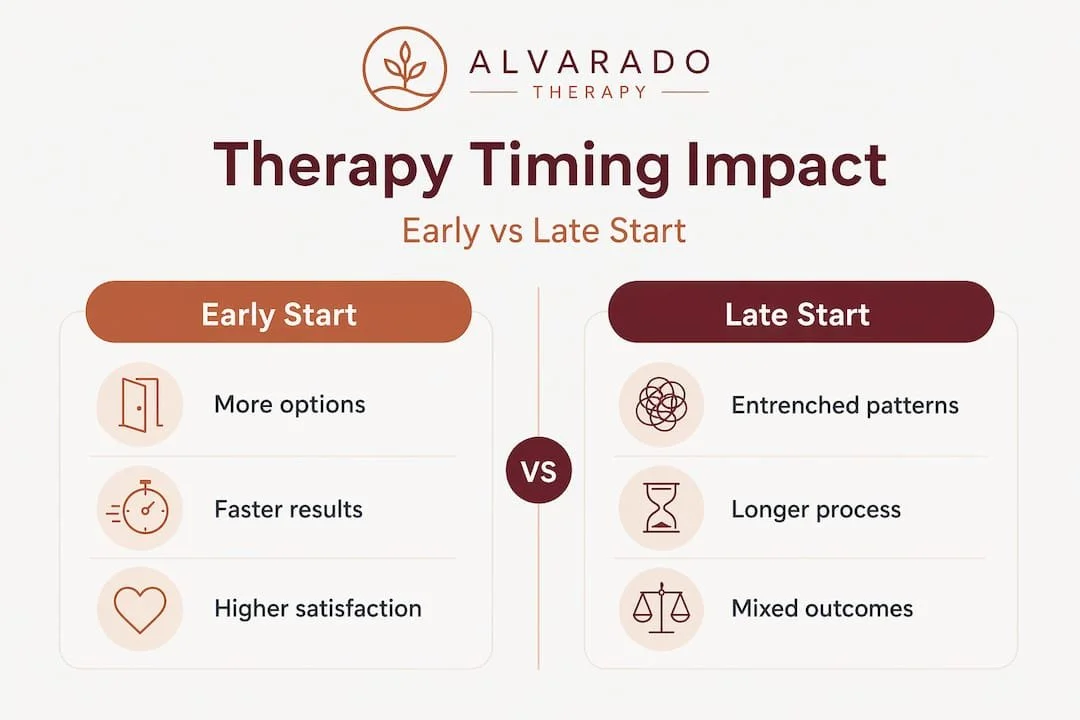
Here is how timing affects therapy outcomes:
| Timing | Typical challenges | Likely outcomes |
|---|---|---|
| Early (within 1 to 2 years of problem onset) | Fewer entrenched patterns, higher motivation | Faster progress, strong improvement rates |
| Mid-stage (2 to 5 years of ongoing conflict) | Some defensiveness, deeper grooves in negative cycles | Good improvement with sustained effort |
| Crisis stage (considering separation, affair, trauma) | High emotional intensity, possible ambivalence | Progress possible but slower, requires skilled therapist |
The encouraging news is that the culture around therapy is shifting. Young adults in their 20s and 30s are seeking therapy proactively at higher rates than previous generations, reflecting a meaningful shift toward early intervention. There has been a 30% increase in younger clients seeking couples support over five years. That shift matters because earlier help tends to produce better, faster results.
If you are reading this and wondering whether things are "bad enough" to warrant therapy, that question itself is your answer. You do not need to wait for catastrophe.
When relationships end but therapy still succeeds
One of the most underappreciated aspects of couples therapy success is what happens when the relationship does not continue. Therapy can provide the structure for a compassionate, respectful ending. That is not failure. That is often the most dignified outcome available.
Therapy helps partners leave with clarity and less resentment, which directly benefits any co-parenting relationship and protects the emotional health of both people going forward. More than that, the self-knowledge gained in therapy, understanding your own attachment style, recognizing the patterns you bring into relationships, learning to express needs clearly, travels with you into every future relationship.
Positive outcomes when a relationship ends can include:
A shared understanding of what went wrong without ongoing blame
A co-parenting plan built on mutual respect rather than conflict
Individual clarity about emotional needs and boundaries
Reduced trauma from the separation process itself
Skills that directly improve the next relationship
For people processing a breakup or separation, couples counseling after a breakup can continue to support healing, communication, and shared goals even when the romantic relationship has ended.
My honest take on what couples miss most
In my experience working with relationship content and observing the research closely over time, the single most common misconception couples carry into therapy is that progress means things get easier quickly. They expect to feel better by session three. When they do not, they conclude that therapy is not working or that their relationship is beyond repair.
What I have learned is that the couples who achieve the most lasting success are the ones who reframe what they are there for. They stop measuring progress by whether they had fewer fights that week and start noticing whether the fights feel different. Did you repair faster? Did someone say "I hear you" and mean it? Did you catch yourself starting the old pattern and pause? Those are the real markers.
Emotional safety is the foundation of everything. Without it, all the communication scripts in the world are just performance. Emotionally Focused Therapy works precisely because it targets that safety first, creating the conditions where real change becomes possible rather than forced. What most people miss about couples therapy success is that it is a direction, not a destination. The goal is not a fixed endpoint. It is two people learning to move through difficulty together with less damage and more honesty than before. That, more than any single outcome, is what lasts.
— Alvaradotherapy
Work with a therapist who understands your relationship
If this article has you thinking about your own relationship, the clearest next step is a conversation with someone trained to help.
At Alvaradotherapy, the licensed therapists specialize in trauma-informed online couples therapy across California, bringing evidence-based approaches including Emotionally Focused Therapy to both partners wherever they are. Sessions are available in English and Spanish, and the team understands how personal history, cultural context, and trauma shape relationship patterns. Whether you are trying to improve communication, navigate a major rupture, or find clarity about the path forward, a free consultation is the place to start. You do not need a crisis to make the call.
FAQ
What is the success rate of couples therapy?
Research shows that 70 to 75% of couples report meaningful improvement in relationship satisfaction through Emotionally Focused Therapy, with nearly 90% experiencing some positive gains.
How long does couples therapy usually take to work?
Most couples notice meaningful shifts after 3 to 6 months of consistent sessions, though the average full course runs 12 to 20 sessions depending on the depth of issues.
Can couples therapy succeed even if the relationship ends?
Yes. Therapy success can mean improved communication, reduced resentment, and personal clarity even when a couple decides to separate. Many people carry those skills into healthier future relationships.
What can I do between sessions to improve outcomes?
Practicing therapist-assigned exercises, tracking specific emotional moments, and reflecting on interaction patterns between sessions significantly accelerates progress compared to attending sessions without applying the work.
When is the right time to start couples therapy?
The earlier the better. Seeking help before conflict becomes entrenched is linked to faster and stronger outcomes. If you are already questioning whether it is time, that is a strong signal to reach out.
Recommended
Effective Couples Counseling: Methods, Results, and What Works — Alvarado Therapy
Couples Therapy Process Workflow: Step-by-Step Guide — Alvarado Therapy
Effective couples therapy: trauma-informed approaches to rebuilding trust — Alvarado Therapy
Couples Therapy in Trauma Recovery: Rebuilding Trust — Alvarado Therapy
