
Step-by-step guide to effective couples communication
TL;DR:
Communication issues often stem from unspoken expectations, reactivity, stress, and defensiveness.
Preparing with a positive mindset and environment enhances the effectiveness of difficult conversations.
A structured five-step framework helps couples reduce conflict and foster understanding and closeness.
Many couples in California reach a point where even simple conversations feel like minefields. You say one thing, your partner hears another, and before long you're both frustrated and distant. Sound familiar? Effective communication is a learned skill, not something most of us are born knowing how to do. The good news is that with the right framework, you and your partner can break painful cycles and build something that actually feels safe and satisfying. This guide walks you through every step, from understanding why communication breaks down to recognizing the signs that things are genuinely getting better.
Table of Contents
Key Takeaways
| Point | Details |
|---|---|
| Identify barriers | Recognize common triggers and emotional patterns to break negative cycles. |
| Prepare intentionally | Have the right mindset and environment to support constructive dialogue. |
| Follow clear steps | Use a structured framework for honest, productive communication. |
| Troubleshoot setbacks | Learn how to navigate common pitfalls and repair talks when they go off track. |
| Seek support if needed | Therapy can offer powerful strategies and accountability for lasting change. |
Why communication breaks down in relationships
Before you can fix something, you need to understand why it's breaking in the first place. Most couples don't fail to communicate because they don't care. They fail because they're operating with faulty tools, unspoken assumptions, and nervous systems that aren't designed for calm, rational conversation under stress.
Here are the most common reasons communication falls apart:
Unspoken expectations. You assume your partner knows what you need, so you never say it. When they don't meet that need, you feel let down or dismissed.
Emotional reactivity. When you feel threatened, criticized, or misunderstood, your brain shifts into survival mode. Logical, empathetic conversation becomes nearly impossible.
Chronic stress. Work pressure, financial worries, parenting demands, and other life stressors leave couples with very little emotional bandwidth for nuanced conversation.
Defensive listening. Instead of listening to understand, one or both partners listen to respond, counter, or defend themselves.
Stonewalling. When one partner withdraws completely from the conversation, the other often escalates to get a reaction, creating a painful push-pull cycle.
These patterns create what therapists call a negative interaction cycle, where each partner's behavior triggers the other's worst communication habits. Over time, this cycle can erode trust and create real emotional distance.
"Effective communication is crucial for healing and overcoming challenges in couples experiencing trauma." Alvarado Therapy
The takeaway here is important: struggling with communication and healing as a couple does not mean you have a broken relationship. It means you're human. Patterns that develop over months or years won't disappear overnight, but they absolutely can change with intention and practice. Recognizing your specific triggers is the first step toward dismantling the cycle.
With an understanding of why problems arise, let's get prepared to reset communication patterns.
Preparing for productive conversations: What couples need
Setting yourself up for success before a conversation starts makes a surprisingly big difference. Think of it this way: even the best recipe fails if you walk into the kitchen without the right ingredients. The same is true for tough relationship conversations.
The right mindset
Before you open your mouth, check in with yourself. Are you approaching this conversation with openness and curiosity, or are you already certain of your partner's motives? Going in with the goal of understanding rather than winning changes everything. Patience matters too. Productive conversations rarely happen in ten minutes when a topic has been sitting unaddressed for weeks.
The right environment
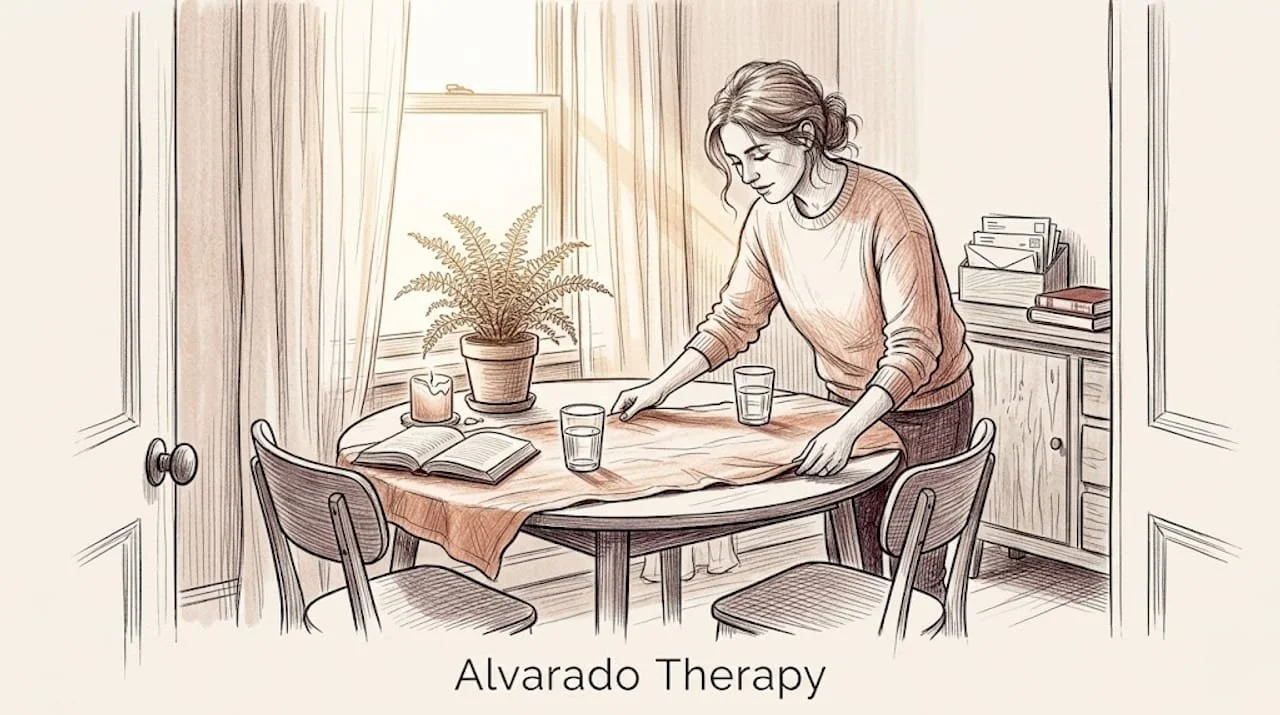
Physical setting matters more than most couples realize. Choose a neutral, calm space where you both feel safe. Avoid having important conversations in the car (where eye contact is impossible), in the bedroom (which should feel like a safe retreat), or in public places where emotions can't flow freely. Sit at a kitchen table or on a comfortable couch, at similar heights, with phones in another room.
Practical tools that actually help
| Tool | Purpose | Example |
|---|---|---|
| Notepad | Track your thoughts without interrupting | Jot down feelings as your partner speaks |
| Timer (2 to 3 min) | Ensure equal speaking time | Each partner speaks uninterrupted |
| Calm app or breathing exercise | Regulate nerves before starting | 4–7–8 breathing for 2 minutes |
| Conversation goal card | Keep the dialogue focused | "Tonight we want to understand each other better" |
Pro Tip: Schedule weekly or biweekly check-ins instead of waiting for tension to boil over. Short, intentional conversations on a regular schedule prevent the emotional buildup that makes difficult talks feel overwhelming.
Research consistently shows that couples therapy insights confirm what many couples discover in session: therapy helps couples learn tools and strategies to communicate more effectively. You don't have to be in crisis to benefit from these tools. Integrating them into your daily routine builds a foundation that holds up under pressure.
You can also find practical communication tips specifically designed for couples navigating stress or trauma together. These resources help you practice outside of session and reinforce what you're learning in real time.
Once you've established the groundwork, you're ready to follow the actionable steps for better communication.
Step-by-step couples communication framework
This five-step process is designed to slow down the conversation, reduce reactivity, and give both partners a genuine chance to feel heard. Following a step-by-step therapy workflow helps couples stay focused and resolve issues constructively, rather than spinning in circles.
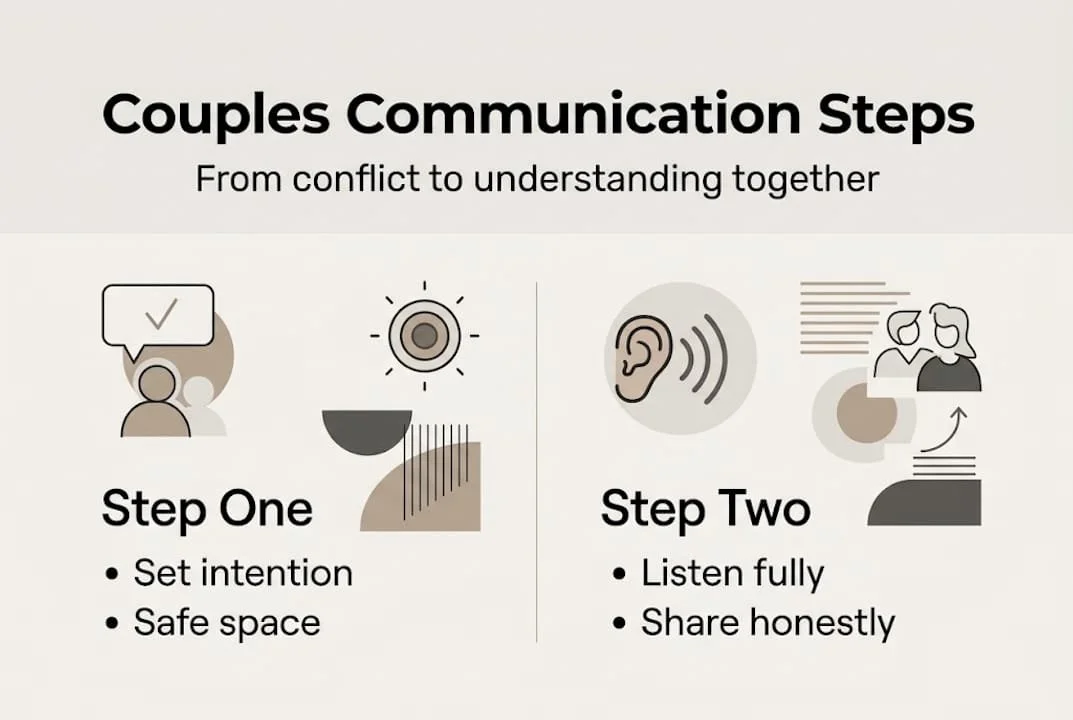
Set your intention and assign roles. Before diving into the topic, agree on the goal of the conversation. Say something like, "I'd like us to understand each other better about this." Then decide who will speak first (the Speaker) and who will listen first (the Listener).
Speaker shares feelings and needs using "I" statements. The Speaker describes their emotional experience without blaming or accusing. Instead of "You never listen to me," try "I feel unheard when our conversations get cut short." Keep it focused on one topic at a time, and limit your share to two or three minutes so it stays digestible.
Listener reflects and validates without problem-solving. The Listener's only job right now is to understand, not fix. Reflect back what you heard: "It sounds like you feel dismissed when I interrupt. Did I get that right?" This one step is often the most powerful because it signals to your partner that they matter more than being right.
Swap roles and repeat the process. Once the Speaker feels genuinely understood, switch roles. The new Speaker now shares their perspective, and the process repeats. This structure prevents conversations from becoming a debate where both partners are just waiting for their turn.
Jointly brainstorm or agree on next steps. After both partners have shared and felt heard, move into collaborative problem-solving. What small change can you each commit to this week? Keep agreements specific and realistic.
Here's how this framework transforms common communication moments:
| Old unhelpful response | Constructive alternative |
|---|---|
| "You always do this." | "I noticed a pattern that worries me." |
| "That's not what happened." | "My experience of that was different. Can I share it?" |
| "You're overreacting." | "Help me understand why this feels so important to you." |
| Leaving the room mid-conversation | "I need five minutes to breathe. Can we continue shortly?" |
| Bringing up past arguments | "Let's stay focused on what's happening right now." |
Pro Tip: Use a simple kitchen timer or your phone's timer app to keep each speaking turn to two or three minutes. This prevents the conversation from being dominated by one voice and helps both partners feel the exchange is fair.
You'll find additional healing tips that complement this framework, especially if your relationship has been affected by trauma or significant stress.
Now that you have a framework, be aware of the pitfalls that can derail your progress.
Common pitfalls and troubleshooting
Even with the best intentions and a solid framework, couples run into obstacles. Knowing what they look like in advance means you won't be caught off guard when they appear.
The most common pitfalls include:
Interrupting. This signals to your partner that what you have to say is more important than what they're expressing. Even if you have a great point, wait.
Blaming and criticizing. Statements that attack character ("You're so selfish") rather than behavior shut down productive dialogue instantly.
Problem-solving too soon. When someone is still in their feelings, jumping to solutions feels dismissive. Emotional validation must come before practical fixes.
Bringing up old issues. Piling on past grievances overwhelms the current conversation and makes resolution feel impossible.
Speaking in absolutes. Words like "always" and "never" are almost never accurate and almost always escalate conflict.
"Therapy provides strategies for overcoming communication barriers and setbacks." Alvarado Therapy
What to do when one partner shuts down or escalates:
If you notice your partner going quiet or your own voice rising, that's your signal to pause. Calmly say, "I think we both need a few minutes. Can we come back to this in half an hour?" Set a specific time to return. This isn't avoiding the conversation; it's protecting it. Coming back is what matters.
When escalation happens repeatedly, it often points to underlying issues that need more support than a conversation framework alone can provide. Understanding the benefits of couples counseling can help you see that professional support is not an admission of failure. It's a targeted intervention that gets you unstuck faster.
Some couples find that reviewing marriage counseling preparation steps helps them understand what to expect and feel less anxious about reaching out for help.
With new strategies for staying on track, it's important to know what progress and healthy communication should look like.
Signs of healthy communication and next steps
One of the most encouraging moments in a relationship is when you start noticing that things are different. Not perfect, but genuinely different. Here's what progress looks like in practice:
Fewer misunderstandings. You finish conversations feeling like your partner actually got what you were trying to say.
Feeling heard without having to fight for it. Your partner reflects your words back without you needing to repeat yourself three times.
Conflict that actually resolves. Arguments end with a clear agreement or at least mutual understanding, rather than trailing off in resentment.
Faster recovery after disagreements. You argue, you pause, and you repair more quickly than you used to.
Increased emotional closeness. Vulnerability starts to feel safer because you've built a track record of being met with care rather than judgment.
Research shows that healthy communication increases emotional closeness and relationship satisfaction over time. These aren't abstract outcomes. They show up in real ways: more warmth in daily interactions, willingness to be honest about hard things, and a sense that you're genuinely on the same team.
When to seek ongoing support:
If you've tried these steps sincerely and still feel stuck, that's not a sign of failure. It's a sign that the patterns between you are complex enough to benefit from a trained outside perspective. Visiting a page on therapy for relationships can help you understand what professional support looks like and whether it fits your situation.
You might also explore what rebuilding trust after trauma looks like for couples where one or both partners carry significant emotional wounds from the past.
After exploring what works, here's a real-world perspective from years working with couples.
A therapist's take: Why most couples underestimate communication work
Here's something we see consistently in our work with couples: most people come in thinking that if they just learn the right phrases, the right techniques, communication will click into place. And to a point, that's true. The tools in this guide are effective. But what nobody tells you is that the work is repetitive.
Breaking a pattern that's lived in your nervous system for years takes more than one good conversation. It takes showing up imperfectly, again and again, until the new way starts to feel more natural than the old one. That's not a flaw in the process. That's just how real change works.
We've found that couples who see the biggest transformation are the ones who are willing to get help when they hit a wall. Reaching out to a therapist isn't a sign that your relationship is broken. It's a sign that you value it enough to invest in it. Understanding why couples need therapy can shift your perspective from therapy as a last resort to therapy as a powerful resource.
Every small step counts, even the clumsy ones. The conversation that goes sideways but ends with "I'm still here" is progress.
Start your journey to better communication
Taking what you've learned here and putting it into practice is the most important move you can make right now. Real change rarely waits for the perfect moment.
At Alvarado Therapy, we work with couples across California who want more than just conflict management. We help you build the kind of relationship where both partners feel seen, valued, and safe. Whether you're ready to explore online couples therapy from the comfort of your home or you'd like to understand what to expect in therapy before committing, we're here to help. Taking the first step is often the hardest part. Schedule a consultation today and see what's possible when you stop trying to fix things alone.
Frequently asked questions
What are the core steps to better couples communication?
The core steps are setting intentions, using "I" statements, active listening, reflecting back, and brainstorming solutions together. A structured process keeps couples focused and helps them resolve issues constructively rather than getting derailed.
How can therapy in California help couples talk better?
Therapy provides tools, structure, and guidance that make it easier to communicate even about tough topics. Research confirms that couples therapy helps partners learn more effective ways to connect and be understood.
What if my partner shuts down during a conversation?
Take a short, agreed-upon break and return to the conversation with a focus on listening rather than solving. Repeated shutdowns often benefit from professional support to identify what's driving the withdrawal.
How do I know if our communication is improving?
Look for fewer misunderstandings, greater emotional closeness, and a sense of feeling understood after difficult talks. These are the clearest markers that the work is paying off, and research links emotional closeness directly to relationship satisfaction.
