

Nervous system regulation means keeping your autonomic nervous system's two main branches, sympathetic (fight-or-flight) and parasympathetic (rest-and-digest), in a flexible balance instead of stuck in high alert or shutdown. When you're overwhelmed right now, three things work fastest: slow diaphragmatic breathing, a vagal anchor like humming or a cold water splash on your face, and a 5-4-3-2-1 grounding scan through your senses.
Diaphragmatic breathing: 60 to 90 seconds, inhale for 4 counts, exhale for 6 to 8. Works anywhere, including mid-meeting.
Vagal anchor: Hum a low note for 30 seconds, or splash cold water on your face for 15 to 20 seconds. Best used at home or somewhere private.
Grounding scan: Name 5 things you see, 4 you feel, 3 you hear, 2 you smell, 1 you taste. Takes about 90 seconds and works well when you can't step away from people.
Pro Tip: If you're too keyed up to sit still, do the breathing standing up with your feet planted wide. Fighting your body's urge to move often backfires; work with it instead.
Key Takeaways
Nervous system regulation works by shortening how long it takes your body to return to baseline after stress, not by eliminating stress responses entirely.
| Point | Details |
|---|---|
| Use fast resets strategically | Match the tool to your state: breathing and grounding for hyperarousal, cold splash or movement for hypoarousal. |
| Build a daily anchor routine | Stack short breathing, movement, and sleep habits onto existing routines to build lasting recovery capacity. |
| Track recovery speed, not calm | Progress means bouncing back faster from stress, not never feeling activated. |
| Know the red flags | Persistent panic, suicidal thoughts, or functional impairment mean it's time for professional support. |
| Consider trauma-informed care | Alvaradotherapy offers EMDR and bilingual therapy for dysregulation rooted in trauma or chronic stress. |
Table of Contents
What Happens Inside a Dysregulated Nervous System
Your autonomic nervous system runs on three divisions: sympathetic, parasympathetic, and enteric, and it controls things you never consciously think about, like heart rate, blood pressure, and digestion. The Cleveland Clinic describes dysregulation as chronic stress that keeps this system locked in high-alert mode instead of cycling normally between activation and recovery. The vagus nerve, the primary parasympathetic pathway, carries roughly 80% sensory fibers and touches the heart, lungs, and gut, which is why StatPearls at NCBI notes it plays such an outsized role in calming the body down.
Picture getting called out in a meeting. Your heart rate spikes, your stomach tightens, your thinking narrows to the threat in front of you. That's the sympathetic branch doing exactly what it evolved to do. The problem isn't that response. It's when your body can't downshift afterward.
Common signs the system isn't resetting properly:
Trouble falling or staying asleep
Digestive issues that flare with stress
Sensory sensitivity (noise, light, touch feeling like too much)
Persistent fatigue that sleep doesn't fix
Emotional reactivity that feels disproportionate to the trigger
Healthline's coverage of dysregulation lists these same patterns as the most frequently reported symptoms tied to chronic stress.
Fast Resets You Can Use in Under Two Minutes
Different states call for different tools. Hyperarousal (racing heart, spinning thoughts, feeling flooded) responds best to slow breath and grounding. Hypoarousal (numbness, fog, feeling shut down) responds better to gentle activation, like cold water or brisk movement.
Diaphragmatic breathing for hyperarousal: Sit or stand with a straight spine. Place one hand on your belly. Inhale through your nose for 4 counts, feeling your belly expand, not your chest. Exhale for 6 to 8 counts. Repeat for 60 to 90 seconds.
Vagal stimulation for either state: Hum a low, steady note for 30 seconds. Humming vibrates the vagus nerve directly. For hypoarousal, a cold splash on the face or the back of the neck for 15 seconds tends to work faster than breath alone.
5-4-3-2-1 grounding for dissociation or racing thoughts: Silently name 5 things you see, 4 you can touch, 3 you hear, 2 you smell, 1 you taste. Takes about 90 seconds.
Pro Tip: In a public setting, skip the humming and do a silent version: press your tongue to the roof of your mouth and exhale slowly through pursed lips. Nobody notices, and it still signals your vagus nerve.
Cold exposure carries a caution worth flagging now and repeating later: skip it if you have a heart condition, uncontrolled high blood pressure, or a seizure disorder, unless a doctor has cleared you.

Building a Daily Practice That Shortens Recovery Time
Fast resets handle the moment. What actually shifts your baseline over weeks is a short, repeatable routine that gives your body regular practice returning to calm. Think of it as training a muscle you use daily under stress.
A workable toolkit includes:
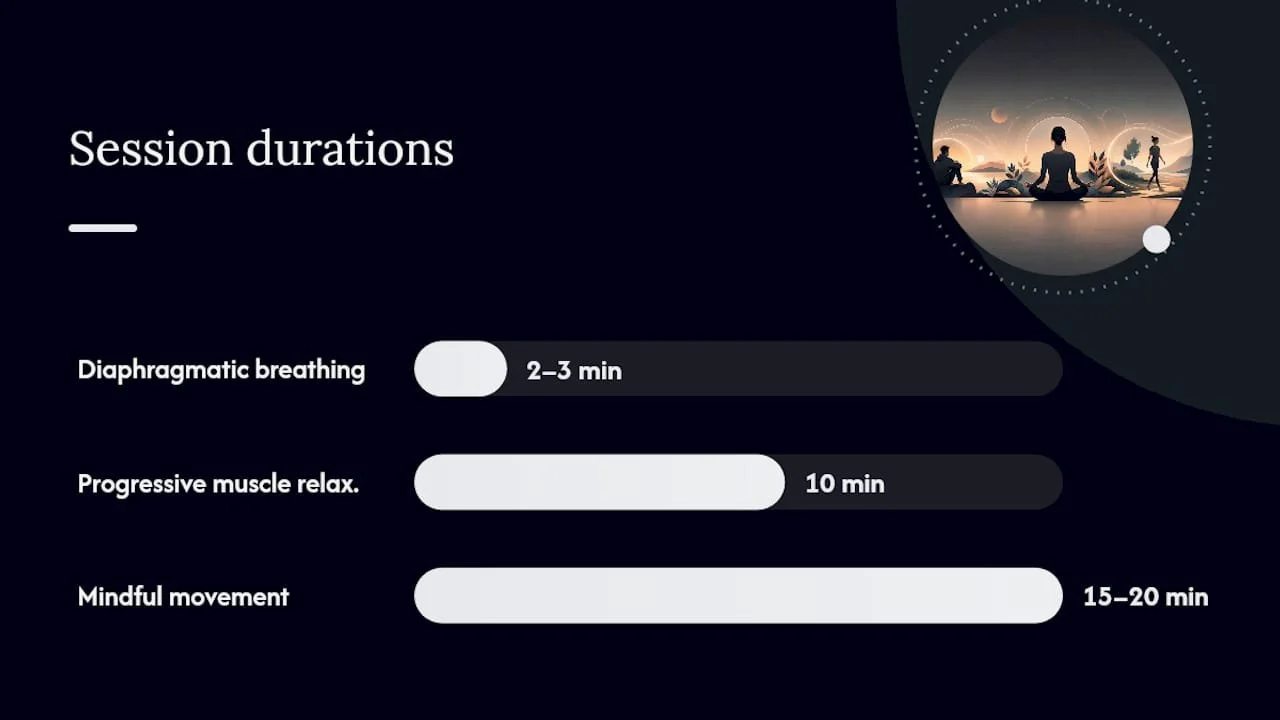
Diaphragmatic breathing, 2 to 3 minutes, once or twice daily
Progressive muscle relaxation, 10 minutes, three to four times a week
Mindful movement or a walk outside, 15 to 20 minutes, daily if possible
One screen-free meal a day, eaten slowly, without multitasking
A consistent sleep and wake time, even on weekends
A simple version might look like this: morning, 3 minutes of breathing before checking your phone; midday, a 15 minute walk without earbuds; evening, 10 minutes of progressive muscle relaxation before bed, tensing and releasing each muscle group from your feet up to your face.
Progressive muscle relaxation, mindful movement, and consistent sleep are the practices most consistently linked to improved autonomic tone over time, according to the University of Maryland Medical System.
Pro Tip: Stack new habits onto ones you already do. Breathe for two minutes while your coffee brews, or do the muscle relaxation right after you brush your teeth at night. Track progress by noticing how fast you calm down after a stressful moment, not by whether you feel calm all the time. If your reset time from a spike to steady drops from twenty minutes to five over a month, that's the improvement that matters, not the absence of spikes altogether.
Reviewing PTSD-specific self-care strategies can help you adapt this routine if trauma symptoms complicate your baseline.
When Dysregulation Needs More Than Self-Help
Some symptoms signal that daily practices alone won't be enough. Watch for:
Sleep disruption that persists for weeks despite consistent routines
Digestive problems that don't improve with stress reduction
Frequent panic attacks
Thoughts of suicide or self-harm
Functional impairment: missing work, withdrawing from relationships, or struggling to complete basic tasks
If you notice several of these, a trauma-informed therapist, a somatic-focused clinician, or an EMDR-trained provider can help address the underlying dysregulation rather than just its symptoms. A primary care visit is worth scheduling too, since some symptoms overlap with medical conditions that need separate evaluation. Understanding trauma-informed therapy can clarify what that kind of care actually involves before you reach out.
If you're in crisis or having thoughts of harming yourself, call or text 988 (the Suicide & Crisis Lifeline) or go to your nearest emergency room. This is not a situation for breathing exercises alone.
One more caution: if you have a cardiac condition or a seizure disorder, talk to your doctor before using cold exposure techniques regularly, since the abrupt physiological shift they trigger can carry real risk for those conditions.
Myths That Make Regulation Harder Than It Needs to Be
The biggest myth is that regulation means becoming permanently calm. It doesn't. Clinicians at UC San Diego point out that the goal is building capacity to recover faster, not eliminating stress responses altogether. Your sympathetic system isn't broken; it's doing its job.
Another common misconception: cold plunges, breathwork apps, or a single dramatic technique will "fix" chronic dysregulation. These tools help in the moment. They rarely resolve dysregulation rooted in unprocessed trauma or ongoing life stressors on their own.
A few safety notes worth repeating: check with a doctor before regular cold exposure if you have a cardiac history, uncontrolled hypertension, or seizure risk. Don't rely on extreme or unsupervised interventions as your only treatment if trauma is driving your symptoms.
The Biology Behind Why These Techniques Actually Work
The vagus nerve doesn't just slow your heart rate. Vagal signaling also influences inflammation through what researchers call the cholinergic anti-inflammatory pathway, meaning consistent vagal stimulation may support your body's recovery processes beyond just feeling calmer, according to StatPearls.
The nervous system doesn't need to be fixed once and left alone. It needs repeated, low-stakes practice returning to baseline, which is exactly what daily breathing, movement, and sleep routines provide.
The slower half of this story runs through your HPA axis, the neuroendocrine system that governs cortisol release. Research on stress reactivity shows early adversity and chronic stress can heighten this axis's reactivity long term, which is part of why quick tools alone rarely undo years of dysregulation. Pairing short resets with therapy and steady lifestyle habits is what tends to produce change that actually holds.
What We See in Practice
Most people who come to us describing "feeling wired but tired" or "snapping at everyone" aren't broken. They're carrying a nervous system that's been asked to handle more than it was given room to recover from. Regulation is a skill, built in small repetitions, not a personality trait some people have and others don't.
We see steady progress happen in weeks, not overnight, and that pace is normal. If self-directed tools aren't moving the needle, that's information, not failure, and it's exactly the kind of pattern trauma-informed care is built to address.
Getting Professional Support When Self-Help Isn't Enough
Breathing exercises and grounding techniques handle the moment. When dysregulation is rooted in past trauma, ongoing panic attacks, or relationship stress that won't budge, working with a trauma-informed therapist gets at what's actually driving the pattern. Alvaradotherapy offers EMDR therapy, individual counseling, and couples therapy across California and New York, both in person and online, with bilingual care available in English and Spanish.
An initial session typically starts with understanding your history and current symptoms, then building a plan that might include EMDR intensives for faster processing or weekly sessions paced around your life. If interpersonal stress is part of the picture, couples therapy addresses the relational side directly. The boundary is simple: try the daily toolkit first, and if sleep problems, panic, or emotional reactivity persist past a few weeks, book a consultation to talk through what EMDR trauma therapy could look like for your situation.
Sources
Autonomic Nervous System: What It Is, Function & Disorders — Cleveland Clinic
Anatomy, Autonomic Nervous System - StatPearls - NCBI Bookshelf
Why Is Everyone ‘Regulating’ Their Nervous System? — UC San Diego Today
Healthline — general coverage on nervous system dysregulation
This article is general information, not a substitute for advice from a qualified doctor. Consult a qualified healthcare professional about your own circumstances before acting on anything here.
