
Post-Breakup Self-Care Workflow: Your Step-by-Step Guide

TL;DR:
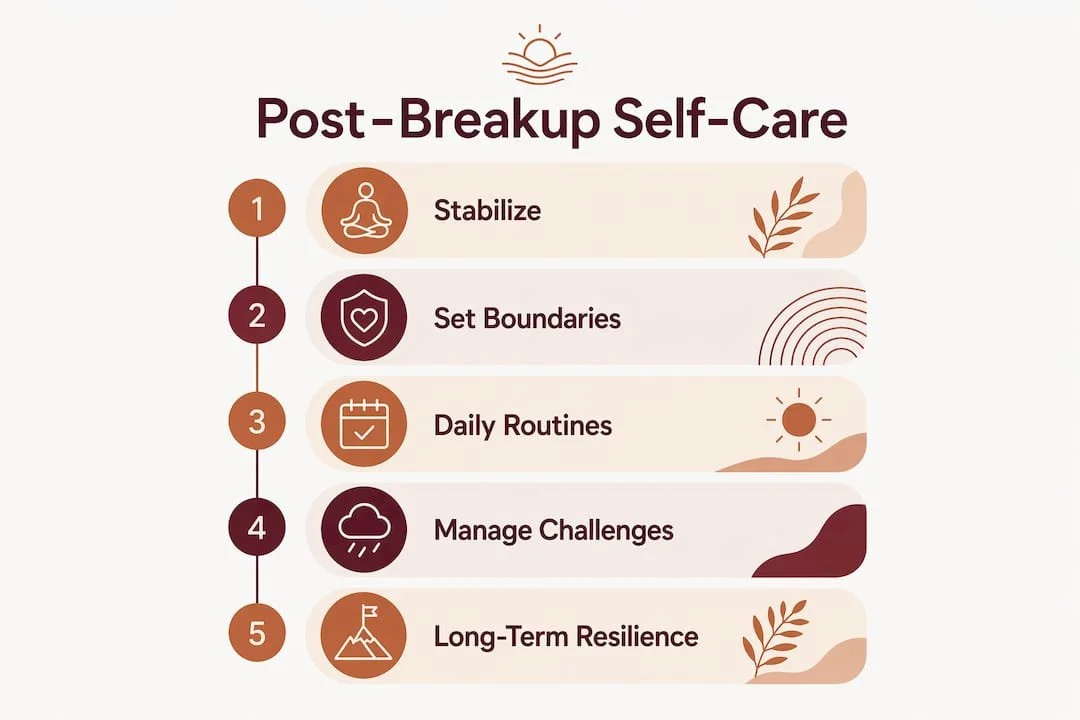
A post-breakup self-care workflow is a structured process designed to stabilize emotional health and rebuild routines. It emphasizes nervous system regulation first, followed by digital boundaries, daily habit formation, and professional support. This sequence aids long-term resilience and genuine healing from relationship loss.
A post-breakup self-care workflow is the structured process of stabilizing your emotional health, managing triggers, and rebuilding daily routines after a relationship ends. Clinicians also call this an emotional recovery process, a term that better captures the neurobiological work happening beneath the surface. What separates this approach from a generic self-care list is sequence. Your nervous system cannot process identity questions or future planning until basic safety is restored first. This article walks you through each phase, from the critical first 72 hours to long-term resilience practices, using evidence-based techniques including cognitive behavioral therapy (CBT) and acceptance-based approaches.
What are the essential first 72 hours in your post-breakup self-care workflow?
The first 72 hours after a breakup are survival mode. Your nervous system is in acute stress, and the brain treats relationship loss similarly to physical pain. Experts emphasize that calm, daily structure, and avoiding closure-seeking are the three priorities during this window. Complex decisions, big conversations, and identity work all wait.
Your body is the first place to focus. The nervous system in acute breakup trauma cannot process complex recovery until basic safety is re-established through hydration, rest, and routine stabilization. That means drinking water, eating something, sleeping at a regular time, and showering. These are not small acts. They are the foundation everything else builds on.
Three immediate priorities for the first 72 hours:
Hydrate and eat on a schedule. Grief disrupts appetite and thirst signals. Set phone reminders if needed.
Sleep at a consistent time. Even poor sleep at a regular hour is better than irregular sleep patterns.
Avoid major decisions. Do not quit your job, move out impulsively, or send long messages to your ex.
Protecting your emotional bandwidth means steering clear of rash new relationships or quick life changes. Impulsive coping feels like action but delays authentic recovery.
Pro Tip: Write one sentence each morning that describes how you feel physically, not emotionally. "I slept five hours and my chest feels tight." This grounds you in the body before the mind takes over.
No-contact or low-contact with your ex is not cruelty. Structured no-contact periods are recommended for most people early in recovery because contact keeps the attachment system activated. Muting your ex on every platform is the fastest way to give your brain a chance to begin downshifting.
How to implement digital and social media boundaries for emotional regulation
Digital exposure after a breakup is one of the most underestimated obstacles to healing. Seeing your ex's posts, tagged photos, or mutual friends' updates activates the same attachment circuits that made the relationship feel necessary. Early no-contact and digital muting limit attachment system activation and allow the brain to begin the neurobiological downshifting needed for emotional healing.

The good news is that the actions themselves are quick. Muting an ex on social media typically takes about 2 minutes but delivers significant long-term benefits for emotional regulation. The hard part is committing to leave those settings in place.
A practical digital boundary sequence:
Mute your ex on every platform. Instagram, TikTok, Snapchat, LinkedIn. Mute is better than block if you want to avoid drama, but block if seeing their profile is a risk.
Remove shared playlists and photos from your home screen. Archive, do not delete, if you are not ready to let go permanently.
Unfollow mutual accounts that regularly post content featuring your ex.
Set a minimum 30-day boundary. Digital hygiene involving muting and blocking is recommended as a minimum 30-day practice before reassessing.
Replace the scrolling habit. When you reach for your phone out of habit, open a notes app and write one line about what you are feeling instead.
Pro Tip: Turn off "People You May Know" suggestions on Facebook and Instagram during this period. Algorithms surface mutual connections constantly, and each one is a potential trigger.
The goal is not to erase the relationship from existence. The goal is to give your nervous system a break from constant re-triggering so genuine processing can begin.
What daily and weekly routines rebuild safety and personal identity after a breakup?
Rebuilding after a breakup is not about becoming a new person. It is about replacing shared routines with new habits that belong entirely to you. This retrains the nervous system to function without the attachment bond that previously organized your days.
Start with small, repeatable promises to yourself. If you say you will walk for 10 minutes after dinner, walk for 10 minutes after dinner. Not because exercise heals heartbreak, but because keeping small promises to yourself rebuilds self-trust. That self-trust is what makes larger recovery steps possible later.
Key daily and weekly practices for emotional recovery:
Morning anchor ritual. Five minutes of the same activity every morning, whether that is making coffee slowly, stretching, or reading one page of a book. Consistency signals safety to the nervous system.
Journaling without a goal. Write for 10 minutes without trying to reach a conclusion. Allowing emotions to exist without rushing to resolve them builds self-trust and long-term resilience.
Intentional social contact. Schedule one real conversation per week with someone who knows you well. Loneliness rarely improves without active effort, and withdrawal reinforces isolation.
One new personal tradition. Choose a restaurant, trail, or activity that has no shared history with your ex. Make it yours.
For a clearer picture of how to pace these habits, the table below outlines a basic weekly structure:
| Day type | Focus area | Example activity |
|---|---|---|
| Weekday mornings | Nervous system anchor | 5-minute stretch or slow coffee ritual |
| Weekday evenings | Emotional processing | 10-minute journal, no conclusions required |
| One weekday | Social connection | Phone call or coffee with a trusted friend |
| Weekend morning | New personal tradition | Solo walk in a new neighborhood or park |
| Weekend afternoon | Rest and gentle activity | Reading, light cooking, or a low-stakes hobby |
Balancing rest with gentle activity matters more than filling every hour. Trying to be productive too soon can mask grief and lead to burnout. Safety and rest come before complex self-identity work.
You can find more detailed guidance on stabilizing your nervous system in the early weeks of recovery at Alvaradotherapy.
How to recognize and manage common challenges in your healing process
Recovery from a breakup is not linear. The Gottman Institute and clinical experts advise against rigid recovery timelines because forcing a pace leads to emotional exhaustion, not authentic integration. You will have good days followed by hard days. That is not failure. That is the arc of healing.
Common setbacks and how to respond:
The urge to reconnect. When the impulse to text your ex hits, delay the action by 24 hours. Write the message in your notes app instead of sending it. Most urges pass within that window.
Emotional exhaustion from "doing the work." If your self-care routine starts to feel like a second job, scale back. Rest is recovery too.
Mood fluctuations that feel alarming. Grief cycles through anger, sadness, numbness, and brief relief. All of these are normal responses to loss.
"Healing progress is an arc, not a straight line. Forcing timelines causes emotional exhaustion and hinders long-term integration." — The Gottman Institute
Boundary-setting with your ex can include a brief, polite text stating you need space, sent once and not repeated. That single act of self-advocacy is a form of self-care. You do not owe ongoing negotiation.
Professional support becomes relevant when setbacks feel unmanageable or when the same painful patterns keep repeating. Trauma-informed therapy, including approaches like EMDR, addresses the deeper nervous system responses that standard coping strategies cannot reach. Alvaradotherapy offers emotional healing after trauma resources that can help you recognize when it is time to seek that level of support.
What advanced techniques support long-term emotional resilience after a breakup?
Once basic stability is in place, deeper healing work becomes possible. This phase is about building skills, not just surviving days. Therapy approaches like CBT and acceptance-based methods reduce rumination and help clarify the relationship patterns that contributed to pain on both sides.
Four techniques that support sustained emotional wellness:
Diaphragmatic breathing. Slow, belly-level breathing activates the parasympathetic nervous system and reduces cortisol. Practice four counts in, hold four counts, six counts out. Use it before sleep or when anxiety spikes.
Cognitive behavioral therapy techniques. CBT teaches you to identify distorted thoughts ("I will never be loved again") and replace them with evidence-based alternatives. A licensed therapist guides this most effectively, but CBT workbooks are a useful starting point.
Acceptance-based approaches. Acceptance and Commitment Therapy (ACT) focuses on making room for painful feelings rather than fighting them. This builds psychological flexibility, which is the capacity to act according to your values even when emotions are difficult.
Paced self-improvement. Avoid stacking too many new habits at once. Adding one new practice per week is more sustainable than a complete lifestyle overhaul in month one.
Building the capacity to trust again is a separate skill from recovering from the breakup itself. Alvaradotherapy's resources on healing from relationship betrayal address this directly, including how to identify healthier relationship patterns going forward.
Self-compassion is not a soft concept. Research in clinical psychology consistently shows that people who treat themselves with the same kindness they would offer a friend recover faster and with less residual anxiety. The internal voice matters as much as the external routine.
Key Takeaways
A post-breakup self-care workflow works because it sequences recovery correctly: nervous system stabilization first, digital boundaries second, routine rebuilding third, and deeper healing last.
| Point | Details |
|---|---|
| Stabilize the nervous system first | Prioritize hydration, sleep, and basic hygiene before any identity or future work. |
| Set digital boundaries immediately | Mute your ex on all platforms for a minimum of 30 days to reduce attachment system activation. |
| Rebuild routines with small promises | Keep one small daily commitment to yourself to restore self-trust gradually. |
| Accept non-linear healing | Mood fluctuations and setbacks are normal; forcing a timeline leads to burnout, not recovery. |
| Use evidence-based techniques | CBT, ACT, and diaphragmatic breathing build long-term resilience beyond the initial recovery phase. |
What I have learned about slowing down after a breakup
The most common mistake I see people make after a breakup is treating recovery like a project with a deadline. They read every article, start five new habits in week one, and then crash by week three wondering why they feel worse than when they started.
The truth is that the basics are the work. Drinking water. Sleeping. Not sending the text. These feel too small to count, but they are the exact actions that allow the nervous system to downshift enough to process anything deeper. Skipping them to get to the "real" healing is like trying to run before the fracture has set.
Setting digital boundaries was the hardest part for me personally. The pull to check in, to see if they posted anything, to look for signs of regret, is genuinely powerful. What helped was reframing it: every time I did not check, I was choosing my own nervous system over a habit that only kept me stuck. That reframe made it feel less like deprivation and more like self-respect.
The non-linear part is also real. There will be a Tuesday three weeks in where you feel almost fine, followed by a Saturday that hits harder than day one. That is not regression. That is how grief works. The arc is real even when you cannot see it.
Recovery is not about rushing to the other side. It is about building enough safety, one small act at a time, that the other side becomes reachable.
— Juiced
How Alvaradotherapy supports healing after a breakup
Breakups can activate trauma responses that structured self-care alone cannot fully resolve. When grief, anxiety, or repeating patterns feel stuck, trauma-informed therapy provides the clinical support that moves recovery forward.
Alvaradotherapy is a California-based practice specializing in EMDR therapy, individual counseling, and trauma-informed care for people navigating relationship loss, grief, and complex emotional pain. The team works with clients online across California, in both English and Spanish. If you are ready to move beyond survival mode, online EMDR trauma therapy at Alvaradotherapy offers a structured, evidence-based path toward genuine healing. You can also book an initial consultation to find the right fit for where you are right now.
FAQ
What is a post-breakup self-care workflow?
A post-breakup self-care workflow is a structured sequence of actions designed to stabilize your emotional health after a relationship ends. It prioritizes nervous system regulation first, then digital boundaries, daily routine rebuilding, and deeper therapeutic work.
How long should no-contact last after a breakup?
Clinical guidance recommends a minimum of 30 days of no-contact or digital muting to allow the brain's attachment system to begin downshifting. Longer periods are often more effective depending on the depth of the relationship.
When should I seek professional therapy after a breakup?
Seek professional support when setbacks feel unmanageable, when the same painful patterns keep repeating, or when grief interferes with basic daily functioning for more than a few weeks. Trauma-informed approaches like EMDR are particularly effective for breakup-related distress.
Why does healing from a breakup feel non-linear?
Grief cycles through multiple emotional states including sadness, anger, numbness, and brief relief, often in unpredictable order. The Gottman Institute notes that forcing a rigid recovery timeline leads to emotional exhaustion rather than authentic integration.
What is the most important first step in self-care after a breakup?
The most important first step is nervous system stabilization through hydration, consistent sleep, and basic hygiene. The brain cannot process complex emotional recovery until these foundational needs are met.
